


Bottomland Trail at Sunset The sun sets over a TNC preserve that includes a fully paved and accessible trail that winds through a prairie. © Zoe Colatarci
Time in nature changes people. It lowers stress, lifts mood and restores something hard to name. But for millions of people, the barrier isn't interest but the trail itself. Across North America, The Nature Conservancy is redesigning how people reach and experience the lands we protect, from trail surfaces and boardwalks to parking, signage and sensory-friendly spaces, so that more people can find their own connection to nature.
That work is visible on the ground. Each pin below marks a preserve with accessible trails, parking, facilities or other features designed to make a visit easier. Explore the map to find a preserve near you.

Click on the map below to discover examples of TNC preserves where accessibility improvements are helping more people connect with nature. As this work continues, more preserves are expanding access through new features, amenities and visitor experiences.
Plan Your Visit!
No results are shown. To see results, turn on the toggle switches in the legend.
- Burnham Brook Preserve
-

Burnham Brook Preserve
Accessibility Features
In 2025, TNC offered a new way for visitors of all ages to connect with nature at the preserve with an all-terrain wheelchair. Secured through a reservation system, the chair provides an additional way to see the preserve's grassy fields, vibrant vernal pool, and mighty trees. Existing trails accommodated the track chair when the program started, and a new path to an overlook opened in 2026.
- Cosumnes River Preserve
-

Cosumnes River Preserve
Accessibility Features
This preserve boasts the one-mile-long wheelchair accessible Lost Slough Wetlands Walk and quarter-mile Boardwalk, both equipped with Right Hear stations. There is also a wheelchair-accessible visitor center, staffed during weekends, that contains tactile exhibits and interpretive signage about the preserve. On-duty service animals are welcome but pets and ESAs are not allowed.
- Debsconeag Lakes Wilderness Area
-

Debsconeag Lakes Wilderness Area
Accessibility Features
The preserve’s three-quarter-mile Pockwockamus All Persons Trail—featuring the sights, sounds and smells surrounding Pockwockamus Falls and Katahdin—has wide, gentle slopes and a firm and stable surface designed for people across the mobility spectrum. There are also designated parking spaces and a non-gendered restroom that meet ADA requirements.
- Dick and Nancy Eales Preserve at Moosic Mountain
-

Dick and Nancy Eales Preserve at Moosic Mountain
Accessibility Features
Working with local accessibility advocates, including community partners Individuals in Motion, TNC installed a wheelchair-accessible gate that allows people using mobility equipment to access the trailhead while continuing to deter prohibited motorized vehicles such as ATVs.
- Edward H. McCabe Preserve
-

Edward H. McCabe Preserve
Accessibility Features
Bennett’s Trail at Delaware’s McCabe Preserve invites people of all abilities to explore a thriving forest landscape. With a stable, accessible surface for mobility devices and abundant wildlife viewing opportunities, the trail offers a welcoming gateway to nature and conservation.
- Garrett Family Preserve
-

Garrett Family Preserve
Accessibility Features
A half-mile of wide, flat trails have been converted into a braille trail, complete with a free audio tour and a guide rope to assist with navigation. Thoughtfully placed stoppers along the guide rope indicate upcoming braille and English interpretive signs, as well as benches along the route. The trail is intended to welcome visitors with low or no vision, and other access considerations.
- Kankakee Sands Preserve
-

Kankakee Sands Preserve
Accessibility Features
TNC made accessibility improvements to the welcome area, plant nursery and bison viewing area, which includes picnic tables, shade pavilions and viewing scopes with lenses to adjust for colorblindness. These improvements allow for visitors with mobility disabilities and visual impairments to experience bison viewing, wildflower season and other preserve attractions.
- Long Pond Preserve
-

Long Pond Preserve
Accessibility Features
In consultation with a local outdoor accessibility advocacy organization, TNC designed and created a 0.8-mile Universal Access Trail that allows preserve visitors with mobility challenges to independently experience the preserve's unique habitats, including a pollinator garden and northern bog ecosystem.
- Manchester Cedar Swamp Preserve
-

Manchester Cedar Swamp Preserve
Accessibility Features
An All Persons Trail, designed to be an inclusive, immersive experience, includes accessible parking spaces, a public transportation stop and a family-friendly, nongendered ADA-compliant portable toilet. Seven illustrated interpretive panels provide insight into the area's nature and history. A free audio tour, available in English and Spanish, shares more about the preserve's sights and sounds.
- Moss Lake Preserve
-

Moss Lake Preserve
Accessibility Features
TNC reconstructed more than a quarter mile of a 1.1-mile a trail to meet the Outdoor Developed Area Accessibility Guidelines that make it more inclusive of people with mobility limitations and disabilities. The wheelchair-accessible portion features an accessible picnic area and a boardwalk, and a viewing platform of the lake.
- Nachusa Grasslands Preserve
-

Nachusa Grasslands Preserve
Accessibility Features
In an effort to develop spaces that can be used by people with different lived experiences, TNC created a visitor center with accessible parking, an accessible portable toilet and a paved accessible route to the Visitor Center Pavilion. The open-air pavilion includes tactile and audio exhibits. Contact the preserve with questions regarding service animals.
- Raven Ridge Natural Area
-

Raven Ridge Natural Area
Accessibility Features
After meeting with a local disability advocate, TNC upgraded the Raven Ridge boardwalk to meet ADA specifications. TNC reused materials from the original boardwalk and in the process, also achieved a positive yet unintended conservation outcome as moving the boardwalk revealed an endangered plant in need of protection!
- Santa Fe Canyon Preserve
-

Santa Fe Canyon Preserve
Accessibility Features
A quarter mile of the Santa Fe Canyon Preserve’s 1.5 mile interpretive loop trail has been widened and updated to include handrails to help people navigate the trail more easily. Signage at the trail’s entrance features Spanish and Braille. The preserve also has an audio tour that visitors can download to their device and use at the time of their visit.
- South Cape May Meadows Preserve
-

South Cape May Meadows Preserve
Accessibility Features
A half-mile, boardwalk offers braille and tactile signage and maps, a handrail, passing spaces with accessible seating options and an elevated observation platform. Visitors can also enjoy the preserve’s other accessibility features including an audio tour, solar charging station, accessible picnic area, water fountain, frequent benches, ADA parking and sturdy, wide nature trails.
- Tiger Creek Preserve
-

Tiger Creek Preserve
Accessibility Features
TNC teamed up with Removing the Barriers to launch a track chair program in 2024, which allows users to borrow battery-powered outdoor all-terrain chairs at no cost to explore 1.5 miles of trail around the preserve. The program has been well received by local residents, TNC volunteers and visitors, many of whom are older or experience mobility limitations and other disabilities.
- Whitehead Preserve at Dundery Brook
-

Whitehead Preserve at Dundery Brook
Accessibility Features
An accessible boardwalk winds for a half mile through a wetland forest, with occasional benches for rest stops. Much loved by local families, the trail welcomes parents with strollers, wheelchair users and nature lovers who enjoy quiet exploration. In spring and fall, the boardwalk is a great spot to look for migrating songbirds. Accessible parking and seasonal restrooms are available.
Examples of Accessible Features


Track Chair: A visitor uses the new all-terrain wheelchair (also called a track chair) at The Nature Conservancy's Burnham Brook Preserve in Connecticut. © Tebben Gill Lopez/TNC
Accessible Trail: One of the eight trails at TNC's Nags Head Woods Preserve feaures a wooden boardwalk and observation area. © Dr. David Blevins
Braille Trail Loop: A 1/2 mile loop featuring a guide rope and Braille signs runs through the heart of the wildflower meadows at the Garrett Family Preserve. A free audio tour is also available. © Lily Mullock/TNC
Half-mile Boardwalk: This boardwalk brings visitors through a previously inaccessible portion of a nature preserve. © Damon Noe / TNC
What is accessibility when it comes to spending time in nature?
TNC’s approach to accessibility at our preserves is inspired by the definition created by the publication, Open to All, a Disability Inclusion Guide for Land Trusts, crafted by the Land Trust Alliance’s Advisory Council on Inclusive Health and Disabilities, which states: "Accessibility is the degree to which people with disabilities can independently access a device, service or environment without barriers. Accessibility is also a process, spanning the proactive identification, removal and prevention of barriers to people with disabilities."
To translate that definition into action, TNC has committed to a human-rights-based approach to improving accessibility, which includes removing barriers to access where feasible and adopting best practices for trails that align with industry standards so that more people can experience both the health benefits and wonder that being in nature provides.

We have an opportunity to deepen our culture of inclusion and belonging, where people with disabilities, non-English speakers, people who experience sensory processing differences, or who have limited experience with outdoor spaces feel welcomed, respected and informed when visiting a TNC preserve.
Photo Gallery
Swipe through to see examples of projects that have been completed at different TNC preserves.


From the Field
Meet a volunteer working to make nature more accessible.
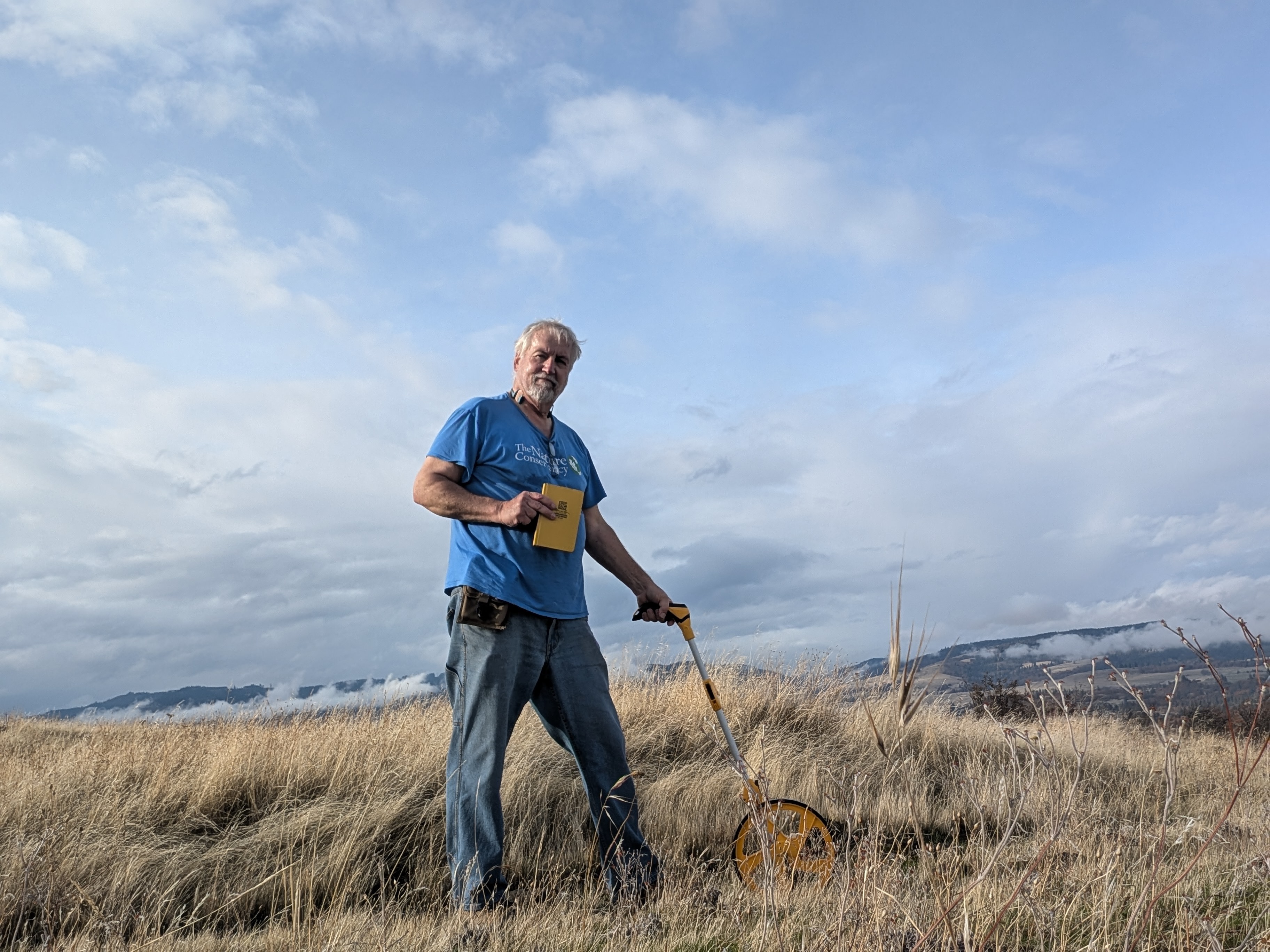
Each year, John and Normandy Helmer spend a few months as volunteer caretakers at TNC's Zumwalt Prairie Preserve in Oregon. Inspired by a desire to help more people experience nature, John documents trail conditions so visitors with mobility or health challenges can decide whether a trail is a good fit for their abilities. He also helps lead electric track chair outings for people who use wheelchairs or have other mobility challenges. As John says, “I want to break down barriers to experiencing nature.” Learn more about his efforts and what motivates his work.
Nature Needs You
The places we love need champions. Your support helps The Nature Conservancy protect critical habitat, improve resilience and care for treasured natural areas for people and wildlife.

More To Explore

The Power of Perspective
Hear from TNC’s Preserve Accessibility Coordinator Lisa Ryan on making outdoor spaces welcoming for everyone.

Trails for All
A unique trail project in an urban preserve works to remove barriers to nature.

An Outdoor Adventure in New York for Everyone
Discover accessible trails in New York State.