
Laurel Creech
State Director
Tennessee

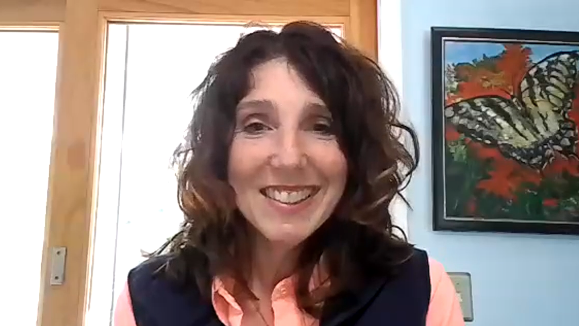
Laurel Creech Laurel Creech is The Nature Conservancy's state director in Tennessee. © Courtesy/Laurel Creech
Areas Of Expertise
relationship building; communications; project management; strategic visioning
Biography
As The Nature Conservancy's Tennessee State Director, Laurel Creech leads a talented team working to achieve lasting conservation outcomes for Tennessee's lands, waters and wildlife. In this role, Laurel cultivates relationships with donors, trustees and partners representing government, business, academic, philanthropic and nonprofit sectors. She also provides leadership for fundraising and advocacy efforts that support TNC's local, regional and global priorities.
Under Laurel's leadership, The Nature Conservancy in Tennessee advances science-based conservation solutions across the state, from protecting critical forests and rivers to restoring freshwater systems, improving habitat connectivity and conserving globally significant biodiversity. This work contributes to TNC's ambitious 2030 Goals while benefiting both people and nature.
Prior to assuming this role, Laurel worked for the Metropolitan Government of Nashville & Davidson County, where she helped create and served as assistant director for Metro Nashville's Division of Sustainability. There, she led initiatives focused on renewable energy, energy efficiency, green infrastructure, waste reduction and education. Under her leadership, the division received two Governor's Environmental Stewardship Awards and four U.S. Green Building Council Impact Tennessee Awards. Laurel also represented the United States through a joint European Union partnership focused on advancing sustainable practices and environmental stewardship.
During college, Laurel interned with the Tennessee Department of Health's Environmental Epidemiology Program, conducting health surveys related to industrial pollution in Chattanooga Creek. Hearing directly from affected residents inspired her lifelong commitment to protecting natural resources and promoting healthy, resilient communities.
A Chattanooga native, Laurel's love of the outdoors began as a runner, cyclist and triathlete in the mountains of East Tennessee. She later founded and directed Team Green Adventures for 13 years, connecting thousands of Middle Tennesseans with outdoor experiences across the region.
Outside of work, Laurel is a weekend radio host on WMOT 89.5 FM, Nashville's Americana station with listeners around the world. She enjoys exploring Tennessee with her two yellow Labrador retrievers and spending time outdoors camping, hiking and discovering new places across the state.

Tennessee: A Story of Conservation and Connection
SUMMER 2025
In early June, Tennessee served as host of The Nature Conservancy’s Global Board of Directors, Executive Leadership Team, and the Trustee Council—an opportunity to shine a light on how our conservation work is so significant to The Nature Conservancy’s mission and achieving our 2030 goals
The week’s activities kicked off with an intimate dinner at the Country Music Hall of Fame which was the perfect backdrop for Nashville as being Music City USA and the theme of songwriting. Just as every song tells a story, so does conservation—a story of connection to nature and to people. The theme of storytelling emulated throughout the week’s events. In fact, one of the stories that the Nature Conservancy’s Board Chair and our local champion for conservation Senator Bill Frist shared was about how conservation policy shaped Tennessee via leaders who were committed to the common ground of nature. Read Senator Frist’s blog here.
The following evening, Senator Bill and Tracy Frist hosted a beautiful dinner at their farm at Old Town, just outside Nashville along the Harpeth River. Senator Frist shared the rich cultural history of this magical place. The gathering was warm and familial with locally grown foods to nourish our bodies. Our minds and hearts were also filled as an indigenous family with cultural ties to Old Town welcomed us with a group participation included drumming circle, dances and sharing history of place.
On the third day, the Trustee Council, which is comprised of TNC Board Chairs from states across the country, gathered in person for the first time in over a decade. Over 30 board members attended and had a full day of education and interactions amongst their peers and TNC leadership staff.
The week culminated with a field trip to experience the Tennessee’s cedar glades at Couchville Cedar Glade State Natural Area where attendees got to have a rare glimpse into one of the most biologically rich and geologically unique landscapes in the southeastern US. Learn why Tennessee’s biodiversity matters to the world, here. Highlights included encountering desert-like cedar glades, lush barrens, and calcareous forests peppered with Tennessee coneflowers and gray-headed cone flowers, also known as prairie cone flower.
This field trip offered the opportunity to talk about the streamside salamander - which is a rare amphibian that breeds in temporary streams, the importance of prescribed fire, and how and why Tennessee has the most caves in the US by hiking to a hidden sinkhole, a karst formation. We even got to see a fang flower which only blooms four hours of the day during limited times of the year.
By the end of the week, we all had a story to tell. And each story includes examples of how together we are tackling the interconnected crises of biodiversity loss and climate change. Tennessee stood out as a beacon—a lighthouse of conservation—and we hope it will remain a place of return and reflection for all who visited.
TNC's Global Board Meeting


ONE CONSERVANCY WEEK
Winter 2025
As we continue our conservation progress into 2025, I waas recently inspired by meaningful time spent with many of The Nature Conservancy's incredible leaders from around the world at One Conservancy Week 2025 in Mérida, Mexico. This global gathering highlighted that achieving TNC's ambitious 2030 goals and beyond hinges on how successfully we can work together as One Conservancy, with a sharp focus on what we are learning from implementation and our progress. This will enable us to scale and execute against our 2030 goals while also understanding more quickly what is and is not working, so we can adapt, collaborate and support each other.
Additional ways that can further our impact collectively include equipping ourselves to tell the global-to-local TNC story, so we can raise flexible funding and inspire others to support our work; ensuring we continue to build an inclusive, thriving, resilient and agile culture; and designing the enabling organizational conditions that will help us reduce complexity and equip us for delivery. We can do this together and urgently through radical partnerships to help us increase our pace, test solutions and influence the policies, markets and movements needed to deploy those solutions at scale.

As part of OCW, I was honored to partake in two field trips. First, I joined over 100 other TNC staff and Las Chelemeras, a group of 18 women from a fishing village called Chelem located in the Northern Yucatan Coast Mangroves and Marshes protected area, for hands-on mangrove restoration activities. This was my first visit to a mangrove restoration, where we got waist-deep in the coastal area to clear water flow channels and replant mangroves in degraded areas to help restore the health and hydrological flow of the mangroves while spotting coastal and migratory birds—all with the backdrop of wind turbines towards a renewable energy transition.
On the final day of OCW, I joined a group to visit a regenerative ranch in Peto, in the Puuc Region of the Yucatán Peninsula. We met with the father, son and entire family who are transitioning to regenerative ranching practices, which all began because of TNC. They are one of many ranches that are now integrating these best practices such as piloting bio-inputs throughout their ranching operation, harvesting maize and transforming a milpa maya’s productive system.
OCW brought together the brightest, most caring people on the planet, and I am so grateful to be a part of TNC’s community of change-makers who take their responsibility and passion to heart—truly inspiring!
TENNESSEE'S WATERWAYS
Winter 2024
Learn more in our Winter 2024 issue of Tennessee Field Notes.
In September, 2024 Hurricane Helene brought devastation to lives and livelihoods in several Appalachian Mountain communities in East Tennessee and western North Carolina as a result of widespread flooding throughout the region’s rivers and streams. This deluge came on the heels of historically low water levels at the Duck River in Middle Tennessee, one of North America’s most biodiverse rivers, caused by a combination of extreme drought conditions and increased demand for drinking water.
The influence that water has on our landscape, and on surrounding communities, is real. Nature has a role to play in building resilience against what we are seeing in the headlines. Incorporating more nature into our watersheds allows the landscape to better collect, store and gradually filter clean waters entering rivers and streams to reduce flooding and handle droughts.
At The Nature Conservancy, we are on the case. Our network of scientists recently completed a portfolio of conservation priorities around the state to inform where our work can have the greatest impact. This includes our efforts at some of the most biologically diverse watersheds on Earth located right here in Tennessee, in places like the Duck River, throughout the Southern Appalachians and in portions of the “Mighty Mississippi.”
As people are increasingly enjoying and appreciating the outdoors and especially our rivers, lakes and streams, it is an exciting time to pursue the work of conserving nature in Tennessee. This heightened engagement also brings an awareness of how the surrounding landscape influences our freshwater resources. Protecting the quality and abundance of Tennessee’s water depends upon what we are doing on farms and in forests, around cities and in our own back yards. We all have a role to play.
OPEN LETTER ABOUT CONSERVATION FUNDING
Fall 2024
Learn more in our Fall 2024 Nature News.
More than ever, a topic near and dear to my heart is funding for conservation. The Nature Conservancy is grateful for every dollar dedicated to protecting our state’s lands, waters and wildlife, especially the $71.5 million in recent funding that came through the Tennessee Heritage Conservation Trust Fund, which had not received funding in more than 15 years until 2023. Thanks to Governor Lee’s leadership, and approval by the Tennessee Legislature, this funding represents a significant step forward in conserving Tennessee’s landscapes, supporting wildlife, expanding outdoor recreation and building climate resilience. It will build momentum to protect Tennessee’s lands and waters for future generations.
However, to achieve TNC’s 2030 goals for adapting to changes in climate and halting, or even reversing, a global decline in biodiversity, we need to pursue innovative strategies that generate recurring, predictable annual funding for nature in Tennessee and beyond. Nationally, funding gaps exist. In 2020, the Paulson Institute, TNC and the Cornell Atkinson Center for Sustainability published a report called Financing Nature: Closing the Global Biodiversity Financing Gap.
The report states, “To reverse the decline in biodiversity by 2030, our analysis suggests that, globally, we need to spend between US$ 722–967 billion each year over the next ten years. That puts the biodiversity financing gap at an average of US$ 711 billion, or between US$ 598–824 billion per year.” The good news is that such investment also creates jobs and, more importantly, secures a habitable planet for all life on Earth.
In light of the nature funding gap in Tennessee, TNC values the recent support for conservation and encourages state leaders to consider a recurring and stable funding source for conservation, one that would be in place beyond their terms. This could further enhance a healthy and resilient natural environment for all Tennesseans.
TNC is here to help with a rigorous, well-tested, science-based process for identifying places that are key to supporting our state’s unique biodiversity and building natural defenses against climate change. Over the years, TNC has accessed funds from the Heritage Conservation Trust Fund to support various initiatives throughout the state. Most recently, these funds were instrumental in establishing the Middle Fork Bottoms Recreation Area in West Tennessee, which will soon become a Tennessee State Park, and supporting conservation work within South Cumberland State Park.
TNC can also help guide efforts to preserve working forests, restore nature to secure clean and abundant freshwater, and ensure unforgettable opportunities for outdoor tourism and recreation. If such a recurring funding source was established, TNC and our partners could pursue priorities faster, including acquiring and connecting lands and waters that are critical to the survival of native plants and animals and freshwater resources.
We are excited to see Governor Lee’s leadership when it comes to funding conservation in Tennessee. We look forward to working with partners around the state to build on this momentum. Together, we can collectively establish a conservation legacy that invests in preserving Tennessee’s lands, waters and wildlife for generations to come.
CELEBRATING CHESTNUT MOUNTAIN
Summer 2024
Learn more in our Summer 2024 Field Notes Newsletter.
It is hard to believe that more than five years have passed since The Nature Conservancy assumed ownership of the Bridgestone Nature Reserve at Chestnut Mountain. It was monumental news back then and remains a centerpiece of our work in Tennessee.
Fondly referred to by our staff as “Chestnut Mountain,” the Reserve represents the type of large-scale, multi-dimensional, collaborative project that TNC is pursuing more and more around the world. Case-in-point, the work that we do on Chestnut Mountain’s 5,763 acres also impacts an additional 70,000 acres of conservation lands surrounding the Reserve in the Cumberland Plateau.
Working with partners to collectively conserve this sizeable mosaic of protected areas extends even more broadly to the Appalachian Mountains. A globally significant hotspot for biodiversity and top priority for TNC, our Tennessee program works as part of an 18-state initiative focused on conserving this vast landscape’s clean and abundant freshwater resources and unparalleled biodiversity. The Appalachians’ intact forests and woodlands also do double duty as important carbon reserves.
For TNC, Chestnut Mountain requires an “all hands on deck” approach to conservation that is key to conserving large landscapes. Here, our staff taps into every tool and talent in our conservation arsenal to advance TNC’s mission: scientific research, community outreach, land protection, donor engagement, land and water management, mapping, wildlife inventorying, partnership building and much, much more.
We could not be more proud of what we have accomplished since receiving the gift that has become our Bridgestone Nature Reserve at Chestnut Mountain. Thanks for your continued support.
WORKING BEYOND BORDERS
Spring 2024
Learn more in our Spring 2024 Nature News.
Our work, like wildlife, operates beyond lines on a map.
The Nature Conservancy has set ambitious 2030 goals around tackling the dual crises of slowing an alarming loss of our planet’s biodiversity and a rapidly changing climate. Achieving our goals requires mobilizing our skills, talents and resources around larger, cross-boundary projects that, if conserved, can have a global impact. We feature two examples of such efforts here. Both sides of our great state of Tennessee touch upon significant landscapes—the Appalachian Mountains to the east and the Mississippi River floodplain to the west, which require our urgent attention. In these places, we are truly greater than the sum of our parts.
WHAT KIND OF LEGACY WILL YOU LEAVE?
Winter 2023
Learn more in our Winter 2023 Field Notes Newsletter.
It is something that crosses all our minds at one time or another. “What kind of legacy will I leave to the next generation?”
This thinking factors into why I am working at The Nature Conservancy in my native state of Tennessee. What better legacy is there to leave than clean air and water, healthy soils for growing food and lands and waters for finding peace and outdoor fun?
That is what makes me feel so proud of all we are accomplishing at The Nature Conservancy. This includes adopting new science that is guiding our work in conserving federally endangered gray bats, which serve as important pollinators and insect consumers throughout their broad range. We also continue to target land acquisitions that are key to connecting and building resilient landscapes that can support wildlife while reducing the impacts of a rapidly changing climate. Our trustees and staff also regularly advocate for nature-friendly legislation and policies—from watershed restoration to wildlife protection and support for working farms and forests—that will secure a healthier planet in the future.
On the topic of legacy, I want you to know that the work we do here in Tennessee represents YOUR legacy as well. That is because none of this work would be possible without your support.
Thank you for all that you do to make it possible for us to conserve the lands and waters on which all life depends here in Tennessee.
ALLOW ME TO INTRODUCE MYSELF
Summer 2023
Learn more in our Summer 2023 Field Notes Newsletter.
I am honored to assume the role as The Nature Conservancy’s state director in Tennessee, where I grew up and continue to reside. I look forward to advancing TNC’s efforts around the state. Since I am new to this job and to TNC, I thought I would share a little bit about me.
Growing up in the beautiful mountains of Chattanooga nurtured my love for spending time outdoors. However, the “aha” moment that led me to focus on a career dedicated to protecting our planet came during college while working as an intern with the Tennessee Department of Health‘s Environmental Epidemiology program. In this role, I was charged with interviewing residents living along the Chattanooga Creek as part of a study examining the effects of toxic pollution that had been released into the watershed for decades.
Ultimately, the study results were “inconclusive,” and I felt frustrated that the people living, swimming and fishing along the creek had no recourse for dealing with some of the health issues mentioned during our conversations. However, my eyes were opened to the connection between human health and our environment and my heart was set on dedicating myself to this important relationship.
This snapshot from the beginning of my career comes to mind as I begin this new role with TNC, an organization focused on protecting the lands and waters that support Tennessee’s incredible biodiversity. We mustn’t forget that TNC’s mission includes people. All of the work that TNC does to benefit nature around our state—in our forests, floodplains, farms and around our cities—benefits our physical and mental health.
Thank you for supporting this vital work.
Nature Unites Us
Laurel Creech promotes TNC's work in Tennessee
-
Investing in Natural Infrastructure
Laurel spoke with The Tennessean's Opinion and Engagement Director, David Plazas, about her career path and goals as The Nature Conservancy’s Tennessee state director. Check It Out