


Strengthening South Carolina’s Lowcountry
Land acquisitions and living shorelines in the Port Royal sound.
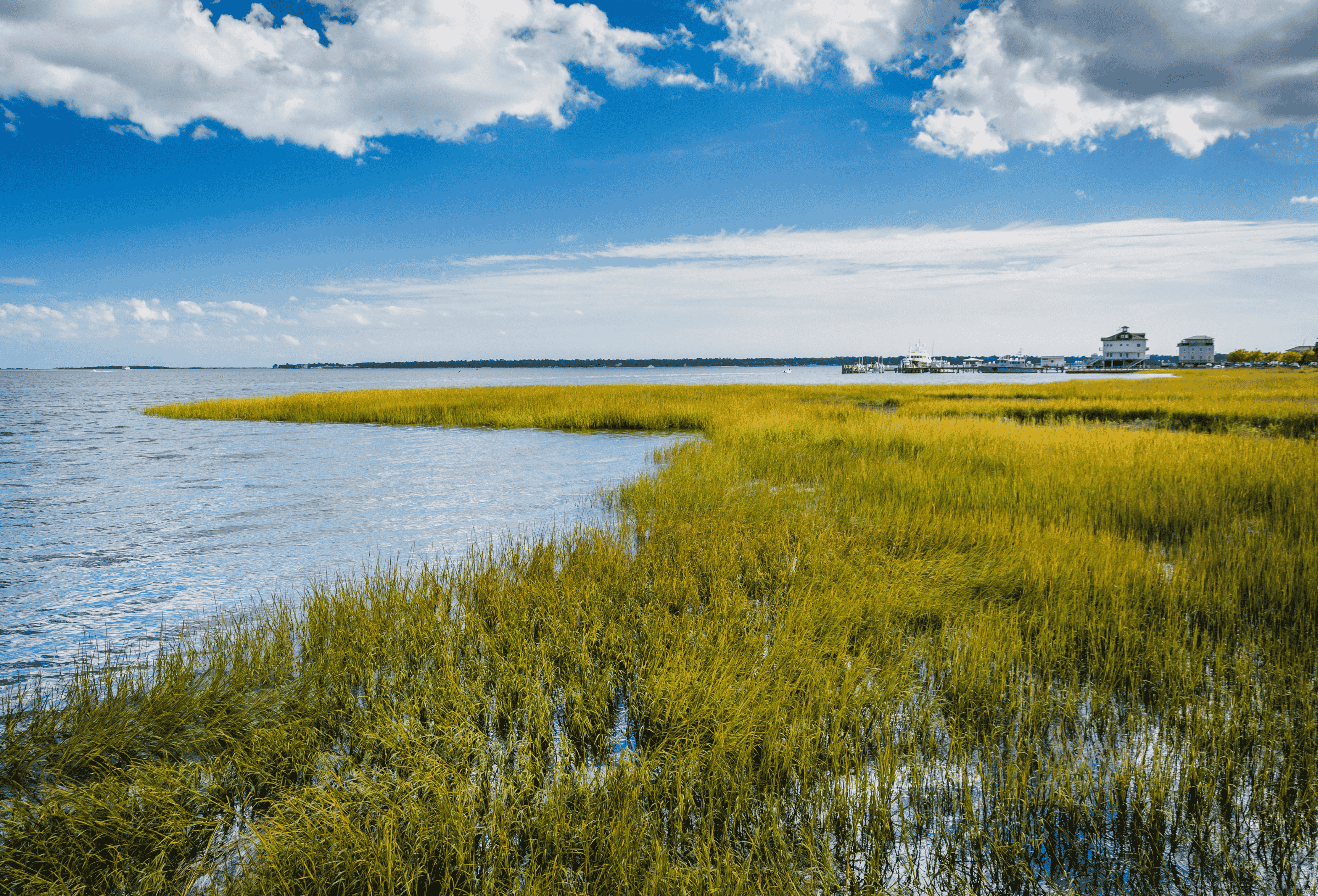
So, we are in the North Inlet-Winyah Bay National Estuarine Research Reserve. And so what we are looking at here is the North Inlet marsh. It's like 18,000 acres. First of all, it’s beautiful. I think sometimes we leave that part out that like we as humans just need that sense of beauty. And there it is.
One of the main benefits—if you like to eat fish and shrimp, this is where they’re born and grow up. We need marshes to support these coastal ecosystems.
Storm abatement is the other really big one. You can imagine a big, huge storm surge coming in. Really high tides coming in from these storms. If you have all of this in front of your house, it’s not quite so bad by the time it gets to your house. There’s, you know, water infiltration and also clean water. So, rainfall runoff runs into the marsh. The marsh is taking up a lot of those excess nutrients. It's helping to keep our water supply clean.
So, one of the big topics right now is this idea of carbon sequestration. And so that marshes are actually, as they grow, taking up carbon. They could be helping with mitigating some climate change impacts. So, wherever you see all this vast expansive green, that’s productivity going on, which is taking up carbon.
And, you know, the idea of like preserving it for all these functions that it's providing for us in terms of, you know, giving us food, giving us shelter, and to protect the habitat that's providing all these benefits to us, it seems like it's obvious that we need to be protecting salt marshes.
Anything else you want to show me or share?
Do you want to just peek out on the boardwalk? I always use this with my classes as a demonstration. So, this little strip of land right here. This is relic dune line.
So, when I started working here about 20 years ago, this was completely all healthy green trees. But as sea level rises, they're also starting to die off. But with, as the sea level has risen, it's just accelerated that die-off. So, I would say really like within the last 10 years, this has gone from almost completely live trees to being almost completely dead trees.
So that's like if you want to see sea level rise in action, there it is right there. And I've seen it, you know, literally before my eyes, year after year in the die-off of these areas.
So, I think it's awesome that there's so much dedication to protecting this area. I'm glad that The Nature Conservancy is sort of taking the lead, that they're taking this on and they seem to be having a very comprehensive approach to it all. Yeah, I hope that if anything, just a greater understanding of what the possibilities are.
Learn about how The Nature Conservancy is approaching conservation challenges and opportunities throughout South Carolina.

