
Policy
Join The Nature Conservancy in Shaping Conservation Policy for South Carolina

Preserving South Carolina’s Natural Beauty
For more than 60 years, you have helped The Nature Conservancy protect nature through conservation policy. From the rolling Blue Ridge Mountains to the stunning marshes and dunes on our coast, nature is integral to the lives of South Carolinians. With your support, we can continue to foster a thriving and resilient future for our beautiful state.
We advance policy solutions that strengthen the connection between nature and people.
Explore Our Legislative Priorities
-
2026 is the final year of the two-year state legislative session for the 126th General Assembly. It is also an election year for every member of the S.C. House, Governor, Congressional House members and one of our U.S. Senators. As a result, TNC-SC has an opportunity to engage both sitting and prospective legislators and elected officials with an encouraging message about how conservation benefits Palmetto State residents and businesses. In 2026, we will:
- Promote protection and restoration projects, as well as the science that underpins them, through direct legislative engagement.
- Demonstrate how conservation is compatible with working lands, recreation, development, resilience and prosperous communities.
-
The 2026 legislative session brings opportunities to improve incentives that encourage landowners to consider voluntary long-term land protection in exchange for realized value through tax credits. Modest adjustments to these programs have the potential to unlock additional acres for conservation along South Carolina’s scenic rivers and in areas highly susceptible to conversion from working forests or agricultural use. In 2026, we will:
- Partner with the S.C. Land Trust Network to improve the S.C. Scenic Rivers Act. Program improvements will further secure key river corridors and expand opportunities for land protection by enhancing incentives to landowners through an improved tax credit.
- Advance legislation to improve the S.C. Conservation Easement Tax Credit (H.3409). Adjusting the tax credit to track more closely with inflation and current property values will incentivize and encourage private land protection statewide.
-
TNC deeply values the partnership and expertise of our state natural resource agencies. We are proud to work side-by-side with them in our Lowcountry pine forests and salt marshes, on the fire line of controlled burns in the Piedmont, along the streams of the Southern Blue Ridge and in the halls of the State House. In the coming year, we endeavor to partner with them in support of Governor McMaster’s Legacy for Landscapes initiative to increase the pace and scale of land protection statewide. We will continue to support funding for the S.C. Department of Natural Resources, S.C. Conservation Bank, S.C. Office of Resilience and the S.C. Forestry Commission, as well as for enhanced investments in land protection, forest management, habitat restoration and coastal stabilization across the state budget. In 2026, we will:
- Capitalize on the Governor’s Legacy for Landscapes initiative to advance relevant policy measures and funding requests, in conjunction with state agency partners and other conservation organizations.
- Support the S.C. Conservation Bank, creating a shared appreciation for the valuable role it plays in conserving critical landscapes statewide, at a fraction of the normal cost of land protection.
- Champion the SC Land Trust Network as a trusted resource for elected officials to seek information and insight on policy questions and connect with local land trusts.
- Support expansion of conservation technical assistance resources available to South Carolina agricultural producers in partnership with the SC Association of Conservation Districts and the SC Department of Natural Resources.
-
TNC-SC is committed to advancing a science- and nature-based approach to resource management and the alleviation of challenges impacting people and communities across the state. Surface water availability, repeated flooding, coastal inundation and erosion, sedimentation and wildfire are all threats that can be addressed at least in part by maintaining and restoring natural systems and processes. In 2026, we will:
- Continue to track the WaterSC process, led by the S.C. Department of Environmental Services, and the draft State Water Plan. We will provide information and resources to state legislators, including Senate Agriculture and Natural Resource Committee members and Surface Water Study Committee members.
- Partner with the S.C. Office of Resilience, S.C. Department of Natural Resources, hunting and fishing organizations and others to consider the future of state wetlands protection. We will seek a better understanding of present obstacles in discussion with the agriculture, business and economic-development communities, working in good faith toward realistic, effective solutions to secure wetlands for flood defense, habitat protection and water quality.
- Connect legislators and staff with opportunities to appreciate policy and budget impacts by engaging live and in person with conservation and restoration work, such as prescribed burns, aquatic connectivity and land protection. This will be accomplished through field visits organized alongside state and federal agency partners, local land trusts and other groups.
Download a Copy
-
Download a copy to support your discussions, committee work and budget planning. Contact information for our Director of Government Relations is included.
How We Can Work Together
to Make a Difference
-
Partner
Invite us to the table to collaboratively address natural resource challenges alongside landowners, organizations, communities and local & state government agencies.
-
Policy
Develop conservation policies that reflect our shared values and goals, ensuring the protection of nature while enabling effective natural resource management strategies.
-
Fund
Invest in our future by funding initiatives that encourage conservation of our lands and waters and balance development with the needs of nature and communities.

Sustainable Crabbing in South Carolina
Tia Clark is bringing national attention to South Carolina's shoreline through crabbing, and federal funding can ensure it stays protected.

Policy + People + Nature Share a Connection
Policy makes conservation possible. Without it, we cannot preserve our land. It provides us with food, energy and space to live, work and play. Our culture and way of life are deeply connected to the natural world, reminding us that we depend on healthy lands, waters and ecosystems. Our land flows with natural rivers and streams that supply drinking water, support vital wildlife corridors for endangered and game species and feed into estuaries that nurture marine life. Recognizing this fundamental connection, we must conserve our lands and waters for current and future generations.
-
South Carolina residents care about preserving their lands and waters and the places they call home. Land conservation helps improve water quality and supply, boosts resilience against storms and provides habitat for diverse species. Protecting land also has economic benefits, such as supporting agriculture and forestry, enhancing local tourism and creating more opportunities for people to get outdoors and connect with nature. Investing in land conservation today ensures a healthier, more resilient environment and quality of life for all who call our state home.
-
Our mission is to conserve the lands and waters on which all life depends.
We see an exciting future for nature. A future filled with opportunities and possibilities. A future where nature beats the odds. Where a better tomorrow exists thanks to forests, salt marshes and streams. Coral reefs and mountain ranges. Animals great and small. Our human communities. By collaborating across boundaries, borders and divides, we can manifest this reality because together, we find a way.

South Carolina’s Living Landscape
South Carolina’s salt marshes are crucial for coastal resilience and biodiversity. TNC is working to restore these habitats, which provide nursery grounds for fish and shellfish and act as buffers against storm surges.

How TNC Uses Land Acquisitions & Conservation Easements to Conserve South Carolina
These powerful and effective tools allow us to protect open space and working lands from intensive development. TNC uses acquisitions to secure land for outdoor recreation, water quality and wildlife. Conservation easements provide landowners the opportunity to protect their land while continuing to use it for forestry, hunting and residence and, at the same time, allowing for tax benefits.

Decades of Hands-on Expertise Working with Communities & Government at All Levels
Since 1951, we have shared policy recommendations and fostered a world where both people and nature thrive. As a non-partisan, data-driven organization, we strive to advance policy solutions that connect communities and their natural surroundings.
Conservation promotes a sustainable and healthy environment for all.
Advance Meaningful Policy for South Carolina
Thoughtful conservation policies drive meaningful statewide progress. Let’s unite to conserve nature, empower communities and ensure lasting solutions for South Carolina’s natural resources.
Download Policy Positions

Burn watch: Kyle Worley monitoring a controlled burn on North Saluda Reservoir © Andrew Kornylak
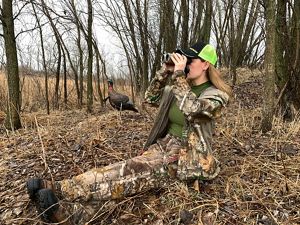
Bird-watching: Dr. J. Drew Lanham bird-watching at an agricultural research center run by Clemson University in nearby Pendleton, South Carolina. © Travis Dove
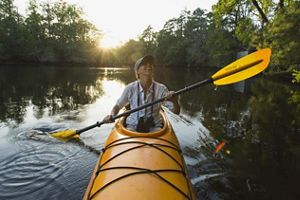
Black Mingo Creek: The Nature Conservancy's Winyah Bay-Pee Dee Program Director, Dr. Maria Whitehead, paddles out on Black Mingo Creek in search of swallow-tailed kites, South Carolina. Her family has owned a cabin on the creek for generations and Black Mingo is a major tributary to the Black River, one of the four rivers that make up Winyah Bay Basin in South Carolina. © Mac Stone
Outdoor Recreation: South Carolina offers a wide range of outdoor recreational activities that cater to various interests including wildlife viewing, hunting, fishing, and hiking. © Angie Gade/Unsplash
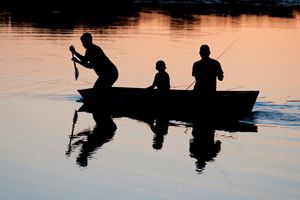
Gone Fishing: Fishing in South Carolina is a beloved pastime, offering abundant opportunities to catch a variety of fish in its scenic lakes, rivers, and coastal waters. © Jed Owen/Unsplash
Real Stories, Real Impact

Protecting the Future of Fish
In South Carolina, The Nature Conservancy is collecting data on fish reproduction that can help guide future ocean protection.

To Protect the Water, They Set Fires
Greenville, South Carolina, has some of the purest drinking water in the United States because it has always protected its watersheds.

Federal Policy Can Protect Coastlines and Culture
Tia Clark is bringing national attention to the state's shoreline through crabbing, and federal funding can ensure it stays protected.