


Throughout Oregon, The Nature Conservancy and our partners are advancing a vision where thriving ecosystems and resilient communities go hand in hand. From restoring the world’s largest coastal temperate rainforest to revitalizing salmon populations in the Columbia River and enhancing collaboration with Tribal Nations and local communities, these efforts are rooted in respect for Indigenous Knowledge and the connection between people, lands and waters. We envision a future where healthy forests, grasslands, rivers and estuaries sustain biodiversity, uphold Tribal sovereignty and empower communities to adapt to climate change—ensuring Oregon’s landscapes remain vibrant for generations to come.
Explore our programs to see how collaborative leadership and respect for traditional knowledge are driving lasting change for Oregon’s lands and waters.

Emerald Edge
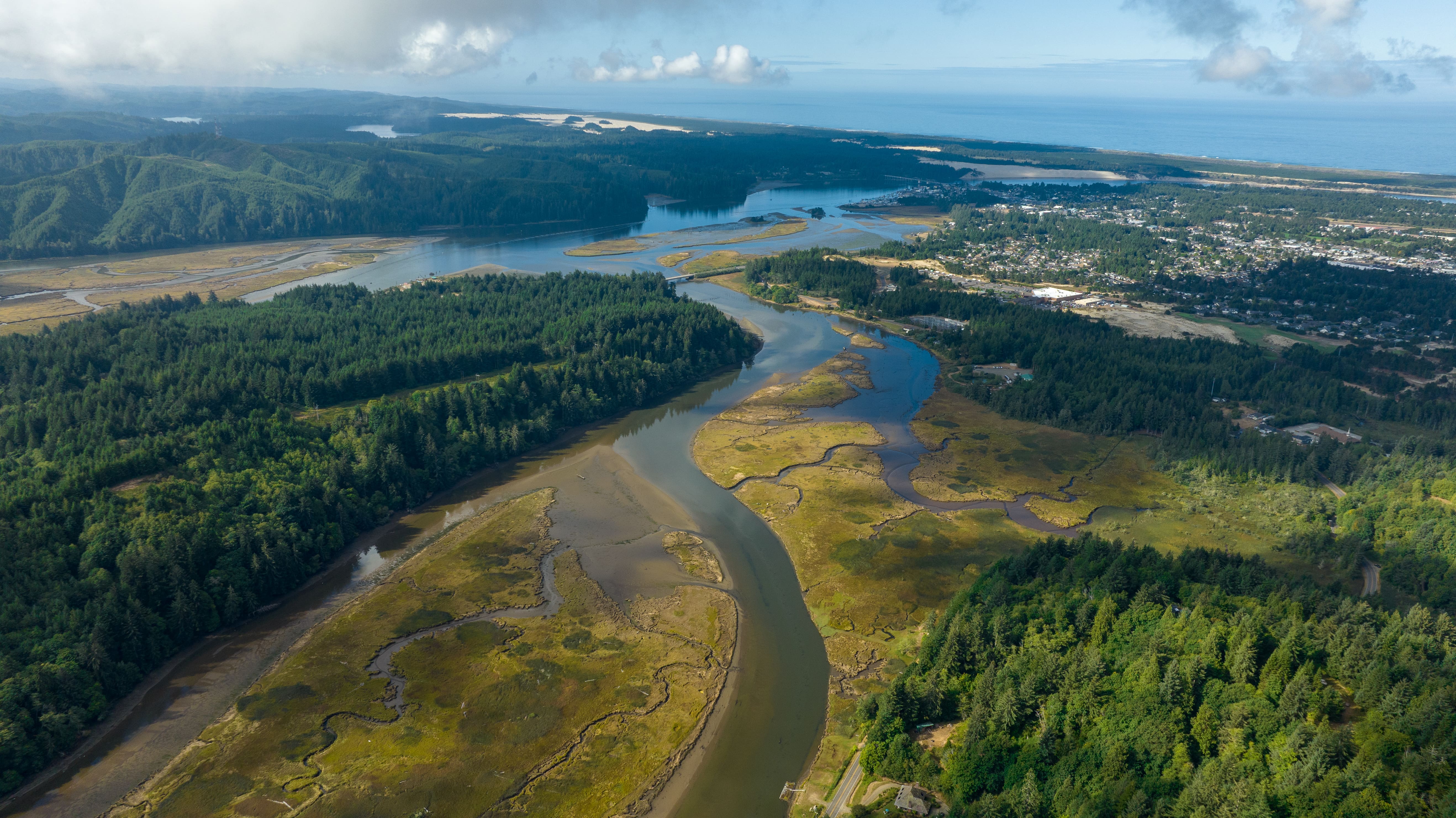
The lush forests and braided estuaries along Oregon’s coast are part of the world’s largest coastal temperate rainforest, known as the Emerald Edge.
For millennia, Tribal Nations have stewarded these lands and waters, honoring the deep connections between mountains, rivers and ocean. This interconnected system is vital for biodiversity and a powerful ally in curbing climate change by storing immense amounts of carbon. Equally important are the connections people have to these lands and resources, which their lives, livelihoods and cultures depend on.
TNC is partnering with Indigenous communities and local leaders to protect these vibrant habitats, maintain and create economic opportunities and help communities proactively adapt to climate change. We’re building on years of wetlands restoration to reverse habitat fragmentation and addressing climate impacts through kelp forest recovery, restorative aquaculture and improved forest management.
Leveraging Our Lands
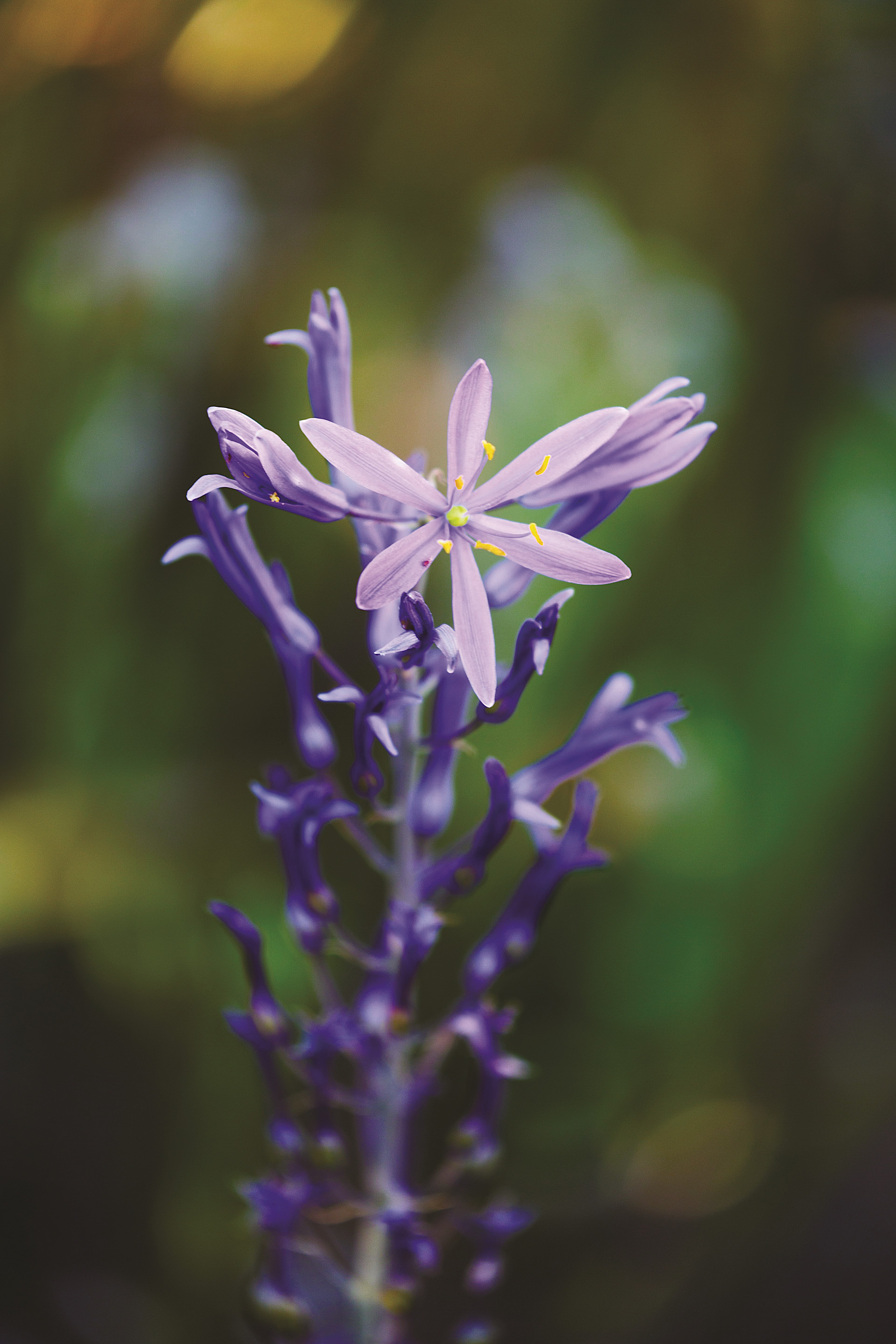
Since 1961, Oregonians have helped TNC protect almost 550,000 acres of special places, from Cascade Head to Zumwalt Prairie. These preserves and other protected areas provide vital habitat for biodiversity, connect our work to local communities, and create opportunities to learn from and inform land management practices that can be applied by TNC and our partners across Oregon and the West.
TNC is building on our legacy of protecting important landscapes, leveraging the places we steward to meet the climate and biodiversity challenges we face, and opening doors for people to connect with nature. Recognizing the legacy of Indigenous stewardship across Oregon’s lands, we are working in partnership with Tribes, when and where invited, to provide access for cultural and spiritual purposes and interweave Indigenous Knowledge into land management decisions.
Columbia Basin Salmon
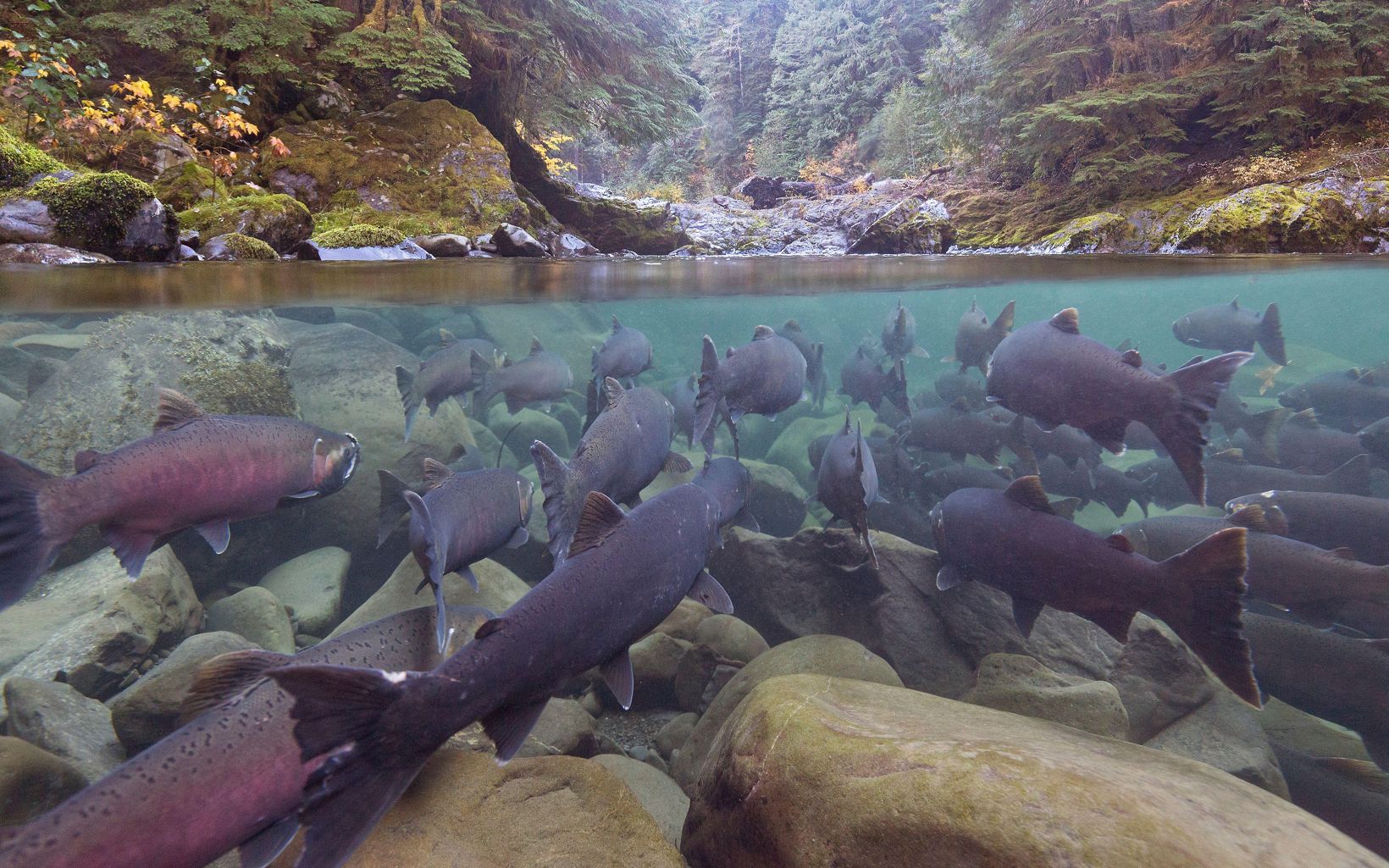
In the Pacific Northwest, salmon have sustained thriving Indigenous cultures and communities for millennia, and are inextricably linked to our wellbeing and economy, connecting and nourishing forests, rivers and ocean ecosystems. Despite their significance, salmon in the Columbia Basin are on the verge of extinction.
We are working with Tribal Nations who are leading recovery of healthy and abundant salmon populations that are essential for upholding Tribal treaty rights and food sovereignty, ecosystem health and economic benefits for the entire region. In Oregon, we are engaging Columbia Basin Tribes and applying our expertise in state and federal policy to facilitate salmon recovery and establish a roadmap for a just and responsible transition to renewable energy for Oregon and the Pacific Northwest region.
We Can’t Save Nature Without You
Sign up to receive monthly conservation news and updates from Oregon. Get a preview of Oregon's Nature News email.
Related Articles

Building Climate Resilience at Nehalem Bay
Learn how a small community completed a decades-long vision to protect nearly 20 acres of land known as the Sitka Wetlands Addition.

Science of Salmon
Restoring rivers and forests to sustain salmon, communities, and cultures across the Pacific Northwest.

Common Ground Between Grazing And Conservation
Conservation easements ensure sustainability on Oregon’s Zumwalt Prairie Preserve.