

On a cloudy November day, community members gathered at Shawnee Lookout Park to plant tree nuts of all shapes and sizes. From Ohio buckeyes to pin oaks, these nuts from all over the state were scattered throughout two sites.
This tree nut effort is a yearly Ohio Mitigation Program (OMP) initiative. Folks from around the state donate tree nuts and volunteers plant the nuts at two ongoing restoration sites. This year, Shawnee Lookout was one of the sites selected.
The planting is a part of the larger restoration project ongoing on at the Shawnee Lookout—a collaboration between Great Parks and the OMP at The Nature Conservancy (TNC) in Ohio.
Shawnee Lookout Park is a part of Hamilton County’s park system, known as Great Parks, and is being restored back to its roots by the Ohio Mitigation Team at TNC in Ohio.
The park has changed drastically throughout the last two centuries. Over time, the soils were transformed from forests and wetlands into agricultural land—and more recently a golf course. It is now part of Hamilton County’s park system, known as Great Parks, and is being restored back to its roots.
TNC in Ohio started planning the restoration of this important historical site in 2021.
“Shawnee Lookout was continuously occupied by indigenous people for 10,000 years—and most recently the Miami and Shawnee Tribes. Throughout the planning process, we have been working with the Miami Tribe to ensure the restoration design is thoughtful and respectful of the cultural history here,” says Devin Schenk, director of OMP at TNC in Ohio.
Working with partners, the team's vision for this project is to restore 84 acres of habitat, while improving recreational opportunities for the park visitors.


“As part of the construction of the golf course, most of the streams were put underground. They were put in pipes—there's no ecological value to a piped stream. No wildlife can use it. It's not a water source. There's no habitat,” says Schenk.
The work has involved removing the pipes and restoring the stream. Approximately 1.25 miles of buried stream were uncovered throughout this process.
Additionally, 0.9 miles of the stream were reconnected to its floodplain, which both improves habitat and water quality.
A final step of this project involved leading the community in planting native tree nuts throughout the site. Volunteers also received a tour of the restoration work.
“The tree seed planting was a fun effort that connects with the community and allows us to utilize seeds that can be harvested from everybody's yards," says Schenk.
Ben Silliman, a site selection specialist for OMP managing the project, shares the importance of the nuts for reestablishing the forest.
“These nuts were collected locally and were planted by seed. That helps them become established onsite and become healthy trees,” said Silliman.
Planting with the community
A final step of this project involved leading the community in planting native tree nuts throughout the site. Volunteers also received a tour of the restoration work.
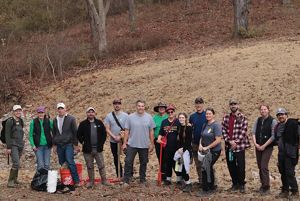
Volunteers at Shawnee Lookout: A group photo of volunteers planting tree nuts at Shawnee Lookout Park in November 2025. © Marlee Stollar/TNC
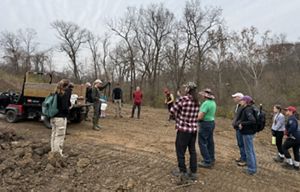
Learning how to plant the nuts: Liss Whiting, land protection and outreach specialist at TNC in Ohio, explaining how to plant tree nuts at Shawnee Lookout Park in November 2025. © Marlee Stollar/TNC
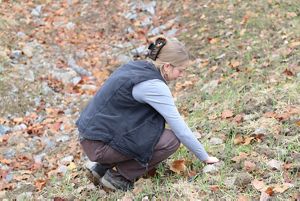
Planting the nuts: Ashley Yockey, community engagement specialist for TNC in Ohio, helps volunteers plant tree nuts at Shawnee Lookout Park. © Marlee Stollar/TNC
Previously a golf course: Shawnee Lookout was recently a golf course. It is now part of Hamilton County’s park system and being restored by TNC in Ohio. © Marlee Stollar/TNC
This spring, OMP will finish the reforesting effort by planting more than 30,000 additional trees. The reforestation will enhance habitat for birds and other wildlife, providing shade for the stream and associated aquatic and riparian habitats.
In the near future, this project will also work with the Miami and Shawnee Tribes, as well as Great Parks, to plant pawpaws on the site. The pawpaw is an important native understory tree that produces a large, edible fruit that is loved by wildlife and humans.
“There is a pawpaw grove in the nearby forest that is super productive, likely because ancient agroforestry was practiced here by the native population. The best producing individuals would have been selected, moved around, and planted in maintained woodlands. We want to be respectful of these ancient genetics and replant offspring from this existing grove,” says Schenk.
Pawpaw seeds will be harvested from the nearby grove, and then Great Parks will grow the seed into saplings, which will then be planted throughout the site.
The partnership with Great Parks has been the key to establishing these local relationships.
“It’s been a win-win situation, our mitigation program bringing in the funding and Great Parks’ local expertise to do the work. We are all really excited about it,” says Schenk.
The project is expected to conclude in the fall of this year, with maintenance and monitoring ongoing.
With your help we have accomplished many goals toward a clean, healthy, thriving Ohio.
There is still more to do, but we can't do it without you.
Explore our Work in Ohio

Ohio Stream and Wetland In-Lieu Fee Mitigation Program
The Nature Conservancy’s Ohio Stream and Wetland In-Lieu Fee Mitigation Program (OMP) restores and protects streams and wetlands for future generations.

Sustainable Agriculture in Ohio
Learn how The Nature Conservancy is working to safeguard Ohio’s food security and abundant water supplies.

Securing Clean Water for Ohio
From the shores of Lake Erie to the banks of the Ohio River, water sustains us. Learn how TNC is helping safeguard clean water so people and nature can thrive.