

Pickerel Creek Wildlife Area TNC is leveraging partnerships to restore the dynamic Sandusky Bay ecosystem. © ODNR
Where the waters of Sandusky Bay meet the shores, large yellow bulldozers sound their back-up alarms as they rumble across the muddy ground. Backhoes dig up and shift soil, recontouring the land. At first glance, it looks like any other construction site, as soil is prodded and moved around.
But this isn’t construction—this is large scale habitat restoration. And to understand why it’s happening we need to go back a few hundred years.

An Interconnected and Thriving Past
Located where the mouth of the Sandusky River connects to the waters of Lake Erie, Sandusky Bay is one of the most important bodies of water in northern Ohio with one of the largest ranges of coastal wetlands in the Lake Erie basin.
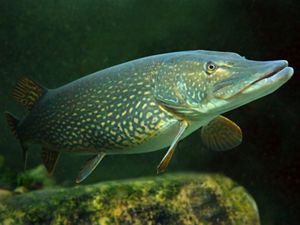
Before European colonization, it was a thriving, interconnected wetland matrix home to diverse wildlife and native vegetation. While much biodiversity has been lost, pockets of high-quality habitat still stand and continue to serve as critical stopover points for birds and other wildlife. Fish, such as northern pike, use the shallow wetlands that remain as nursery and spawning grounds, with vegetation providing shelter and plenty of food for young, newly hatched fish, such as insects and small crustaceans.
In fact, Sandusky Bay was part of the Great Black Swamp—a deeply interconnected network of wetlands, waterways, dense forests and grasslands that stretched to northeast Indiana. But, in the 19th century, European settlers began to drain and transform the Great Black Swamp into rich and productive agricultural land which had lasting, unintended consequences for the health of Lake Erie.
In the spring and fall, a cacophony of birdsong carries across the shorelines, as migratory songbirds and waterfowl stop at the waters and marshes to rest and refuel on their journeys. Indigenous Peoples fished the healthy, productive waters and foraged the plants growing throughout the open bay.
Wildlife Need Wetlands
Sandusky Bay coastal wetlands and nearshore areas around once supported diverse wildlife and native plants. While the isolated wetlands around Sandusky Bay today still support migratory birds and other wildlife, their populations have greatly declined due to the fragmented state of the land around the Bay.
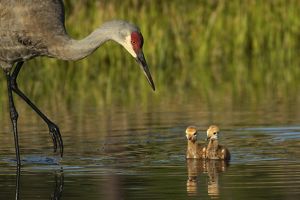

Sandhill Cranes: These large migratory birds depend on large wetland areas for food and shelter and are threatened in Ohio due to lack of suitable habitat. © Roxana Walters/TNC Photo Contest 2019
Northern Pike: Fish, such as northern pike, depend on the shallow wetlands connected to Sandusky Bay for their spawning and nursery grounds. © abadonian/Getty Images
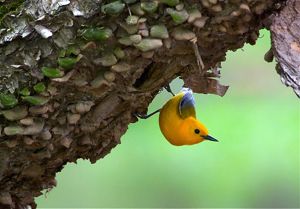
Prothonotary Warbler: These warblers breed in wooded swamps, flooded bottomland forests and wooded areas near streams and lakes. © Steve S. Meyer
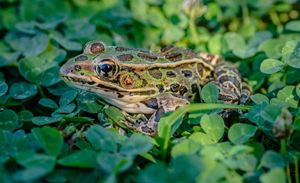
Northern Leopard Frog: Amphibians, like the northern leopard frog, depend on wetlands to survive. © Kent Mason
Beaver: Like other wildlife, beaver depend on access to wetlands and other bodies of water to survive. © Ken Miracle
The Bay Today
Today, Sandusky Bay looks far different from those earlier times, altered significantly by the dense population, as well as various industries and agriculture in its surrounding areas. As the land was settled and developed, hydrology of the area was altered with extensive installation of agricultural drainage tile and rerouting of tributaries. Shorelines were largely hardened by earthen and rock dikes, including around coastal wetlands, disrupting the balance of the Bay’s ecosystem. Instead of waves dissipating on gentle shores, the dikes ricochet wave energy back into the Bay and churn up sediment making the waters turbid like chocolate milk, and inhibiting light penetration into the water column which prevents growth of native vegetation.
All of these factors together exacerbate the annual harmful algal blooms that erupt throughout the Western Lake Erie Basin during the warmer months. As a result of hydrologic modifications like channelized tributaries and conversion of wetlands to agriculture or isolation behind dikes, fertilizers and sediment flow unhindered from upstream watersheds down into Sandusky Bay, creating the perfect conditions for algae growth.
These landscape changes have reduced suitable habitat for all kinds of wildlife, including migratory birds and shorebirds. While this area remains a birding hotspot, abundance and diversity has declined.

Restoration at Scale
TNC is working with partners to change the course of the Sandusky Bay ecosystem. Thanks to the launch of the Sandusky Bay Initiative, a large-scale vision is in process to restore ecosystem function and habitat in the Bay. This work is made possible through funding from H2Ohio, the National Oceanic and Atmospheric Administration, the Great Lakes Restoration Initiative and private donations, as well as numerous partners and stakeholders.
Four projects have been completed as part of the initiative, and extensive research informed engineering plans for an additional 12 projects. These projects are innovative due to how they mimic nature—using smaller stone and gentle slopes to reduce wave energy and maximize habitat benefits while still protecting the shoreline. The restored wetlands are accessible to fish and wildlife for nursery and foraging habitat, and vegetation provides stability and nutrient reduction benefits.


One of the first projects, the Pickerel Creek Riparian project at Ohio Department of Natural Resources’ Pickerel Creek Wildlife Area, reconnected the creek to its floodplain and restored 44 acres of wetland habitat. It was completed in 2023. Nearby, the Raccoon Creek Riparian project was finished in 2024 by restoring more than four acres of coastal wetlands.
Then in the fall of 2025, another project down the shoreline, Pickerel Creek West, significantly scaled up this approach by eight times through the completion of more than 32 acres. The most recent project, Pickerel Creek East, marks another nature-based shoreline project completed and includes a boat dock, staging area and barge access.
These 12 projects are anticipated to restore 1,000 acres of wetlands and 11,000 linear feet of nature-based shoreline, which would improve water quality by reducing total phosphorus loading by approximately 2,000 pounds per year.
Strategically restoring natural infrastructure is critical work for Lake Erie. We can’t put things back to exactly the way they were, but we can restore habitat and improve Sandusky Bay for nature and people.
TNC in Ohio looks forward to continuing to ensure the quality of these natural resources. “We can’t put things back exactly the way they were, but we can restore critical habitat and improve Sandusky Bay,” says Alexis McCarter, TNC in Ohio natural infrastructure director.
What’s more, this work contributes directly to TNC’s 2030 goals for conserving rivers and protecting people from climate change. By making Sandusky Bay more resilient through restoration and nature-based solutions, there will be cascading effects on the broader Lake Erie and Great Lakes systems, ultimately helping create places where people and nature thrive.

Explore More Stories

Securing Clean Water for Ohio
From the shores of Lake Erie to the banks of the Ohio River, water sustains us. Learn how TNC is helping safeguard clean water so people and nature can thrive.

Wet and Wild: The Weird, Wondrous and Wicked Cool Creatures in Midwest Wetlands
Wetlands support an incredible diversity of life. Yet they’re in danger: in some states, as much as 90% of wetlands have been destroyed.

Climate Change in the Great Lakes
Climate change is taking a significant toll on the Great Lakes region. Learn how The Nature Conservancy is working to secure a resilient future in this region.