

Treating Invasives and Monitoring Wildlife
Restoring 600 acres of wetlands in the Lower Cuyahoga

In Lower Cuyahoga River area, The Nature Conservancy (TNC) in Ohio is working with partners to restore 600 acres of wetlands. This work, funded by a Great Lakes Fish and Wildlife Restoration Act grant, focuses on treating invasive species, monitoring wildlife and including community members in the project.
To the untrained eye, invasive plant species are typically not so easy to spot, but they have a significant impact on the habitat in the area.
“In order for wetlands to improve water quality, you have to remove invasive species and let native species come in to do the work,” says Emily Finch, Crooked River Cooperative Weed Management Area Coordinator for TNC Ohio and the project lead for this work.
In the Lower Cuyahoga River area, Gorge Dam to Lake Erie is considered a Great Lakes Environmental Protection Agency (EPA) Area of Concern (AOC), which means the area’s habitat has experienced environmental degradation and is need in of restoration.
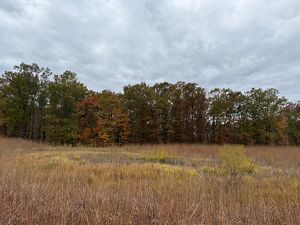
However, throughout the watershed, restoration work is improving this habitat. One specific site, Krejci Dump, was a trash salvage yard and waste disposal facility from 1948 to 1980.
Today, this area has been completely converted to wetlands. TNC Ohio has played a role in managing invasive species here, which is essential to maintaining restoration work.
“The Cuyahoga area is getting closer and closer to having its EPA area of concern status removed. But part of that work is making sure that the wetlands are doing their job,” says Finch.
The work for this grant spans across the Lower Cuyahoga area, including CVNP, Cleveland Metroparks, Summit Metro Parks, Portage Park District, Division of Natural Areas and Preserves (DNAP) state nature preserves, and TNC Ohio preserves.


How We Treat Invasive Species
Across the watershed, treating invasive species is a significant way the area can continue to improve habitat.
One major invasive found here is phragmites—one of the most prominent wetland invasive species in Northeast Ohio.
“If it is left untreated, it will take over wetlands—draining most of the water and outcompeting all of the native wetland plants. We like to jump in as early as we can to ensure the problem stays manageable,” says Finch.
In the CVNP wetlands, phragmites was treated by hand wicking—applying herbicide by hand directly to a single plant—and backpack spraying herbicide.
At one field in particular, managed with Cleveland Metroparks, there is a monoculture invasion of phragmites. This means the plant is one of the only plants in the wetland area—and it is all that can be seen for acres.
The area has been treated with herbicide, but there are additional plans to ensure this plant does not come back.
“We have done a big push of herbicide treatment to treat as much invasion as we can—then Cleveland Metroparks will be able to flood the area to prevent it from resprouting. We are trying a variety of techniques and working with partners to make sure best management practices for the environment are followed,” says Finch.
A 25-acre field, managed with Cleveland Metroparks, with a monoculture invasion of phragmites. This means the plant is one of the only plants in the wetland area—and it is all that can be seen for acres.
Quote: Emily Finch

“In order for wetlands to improve water quality, you have to remove invasive species and let native species come in to do the work."
Monitoring Wildlife After Restoration Work
By treating invasives, the wetland habitat is improved, which brings new wildlife to the area.
“We have ongoing monitoring for us the scientists, but also for community members to be able to get involved. We want people to see what things change and improve as we do the work—from more species moving in to more birds singing in a space,” says Finch.
One way this monitoring is taking place is through autonomous recording units, which record various wildlife that make noises.
“We started off listening to frog sounds, but we have switched over to bird sounds because of migration season. We work with the National Park Service to collect and analyze the data, so we know exactly what is changing with our restoration work here,” says Finch.
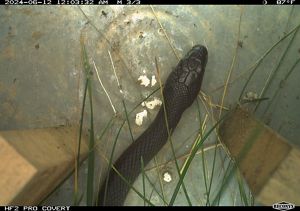
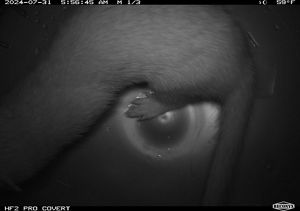
The AHDriFT camera units also help to monitor wildlife’s response to the work here. Five cameras are set up around the park.
The animals are guided to the camera by metal sheeting that leads to the bucket with a camera on top.
“We are working with a community engagement platform called Zooniverse to have folks look at the pictures and help us identify what’s in the bucket,” says Finch.
While the site is still in beta testing, once finished, community members or national park visitors can help label wildlife photos.


Community Photo Stations
In some areas of the park, photo stations also allow community members or visitors to set up their phone camera to capture sections of the park.
“It creates a time lapse compilation that shows the restoration work over time,” says Finch.
The platform—Chronolog—is used throughout Ohio to monitor restoration work. It is just one tool to engage the community.
With tools like Chronolog and Zooniverse, the community can be a part of TNC restoration work and follow the progress of each project throughout the park.

In some areas of the park, photo stations also allow community members or visitors to set up their phone camera to capture sections of the park.
Restoration Across the Lower Cuyahoga
This 600-acre wetland project in the Lower Cuyahoga is thanks to a Great Lake Fish and Wildlife Restoration Act Grant. These acres are across CVNP, Cleveland Metroparks, Summit Metro Parks, Portage Park District, Division of Natural Areas and Preserves (DNAP) state nature preserves and TNC preserves.
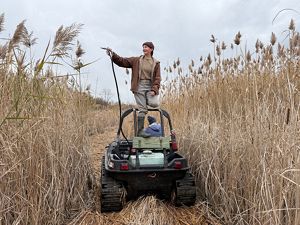
Spraying Invasives: Lydia Stephens, Field Staff for TNC Ohio, demonstrating invasive species spraying treatment with an Argo—an amphibious ATV. © Marlee Stollar/TNC
Monitoring Wildlife : This rat snake was captured by an AHDriFT camera at one of our CVNP restoration sites. © Emily Finch and Cuyahoga National Park
Wetland Restoration: Krejci Dump, a trash salvage yard and waste disposal facility from 1948-1980, has now been converted back to wetlands. TNC Ohio has played a role in managing invasive species. © Marlee Stollar/TNC
Monitoring Wildlife : An AHDriFT camera unit captured a weasel at one of the wetland restoration sites. © Emily Finch and Cuyahoga National Park
With your help we have accomplished many goals toward a clean, healthy, thriving Ohio.
There is still more to do, but we can't do it without you.
Explore our Work in Ohio

Ohio Stream and Wetland In-Lieu Fee Mitigation Program
The Nature Conservancy’s Ohio Stream and Wetland In-Lieu Fee Mitigation Program (OMP) restores and protects streams and wetlands for future generations.

Sustainable Agriculture in Ohio
Learn how The Nature Conservancy is working to safeguard Ohio’s food security and abundant water supplies.

Securing Clean Water for Ohio
From the shores of Lake Erie to the banks of the Ohio River, water sustains us. Learn how TNC is helping safeguard clean water so people and nature can thrive.