
Protecting New York’s Family Forests
Learn how the Family Forest Carbon Program helps landowners and nature—and find out if your land qualifies for enrollment and payment.

In the Taconic Mountains of Rensselaer County, New York, Spring Lake sits at the center of 300 acres of woodlands, with 32 private camps surrounding the lake. The lake has hosted misty morning strolls, sunny afternoon picnics and evening fishing rambles since the 1940s. In 2023, it became one of the first properties in New York to enroll in the Family Forest Carbon Program, a program that pays landowners to keep forests standing and healthy while offering expert guidance and long-term stewardship support.

Program Snapshot
The Family Forest Carbon Program provides financial and technical resources to help landowners in 20 states improve the health and value of their woodlands.
As costs and pressures grow, new solutions can keep forests healthy
Long-time resident Ed Skorupski kick-started the enrollment process. His relationship with Spring Lake began with an invitation to visit from a friend—a trip he still remembers for one simple reason:
“There’s always a breeze,” says Ed. Thanks to the elevation and the forest that surrounds the lake, “it’s always 10 degrees cooler here than our home near Albany.”

Forests have been proven to help lower local temperatures, provide habitat for wildlife and offer a range of recreation opportunities. Now, through offerings like the Family Forest Carbon Program, they can also provide new income for landowners.
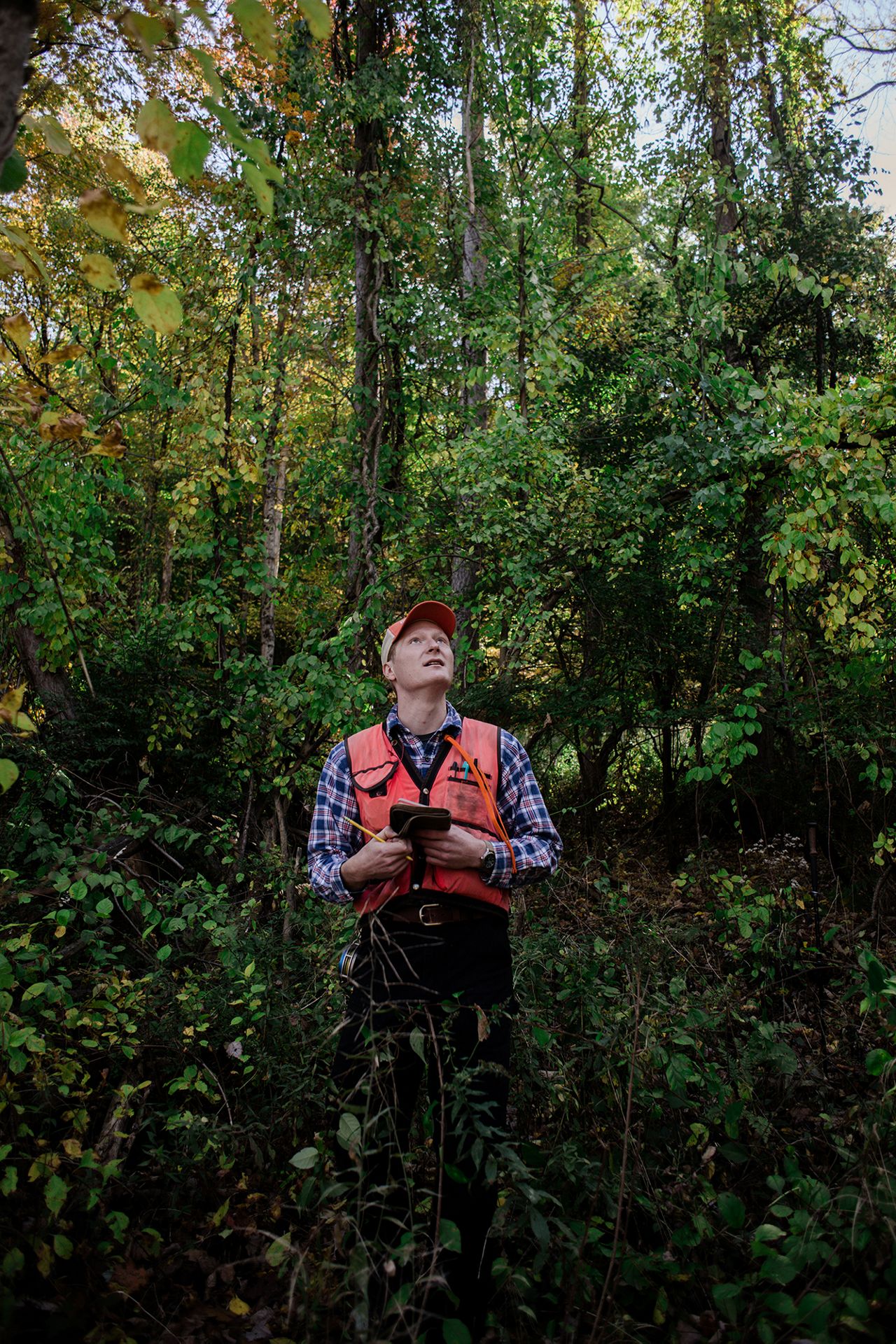
“We know forests offer many benefits to landowners and local communities,” says Nature Conservancy Forester Jack Lampman. “Landowners often navigate short-term financial needs alongside long-term stewardship goals, and without access to trusted forestry expertise, it can be challenging to achieve both.”
Rising costs—from property taxes, road maintenance, personal expenses and more—combined with mounting pressures like invasive pests, overabundant deer and extreme weather create a perfect storm of social, economic and environmental factors that jeopardize the health and existence of family forests in New York and across the nation.
To support landowners facing these issues, The Nature Conservancy and the American Forest Foundation created the Family Forest Carbon Program. Landowners with at least 30 acres of qualifying forest can enroll for a 20-year period. Participating landowners receive an annual, per-acre payment for keeping their woodland intact. Participants also gain access to experts like Lampman, who help create and implement free, site-specific management plans for their woodlands.
Does your land qualify
for the Family Forest Carbon Program?
At a Glance
The compensation for enrolling in the Family Forest Carbon Program generally ranges from $10-$15 per acre per year over the 20-year enrollment term.
The program was appealing to Spring Lake’s resident association, says Ed. “Spring Lake was incorporated in 1972 as a land holding company. That’s how the lands were accumulated. Now we’ve evolved to more of a stewardship corporation.”
In the past, the association relied on timber harvesting to generate income when funds were needed. When the community faced costly road repairs a few years ago, that strategy was not viable. “We were told that lumber prices were low,” says Ed. “So that’s when I started to think about alternatives.”
A community’s decision leads to a healthier forest
Ed heard about the Family Forest Carbon Program from a friend who runs a local land trust. Momentum for the idea picked up when fellow Spring Lake resident Dana Cusimano got involved.
With hard-earned savings her Depression-era great-grandparents set aside so their children could grow up in nature, Dana’s grandparents—a school principal and English teacher—purchased land at Spring Lake. Dana spent her childhood summers there. “I learned how to sail a boat before I knew how to drive,” she says. Today, her grandchildren are exploring the same woods and waters.
Ed and Dana invited representatives from the Family Forest Carbon Program to evaluate Spring Lake’s forest, and the visit revealed that 154 acres were eligible for enrollment. Ed and Dana were on board.
“Our ultimate goal is to protect the lake,” says Dana. “This program provides a source of income that allows us to keep control of our forest, which in turn keeps our lake healthy and clean. It was a perfect match.”
The next step: get all 32 families to agree to enroll.
“Dana was the one who presented at the shareholders meeting—she's a very convincing person,” Ed laughs. “It was accepted almost unanimously.”

Since Spring Lake enrolled in the Family Forest Carbon Program, Jack has gotten to know the people and the property and drafted a management plan to guide the care and stewardship of the forest. “Overall, the Spring Lake forest is in good shape, and we aim to steward the land to support its long-term health, including ongoing monitoring for potential pest threats such as hemlock woolly adelgid.”
Did You Know?
Private owners in the United States hold and manage more acres of woodland than all other ownership groups, including the federal government. In New York, families and individuals own about 57% of the state’s roughly 18 million acres of forestland—higher than the national total of nearly 40%.
“The Family Forest Carbon Program is a practical, accessible way for landowners to improve forest health while earning income without giving up control of their land or taking on complex administrative burdens,” says Chris Zimmerman, The Nature Conservancy’s forest restoration lead in New York.
Since the program began, more than 200,000 acres have been enrolled across 20 states, including more than 20,000 acres in New York.

“My Spring Lake family is like every family,” says Dana. “We have different views. But one thing we all agree on is the importance of retaining the timelessness of the lake. That is our common goal.”
While every landowner’s reason for participating is different, the Family Forest Carbon Program offers a shared path to protecting forests and all they provide. It’s one piece of a larger strategy led by The Nature Conservancy to advance natural climate solutions and ensure forests remain healthy and climate resilient for New Yorkers.
Alongside efforts to enroll landowners in programs like this, The Nature Conservancy is working to restore and reforest degraded lands, helping woodland owners implement climate-smart management practices and addressing threats like invasive species and extreme weather. Together, these efforts are helping keep New York’s forests standing, absorbing carbon and supporting wildlife and communities—adding up to a powerful, statewide impact for climate and nature.
More From New York

How Federal Funds are Helping Families Revive Their Forests
Forester Jack Lampman guides small-scale landowners who want healthier forests, all thanks to the Inflation Reduction Act.

The Seedling Solution
The Nature Conservancy has launched a first-of-its-kind Nursery Incubation Program to help restore 1.7 million acres with 680 million trees by 2040 in New York.

Climate Resilience Grant Program
Supporting New York-based organizations, municipalities and State and Federally Recognized Tribal Nations, the Climate Resilience Grant Program provides grants to fight climate change.