
Mississippi Conservation News
Read about recent accomplishments from around the Magnolia State.

Thanks for visiting our conservation newsroom. We hope you’ll visit often to stay informed about conservation projects and big wins that we are reporting from around Mississippi!
August 15, 2026
TNC's Mississippi nature preserves take part in Bat Blitz.
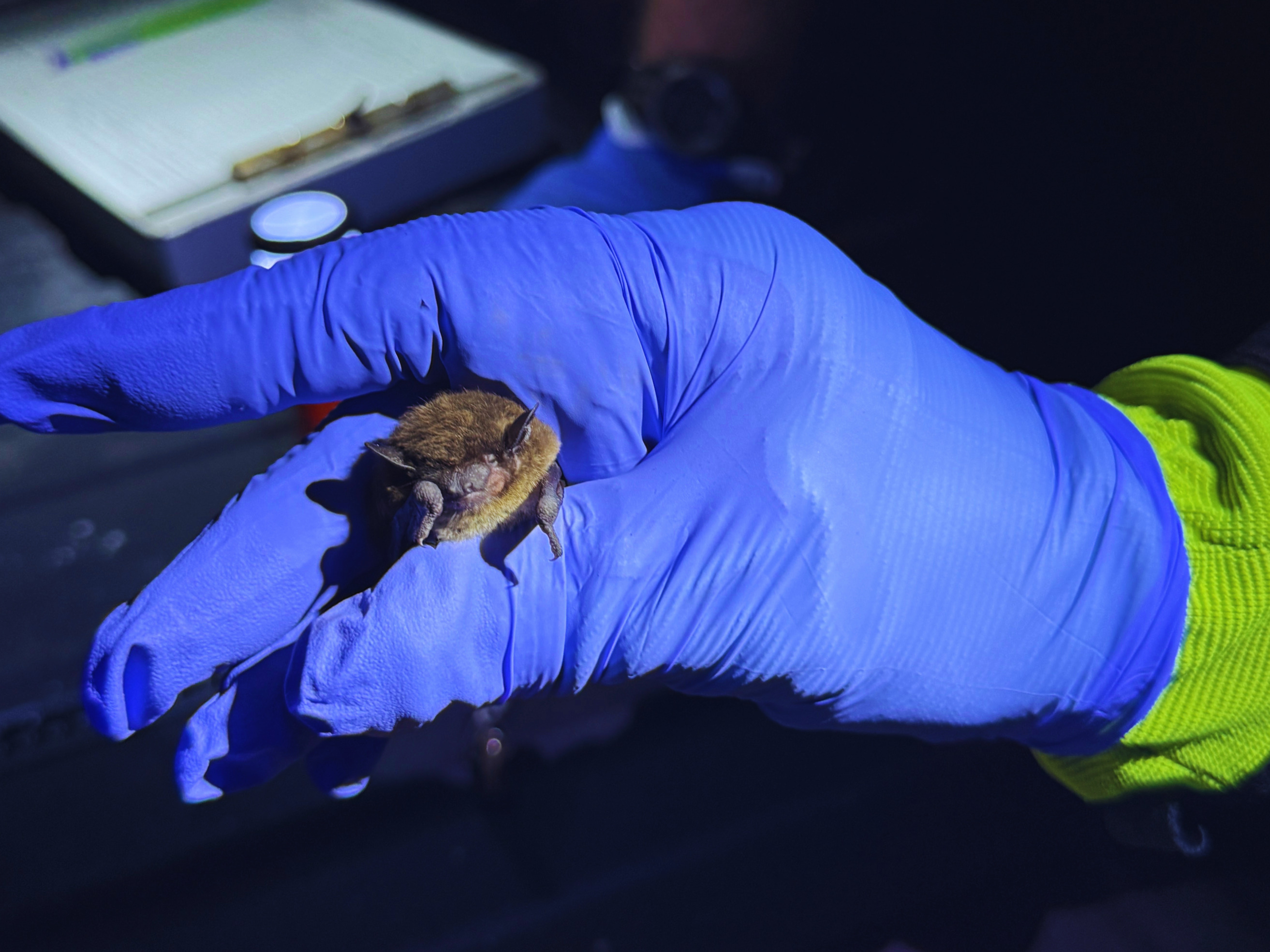
Three Nature Conservancy preserves in Mississippi played a key role in the Southeastern Bat Diversity Network’s Bat Blitz, an intensive survey to document bat species in the region. Hosted by the Mississippi Bat Working Group, biologists, students and conservation partners fanned out across 39 survey sites in 10 counties, including TNC’s Charles M. Deaton Preserve, Robbie Doak Fisher Preserve and Herman Murrah Preserve. The survey, which took place over three nights in August, captured 255 bats.
The effort brought together 66 participants from 19 states, representing universities, state and federal agencies, and private institutions. Katelin Cross, mammalogist with the Mississippi Department of Wildlife, Fisheries and Parks, and an organizer of the event, answered questions about the Bat Blitz.
What was the purpose of the Bat Blitz research? It was to document bat species present in a region of the state where limited surveys had been conducted. Many of the properties that were surveyed had never had any mist net surveys conducted. In the case of TNC's preserves, there were surveys conducted in 2009, but no bats were captured during that survey.
How many people participated at TNC’s preserves? We had five teams survey the preserves over the three nights. Surveys were led by staff from the U.S. Fish and Wildlife Service, Mississippi Department of Wildlife, Fisheries and Parks, Mississippi State University and Copperhead Environmental Consulting, Inc. A total of 18 people conducted surveys on the preserves.
What bats were you specifically hoping to find? Any bat species would have been a joy to find. We were hoping to find the federally endangered northern long-eared bat. There have been recent observations in areas close to the preserves, and the habitat on the preserves is ideal for the species.
How many bats did you find? There was a total of nine bat species captured: two Seminole bats, one big brown, five evening bats and one southeastern myotis. Southeastern myotis are a Species of Greatest Conservation Need in Mississippi.
Where you surprised by anything you saw at TNC's preserves or during this Bat Blitz? The area had been recently flooded and then went through a drought. Unfortunately, that did have a presumed negative effect on insect activity during our blitz. With the low insect activity, there were not many bats flying in the area. I was happy to see the gopher tortoises on the preserves. I was also happy to see the bottomland hardwoods, which is an invaluable habitat to many wildlife species including bats. It is not a commonly found habitat within the pine belt.
August 15, 2026
Scientists check in on gar at TNC's Loch Leven floodplain restoration project
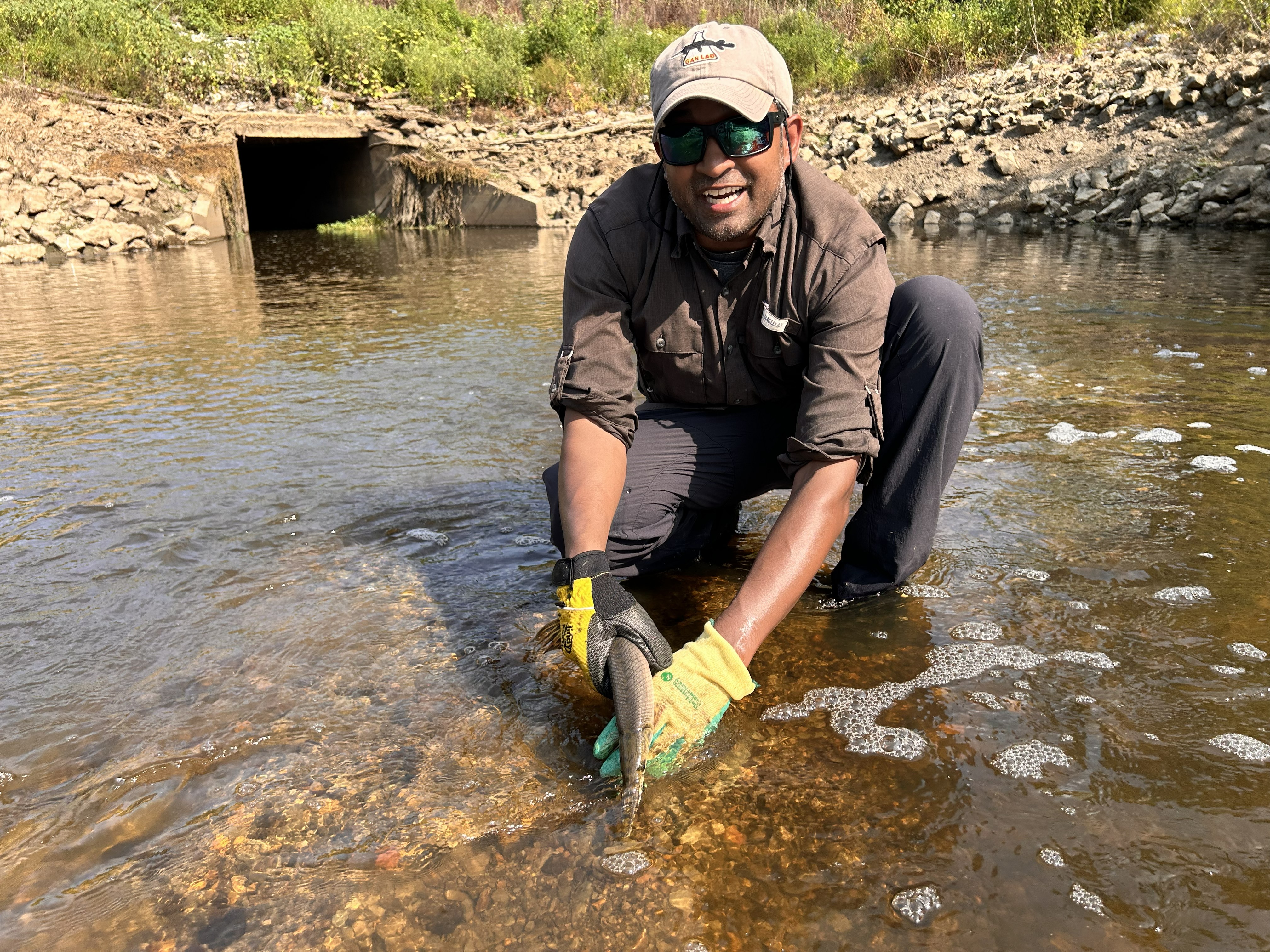
With its long, toothy snout and armored scales, alligator gars aren’t exactly cute, but gar expert Solomon David broke into a big grin when he spotted the baby fish wriggling in a cast net at Lake Mary in Mississippi. “We got one,” David said.
Lake Mary is an Oxbow lake that formed more than 250 years ago when it was cut off from the Mississippi River. The lake curves around Loch Leven, a 6,000-acre property in Wilkinson County, Miss., where The Nature Conservancy has reconnected this historic floodplain to the river.
David, a professor of aquatic ecology at the University of Minnesota, and graduate students Charles Vaughan, Gabby Gonzales and Luxi Feyereisen recently traveled to Loch Leven, searching for baby gar. The presence of juvenile fish is an indicator that the area’s flooded vegetation is conducive for spawning thanks to water flowing in from the river.
As principal investigator of Gar Lab, David studies gars, bowfins and other ancient fishes. Previously, he led gar research at Nicholls State University in Louisiana. He clearly loves these fish and can tick off fascinating facts that will make anyone with a passing interest in ecology want to join his class.
“So why are gars so cool? They’re super adapted to a whole bunch of environments,” David said. “They have a modified lung that allows them to go up to the surface and gulp air.”
Alligator gars require submerged terrestrial vegetation to spawn. When the floodplains inundate, they lay their eggs in that submerged vegetation. Then, when the water moves off the floodplain, the juvenile fish will go back into the river and continue to grow.
“They’re important for telling us how healthy our environment is,” David said. “They have value as predators bringing balance to the ecosystem and represent that floodplain connectivity that is important for fish, wildlife and people when we think of mitigating floods.”
That’s where TNC’s work has shown results. TNC, working with several partners, successfully restored the floodplain connectivity at Loch Leven by removing a portion of a ring levee that had cut Lake Mary off from the Mississippi River for more than a century. A box culvert inserted into the levee now allows water to enter and exit the property with the natural flood pulse of the river. Completed in 2019, the project ranks as the largest floodplain reconnection along the Lower Mississippi River.
Over the centuries, Loch Leven has been farmed for soybeans, cotton and other crops. Its restored wetlands also host tens of thousands of migratory birds each spring. And, as researchers confirmed this summer, juvenile gar fish are there as well. “That’s a good indication the floodplain is serving its purpose,” David said.


