
interstitialRedirectModalTitle

interstitialRedirectModalMessage

Bison browse in a misty field with flowers at Nachusa Grasslands.
Nachusa Grasslands Bison browse among the 700 species of plants that grow at Nachusa Grasslands in Illinois. © Dee Hudson/TNC

Stories in Illinois

Celebrating a Jewel of the Prairie State

Nachusa Grasslands Preserve in Illinois turns 40

From the wind-swept vantage of the visitor center at The Nature Conservancy’s Nachusa Grasslands Preserve near the communities of Franklin Grove, Dixon and Oregon, Illinois, one can see an undulating tapestry of restored tallgrass prairie, punctuated at times by a resident buffalo. It is heralded as a gem of tallgrass prairie restoration and offers a glimpse of Illinois’ past before the plow. It also exemplifies the future TNC is working toward, where the world’s grasslands are protected and restored, along with their biodiversity and climate-resilience functions.

Diverse wildflowers in a prairie.
Prairie Diversity at Nachusa The restored prairie at Nachusa Grasslands in Illinois features more than 700 native plant species. © Dee Hudson/The Nature Conservancy

Grasslands protect against flooding, help clean drinking water and can store massive amounts of carbon, among many other benefits, and yet only 5% of the world’s grasslands are protected. Conserving grasslands is part of The Nature Conservancy’s goal to conserve 1.6 billion acres of land by 2030.

Logo showing a bison, turtle, and purple flower with a large numeral 40 and the words "40 Years of Stewardship."

Celebrating its 40th anniversary in 2026, Nachusa Grasslands has grown to more than 4,000 acres. Its success is the story of a special community of scientists, volunteers and staff working to continuously improve habitat restoration. Their deep commitment to Nachusa Grasslands has shaped best practice across TNC and the broader conservation world.
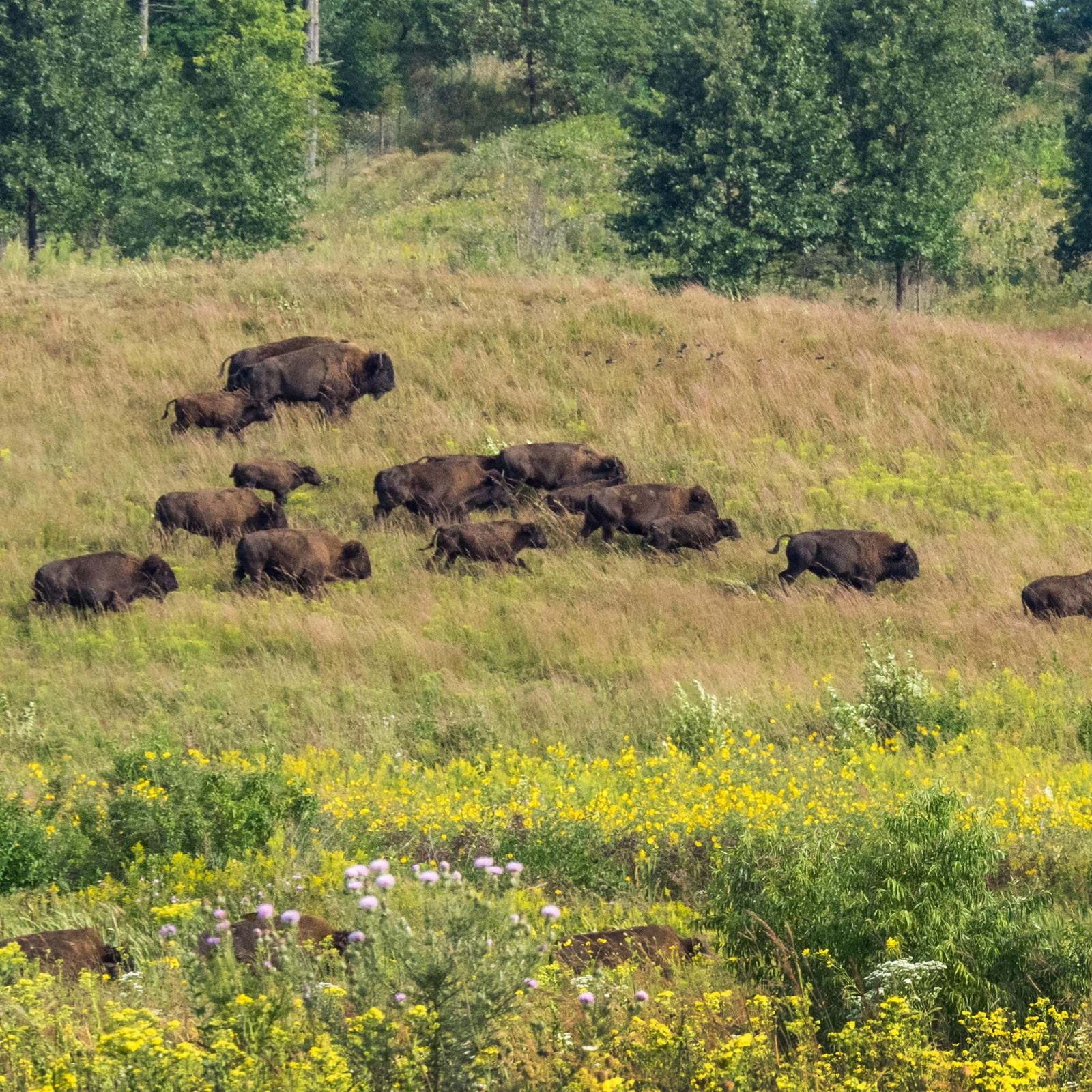
A bison herd runs on a grassy hill.
Where the Buffalo Roam Bison help shape prairies—grazing, trampling and creating habitat for other species. Wildlife corridors help them reach the landscapes where this natural stewardship thrives. © Charles Larry

A rare community

Nachusa Grasslands began in December 1986, when TNC was able to secure 397 acres in an area where remnant prairie had survived amid farm fields on isolated rocky hills. The area also had woodlands and wetlands. TNC determined it was a good spot to pursue a medium-scale landscape restoration that could support a diversity of animal species. This was one of the first such projects for TNC, which before had pursued conservation of small natural areas.

While large expanses of tallgrass prairie remain in the western United States, Nachusa Grasslands is one of the largest restorations of this habitat type on the eastern edge of its range. The diversity of species at Nachusa Grasslands makes it particularly valuable for research. It is home to 700 native plant species, 280 bee species and 245 bird species. There are community science monitoring programs on calling frogs and dragonflies.

In 2014, a herd of American buffalo was reintroduced at the site, one of the first conservation buffalo herds east of the Mississippi. Since 2014, the herd has grown to 100 head. Each year, some make the move from Nachusa Grasslands to grasslands stewarded by Native Nations and communities through a partnership between The Intertribal Buffalo Council and TNC. This work scales far beyond Nachusa Grasslands. Today, TNC operates a major buffalo restoration program that has transferred nearly 3,000 buffalo from 11 preserves to Native Nations and conservation herds since 2020.

The insights gained from research at Nachusa Grasslands have led to more than 100 scientific publications in peer-reviewed journals. Studies at Nachusa Grasslands have looked at everything from how to protect turtles during prescribed fire season, to how restoration practices like high-diversity plantings or the presence of bison affect soil ecology. “These studies truly integrate the forefront of scientific knowledge and land management action,” says Elizabeth Bach, TNC ecosystem restoration scientist at Nachusa Grasslands Preserve. The findings are applied on-site to further refine restoration practices and help inform best practice more broadly. “Nachusa Grasslands takes a long view of the work,” Bach says. “We know that much of what we do today will not yield results for many years, maybe not even in our lifetimes.”
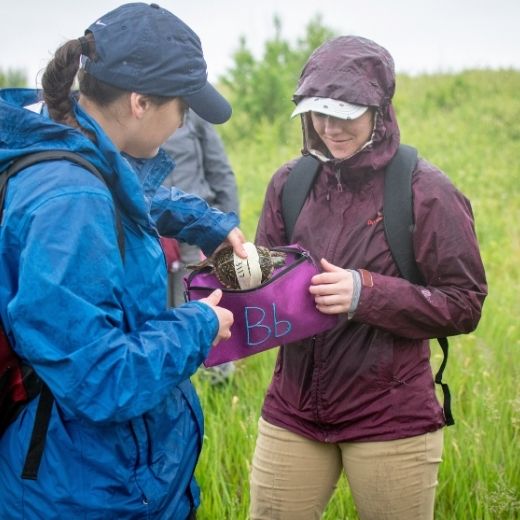
A person places a turtle into a purple pouch held by another person.
Retrieving a Turtle TNC partners with researchers from various institutions to study the diverse species at Nachusa Grasslands Preserve in Illinois. © Philip Rudolph/TNC

The power of collaboration

Nachusa Grasslands is widely recognized for its unique work culture, where staff, volunteers and scientists all work together in a close community. One area where Nachusa Grasslands is a consistent leader in the Midwest is in prescribed fire, with 2,225 acres burned in 2025. Nachusa Grasslands personnel also encourage and support prescribed fire efforts across Illinois through the Illinois Prescribed Fire Council.

Seasonal restoration technicians are central to the restoration work at Nachusa Grasslands. Many of these early-career professionals have gone on to jobs in conservation across TNC and other conservation agencies and organizations in the U.S.

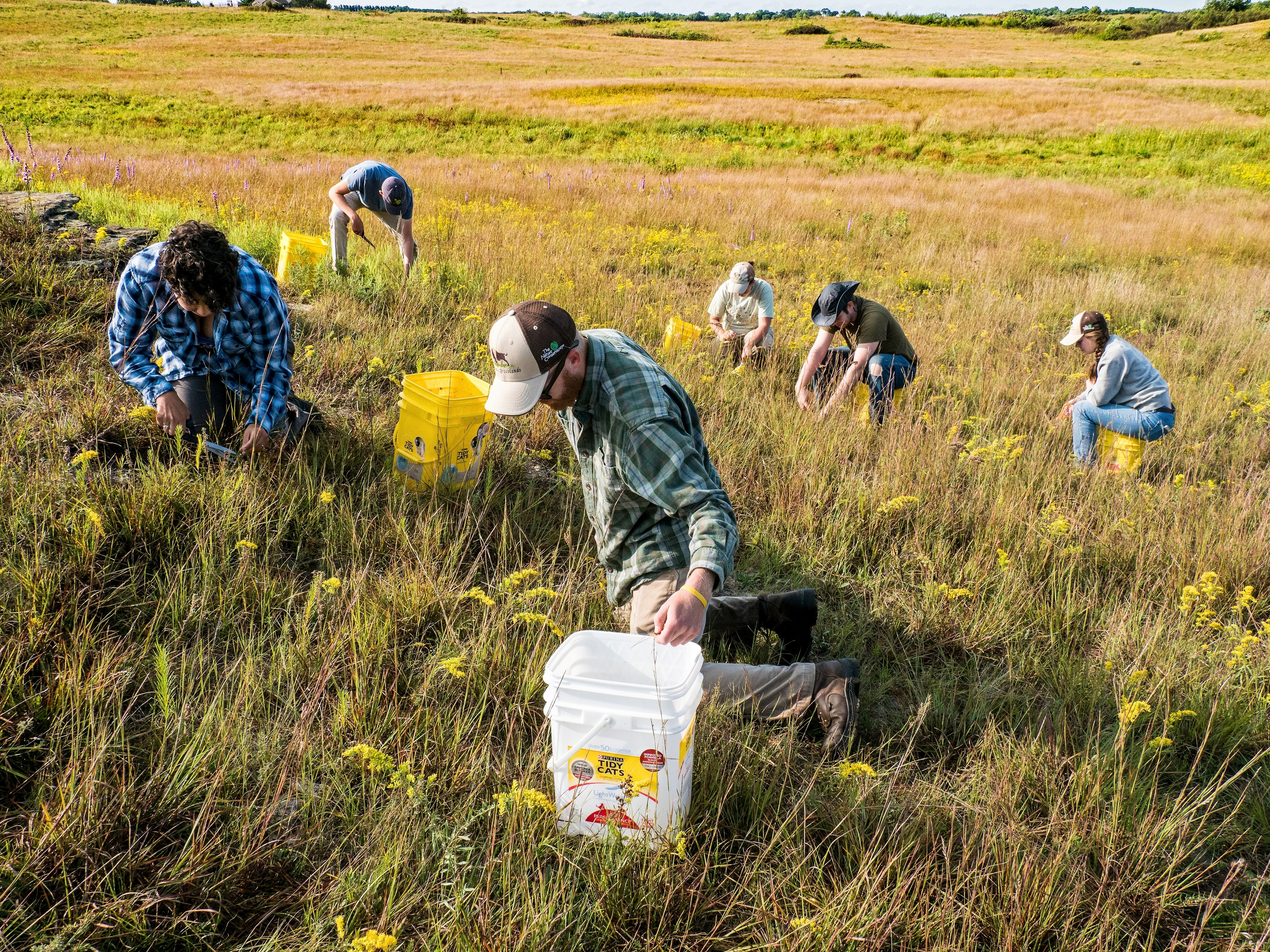
Friends of Nachusa Grasslands has been a vital partner over the years, helping to fund scientific research at the site through grants and through innumerable in-person hours involved in every aspect of restoration, including hand-picking native seed and invasive species removal. Volunteers receive the same level of training as the staff, and some become land stewards, dedicating themselves to leading the stewardship efforts on a particular unit at Nachusa Grasslands.

Six people collecting seeds into kitty litter buckets in a grassy field.
Seed Harvest Volunteers at Nachusa Grasslands in Illinois meticulously hand-pick native seed to use in restoration projects at the preserve. © Charles Larry

Creating new habitat

From the vantage of 40 years in, where Nachusa Grasslands is one of TNC’s most visited preserves, there is much to celebrate. Yet much work remains to be done. Less than one-tenth of 1% of Illinois’ native prairie remains. “The balance to strike is that we need enough habitat to care for the rare things that are here,” said Bill Kleiman, Nachusa Grasslands preserve manager, in an interview for PBS’ State of Change. “One-tenth of 1% of habitat is not enough. So, hence we’re here trying to create new habitat. The balance needs to be toward being good stewards of the land and creating enough habitat that species can continue to thrive.”

The Nature Conservancy’s work will continue at many different grasslands around the world, from Illinois to Mongolia’s Eastern Steppe, helping to protect these threatened ecosystems for future generations.