

Mississippi River Basin
The Mississippi River Basin is indispensable to our way of life—and it needs our help.

The Nature Conservancy’s Emiquon Preserve is a prime example of successful river floodplain restoration, providing habitat for hundreds of thousands of migratory birds and a nursery for fish and other species. Over the past 25 years, TNC has returned this former farmland back into the resource rich habitat it is today for nature and the surrounding communities. TNC is the latest in a long line of Emiquon caretakers—archaeologist’s estimate that it has supported more than 600 generations of civilization. Watch this video to learn more about the history of the Emiquon Preserve and TNC’s role in its conservation.
As he stands on the bank at TNC’s Emiquon Preserve in the heart of the Illinois River Valley, Michael Reuter takes in the thrum of life at dawn. “What a morning this is—it's just full of life,” Reuter, TNC’s Midwest division director, says. “The thriving energy of a place like this, all of the organisms, the plants, the animals, the bugs, the birds. The decisions that we make right here directly impact that for not only us, but future generations and for all the plants and animals that depend on it as well.
In 2000, TNC stepped up to a bold, risky purchase to restore the Emiquon Preserve into a productive wetland. It is one of the largest wetland restorations that have happened in the United States. The Emiquon Preserve is now a Ramsar-dedicated Wetland of International Significance.
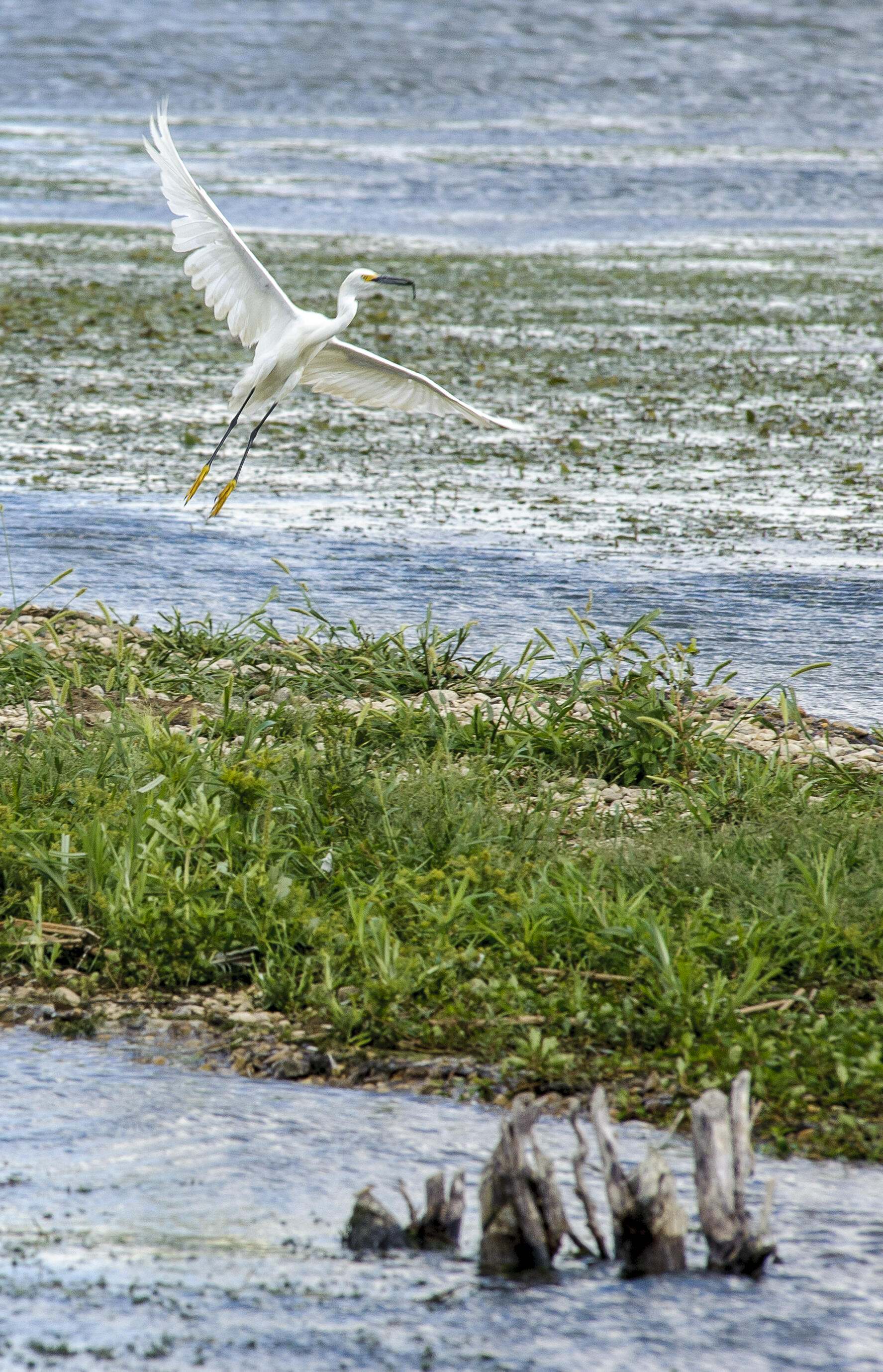
The area now known as the Emiquon Preserve has a long history. “Archeologists tell us that there's been something like 600 generations of human occupancy here because of the amazing abundance that was at this place,” says Randy Smith, TNC's Illinois River project director. “This site was once the most productive freshwater mussel stream in North America, the most productive inland commercial fishery in North America, and really important for migratory waterfowl.”
That abundance started to change around 1920 when a levee was built so that the land could be drained to grow corn and soybeans. Intensive farming continued for about 80 years until TNC was able to buy the 7,000 acre property in 2000. Restoration began in 2007, which involved extensive planning and planting trees and prairie species. “The biggest number one change was just to stop pumping the water out of the site and allowing the wetlands to return,” says Smith.
“The life started to come back immediately,” says Reuter. The dormant seed bank of aquatic vegetation sprouted once the water returned over time and Emiquon’s historic lakes, Thompson and Flag, came back. “We just saw this area begin to recover in ways that was surprising in terms of its speed, but also its quality.”
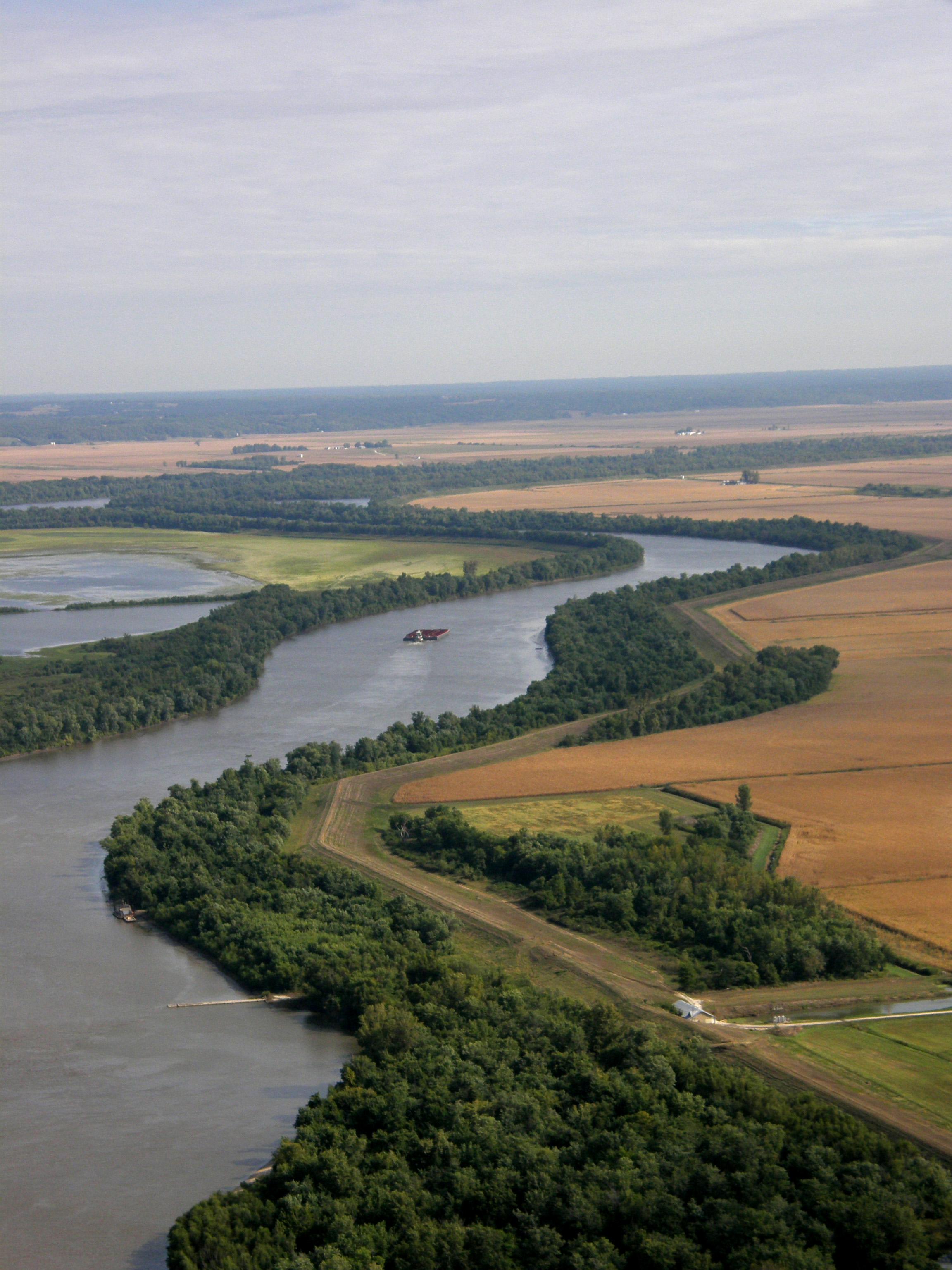
For the restoration project, TNC developed a water control structure that allows for a managed reconnection of the system. “Species and nutrients can flow from the backwater wetlands of Emiquon into the river and also allow water from the river into Emiquon so that we can manage water levels appropriately and get all of the benefits of a wetland—the water filtration properties, and fish and wildlife habitat that come with it,” Smith says.
Approaching this kind of restoration required the careful evaluation and collaboration of many wetland experts inside and outside of TNC. “Over 90% of the wetlands in Illinois have been lost, so this is really critical habitat that's in kind of short supply,” says Maria Lemke, TNC's director of conservation science in Illinois. “There are a lot of questions on how do you return the floodplain habitat from what's been farmed for 80 years.” To answer those questions, TNC convened the Emiquon Science Advisory Council, a group of 40 or so scientists and naturalists. The Council established a series of metrics for species and habitat at the site to evaluate overall health. These have been helpful in assessing restoration progress, Lemke says.
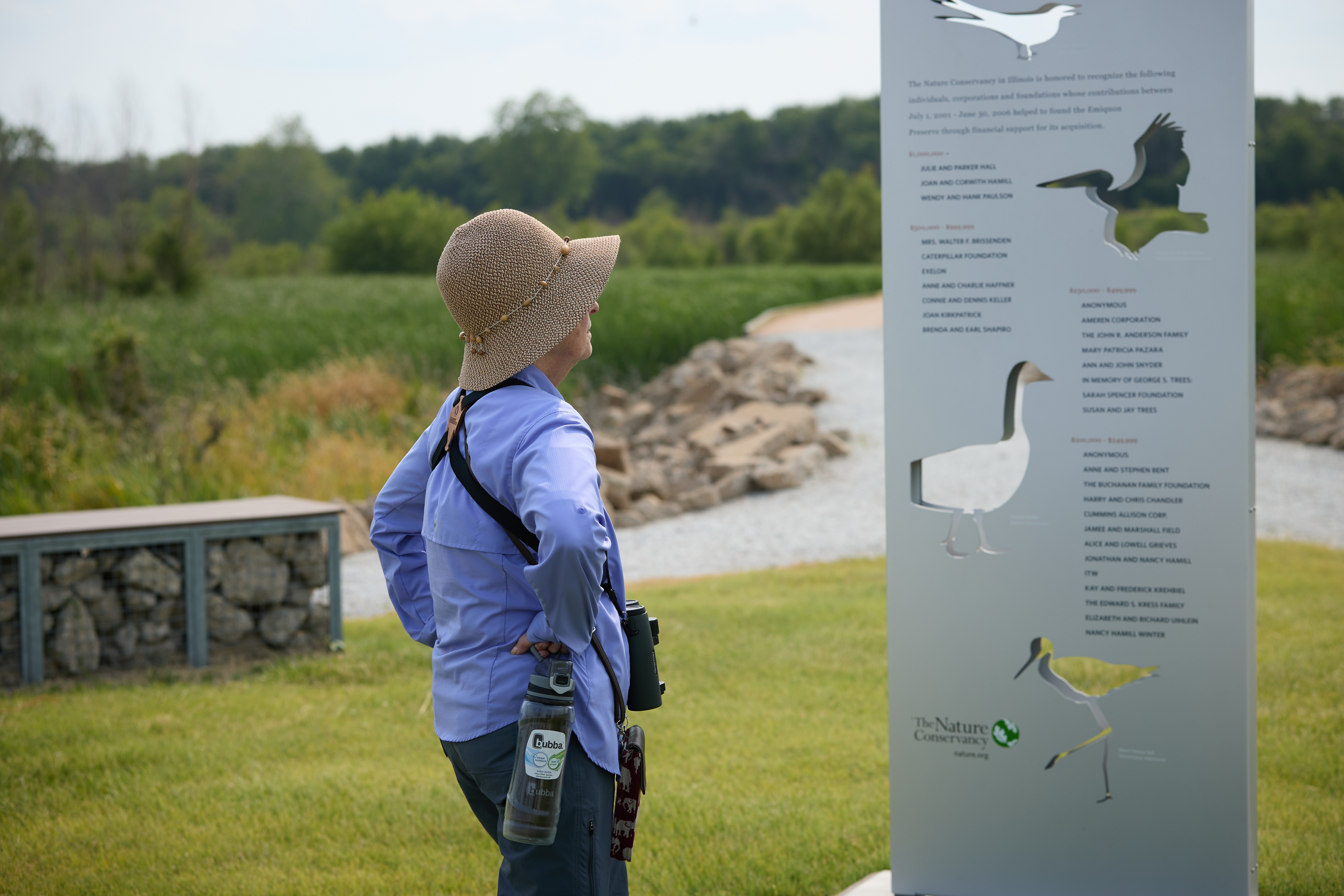
Becoming deeply involved with the local community was important to understand what their needs were in terms of the restoration, which was to have a place they could experience and enjoy. “It’s heavily used,” Smith says, noting that the Emiquon Preserve welcomes around 60,000 visitors per year, making it one of the most visited TNC preserve in the country.
When Smith reflects on what has taken place at the Emiquon Preserve over the years, one of his main takeaways is the remarkable resilience of nature. “When conditions became right, a lot of these things that we thought were lost permanently from this river system came roaring back immediately,” he says. However, the story does not stop there. Smith looks to the future and how the Emiquon Preserve can be managed to drive restoration efforts beyond its boundaries. “What can we learn about the management of this place, apply that to other sites, and really be the teaching hospital for all of the wetlands in the system,” he asks.
The above is based on the video transcript, slightly edited for clarity.
Learn more about TNC's rivers and floodplains work.

