
Honoring Traditional Wisdom, Uplifting Community-Led Management
Our Approach to Marine Conservation in Hawaiʻi

For millennia, Native Hawaiians have sustained and been sustained by the islands’ lands and waters. In many areas, this way of life continues, with communities upholding and reviving long-held Hawaiian practices in fishing, farming and caring for ʻāina.
But for generations, profound and painful challenges such as colonialism, forced resettlement, strong development pressures and exclusion from natural resource decisions have undermined Native Hawaiian agency and ability to manage their lands and waters. And mounting global pressures—including climate change and invasive species—now pose urgent challenges. Fortunately, coastal communities across the state are working to reverse these trends through the perpetuation of traditional stewardship practices that maintain resources, culture, livelihoods and ways of life.

Community-led, culturally grounded conservation is essential in places like Hawaiʻi, where Indigenous Peoples have historically been dispossessed. By collaborating on equal footing, we uplift our people and help return abundance to our home.
Guided by Indigenous stewardship principles and inspired by peoples and partners across the Pacific, The Nature Conservancy (TNC) is committed to collaborative, community and Indigenous-led conservation in Hawaiʻi. We work closely with dozens of local community organizations and individuals leading community-based makai management efforts across five Hawaiian Islands to improve coastal and coral reef health and enhance sustainability. We carry kuleana to the places where we work and to the people we work alongside to find better, more inclusive ways to manage the lands and waters we share.

When opportunities arise or we are invited to collaborate, TNC works in partnership with Indigenous Peoples and local communities to support their visions, learn from their stewardship experiences and amplify their leadership in conserving lands, waters and ways of life.
TNC is helping to build a strong foundation for collaborative, culturally grounded, community-driven conservation by:
- Collaborating on scientific tools and data
- Supporting peer networks
- Centering Indigenous peoples and local communities

The Power of Co-creating Science
Successful decision making depends on good information and integrating contemporary science with traditional, Native Hawaiian knowledge. One of the biggest challenges facing sustainable fisheries is the lack of stock data, especially in smaller coastal communities. TNC collaborates with partners to conduct monitoring, co-develops data-sharing agreements that respect data sovereignty and shares that data to inform decision making. We also support community-led monitoring surveys such as fish counts, by helping design scientifically rigorous monitoring programs and training volunteers in monitoring protocols and to analyze data. We also support communities by building open-source, participatory tools community fisheries managers and fishers can use to collect their own data, analyze it and apply it to make decisions guided by local needs and traditional knowledge.
With this in mind, we developed FishPath and FishKit, a set of software tools that make it easier, faster and more intuitive for coastal communities to collect and analyze data and develop their own culturally appropriate fisheries management plans. Watch our video below to hear more about how FishKit is being used in Hawaiʻi and across French Polynesia.
From Science to Action: the ʻOpihi Partnership
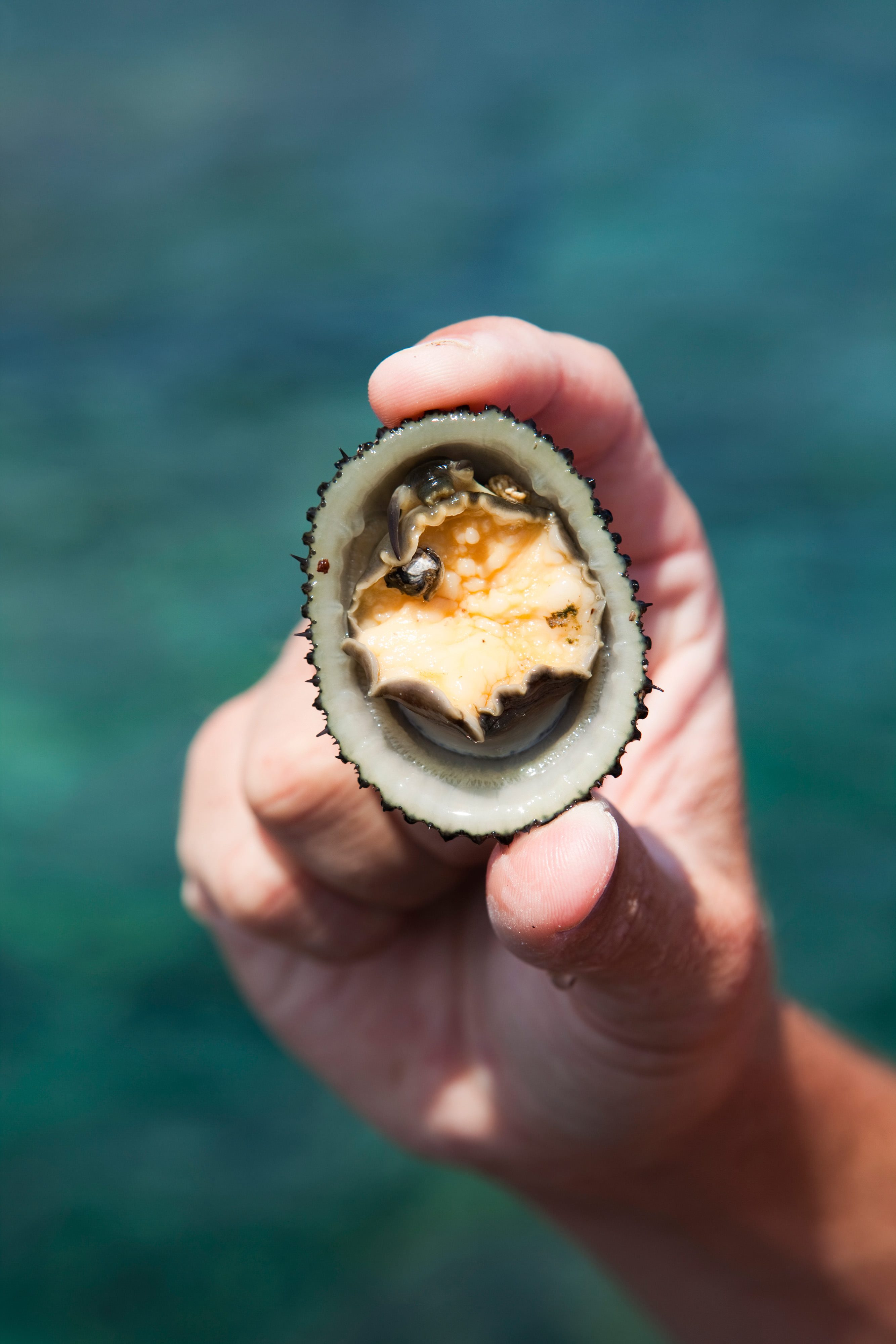
In 2007 the ʻOpihi Partnership was created when East Maui communities noticed something was wrong: ʻopihi abundance was declining. Three species of ‘opihi, aquatic limpets that cling to rocks on island shorelines, play a key role in intertidal biodiversity. These delicacies, a staple of the Hawaiian diet, were once carefully managed to ensure thriving populations. But increasing demand and unsustainable harvest have resulted in dwindling ‘opihi populations across the state in the last century. TNC joined scientists, cultural experts, resource managers and communities who came together with one shared goal—not to stop gathering but to understand what was happening, so present and future generations could continue picking and eating ‘opihi.
From 2008 to 2013, community groups led surveys over two miles of shoreline, confirming a troubling decline in ‘opihi. In response, community groups Nā Mamo O Mū‘olea and Kīpahulu ‘Ohana revived a traditional Hawaiian practice: resting an area from harvest. In 2014, they created voluntary no-take rest areas, giving ‘opihi space to grow larger and produce more offspring that could drift down current to neighboring shores. And it worked. Communities saw clear increases in ‘opihi populations both inside the rest areas and down current in open-to-harvest zones, proving that voluntary, community-led stewardship can spark real recovery.
This success not only helped restore the abundance of ‘opihi populations, but it also brought people together. More East Maui communities joined in, forming the Maui Hikina ‘Opihi Project. This partnership, which consists of Nā Mamo O Mū‘olea, Kīpahulu ʻOhana, Na Moku Aupuni O Koʻolau Hui, Ke Ao Hāliʻi, Na Kahakai O Kaupō, the Maui Nui Makai Network and Texas A&M University Corpus Cristi Bird Lab, helped strengthen a movement grounded in community, culture and science. Through teamwork, education and genuine care for place, the community is ensuring that ‘opihi, and the traditions tied to them, are present for future generations.
“The Maui Hikina ʻOpihi Project is a great example of collaboration led by communities, combining traditional knowledge and practice with quantitative science, to address their resource management concerns,” said Scott Crawford, TNC Maui marine director. “TNC is honored to be a part of these partnerships and to support communities in their efforts to gain knowledge, spread awareness and work together to protect and restore the abundance of this precious resource so it can continue to nourish the lāhui.”
The Maui Hikina ʻOpihi Project is a great example of collaboration led by communities, combining traditional knowledge and practice with quantitative science, to address their resource management concerns.
Building Knowledge, Fostering Networks
Over the last two decades, some of the greatest conservation impacts in the Pacific came from building connections between community groups and among local leaders through peer networks. These networks share knowledge, tools, data and resources to grow community and Indigenous-led management and take collective action to accelerate and strengthen management of coastal and marine resources. As local networks implement successful conservation actions, they provide a powerful example for other communities. In Hawaiʻi, TNC currently supports community leaders focused on marine conservation across three peer networks, including the Maui Nui Makai Network, the Kai Kuleana Network and Hui Loko.
Celebrating Local Leadership in East Maui
Spotlight on East Maui
See how local action in East Maui sparked coordinated regional action to sustainably manage fisheries.


Two East Maui community groups, Nā Mamo O Mūʻolea and Kīpahulu ʻOhana, ask TNC for assistance in protecting their makai resources, culture and customs.

Nā Mamo O Mūʻolea completes a Nā Mamo O Mūʻolea completes a Marine Resources Action Plan and Kīpahulu ʻOhana begins developing a community conservation plan.

Kīpahulu ʻOhana begins conducting outreach to generate support for their CBSFA proposal. TNC introduces local leaders to Pacific peer networks.

Inspired by the networks, local leaders from Maui, Molokai and Lānaʻi form the Maui Nui Makai Network and gather regularly to share knowledge, deepen relationships and plan collective action.

Kīpahulu ʻOhana submits their proposal to the Department of Aquatic Resources. The Maui Nui Makai Network begins guiding five new East Maui groups in the development of fisheries management plans.

With help from TNC, the Maui Nui Makai Network publishes Mālama I Ke Kai: Community Action Guide, an open-source compilation of tools and processes tailored to Hawaiʻi and makai conservation efforts.

The Network hosts workshops to help East Maui community groups align plans into a single, regional makai management proposal called Maui Hikina Huliāmahi, which spans four moku (districts) and 50 miles of coastline.

With unanimous community support, residents of Kīpahulu celebrate the establishment of a Community-Based Subsistence Fishing Area, spanning their moku coastline.

The Maui Hikina Huliāmahi proposal informs the efforts of the Maui Navigation Team, which is focused on developing island-wide rules to advance the state’s Holomua Initiative.
Centering Indigenous Peoples and Local Communities
Advancing Indigenous Data Sovereignty
As TNC strives toward right relations with Indigenous Peoples, we are developing new frameworks to support Indigenous data sovereignty, which supports Indigenous Peoples’ efforts to access, authorize and own data about their lands and waters.
TNC Hawaiʻi Marine Conservation Fellows Collin Aldridge’s and KaiLeiʻa Duriano’s capstone projects focused on advancing this work in Hawaiʻi and across TNC. Watch our video to hear more about this important and evolving effort and learn how TNC is working to become a better partner and collaborator.
Understanding the Pacific Way
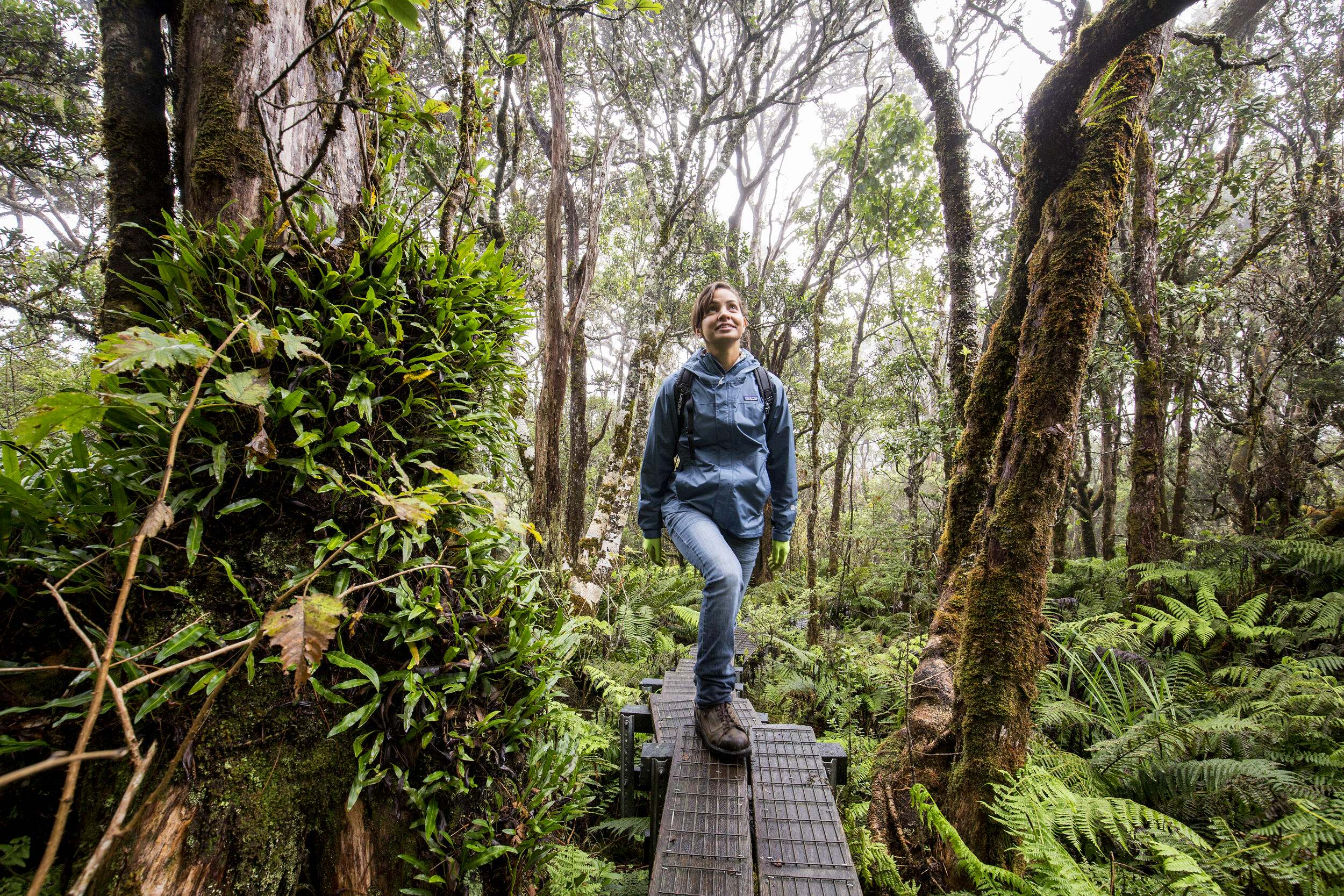
Across the Pacific, seasoned conservation leaders agree that there is a universal key ingredient to achieving effective conservation—we call it The Pacific Way. This thoughtful and humble approach honors people, places and cultures and relies on building strong partnerships.
For decades, conservation organizations recognized the vibrant cultures, ecological significance and profound beauty of the Pacific Islands. However, these organizations have not always given due respect to the peoples, wisdom, values, traditions and knowledge rooted in these places.
In the 1980s, conservation was dead in the water in the Pacific because it was largely driven by ex-patriots following the Western model of establishing national parks, putting a firewall between the park and the people.
In the early 1990s, marine conservation was a new frontier for the growing global conservation movement. But applying Western conservation models, such as government mandated “no-take” protected areas, was not culturally appropriate and often even harmful in the Pacific, where Indigenous management and resource use was commonly practiced. Instead, community-based conservation, where traditional resource owners and managers lead, emerged as the “new” and powerful way to protect and restore natural areas across the Pacific.
This Indigenous People-first approach demands that organizations like TNC embrace and uplift the wisdom of local communities and honor the vast history of Indigenous environmental stewardship practiced across the Pacific. To elicit knowledge gained from the first two decades of community-based conservation in the Pacific, TNC interviewed leaders in this field who offered insights and guidance on how to approach conservation The Pacific Way.
Throughout all these interviews and efforts, one profound truth emerges: community leadership is not peripheral to conservation success; it is foundational.
We Can’t Save Nature Without You
Sign up to receive monthly conservation news and updates from Hawai’i & Palmyra. Get a preview of Hawai’i & Palmyra’s Nature News email.

You May Also Like

Protecting Our Forests: Remember, you can make a difference
Anne Carter, Owner, Kulamanu Farm, Maui and Chair, Board of Trustees of The Nature Conservancy, Hawai‘i and Palmyra encourages conservation action in Hawaii.

Creating Hope for Nā Manu Nahele, Hawaiʻi’s Forest Birds
Hawaiʻi’s melodious and beautiful honeycreepers evolved with the Hawaiian Islands over millions of years, but we could lose them in our lifetime. See how you can support Hawaiʻi's forest birds.

Restoring Reefs to Build Resilience
Coral reefs are vital to Hawai‘i’s people, culture, lifestyle and economy, but they are at risk. Learn how TNC is working to restore and repair them.