


Point Reyes National Seashore is a 71,000-acre, ecologically significant coastal landscape managed by the National Park Service (NPS) in northern California’s Marin County. Known for its remarkable biodiversity, the park represents a unique mosaic of beaches, wetlands and forests. Its rich tapestry also includes deep cultural history—from Indigenous homelands to generations of ranching families—making it a place where natural and human stories are tightly interwoven.
This page explains The Nature Conservancy’s (TNC) role at the Seashore and provides the latest updates on our ongoing work to support a resilient future for this public landscape.
The Nature Conservancy's Role
For decades, a land-use conflict ensued over the future of dairying, cattle ranching and wildlife management at Point Reyes National Seashore. This conflict resulted in multiple court suits against NPS related to management of ranch lands in the park. In 2022, as an organization with a long history in natural resources management, TNC was invited by all parties involved in the litigation—though not itself a party—to help resolve this long-standing dispute. In January 2025, a Settlement agreement was announced between the litigating parties—environmental groups, the National Park Service (NPS) and ranchers who leased land on the Seashore and Golden Gate National Recreation Area—based on the decisions of 11 multi-generational family lessees to retire 12 ranching operations in exchange for compensation from TNC.
TNC joined this legal mediation to address important environmental concerns, while helping to explore better options for the ranchers and their farmworkers than prolonged litigation that the ranchers could lose. TNC secured private funding to compensate the ranchers and to assist ranch workers and tenants with their departure from the Seashore. Nevertheless, TNC is keenly aware that the outcome of the Settlement resulted in immensely difficult transitions for those involved and the broader community.
The Nature Conservancy and NPS
NPS owns and manages Point Reyes National Seashore’s 71,000 acres according to the 2025 Record of Decision (ROD) for the General Plan Amendment and Environmental Impact Statement (GMPA). Independent of the requirements of the Settlement agreement, TNC is supporting NPS in implementing the GMPA. TNC’s engagement focuses on restoration and targeted grazing across approximately 17,000 acres of former ranch and dairy lands, out of the Seashore’s total 71,000 acres. NPS also works together with the Federated Indians of Graton Rancheria through their government-to-government partnership on cultural resource, natural resource and land use activities. TNC’s support for this collective stewardship by NPS and the Federated Indians of Graton Rancheria will foster diverse wildlife, vital watersheds, irreplaceable coastal ecosystems and public enjoyment of the park.
Key Goals for Resources Management
With a commitment to collaboration, scientific integrity and traditional ecological knowledge, TNC will support NPS to guide the natural resources of the Seashore toward a more climate-resilient future that benefits the public. This path forward has four key goals.
-
With local partners and public input, TNC and NPS will develop restoration and targeted grazing plans specifically designed to help the Seashore’s grassland, coastal shrubland and wetland ecosystems to be resilient to future climates.
-
TNC will support NPS in improving the health of roughly 4,700 acres of freshwater ecosystems, 2,000 acres of estuary and bay habitat and 19 miles of streams.
-
By keeping invasive plants in check and protecting wetlands, TNC will support NPS in protecting and growing populations of rare and imperiled plants, as well as the wildlife that depends on them.
-
Tule elk were reintroduced to Point Reyes National Seashore in 1978 and are now one of the state’s largest populations of this once-widespread California native mammal. In partnership with and in support of NPS and the California Department of Fish and Wildlife’s objectives for tule elk, TNC will help promote the free movement of elk herds and other wide-ranging species.
Pastoral Zone and Rangelands of Point Reyes National Seashore by the Numbers
-

4,700
Acres of lakes and wetlands
-

2,000
Acres of estuary and bay habitat
-

19
Miles of streams
-

17,000
Acres of targeted grazing and restoration
Plants & Wildlife
Point Reyes National Seashore is more than a scenic destination—it is an ecological treasure and the only National Seashore on the west coast. Protecting its distinctive habitats and species is essential to sustaining one of California’s most biologically diverse landscapes.
The Seashore is a refuge for 45% of North American bird species and is home to nearly 18% of California's plant species, along with a multitude of mammals, fish, reptiles and amphibians, many of which are culturally significant species for the Federated Indians of Graton Rancheria. Numerous plants and animals that call the Seashore home are listed as threatened or endangered, underscoring the important role this region plays in protecting and conserving some of California’s most vulnerable species.
Plants
When it comes to flora, Point Reyes National Seashore is one of the most biodiverse regions in the world. There are more than 50 rare or endangered plants on the Seashore, three of which are found nowhere else on Earth.


Sonoma Spineflower: The endangered Sonoma spineflower is only found in Point Reyes National Park. © Robert Steers
Native Plants : Northern Curley-Leaved Monardella © TNC
Wild Iris on Point Reyes: TNC began its impactful presence in the Bay Area during the 1960s, focusing on the protection of threatened private forest lands around the Point Reyes Peninsula. © Abigail Whittaker
San Francisco Owl's Clover: Native plants on Point Reyes National Seashore. © TNC
TNC will help protect and expand populations of rare and imperiled plants, as well as the wildlife that depends on them. Collaborative work, which will include targeted grazing and active restoration, will also enhance these species’ resilience to future climate volatility.
Wildlife
PRNS is teeming with animals that find refuge in the Seashore’s diverse habitats. Conservation practices will focus on supporting habitat health, resulting in conditions for native wildlife to prosper. Species expected to benefit include tule elk, California red-legged frogs and migratory birds that depend on healthy wetlands and grasslands.


Northern Elephant Seal: An elephant seal bellowing at Point Reyes National Seashore. © NPS
Butterfly: Myrtle's Silverspot butterfly on gumplant. © Geoff Smick
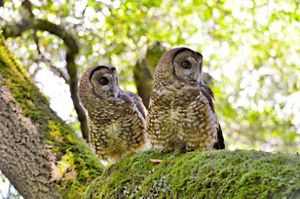
Northern Spotted Owls: Two adult northern spotted owls on a moss-covered tree branch. © Public Domain
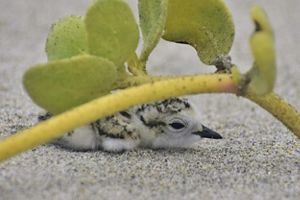
Western Snowy Plover Chick in Hiding: A week old Western Snowy Plover chick hiding in the verbena on California's coastal dunes. © Alissa Goldberg/TNC Photo Contest 2019

Updates
This section contains the latest updates on TNC's work supporting the path forward at Point Reyes National Seashore. TNC is committed to transparency in its support of NPS and to ensuring that this path forward reflects the best available science, the needs of fragile ecosystems and the values of the people and partners who care deeply about the Seashore.
Visit the links below for our latest updates:
- News | Mar. 30 2026: Open House with DOI, TNC and NPS on April 16
- FAQ | Dec. 2, 2025: Targeted Cattle Grazing for Conservation at Point Reyes National Seashore
- Video | Aug. 28, 2025: Transforming the Point Reyes National Seashore | WCB Board Meeting
- FAQ | Aug. 21, 2025: Point Reyes National Seashore Transition Support Plan
- News | Jan. 8, 2025: Historic Agreement on Cattle Ranching and Wildlife Management at Point Reyes National Seashore Ends Decades of Conflict
Frequently Asked Questions
-
As is typical of mediation processes that are part of litigation, all parties entered into a confidentiality agreement to facilitate candid discussions. The confidentiality terms were imposed on TNC when it accepted the parties’ invitation to support the mediation process.
As part of the General Management Plan Amendment and Environmental Impact Statement (GMPA), the public had the opportunity to comment on six different management options for the future management of park lands leased for ranching. At that stage there was robust public engagement, with more than 12,000 comment letters and six public meetings during the planning process. The mediation outcomes are within the range of options presented in the GMPA.
-
All litigating parties—environmental groups, the National Park Service (NPS) and most of the ranchers who leased land on the Seashore—agreed to the outcome in the Settlement agreement. The difficult conditions that dairy and beef producers were facing in Point Reyes National Seashore were decades in the making. For example, deferred maintenance on old buildings and infrastructure was a growing liability. Because TNC is an organization that has worked hard to build trust and effective solutions across the conservation and agricultural communities, the parties invited TNC to help develop a solution that all the parties to the lawsuit could agree upon.
TNC actively supports ecologically oriented agriculture in a variety of contexts and recognizes how important this is to the identity of the local farming and ranching community in West Marin County. To this end, TNC hopes to collaborate with local organizations that support conservation on working lands in advancing knowledge about best practices for rangeland stewardship.
-
The Settlement agreement established natural and cultural resource benefits while providing relief for those most affected by the changes. Even amid legal negotiations, TNC recognized the importance of balancing the Settlement among plaintiffs, ranchers and NPS with compassion and respect for the ranch workers and tenants living on the Seashore. TNC insisted on a robust Transition Support Plan to address impacts on farmworkers, tenants and their families, including raising funds to provide direct financial support. Visit the County of Marin’s West Marin Housing Efforts for information on additional community resources.
-
The joint conservation priority is the health of grassland, coastal shrubland and wetland habitats and biodiversity in these areas. TNC will support NPS in stewarding areas of high conservation value (for example, remnant patches of native coastal prairie) and addressing areas that have been most heavily impacted. Strategies include controlling invasive plant species through targeted grazing and other science-backed techniques like restoration plantings. By reducing historical stresses on natural water systems, we will also work to promote the health and abundance of clean water across ponds, wetlands, estuaries and streams. These actions will help save imperiled plants and wildlife that depend on healthy aquatic habitats. Additionally, NPS and the Point Reyes National Seashore Association will collaborate to increase public access in ways that also benefit wildlife corridors.
-
TNC brings more than six decades of conservation-based land management experience in California. This work includes more than 250,000 acres of land where TNC manages targeted grazing to achieve natural resource goals, similar to what we have committed to support at the Seashore with NPS in its implementation of the 2025 ROD and GMPA.
TNC is working alongside and in coordination with NPS, which maintains Point Reyes National Seashore by law and is required to preserve the public park’s natural and cultural resources for future generations while welcoming public enjoyment now. Being a part of the National Park System showcases the uniqueness of the Seashore and attracts visitors from all over California, the United States and the world.
In addition to supporting and collaborating with NPS, TNC is committed to developing partnerships with local organizations that have strong histories of land stewardship and conservation in West Marin. Through partnership, we can collectively secure a resilient future for this landscape.
-
Yes, TNC was integral in helping to build the Golden Gate Recreation Area and protecting hubs of cultural significance and natural beauty in Marin County, including Green Gulch, Slide Ranch, Spirit Rock and portions of the Bolinas Lagoon. Read more about our work in Marin County.
-
Implementation of the targeted grazing program will include removal of miles of fencing, thus creating new opportunities for public access. NPS will guide this effort with support from the Point Reyes National Seashore Association, thoughtfully expanding trails and other low-impact experiences that protect the landscape while increasing both wildlife connectivity and public access to these areas for the first time in more than a century.
-
In August 2025, TNC applied for and was granted $2.7 million by WCB to support the planning of restoration work on approximately 17,000 acres at Point Reyes National Seashore. This work may include planning for modernizing fencing and water infrastructure, as well as science-driven targeted grazing focused on meeting the natural resource goals of NPS under its General Management Plan. This restoration and grazing plan will be developed through a process that includes public participation. Public engagement opportunities will be posted on this website.
This grant was not used to support a short-term targeted grazing contract issued for F and G Ranches from spring through summer of 2026. -
The Budget Act of 2024 (SB 108), as amended by AB 157, included $10 million to WCB “for Point Reyes for conservation projects that will enhance coastal wetland resilience, restore tule elk habitat and native vegetation, and improve public access at Point Reyes National Seashore.” As stated on WCB’s FAQs, WCB awards funds to Tribes, non-profit organizations and government entities.
-
Targeted grazing at the Seashore will prioritize protecting and enhancing natural and cultural resources, in particular the protection of threatened and endangered species, archaeological sites and areas of ethnobotanical significance. Cattle will be managed to address invasive plants, reduce wildfire risk and support the health and native diversity of the Seashore’s natural ecosystems. With innovative technologies like virtual fencing, cattle can be directed where they need to graze and they can be excluded from vulnerable areas without physical fences that restrict wildlife. Read Targeted Cattle Grazing for Conservation at Point Reyes National Seashore to learn more.
-
Public feedback about future conservation activities is encouraged. In 2026, TNC will provide options for learning about and contributing to the future of the Seashore. Updates will be posted to this website with details about opportunities for engagement. In addition, TNC may offer public check-ins, presentations to local groups and open forums.