


Cave Creek Crossing The Cave Creek Crossing project replaced a 70-foot vented concrete slab crossing with a 100-foot bridge with one set of piers in the middle of the channel. © TNC Arkansas

The Interior Highlands, a rugged region spanning northern Arkansas, southern Missouri, and eastern Oklahoma, is one of the most biologically rich regions in North America. Its clear, winding streams are home to an incredible diversity of fish, mussels, amphibians and other aquatic life. These waterways are vital corridors that allow species to move, reproduce, and survive seasonal changes.

But these connections are fragile. Across Arkansas, thousands of road-stream crossings interrupt the natural flow of streams. Culverts, low-head dams, and fords often fail to accommodate aquatic movement. When these structures block passage, they fragment habitats, isolate populations and degrade water quality. Over time, this can lead to declines in species that define the character and health of our rivers.
Interior Highlands by the Numbers
The Interior Highlands is one of North America’s greatest biodiversity treasures.
-

51%
Rivers in the Interior Highlands host 51 percent of the freshwater fish of the entire Mississippi River Basin.
-

190
At least 190 native fish species live in the Interior Highlands.
-

73
Seventy-three species of native freshwater mussels living within the Interior Highlands.
-

18%
Interior Highlands rivers and streams provide habitat for 18 percent of all native freshwater fish of North America.
Why Connectivity Matters
Imagine a fish trying to reach cooler headwaters during summer heat or a mussel species needing to spread upstream to maintain genetic diversity. If a crossing blocks that movement, the entire population becomes trapped. These barriers also alter stream dynamics, increasing erosion and sedimentation, which harms and degrades aquatic habitat and reduces water quality for humans and wildlife.
The good news? Solutions exist. Replacing outdated crossings with designs that mimic natural stream conditions—such as full-span bridges or open-bottom culverts—restores connectivity and resilience. While it’s not feasible to replace every barrier, strategic projects can reconnect miles of habitat and reduce flood risks for communities.
Types of Stream Crossings
.jpeg)
Culverts
Culverts are enclosed pipes or box structures that allow water to pass under a road. They are common because they are relatively inexpensive and easy to install. However, many culverts are undersized or perched above the streambed, creating barriers for fish and other aquatic organisms.
High water velocity inside culverts often makes upstream movement impossible, and shallow depths can prevent passage altogether. While culverts can work well when properly designed and embedded to mimic natural stream conditions, poorly installed culverts fragment streams and degrade habitat.

Fords
A ford is a shallow section of a stream that may be crossed by wading or inside a vehicle. A ford may occur naturally or be constructed. A ford is a much cheaper form of river crossing than a bridge, and may become impassable after heavy rain or during flood conditions.
A shallow ford like this one creates a physical barrier for fish. The uneven surface and low water depth make upstream movement nearly impossible for many species.
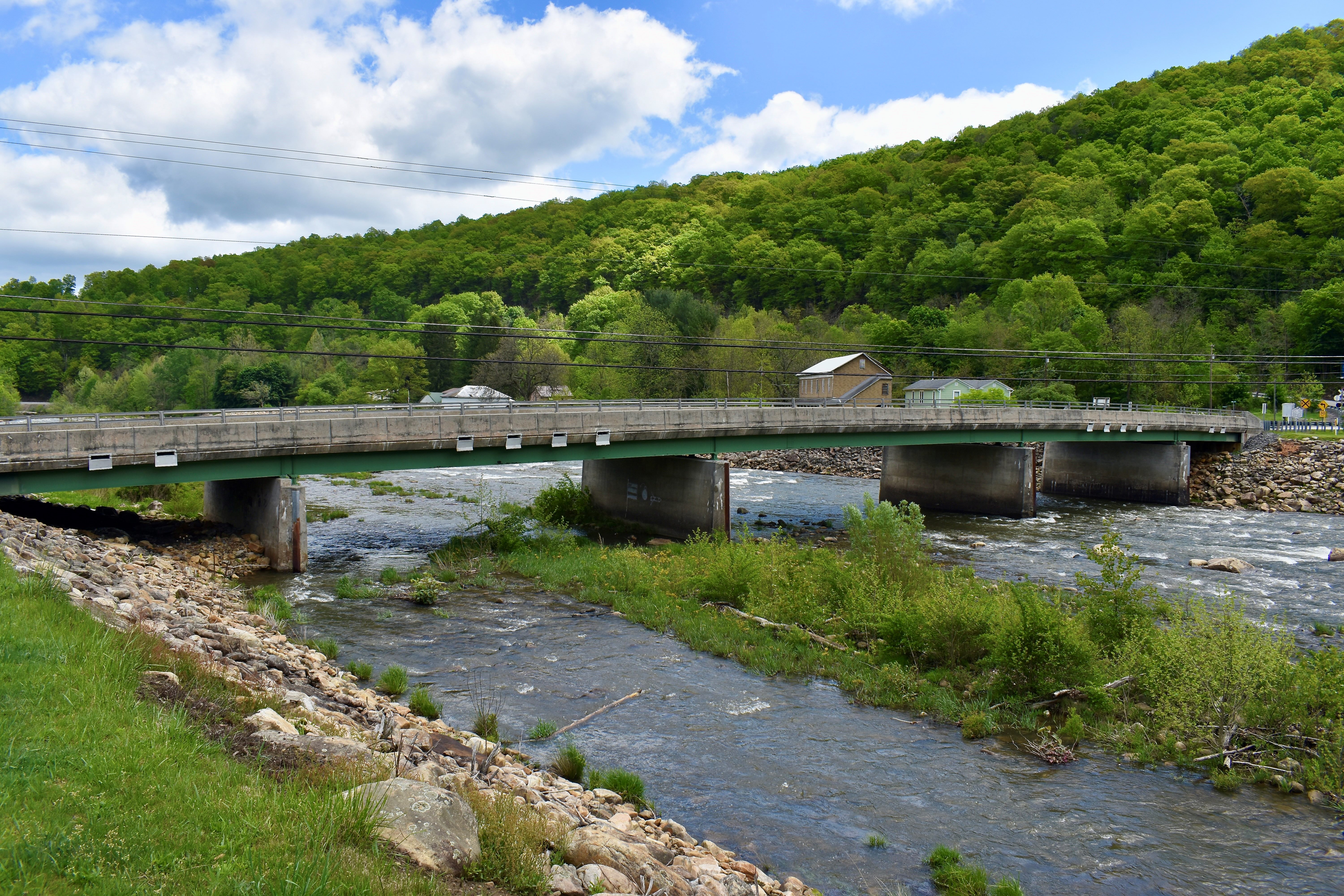
Bridges
Bridges are the gold standard for stream crossings when it comes to aquatic connectivity. Unlike culverts or fords, a bridge spans the stream without constricting its width or altering its natural substrate. This design preserves natural flow patterns, maintains habitat complexity, and allows fish and other aquatic organisms to move freely.
Bridges also reduce erosion and sedimentation because they do not require vehicles to enter the streambed, and they are far less likely to fail during floods.

Restoring Cave Creek: A Success Story in Newton County
In 2023, The Nature Conservancy in Arkansas partnered with Newton County and the Arkansas Game and Fish Commission to restore a critical crossing on Cave Creek, a tributary of the Buffalo River.
For decades, a 70-foot vented concrete slab crossing blocked fish passage and disrupted stream flow. Located just two miles from the Buffalo River, this barrier kept the lower eight miles of Cave Creek isolated from the larger river system. The ecological impact was significant. Fish and other aquatic species could not move freely, and the stream’s natural processes were compromised.


The solution was ambitious and collaborative. With funding from the Environmental Protection Agency's Section 319 Nonpoint Source Pollution Program, the Newton County Road Department designed and installed a 100-foot span bridge with a single pier in the channel. This upgrade reconnected six miles of stream to the Buffalo River, opening new habitat for fish and other aquatic species. It also improved flood resilience and reduced long-term maintenance costs for the county.
Newton County took the project a step further by abandoning 750 feet of road that hugged the creek and building a new, well-crowned road on the floodplain terrace. This change reduces erosion and protects water quality. The Arkansas Game and Fish Commission contributed additional funding and provided staff support to stabilize the site with planting and seeding, while TNC facilitated permitting and project coordination.
This project demonstrates what is possible when conservation and community priorities align. Healthier streams, stronger infrastructure, and a future where nature and people thrive together.
This project has been funded wholly or in part by the United States Environmental Protection Agency under assistance agreement C9-996103-28 to Arkansas Department of Agriculture, Natural Resources Division. The contents of this document do not necessarily reflect the views and policies of the Environmental Protection Agency, nor does the EPA endorse trade names or recommend the use of commercial products mentioned in this document.
Restoring Crossings in Stone County
Stone County Roads Department partnered with TNC to remove two aging low-water crossings on the main stem of the Middle Fork of the Upper Little Red River. These crossings, built with undersized culverts, constricted river flow and blocked fish and other aquatic life from reaching vital habitat for feeding and reproduction.
The old culverts were replaced with crossings that are wider and higher, improving vehicle travel and safety while restoring stream connectivity. Each new crossing features larger concrete box culverts with openings large enough to allow natural flow and aquatic passage. In fact, one new culvert now passes more water than all the old undersized culverts combined.


Together, these upgrades restored connectivity to 308 upstream network miles, including 26 miles of the Middle Fork main stem. This means fish and other aquatic species can now access critical habitat throughout the watershed, strengthening populations and improving ecosystem health.
Who Manages Our Gravel Roads?
Improving stream connectivity starts with understanding who manages the thousands of road-stream crossings across Arkansas. The primary responsibility falls to county governments, led by County Judges and County Road Departments. These teams maintain extensive networks of gravel roads that often intersect streams in the Interior Highlands.
More than 85 percent of Arkansas county roads are unpaved, according to the Arkansas Unpaved Roads Program, which means counties face a monumental challenge. Many crossings are decades old and beyond their functional lifespan. Updating them to meet modern transportation needs and withstand increasingly severe floods is no small task.
Counties are not alone in this work. Timber companies and state and federal agencies also manage public gravel roads where they cross streams on their lands. Each plays a role in maintaining safe infrastructure while protecting water quality and aquatic habitat.
TNC is partnering with these road managers to bring in funding and technical support. By leveraging federal and state resources, we help counties replace outdated crossings with designs that improve flood resilience and restore aquatic connectivity. These projects reduce long-term maintenance costs, protect local communities, and reconnect miles of stream habitat for fish and other wildlife.
Explore Our Resources
Stream Connectivity Resources

Sign up for Nature News
Get conservation stories, news and local opportunities from where you live.
More from Arkansas

Going Underground: Protecting the Interior Highlands
The Nature Conservancy is crossing borders—Missouri, Arkansas, Oklahoma and Kansas to be specific—to protect our caves and increase water quality.

Scenic Stays Near Arkansas Nature Preserves
Book a stay close to Arkansas’s most scenic preserves.

Reinvesting in the Delta
The Floodplain Reforestation Program is an ambitious, large-scale reforestation effort, targeted at landowners and farmers often left out of current state and federal programs.