


The red-cockaded woodpecker (RCW) is one of the most distinctive birds of the southeastern pine forests, including parts of Arkansas. Its bold black-and-white feathers and tiny, nearly hidden red streak make it easy to recognize, but it is its behavior that truly sets it apart. Unlike most woodpeckers, it nests in living pine trees, carving out cavities that later provide shelter for many other animals, making it a key part of its ecosystem.

Meet the Red-cockaded Woodpecker
- Scientific name: Dryobates borealis
- Population: Estimated 18,000
- Ideal habitat: Makes its home in mature, open pine forests in trees averaging 60 to 100 years old
- Range: Populations are in isolated, scattered areas of the southeastern United States
The species depends on a very specific habitat: open, mature pine forests with minimal understory and an abundance of old trees. For centuries, these landscapes were maintained by frequent, low-intensity fires that kept forests from growing dense and supported the insects the birds rely on. In places where these conditions remain, red-cockaded woodpeckers can still be found living in small family groups, working together to maintain nesting sites and raise their young.
Over time, however, much of this habitat has been altered. Fire suppression and development have allowed forests to thicken, while many older pines have been lost. The remaining patches of suitable habitat are often smaller and more isolated, making it harder for populations to persist. Today, the future of the red-cockaded woodpecker depends on conserving these forests and restoring the natural conditions that once allowed the species to thrive.
A Day in the Field with Red-cockaded Woodpeckers
In the spring of 2026, TNC staff accompanied Arkansas Natural Heritage Commission (ANHC) at Pine City Natural Area to complete nesting checks for the red-cockaded woodpecker. Pine City has the only remaining population of red-cockaded woodpeckers (RCWs) in the Mississippi Alluvial Plain of Arkansas and contains genetically distinct loblolly pine.
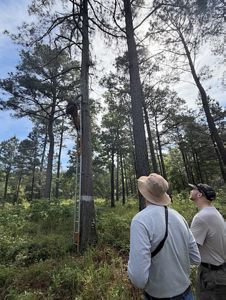
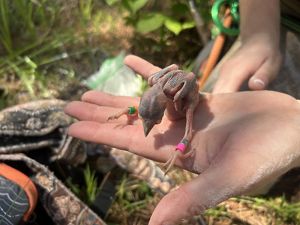
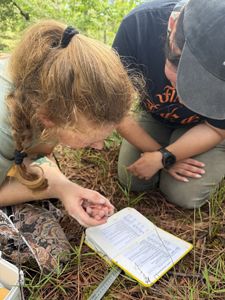
The purpose of the trip was to assist with monitoring the population and banding young nestlings. TNC staff learned how to identify active cavity trees, locate nests and use “peepers” to safely check for eggs. They also learned climbing techniques, nestling extraction, data collection and banding.
All birds were handled with federal and state permits and training.


ANHC staff use artificial cavity inserts to provide nesting habitat as trees mature, though RCWs will create natural cavities when suitable trees are available. Cavities are a limiting factor for the species, as this process can take months or even years. TNC staff helped find two natural nests as clusters—one 46 feet up in a tree! This is great news, as it shows the forest structure is improving greatly to allow birds to utilize trees on their own.
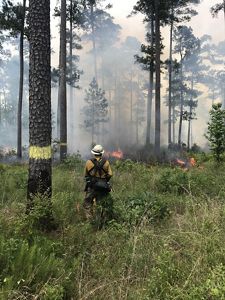
TNC and ANHC have worked together for decades to protect this population through prescribed fire, which is essential for RCW nesting and foraging habitat. Regular fire reduces midstory growth, promotes native vegetation and helps cavity trees reach appropriate size.
The successful nesting of red-cockaded woodpeckers after intensive habitat management shows that these efforts are making a real impact. Continued work with ANHC will help support and protect this species across the Natural State.
Forest Stewardship in Action
From prescribed fire to hands‑on care, these moments capture the dedicated work helping red-cockaded woodpeckers survive and thrive.
More from Arkansas

Scenic Stays Near Arkansas Nature Preserves
Book a stay close to Arkansas’s most scenic preserves.

Reinvesting in the Delta
The Floodplain Reforestation Program is an ambitious, large-scale reforestation effort, targeted at landowners and farmers often left out of current state and federal programs.

Endangered Species Of Arkansas
TNC protected lands and waters provide a haven for some of Arkansas' most at risk species.