


Endangered Species in Arkansas
TNC protected lands and waters provide a haven for some of Arkansas' most at risk species.
Arkansas is home to a stunning variety of wildlife from soaring eagles and black bears to tiny, cave-dwelling crayfish and rare wildflowers. But many of these species are in trouble.
Arkansas currently lists 37 species that are being closely monitored to ensure they remain viable in our state. Organizations like The Nature Conservancy, U.S. Fish and Wildlife Service, Arkansas Natural Heritage Commission, and Arkansas Game and Fish Commission are working together to protect them.
Here, we'll get to know seven of Arkansas' most at risk animals.

A baby Red-Cockaded Woodpecker in Arkansas receives banding.
Red-cockaded Woodpecker
Once found in abundance across the pine forests of the southeastern United States, the red-cockaded woodpecker has a unique story. In the early 1900s, naturalist John James Audubon described this small bird, with its black-and-white striped back and white cheek, as widespread throughout the region. Historically, its range stretched from Florida to New Jersey and west to Texas and Oklahoma, with an estimated population of 1.5 million.
Unlike other woodpeckers that nest in dead or decaying trees, the red-cockaded woodpeckers excavate cavities exclusively in living pine trees. These birds thrive in mature, open pine forests: habitats that have been drastically reduced over the past century.
Today, thanks in part to restoration efforts in Arkansas’ Ouachita National Forest, the red-cockaded woodpecker has been downlisted from endangered to threatened in the state. TNC is helping lead this recovery by restoring shortleaf pine habitats, relocating predators like flying squirrels and securing nesting areas.
Indiana Bat
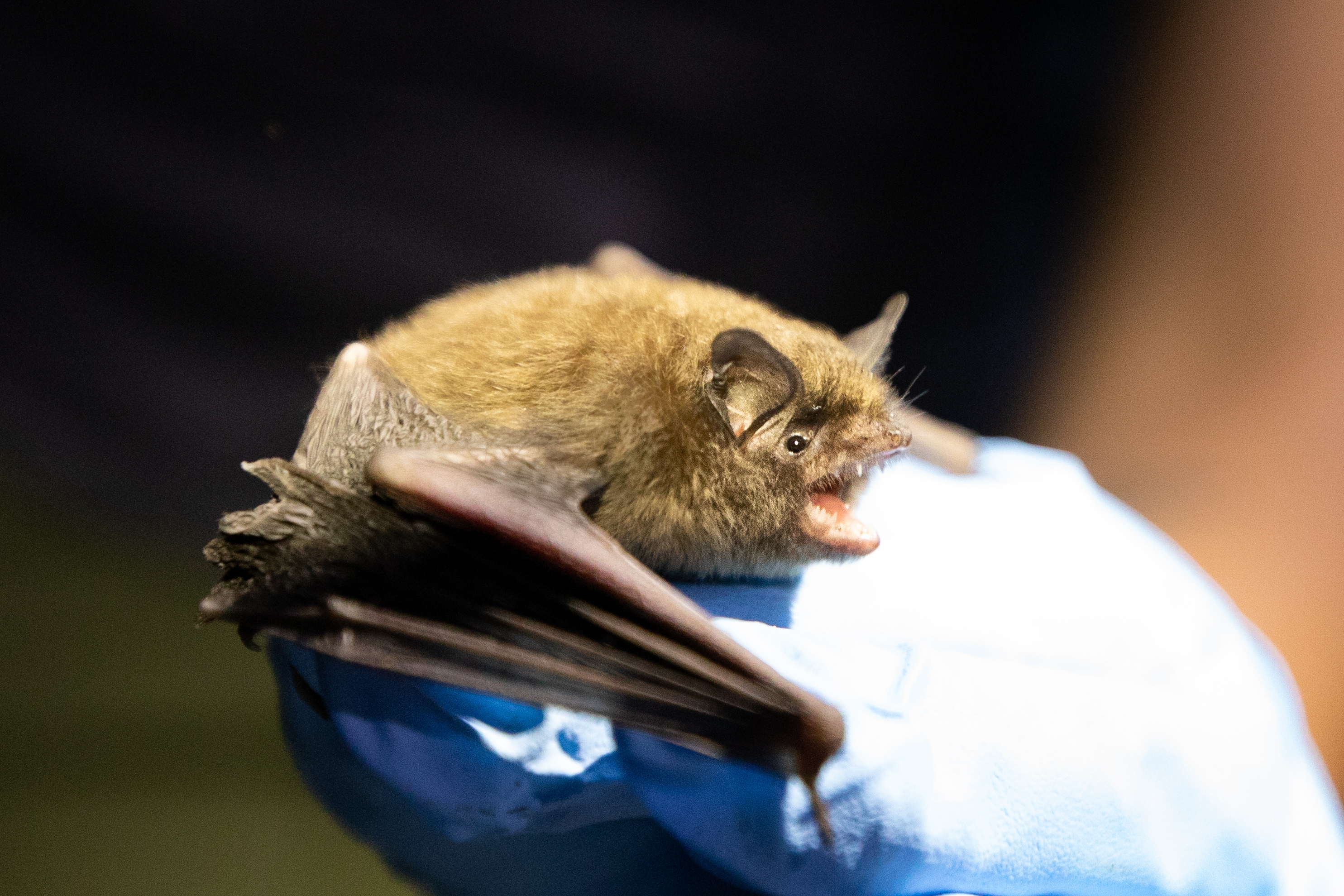
This small, insect eating species is native to the eastern United States. Highly social, these bats cluster together during winter hibernation, sometimes as many as 500 bats per square foot, in caves and mines. In the summer they occupy forested areas, nesting under loose bark or in hollow trees. The Indiana bat was listed as endangered in 1967 and remains federally protected today.
In Arkansas, the largest hibernating colony of this small, insect-eating bat is at Sherfield Cave, which lies beneath TNC’s Smith Creek Preserve near the Buffalo National River. Indiana bats roost and give birth in hollow trees or under loose tree bark and feed in forested areas, making the conservation of forests as important as protecting the caves in which they hibernate. Arkansas is home to two other endangered bats – the Ozark big-eared bat and the gray myotis.
Hell Creek Cave Crayfish
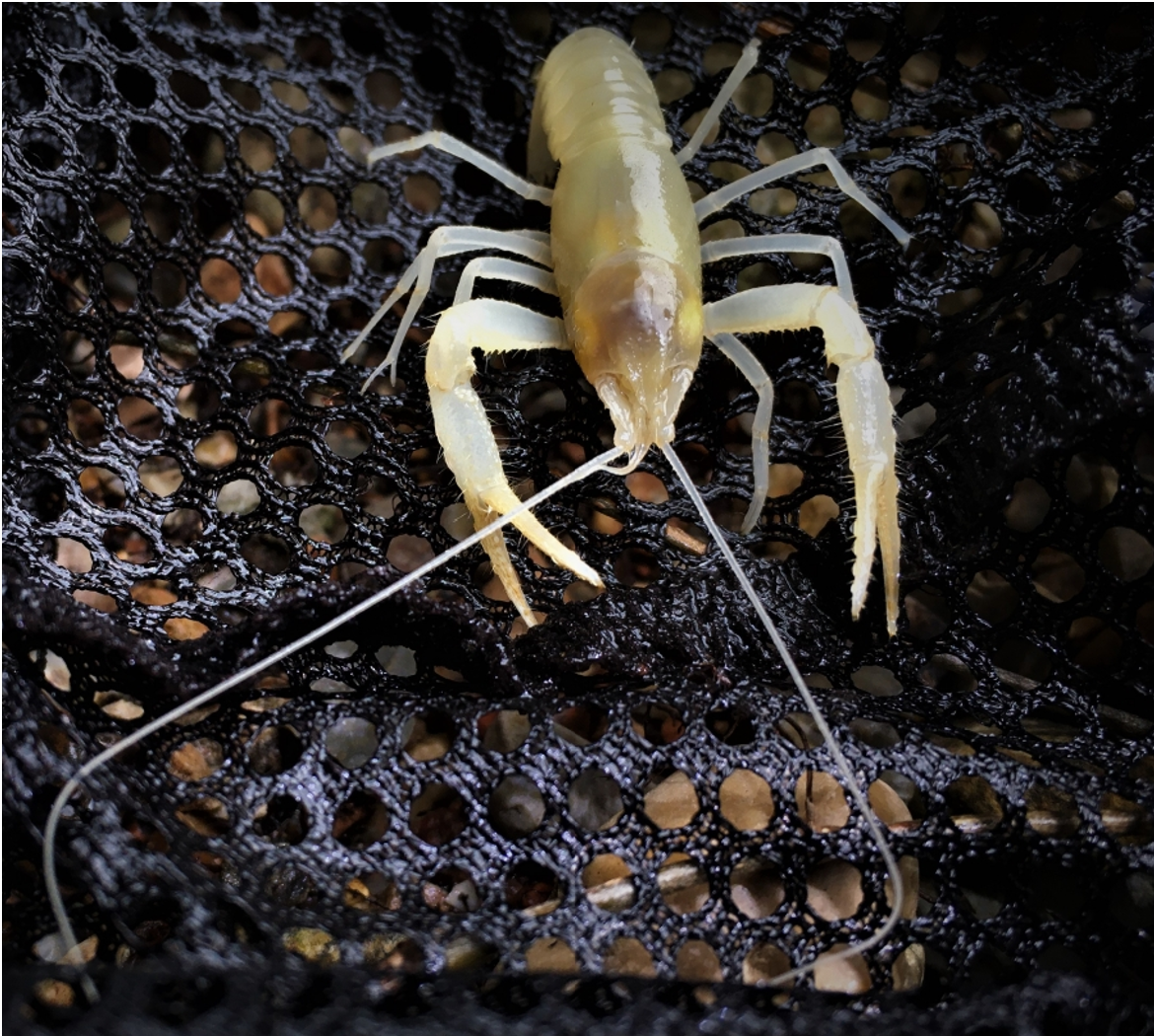
The Heel Creek Cave crayfish is one of the rarest crayfish species in the world, and is found only in Arkansas. Discovered in 1964 in Hell Creek Cave, this elusive creature lives deep underground in Arkansas’ interconnected cave and aquifer systems. With no eyes or skin pigmentation, it’s completely adapted to life underground in total darkness.
As caverns and aquifers are often interconnected, protecting water quality above and below ground is critical to this species' survival.
Interior Least Tern
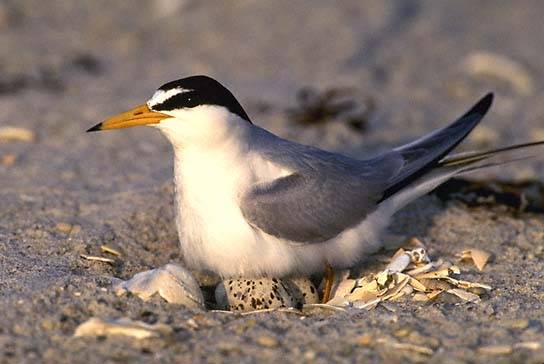
The Interior Least Tern is a small water bird that was formerly well populated throughout the Mississippi River Valley, but now survives only in scattered remnants. Their decline is a result of extensive water management projects that have affected their wetland habitat and the increased use of beaches and sandbars where they nest.
They nest on open, barren sandbars and beaches made of sand, shells or salt-encrusted soils, as well as sand and gravel pits near rivers. Successful nesting depends on the availability of bare sandbars, stable water levels during the breeding season and a reliable food supply.
Speckled Pocketbook
The speckled pocketbook is a small freshwater mussel found only in the Little Red River watershed. Today, it remains in a handful of tributaries where clean, steady flows persist. Like many mussels, it has a complex life cycle. Its larvae must attach to fish to travel to new habitats, making healthy fish populations and connected waterways essential.
This species is especially vulnerable to sediment pollution from eroding banks, roads and land use activities. TNC is working with partners and landowners to reduce runoff, improve stream crossings and protect water quality. These efforts support mussels and strengthen the entire aquatic ecosystem.
Yellowcheek Darter
The yellowcheek darter is a small freshwater fish found only in Arkansas’ Little Red River watershed. Once widespread, it is now limited to portions of its original range. This species depends on cool, clean, flowing water and is highly sensitive to changes in water quality and stream connectivity. Pollution, sedimentation and barriers can prevent fish from moving freely between habitats.
TNC and partners are working to improve stream connectivity by upgrading crossings and reducing barriers. These efforts help restore natural flow patterns and allow fish to access the habitats they need to survive and reproduce.

Monarch Butterfly May Gain Threatened Status
The monarch butterfly is not currently listed as an endangered species in Arkansas, but there are ongoing efforts to protect it under the Endangered Species Act. In 2024, the U.S. Fish and Wildlife Service has proposed listing the monarch butterfly as threatened.
The iconic orange and black butterfly, found in every continental U.S. state, has been in decline for years due to habitat loss, climate change and agriculture pesticide use. Researchers estimate that 970 million monarchs have vanished since 1990. If finalized, the rule would designate land for habitat restoration under the amended Endangered Species Act.
TNC is working with partners across Arkansas to restore vital pollinator habitats and create life-saving stopovers for monarch butterflies.
More Protected Species
Discover more endangered and recovering species across The United States that TNC has a hand in helping to protect.

More from Arkansas

Drones Take Flight for Conservation in Arkansas
See how drones are emerging as a valuable tool in modern conservation efforts.

Going Underground: Protecting the Interior Highlands
The Nature Conservancy is crossing borders—Missouri, Arkansas, Oklahoma and Kansas to be specific—to protect our caves and increase water quality.

Scenic Stays Near Arkansas Nature Preserves
Book a stay close to Arkansas’s most scenic preserves.