
Waves crash against rocky shoreline rocks on a large lake, sending white spray into the air. A sunlit forested peninsula stretches across the background beneath a pale blue sky.
The Great Lakes The Great Lakes' total surface area is 94,000 square miles—larger than Connecticut, Massachusetts, New Hampshire, New Jersey, New York, Rhode Island, and Vermont combined! © Jason Whalen
Great Lakes

Six Eye-Opening Great Lakes Facts

Get to know North America's freshwater giants and why they matter.

Carved out by ancient glaciers,  the five Great Lakes—Huron, Ontario, Michigan, Erie, and Superior—are woven into the fabric of Midwestern life.  They support communities, sustain wildlife, fuel local economies and provide countless opportunities to connect with and enjoy nature. 

However, the Great Lakes are full of surprises. From the world's largest freshwater island to mysterious disappearances and sprawling sand dunes, these inland seas hold stories that go far beyond the shoreline. Dive into these amazing lakes and discover a few fun facts about what makes them so special. 

Why the Great Lakes Matter

From supporting around 10% of the population of the U.S. to thousands of wildlife and plant species, the Great Lakes impact lives across the Midwest.

  • A dark blue icon showing the five Great Lakes.

    94,000

    square miles of combined surface area, making the Great Lakes the largest surface freshwater system on Earth.

  • A dark blue icon showing a heron.

    3,500+

    species of animals and plants call the Great Lakes region home.

  • A dark blue icon of three people.

    25.8M

    people are employed by Great Lakes businesses and industries.

  • A dark blue icon of three bills stacked with two curving arrows circling them.

    $3.1T

    in gross domestic product is generated by the Great Lakes for the U.S.
1. The Great Lakes hold about 84% of North America's surface fresh water.

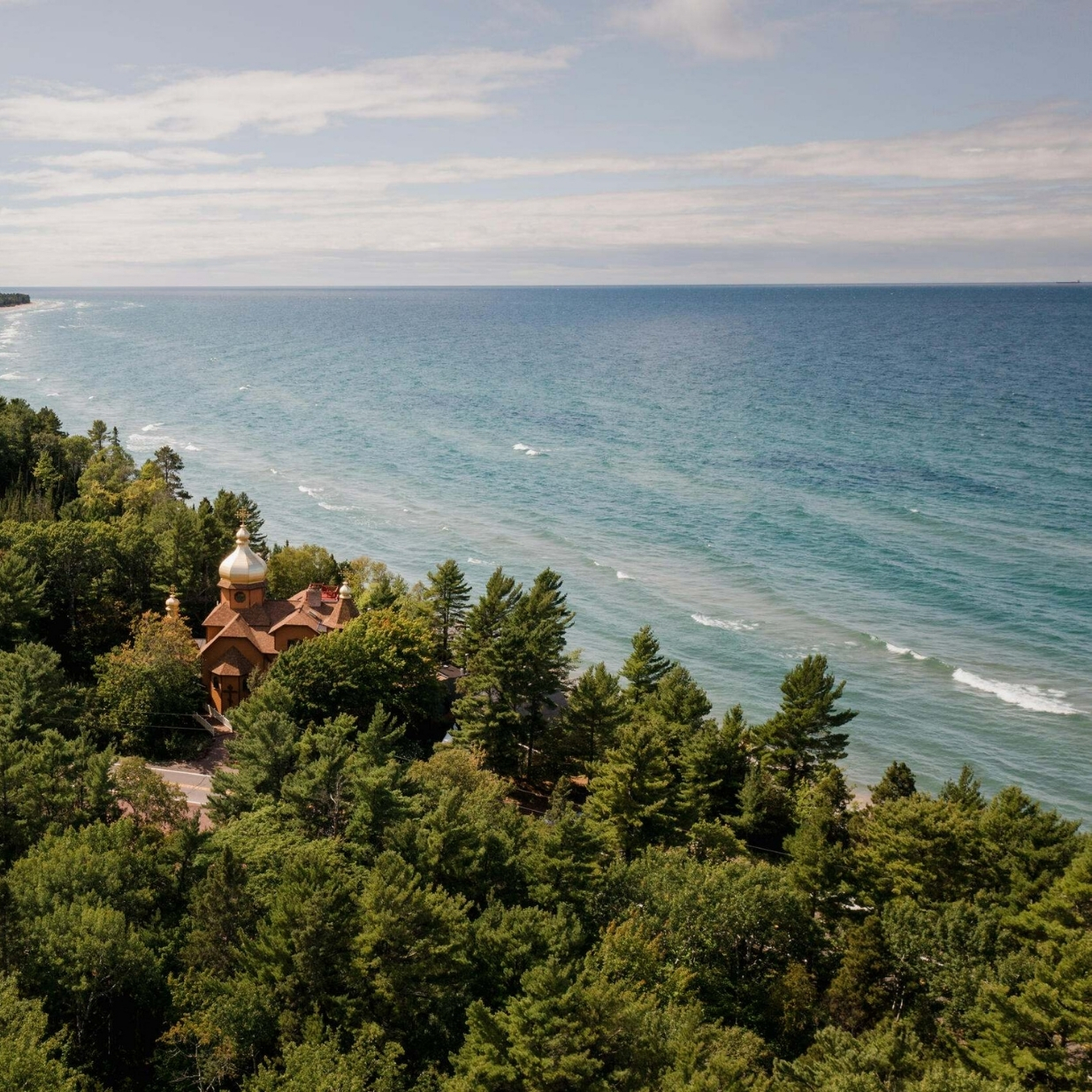
An aerial view of a forested shoreline beside a large blue lake, with a small wooden chapel featuring gold-colored domes nestled among the trees. Gentle waves line the coast beneath a partly cloudy sky.
Lake Superior Combined, the Great Lakes hold 21% of the world's surface fresh water. However, Lake Superior holds nearly half of that volume! © Michael George 2023

Why This Matters

Around 40 million people in the U.S. and Canada rely on the Great Lakes for their drinking water. The waters of the Great Lakes also support local economies through tourism, fishing, outdoor recreation and more. On top of that, countless wildlife and plant species depend on these lakes and surrounding habitats for food and shelter. 

Bonus Fact: The Great Lakes hold 21% of all surface fresh water on Earth. That's enough water to submerge the entire continental United States under 10 feet of water!

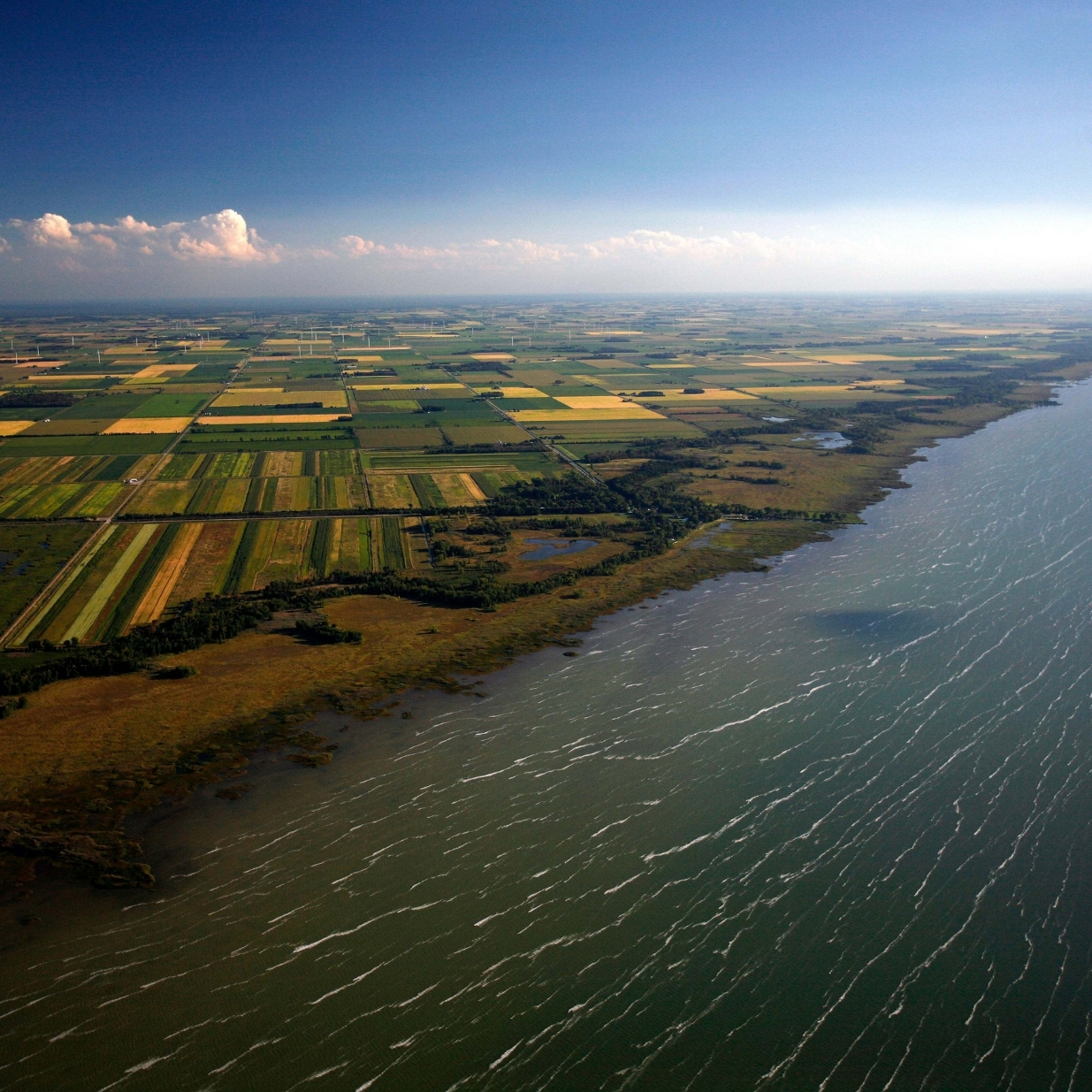
2. The Great Lakes basin holds 25% of Canada's and 7% of the United States' farmlands.

Aerial view of patchwork farmland and coastal wetlands bordering a large lake, with wind turbines scattered across the landscape and wind-streaked water extending along the shoreline beneath a blue sky.
Farming and the Great Lakes Agriculture and water are closely linked, and in places like Saginaw Bay in Michigan, what's used on farms flows into Lake Huron. © Adam Stoltman/Alamy Stock

Why This Matters

The Great Lakes Basin is home to fertile farmland, vital waterways and diverse wildlife habitats. But some traditional farming practices can harm water quality and fuel toxic algal blooms. That's why TNC partners with farmers to implement sustainable solutions that keep farms productive while protecting the Great Lakes, their watersheds and the plants and animals that depend on them. 

Bonus fact: Farming around the Great Lakes includes more than crops—15% of dairy production in the U.S. happens here!

Make a Splash in Your Inbox

If these Great Lakes facts left you wanting more, you're in the right watershed. Sign up for Nature News for a monthly stream of stories about wildlife, conservation, climate action and inspiring nature news from your backyard and around the world.

Sign Up
3. There are around 35,000 islands in the Great Lakes.

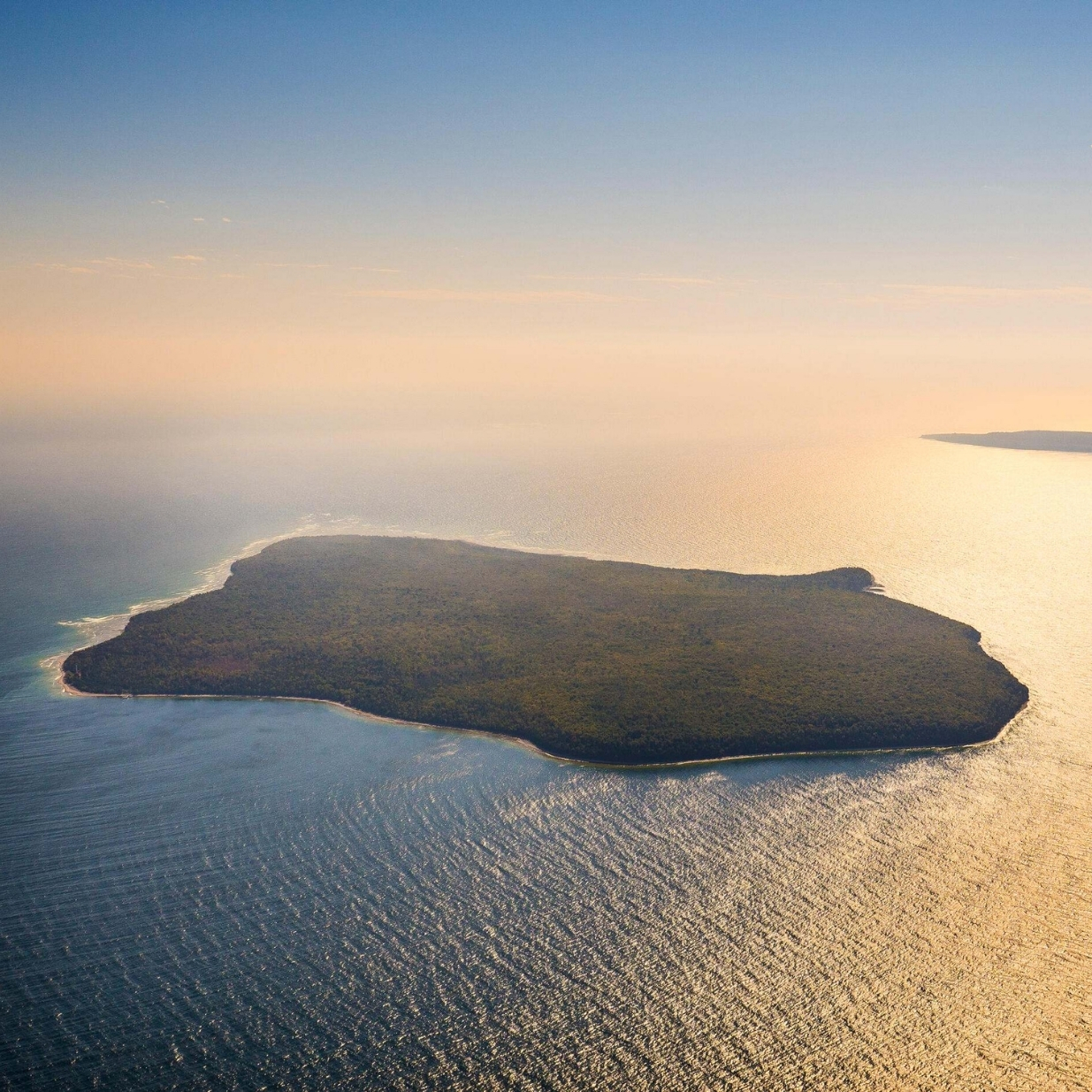
Aerial view of a forest-covered island surrounded by shimmering blue and gold water, with sunlight reflecting across the lake and a hazy horizon beneath a clear sky.
St. Martin's Island Located in Lake Michigan, St. Martin's Island is one of the 35,000 islands in the Great Lakes. © Mark Godfrey

Why This Matters

Many endangered or threatened plant species, such as dwarf lake iris, are only found on islands  and coasts in the Great Lakes. There are also wildlife, like the Lake Erie watersnake (a subspecies of the common watersnake) that are found only on the islands and coasts of western Lake Erie. 

Bonus Fact: Stay with us here, because this is about to get a little tricky. Lake Huron holds the record for the world's largest freshwater island, Manitoulin. Manitoulin itself has two world records: it has the world's largest lake on a freshwater island, AND it has the largest island on a lake that's on an island on a lake.

4. The largest collection of freshwater sand dunes in the world are found on Lake Michigan.

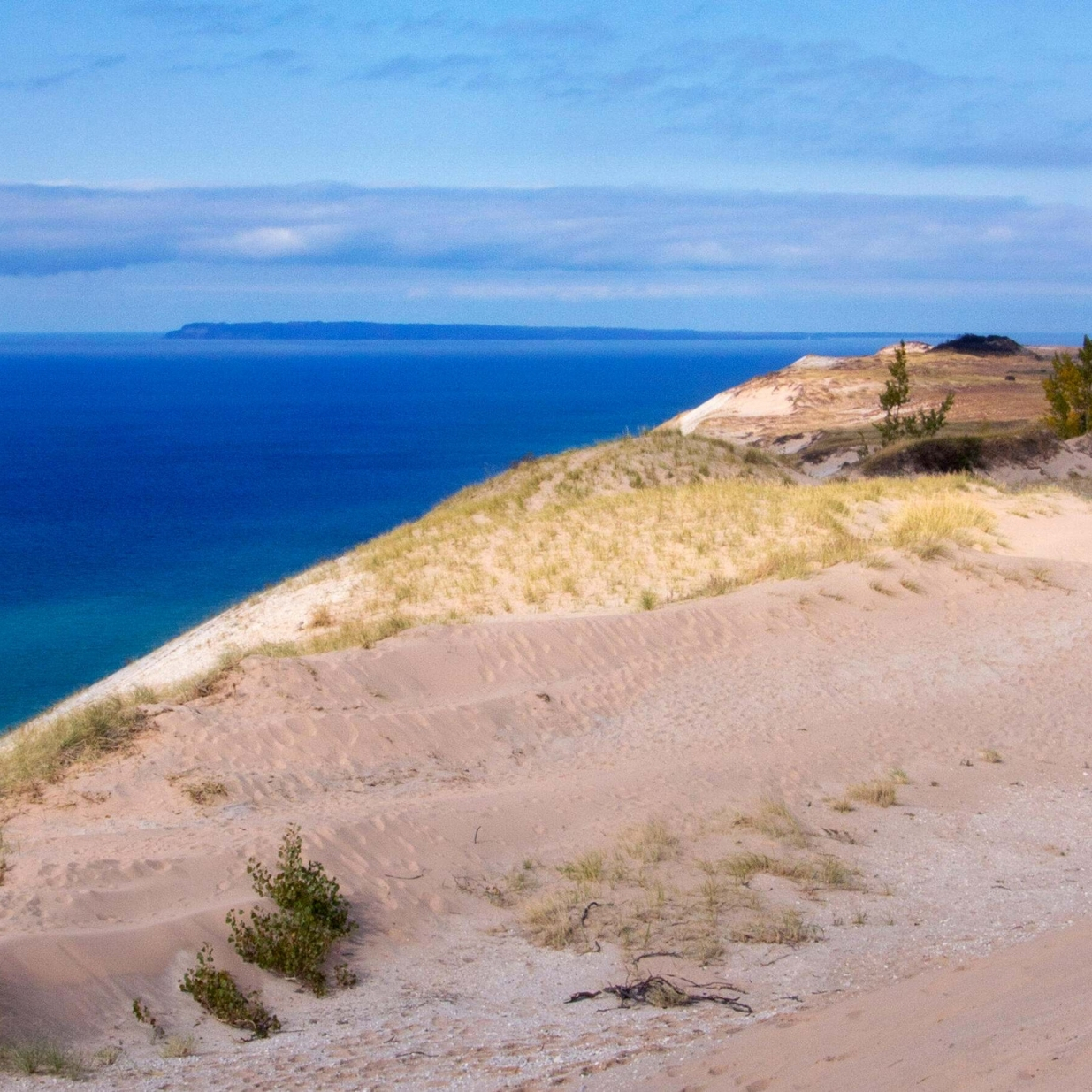
Sweeping sand dunes covered with beach grass overlook a deep blue lake, with sandy bluffs, a distant shoreline, and a partly cloudy sky stretching across the horizon.
Lake Michigan Dunes Found along the shore of Lake Michigan, these dunes in Michigan are a globally unique landform and home to diverse natural communities. © Deb Allen

Why This Matters

Found only in Michigan, this collection of coastal dunes is home to diverse and unique habitats, from coastal forests with hemlock trees to dune and swale complexes dotted with ponds and wetlands. Many threatened or endangered species, such as piping plovers and pitcher's thistle, are dependent on these natural areas. Protecting the dunes and their natural communities is crucial to ensuring that this rare and globally significant area can thrive well into the future. 

Bonus fact: The tallest dune in this complex rises about 450 feet above Lake Michigan!

A Home for More Than 3,500 Species

The Great Lakes provide diverse habitats for wildlife and plant species, some that are only found in the environments in and around the lakes. Here are just a few that depend on these waters. Click each photo to learn more.
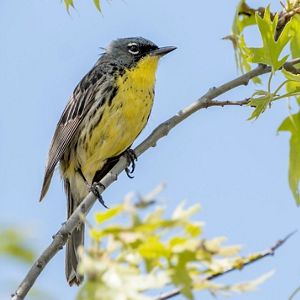

Close-up wildlife photograph of a Kirtland's warbler perched on a diagonal branch in spring foliage. The bird's vivid yellow breast, gray head, and streaked plumage are sharply in focus against a smooth blue background with out-of-focus leaves. The composition emphasizes the bird's delicate features and natural woodland habitat.
Wildlife photograph showing a moose cow and calf beside a pond in a forested area. The calf stands among tall grasses in front of the adult moose, which emerges from dense greenery near the shoreline. The water reflects muted tones of the surrounding landscape, and the softly focused trees and marsh vegetation in the background add depth to the image.
An underwater photograph showing a large lake sturgeon swimming from left to right above a rocky lakebed. The fish has a long, torpedo-shaped body, a pointed snout, and several whisker-like barbels hanging beneath its mouth. Its pale gray-green coloration blends with the blue-green water, while large pectoral fins and a distinctive tail are visible. Rocks and patches of sediment cover the bottom beneath the fish.
Macro-style nature photograph featuring a single dwarf lake iris in bloom. The vivid purple petals contrast strongly with the earthy woodland floor. White and yellow nectar guides on the outer petals draw attention to the center of the flower, while surrounding green foliage and scattered plant debris provide habitat context.
A brown-gray watersnake rests coiled on the ground among grass, rocks, and leaf litter. The snake's body forms several overlapping loops, revealing rows of smooth, tightly packed scales with subtle darker patterning. Its head is positioned on top of the coils, facing slightly to the right, with a visible round eye and closed mouth. Soft natural light highlights the texture of the scales and the surrounding vegetation.

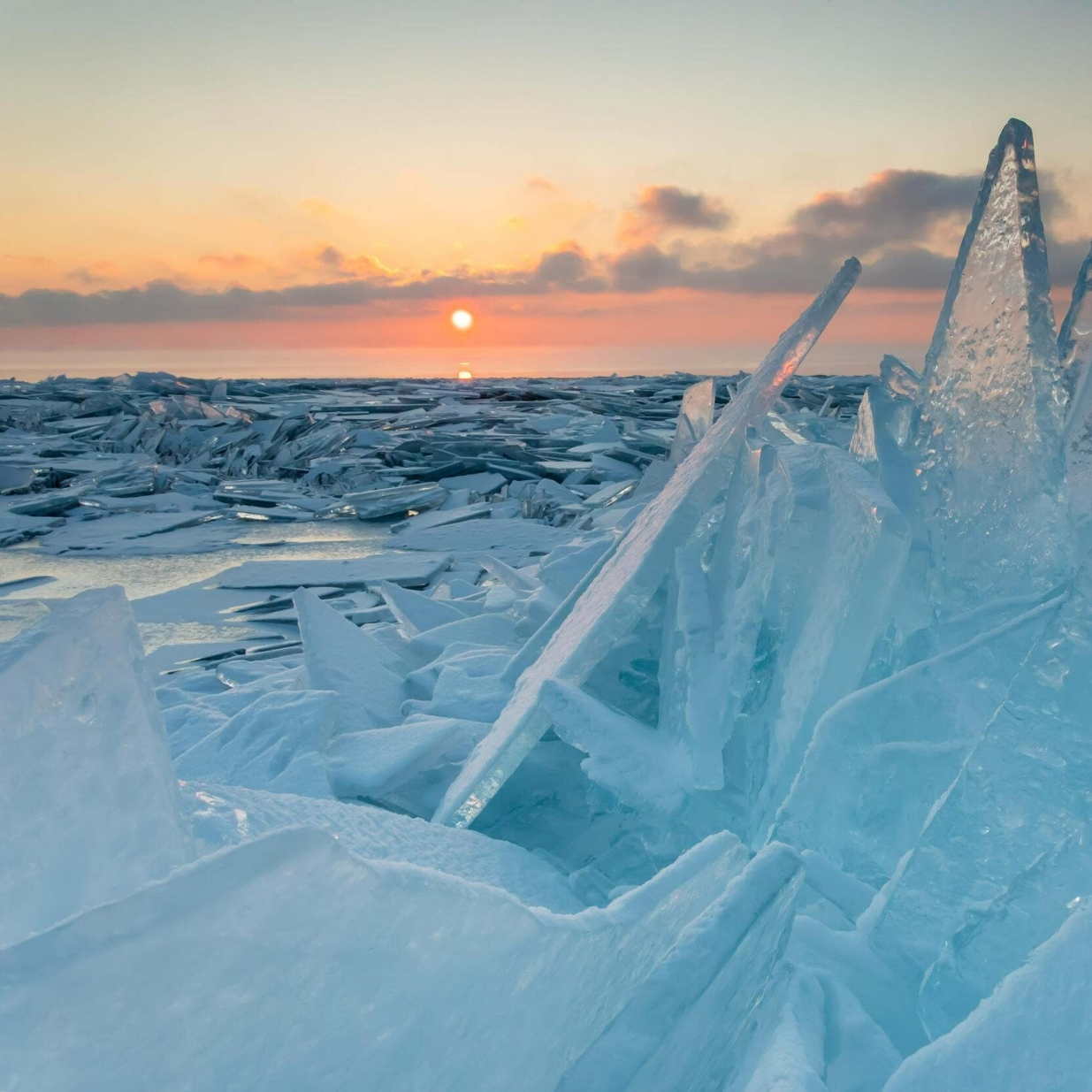
5. Lake Superior is one of the coldest lakes in North America.

Jagged blue ice formations rise from a frozen lakeshore at sunrise, with broken ice sheets stretching into the distance beneath a glowing orange sun and pastel-colored sky.
Frozen Lake Superior While winter definitely brings frosty temperatures to Lake Superior, its temperature remains fairly chilly year-round, rarely topping 55F. © Tom Samuelson/TNC Photo Contest 2021

Why This Matters

The lake's cold temperatures make it a haven for native fish species, such as cisco and lake trout, and help protect it from some invasive species. However, rising temperatures due to climate change also heat the lake. The warmer water not only affects native fish and other species but also creates conditions for more severe weather (such as stronger storms) in surrounding communities. 

Bonus Fact: Beyond the shallower bays and beaches, Lake Superior's water rarely tops 55°F. Below about 660 feet, the water remains a chilly 39°F year-round.

6. The Great Lakes can be spooky?

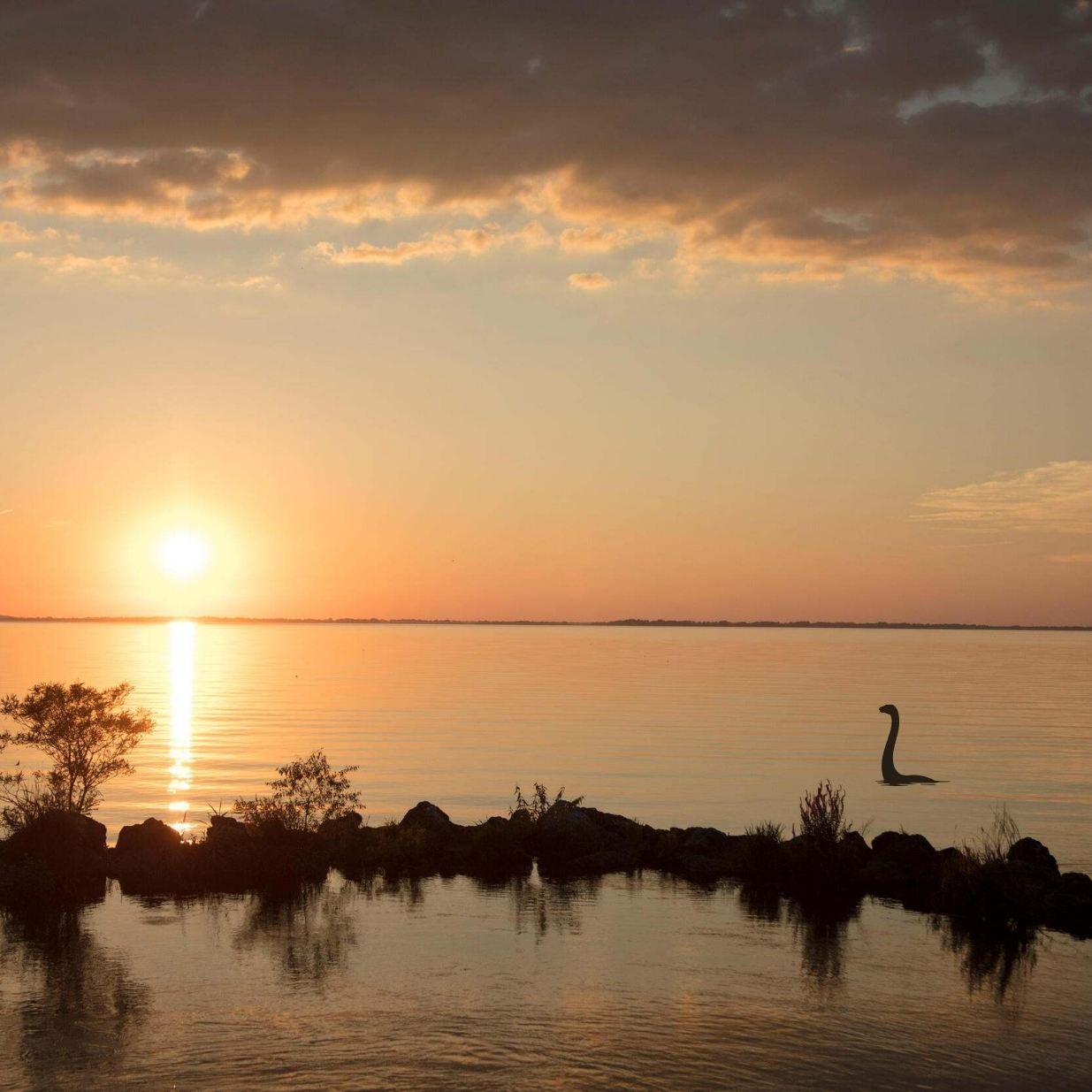
Sunset over a calm lake with golden reflections on the water, silhouetted shoreline rocks and vegetation in the foreground, and an added graphic silhouettte of a long-necked lake monster rising from the water near the right side of the image.
The Lake Erie Monster Known as Bessie, this large lake serpent has been spotted several times since 1817. © Ariana Lindquist (photo); Hikmat Studios (monster graphic)

Why This Matters

Have you heard that Lake Erie is home to a giant lake monster? Or that Lake Michigan has its own "Bermuda Triangle"? Conservation isn't all science and statistics. Sometimes it's fun to celebrate the folklore, mysteries and quirky stories that make the Great Lakes region unique.

The Lake Erie Monster

Dubbed Bessie, the Lake Erie monster was first spotted in 1817, with sightings continuing on and off through the years, into recent history. She's described as snake-like, around 30-40 feet long, with a narrow, dog-like head and a pointed tail. Cleveland, Ohio, has a minor league hockey team called the Lake Erie Monsters, named for this elusive cryptid. 

The Michigan Triangle

Stretching between Manitowoc, Wisconsin, across to Ludington, Michigan, then down to Benton Harbor, Michigan, the Michigan Triangle is home to many unexplained phenomena. The tales started in 1891, when a ship disappeared without a trace in that area. Since then, other ships and even airplanes have gone missing without explanation or recovery. 

Why We 💙 The Great Lakes 

The Great Lakes are more than just massive bodies of water. They provide drinking water for millions of people, support remarkable wildlife, fuel local economies and create unforgettable outdoor experiences. These inland seas shape life across the region, and they're worth exploring, celebrating and protecting so that future generations can enjoy everything that makes the Great Lakes extraordinary.