
We're working with you to make a positive impact around the world in more than 35 countries, all 50 United States and your backyard. Support our work
Yes
Take a look around and spot some of Dragon Flat's amazing plants and animals. View All
Dragon Flats is open for guided paddle trips. View All
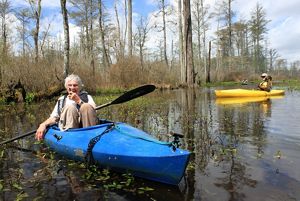
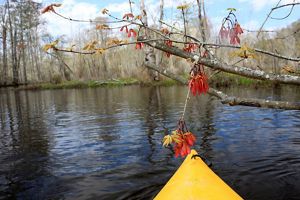
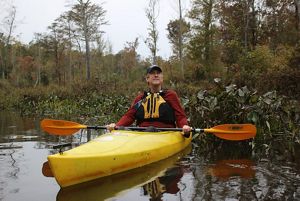
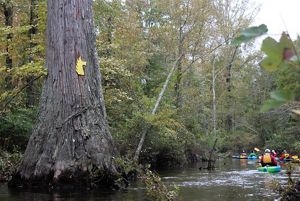
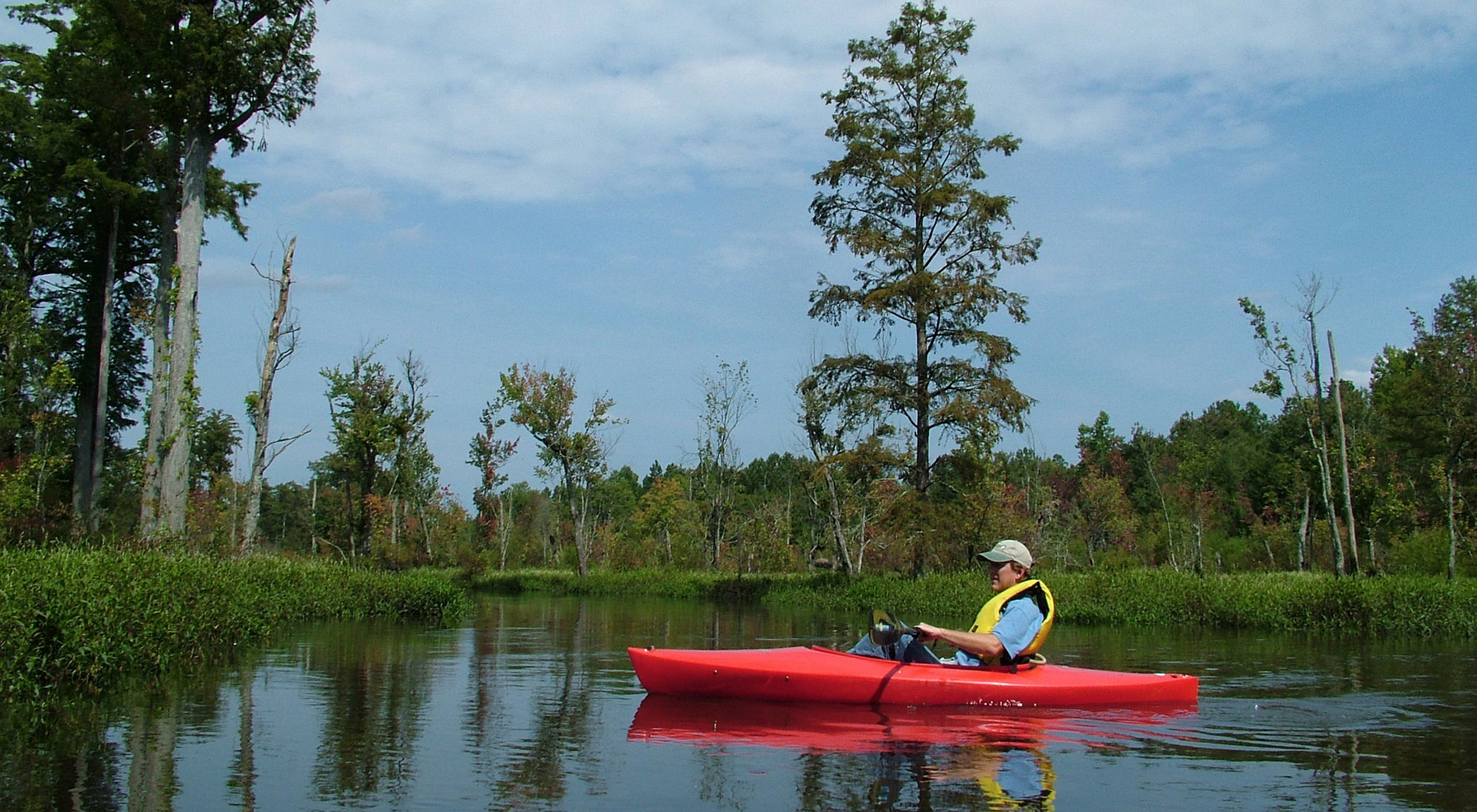
Dragon Flats Preserve, though restricted to visitors, can still be seen and enjoyed by paddling down Dragon Run. Widely considered Virginia's most pristine blackwater stream, Dragon Run meanders for nearly 40 miles through remote portions of four eastern Virginia counties. Near Saluda, the Dragon widens to form the Piankatank River, a tributary of the Chesapeake Bay.
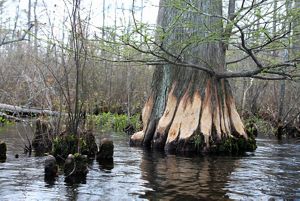
Dragon Flats Preserve features a striking bald cypress swamp where bald eagles and songbirds nest. The preserve follows the waterfront for a mile and a half and helps form a mosaic of connected conservation areas.
In 1976, The Nature Conservancy joined with the Chesapeake Bay Foundation to commission a Smithsonian Institute study of 232 rivers and streams in the Chesapeake Bay watershed. Dragon Run ranked second in terms of ecological significance.
In 2001, the Conservancy established its Chesapeake Rivers Program to work closely with partners such as Virginia’s Department of Forestry and Friends of Dragon Run. Since the landscape program launched, the Conservancy has helped conserve nearly 9,000 acres in the forest block surrounding Dragon Run.
In 2008, the Conservancy transferred more than 1,800 acres to the Virginia Department of Forestry, establishing Dragon Run State Forest. The state forest provides opportunities for sound forestry and public recreation, while protecting water quality in the Dragon and, ultimately, the Chesapeake Bay.
Land conservation along Dragon Run preserves traditional land uses that have endured for at least four centuries. It’s also critical to protecting and restoring the Chesapeake Bay downstream and its embattled species such as our native oyster.
Take a virtual kayaking trip down Dragon Run and experience one of the state’s finest blackwater streams.
The Nature Conservancy and the Chesapeake Bay Foundation believe that restoring our native oyster is the best solution — for citizens, for the oyster industry, and for the Chesapeake Bay. © Hal Brindley
See how we're restoring native oysters downstream from Dragon Run in the Piankatank River.
Bald cypress trees and aquatic plants such as arrow arum, spatterdock and pickerelweed. The preserve hosts at least one state-rare plant, pineland tick-trefoil.
Bald eagle, prothonotary warbler, blackwater bluet (a state-rare damselfly).
For information about guided paddle trips, contact Friends of Dragon Run.
Download a map of the Dragon Run protected lands (pdf, 336KB).
Have you been to this preserve? Are you thinking of visiting? See what others are saying about their experiences and add your comments below.
Time for you to join the discussion. Tell us about your experience at this preserve. What plants and animals did you see? When did you go? You can help others plan their visit when you share your thoughts. And thank you for visiting one of our nature preserves!
Whether scary or exciting, nature has a way of sneaking up on you. See stories
Hear some of nature's success stories and see how nature matters to us all. Watch videos
Brian van Eerden, Southern Rivers Program Director, with his daughter, Abigail, explore the pine savannahs at The Nature Conservancy's Piney Grove Preserve and adjoining International Paper property located in the Mid Atlantic Coastal Plain ecoregion of southeastern Virginia. © Mark Godfrey/TNC