

Plug in, press play and be present as you listen to Wisdom Keepers, an audio series by The Nature Conservancy that shares the stories and messages from Indigenous Elders around the world about living in balance with Mother Earth.
Join our host Gabriela Tejeda, a nature advocate and former TNC and NGS extern, who invites us to listen to the messages of our Elders passed down from generation to generation—gifts of story, song and knowledge rooted in tradition, meant to nurture the future.

Meet Gabriela Tejeda, your host
Gabriela Tejeda is a conservation storyteller and National Geographic explorer who currently works on The Nature Conservancy’s global Storytelling team. Through her work in Florida conservation outreach and on social media, Gabriela created powerful visuals and narrative to immerse audiences into the South Florida Everglades. She is a public speaker, TNC-National Geographic Society Externship alumna, 2x Jackson Wild Fellow, Dry Tortugas Artist in Residence and Global Focus Project Nominee.
Content Warning These stories may contain discussion of historical and ongoing impacts of colonization, including periods when communities experienced significant loss, displacement and other serious hardships. Please take care while listening.
Episode 1: Tom “Sakokwenionkwas” Porter
From the depths of stars, Sky Woman fell and breathed life into the world we know today. Elder Sakokwenionkwas shares the story of his peoples’ beginnings and the ancestral teachings that guide us to live in balance and give thanks to all living beings on Mother Earth.
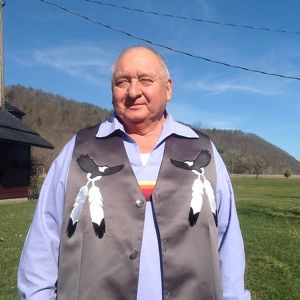

Tom at Kanatsiohareke: © Kay Olan
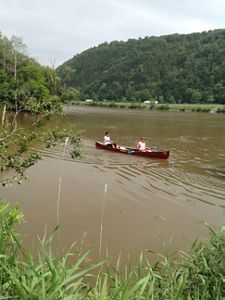
The Mohawk River: Kayakers on The Mohawk River look south from the shores of Kanatsiohareke. © Kay Olan
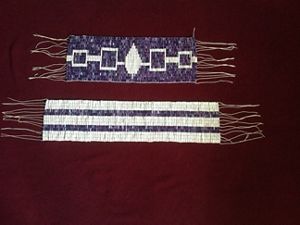
Wampum Belts : Two Wampum belts, Hiawatha (top) and Row Wampum Belt (below), are featured on a hard surface. © Kay Olan
Historic Marker : A historic marker features information about Major Jelles Fonda, a prominent merchant of the Mohawk Valley located at Kanatsiohareke.. © Kay Olan
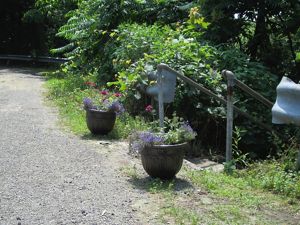
Kanatsioharek : Beautiful planters with flowers are situated at the entrance of the property. © Kay Olan

The Original Instructions
Tom "Sakokwenionkwas" Porter | Bear Clan, Mohawk Nation—Akwesasne
Tom "Sakokwenionkwas" Porter: Kanien'kéha enhatá:ti.
That means that the Creator used the dirt, the soil from the Mother Earth and the water and, uh, fire and the wind. And he used those elements to form out of those materials, natural materials, human men and women. And uh, the ones who did it were the twin boys that were born to the Sky woman. The Creator had given them each half the world's power to create and to bring identity to the Mother Earth.
Gabriela Tejeda: Tom Porter, who goes by his Mohawk name of Sakokwenionkwas, often tells the Mohawk creation story.
Sakokwenionkwas: And so when those twins, with the power of the Creator, began to make the human beings, they used the power of the other place called karonhià:ke. And this place where we live, uh Ionkhi'nisténha Ohwéntsia, that this planet Earth and where our great-great-grandmother came from, somewhere in the solar system, there's another planet there. It's similar to this one, and that's where she came from.
So they use that power so in that mixture of making humans, part of our power comes from the stars or the planet karonhià:ke. And also when we finish our life here on this earth, they all say, no matter if it's Senecas, Cayuga Onondaga or Tuscororas, they all say that our, our spirit, once we're done with our physical body, goes back to karonhià:ke from where it came from.
Gabriela Tejeda: Sakokwenionkwas is a member of the Bear Clan of the Mohawk Nation at Akwesasne. He’s been telling this story and many others, about the Mohawk culture, for decades. He’s told these stories throughout Indian Country and in universities all over North America, and in both the Akwesasne Freedom and Kahnawake Survival schools.
Sakokwenionkwas: But the part that I like a lot was it says, uh wa'sakotahstánion.
That means she stood up the, the humans that they made, the new humans, the new doll. And, uh, he blew in their mouth three times. He used the fire too to make them live, and then he blew in their mouth three times and then they began to blink and they began to have a mobility. And then it is said, uh, that time they took those dolls, and they stood them up side-by-side, the woman and the man.
And, uh, even though they had mobility and were alive and movement, their mind was completely blank because they were freshly made.
Gabriela Tejeda: Sakokwenionkwas has spent his life teaching the Mohawk histories, philosophies and language to achieve what he calls the Carlisle School in Reverse.
The Carlisle Indian Industrial School, located in Pennsylvania and operated by the United States Government at the time, opened in 1879, and for almost 40 years saw nearly 8,000 Native American children come through its doors.
In an effort to assimilate them, the school cut their hair, took away their traditional clothing and belongings and forbade them from speaking their languages or practicing their ceremonies.
Instead, they were taught the English language and Western trades.
There were hundreds of schools across the country trying to achieve this same goal: to systematically erase Native American culture by forcing their children to conform to Western culture.
Sakokwenionkwas: And so the Creator, through the twins and so on said, we have to transfer now, uh, my thinking to the dolls. So I need to give them knowledge and wisdom and I need to also instruct them of how they are to survive and if they're gonna survive, how they have to behave and know.
And so he began to transfer his mind and his knowledge to that new, newly made human beings at the beginning when the world was new for humans. And therein is our instructions.
Gabriela Tejeda: Sakokwenionkwas is referring to the Original Instructions, given to all people by the Creator, telling us how we are supposed to be and how we are supposed to act on this earth. He says that some people refer to it as the opening prayer or opening address. Some people call it the Thanksgiving address. He says, "They aren’t exactly wrong, but they aren’t exactly right either." And he translates it to describe its whole meaning.
Sakokwenionkwas: The word we call it is Ohén:ton Karihwatéhkwen in the Mohawk language. And if we were to take that word apart, and I'll try to do that, I think it might be close to being right. Ohén:ton means in a front or before, and karì:wa means the issues or matters that are important. So Ohén:ton Karihwatéhkwen and those are the words that you say before you discuss or meet about matters or issues of importance or anything significant, important to say that. And then when you're done with those discussions of important issues or matters, you have to close it as well with the same speech, almost exactly the same.
And so then it is spiritually, uh, has a front door and a back door. And so that's the knowledge that the Creator gave to them.
Gabriela Tejeda: The translation is important—and part of the reason Sakokwenionkwas has dedicated his life to restoring the language, traditions and culture of the Mohawk nation. Language and culture are intertwined, and without the language, it's hard to fully understand the culture.
He explains to the many young people he’s taught over the years that this speech, that was given to us in the beginning, is still being given today, time and time again, throughout the longhouses of the Mohawk nation.
Sakokwenionkwas: And this instruction was given to everybody, but mostly the native here has never forgot that. Other parts of the world, they no longer follow the original truths. And until we follow the original truths, there will not be peace. And our Mother Earth and all her sacred life will be in jeopardy. If we get back to our original truths, Mother Earth will be happy, rivers will be happy because everybody will be healthy.
Gabriela Tejeda: Sakokwenionkwas tells young people that these Original Instructions, given by the creator to humans, are our skeleton key, as he calls it, to our success and our health—on how to live a good, long life here on Mother Earth. It's spiritual and physical guidance for us all.
This ancestral knowledge was passed down to him from his elders; he continues the tradition of passing down these Original Instructions to the next generation:
Sakokwenionkwas: So this is what he put in their head, the new human beings, when the world was new. The first thing he says, you'll, you will send your words of thank you and greetings in love, first to the Creator for this wonderful universe that we live in.
And so the sun shining and everything growing, and so to our Creator, we say thank you that we can be a part of this wonderful world. And then we say to the Creator, thank you and hello, and send them our greetings, our love.
And then when the people says, now our mind is agreed, and the people hears that our mind is agreed, then all real Mohawk will say, Tó:r. Kids, woman, men, they will say Tó:r. That's the old fashioned way, formerly of the old Mohawk language, when you say yes, or you agree, you say Tó:r.
Gabriela Tejeda: The Creator then gave the next instruction to the first humans: "When you come together," he says, "you will acknowledge one another, that you are brothers and sisters in the gathering, whether it's a community, a village or a meeting or a ceremony."
Sakokwenionkwas: And you will give greetings and thankfulness and kindness to each other. And so to the people gathered, they said, we greet you and we thank you that we are together and our mind is agreed. And then the people heard that, and they said, Tó:r.
Then they said, next one, he says, now we're gonna face the earth. And at the beginning of time, the Creator said, the earth is gonna be a woman. And not only is she gonna be a woman, but she, the earth is gonna be the mother of all life. Be it trees, vegetation, be it water, be it people, or be it animals. And so the Earth is the mother to all life. Everything comes from her. She gives birth. And then when she gives birth, she feeds and nourishes all of us, just like a little baby nurses from the mother when they're little. But this Mother Earth, we get the food from her body every day until we live no more.
Gabriela Tejeda: Sakokwenionkwas says that his elders, in their telling of the Original Instructions, would say the following: That when the creator "made the earth to be our mother," he "chose the strongest, the most consistent, the most stubborn and loving mother that can be found in the universe."
Sakokwenionkwas: Because since the beginning of time, our Mother Earth has never reneged on what the Creator told her to do, and she never abandoned us or threw us away. That's why every single day, every food we put in our mouth and our children's mouth, it came from our loving mother, the earth. And so because she didn't throw us away, we will gather all our minds from our eldest, our middle age, to our kids and our babies, and with one mind we put multiple layers of Thanksgiving, greetings and kindness, compassion layer after layer, and then we give it gently to our mother, the earth.
And we say to Mother Earth, thank you that you never threw us away. Thank you, you still support us every day. Mother Earth, with love, we say thank you and our mind is agreed and all the people said Tó:r.
Gabriela Tejeda: He goes on to explain how they give thanks and greetings to the water, of which the creator gave a spirit and a soul, as well as a voice. It can whisper like a creek, and it can roar like a waterfall. Every day we drink water, he says, and it quenches our thirst, cleans our bodies and gives us life and health.
They send thanks and greetings to the corn, beans and squash—the plants that they grow and also to the ones that grow wild; to the deer, and to the maple tree, the chief of all the trees in the forest.
Sakokwenionkwas: And from the trees we get oranges and apples and plums and pears, peaches and all kinds of good food.
And from the trees, the hickory nut, walnut, all kind, pecan nut, all kind of good food for the birds, the animal and the people. And from that tree also comes the oxygen or the air that we breathe. And in the hot summer's day, when we take our rest and find comfort under the big tree in the shade that we sit in coolness to rest. So to all the trees in the world, we send our thank you, our greetings and our love. And the people when they heard our mind is agreed, they all said Tó:r.
Gabriela Tejeda: He gives thanks "to the birds that sing to us," "to the four winds that bring the changing of the seasons," "to the thunder" that replenishes the rivers and nourishes gardens and the fields, to the sun who shines and "makes the corn grow," to the moon, who enables women to bring new life.
Sakokwenionkwas: And also to the stars that fill the nighttime sky, we send our thank you and our greetings and our love and our mind is agreed. And the people, they said, Tó:r. And then it is to the four sacred beings, we call them Ratironhia'kehró:non, the powers or the spirit of the sky. They're the helpers of our Creator.
We send our thank you, our greetings and our love to them, and our mind is agreed. Then finally, we come back now to our Creator, and he's the one, he gave us several teachers through the years. And to all of those leaders, the prophets, those reminders of the Creator's mind, we say thank you. That's why we still live. That's why we still remember the Creator's teaching.
Gabriela Tejeda: Sakokwenionkwas says that once, when he was a young boy, a professor from one of the prestigious universities like Yale or Princeton, he can't remember which, came to their reservation looking for his grandfather. This man asked him what his people mean when they say Creator, or God. What are you talking about, he asked? What's the definition?
Sakokwenionkwas: And to put it simple, he gave a big, long answer.
He said, if you add up all the humans in the world and you add up all the animals, big and small, and all the fish in the river and ocean, and you count every star in the nighttime sky, and every bird that flies and sings every day and all life in its total. If you add all that up, the total or the sum of that additional of those lives, that's what we call God or that's what we call Creator.
So the Creator is in everything that lives, in the foods we plant in the garden, the big trees that grows in the woods, the Creator is in there. Every star that shines in the night sky, that's the Creator too in there. For everything that lives and everything that is, the God or Creator is in there.
And that's where it's different between the Western world and the Indigenous, real Indigenous people, that all life is sacred in this Creator.
So whenever we have a ceremony and we say Shonkwaia’tíson, or Creator, we're not talking about just a simple human man or woman. We're talking something that is inclusive of all life and that life can turn into a human. That life of that Creator can turn into a deer or a buffalo or a tree, or a hurricane or a tornado, or the sun or the moon when they want to.
Gabriela Tejeda: Many times that’s where elders receive their spiritual messages—from an animal, or a bird or the wind. He says, “That’s important to know when you are studying our nature’s spirituality.”
Sakokwenionkwas: So now he says, when you come together, he says, always you remember that you are part of the Creator. And so the Creator gave us this universe that we live in.
And so everything that we need is here at our fingertips, never to waste or never to abuse anything that was given to us, but to be grateful.
Gabriela Tejeda: Sakokwenionkwas has spent his life sharing these instructions, bringing his people back to their culture and traditions, reminding them, and all people, of these Original Instructions. Sharing, as he calls it, the skeleton key.
Sakokwenionkwas: It's the skeleton o’key that opens our tomorrows and the next tomorrows until we no longer live on this earth, how we are to connect with the spiritual world and make sure that we always respect and love our mother, the earth and everything that she makes born, that we will respect it. And if we do that, our life will be like a circle. It won't end. Because our children will continue that circle, our grandchildren and our great-grandchildren. Long after we are gone, the circle will not be broken.
Gabriela Tejeda: We want to extend a heartfelt thanks to Sakokwenionkwas for being a part of this episode in The Nature Conservancy’s Wisdom Keepers audio series. I’m Gabriela Tejeda—thank you for listening.
Episode 2: Ilarion “Kuuyux” Merculieff
As a child, Kuuyux imagined what it was like to be a seabird. His Elders taught him the traditional Unangan ways and skills learned through fishing and hunting on how to connect with Mother Earth—listening with his whole body and being present in the mind and the heart.
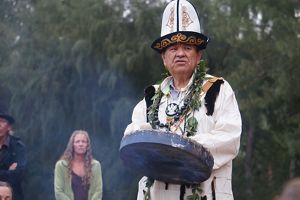
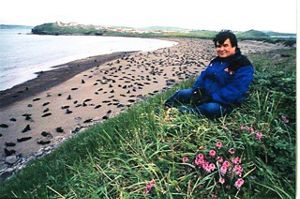
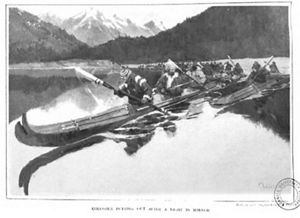
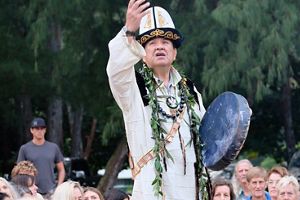
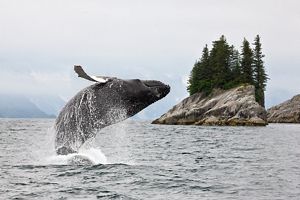
Photo with regalia: Kuuyux has worked with indigenous peoples from around the world and participated in numerous sacred ceremonies © GCILL and WWW
At the Beach With Seals: Having had a traditional upbringing, Merculieff has been, and continues to be, a strong voice and activist calling for the meaningful application of traditional knowledge © Roy Corral
3-hole baidarka: An old black-and-white photo features a group of men putting out after a night at harbor. © Cornell University
Decades of experience: Ilarion (Larry) ‘Kuuyux’ Merculieff has decades of experience serving his people, the Unangan (Aleuts) of the Pribilof Islands © CGILL and WWW
Learning with nature: A whale swims in Alaska. © Shutterstock

Tututhax: Just Listen
Ilarion “Kuuyux” Merculieff | Unangan—Aleutian Islands
Ilarion “Kuuyux” Merculieff: Hello, everyone. Kelum exumnax kelum kusuthax. Aang waan Ting Unangan way. Unangan usuxtax Kuuyux. Ting Cowalungan Unangan way. Ting usuxtax Kuuyux. I said that, uh, I said, good morning. The morning tastes good, which is the way we greet each other every day amongst my people, who are called Unungan. And, uh, the Westerners call us Aleut, but we don't use that because that's a name given to us by our former oppressors.
Gabriela Tejeda: That's Ilarion Merculieff, an elder of the Indigenous Unangan people of the Pribilof Islands. He is also known by his given name, Kuyuux.
Kuuyux: So it's Unungan. And, I said, hello my other self, which is another way we greet each other. And I said, my traditional name is Kuuyux, which means, like, uh, a carrier of ancient knowledge into modern times, uh, messenger, uh, to, to modern times.
Gabriela Tejeda: There's only one person given the name of Kuuyux in each lifetime. This name of messenger to modern times was given to him by the Kuuyux before him when he was just four years old.
The Unangan people, for nearly ten thousand years, lived on and stewarded the lands now known as the Aleutian Islands.
Kuuyux: We have stories about our people coming from Egypt, going across to outer Mongolia, to Siberia, to Kamchatka and across by traditional craft, not across the Bering landbridge, is what people say.
And, we developed a highly sophisticated and advanced, uh, spiritual culture for our time, where we picked the place that's hard to eke out a living, but yet we did, we were, uh, thriving in the Bering Sea.
Gabriela Tejeda: Kuuyux was born on St. Paul Island, an island in the middle of the Bering Sea, that was traditionally hunted but not inhabited by the Unangan people, until they were forcibly relocated by Russian fur traders.
Kuuyux: We called the Islands Tunax Amix, which means land of mother's brother. And this was a name that our people gave the Pribilof Islands, many, many, many years ago before the Russians came, before it was called St. Paul Island. And so the islands were used as hunting grounds and not as a place to settle.
In fact, our shaman told us this is not a place to live because it's a power center.
Gabriela Tejeda: When the Russian traders forced them from their homelands to St. Paul and the neighboring island of St. George, they suffered immensely, losing 80% of their population, he said, in just 50 years, to starvation, malnutrition, disease and genocide.
Despite these hardships, they held on to their traditions and ways of life.
One defining feature of the Unangan culture is that they were the only native Alaskan people that did not have food storage technologies, as he put it, outside of air drying. They didn't worry about where their food would come from the next day.
When Kuuyux was a boy, he got curious about this way of being.
Kuuyux: When I asked my elder on St. Paul Island, what was this all about? He says, look at that seabird over there. Do you think it worries about where it's going to get the food the next day? And are we any different? And of course the answer is no, we're not any different. Uh, that, uh, what we have done to all the people around the world is, um, separate ourselves from the land and we separate from ourselves.
Gabriela Tejeda: Before their forced resettlement to St. Paul and St. George islands, the Unangan had one of the most most densely populated shorelines in North America.
Kuuyux: And the way we did it was to be present in the moment and in the heart, trusting that everything else will be taken care of. And with that approach, we were able to thrive in the Bering Sea.
Gabriela Tejeda: Kuuyux says that his generation was the last to have what he calls a "fully intact traditional upbringing" where the whole village participated in raising the children. He describes how he had to be with his grandfather every single day, all day, for two years, starting at the age of four.
Kuuyux: I would go with him everywhere he went, including during his slave job as the, uh, janitor for the government, uh, in the government house. But anyway, we, uh, would, I would go to work with him every day. I would, uh, go have tea with him, with all of his friends. Um, I would sleep with him, I would go down to the Bering Sea and take off our shirts and spray ourselves with the Bering Sea, praying toward the east. And uh, that night we might go to the Russian Orthodox Church, because he saw no difference in where one got one’s spirituality, and that's the key. Spirituality and not religion.
Gabriela Tejeda: It was during this time, on a rare beautiful day, that his grandfather taught him one of the most important lessons of his life.
Kuuyux: In the Bering Sea, we get 20 days of sunshine a year. And it's blowing most of the time. So there's waves going and, and you know, it's, it's, it's quite blustery and, uh, this, this day was perfect. It was no wind at all.
The sea was calm, the birds were singing, the seals were barking, and it was such a beautiful day that I had to comment at four years old, I said, I said in Unangan Tunuu, in the, uh, Aleut language, um, uh, it's sure beautiful out.
And he goes, ‘Tututhax.’ That's all he said. ‘Tututhax,’ which means listen.
And what we talk about listening is listening without agenda, without your mind. Uh, just listen with your whole body. And, uh, that, that is how our people survived and thrived in the Bering Sea for over 10,000 years, and we're still there.
Gabriela Tejeda: He learned other important cultural lessons from elders during his childhood. One such lesson was in how they use their language.
Kuuyux: We, we don't talk very much, and this is the way that I learned. I had an Aachaa uh, at six years old, which is a traditional relationship between, uh, an older person and younger person, and the way we found each other—literally, we found each other—that when he saw me and I saw him, I was four years old, five years old, and I knew that that was my Aachaa. And, uh, my Aachaa knew that I was his Aachaa, so we called each other Aachaa and he taught me much of what I, I learned about being a man, being in, uh, relationship to others, uh, reverence for all life, the Unungan ethics and values and all these different kinds of things that, that we grew up on. And yet, in the time he had me under his wing from age five to age 13, he literally said no more than 200 words to me because words were considered superfluous and may be dangerous. And besides that, the best learning, uh, about Mother Earth is to be silent and, and, not, uh, clutter ourselves with thought.
Gabriela Tejeda: Kuuyux spent time with the adults in the village too, learning the women's ways, like food preparation, and the men's ways, like hunting and fishing. He talks of weekends spent camping with elders, listening to "story after story." And when he spent time with his peers, he said, his job was to play—and they would.
Kuuyux: We were outdoors every day, all day long until night. Uh, we just, just enjoyed it. I can describe what that's like, but I won't do that right now.
And you know, I, I would be greeted like the long lost son from any household day or night. I would walk into somebody's house and they say, ‘aang lakaiyax, kunguthax, ungaachcith waath, kaakux.’ Come in, sit down, eat. That's the way I lived and uh, that was quite rich.
Gabriela Tejeda: During Kuuyux's time learning the men's ways, they would take him hunting and fishing. They primarily hunted stellar sea lions, only males—the Unangan are among the few that can tell the difference—and only in the seasons when they aren't breeding. They hunt from the shore to the water, and he describes what it was like to go as a child.
Kuuyux: We'd have to go out early in the morning, like six o'clock in the morning at time of sunrise, and sometimes we'd wait the entire day for one sea lion to come by in the water.
And, I'm six years old and by the time noon arrives, I'm just daydreaming and sleepy. But the men, they never did, they never got daydreamy or sleepy and they were never active. They were never talking very much. They were just focused on the water and then all of a sudden, you know, there'd be four or five hunters there, uh, someone would say, ‘cowax ukaakux,’ sea lion coming. And instantly, and I mean instantly, all the men would turn to one spot and look at one spot in the ocean.
Now, mind you, we're, we're, I'm on an island that's 12 miles long and, and, uh, and five miles wide, very small. And we, we face 180 degrees of water and the sea lion could appear at any place, but yet they were looking at this one place.
And, uh, so I looked and looked and looked, and there's no sea lion. But they're still looking sure that the sea lion is gonna be there. So I, I said, okay, I'm gonna watch. And sure enough, the sea lion would appear in the exact spot they're looking, uh, and maybe five minutes before it appeared and it appeared in that one spot.
And I thought, wow, this is magical.
Gabriela Tejeda: He also thought it was magical that the hunters never daydreamed or got sleepy while waiting hours on the shore. Later, he discovered how they did it—by watching the seabirds.
Kuuyux: I just loved it and I loved watching seabirds, and starting at six years old. And so I would walk out of the village, very early in the morning, like four o'clock in the morning. It would be pitch black and then I would, I would get there. Um, and we can't, there, there's no lights there because it's cloudy all the time or foggy and it's just not possible. There's no light, no, no natural light, and so I walked in the dark at six years old and my parents were letting me do it. And so I would get out three miles from the isle, from the village, and go underneath this bird cliff, the closest bird cliff on the island that has intensity of wildlife. And there must have been maybe 10,000 or more seabirds.
Gabriela Tejeda: Red face cormorants, tufted puffins, horn puffins, all kinds of birds, he said, flying around everywhere, making so much noise, circling in front of the cliff at sunrise, gathering with their species to go out foraging.
Kuuyux: And they would fly within inches of me. They'd be oblivious to, to me there. And that's what I love.
And, but I, you know, I noticed how alive they were. And I said, well, I wanna be a seabird.
Kuuyux: And so I'm six years old and I say, okay, uh, I'll be a seabird. “What's the difference between a seabird and a human?” I asked myself. “Well, birds don't think,” and that's what I was thinking when I, when I was six years old. Birds don't think. And they're just, I didn't have the name for that at the time, but they're just a field of awareness. And so I said, okay, I'm going to practice being a bird.
Gabriela Tejeda: And he did. For two months he practiced being a seabird and not thinking, not having a single word come through his head, he said, and eventually, he mastered the art...and then, he went out hunting again.
Kuuyux: That's when the magic happened. I could feel the sea lion before it appeared and then I apply that to halibut fishing. We, we fish for halibut, hook, line and sinker and we can't see the halibut, but I could feel it before it hits the line.
I can tell you its behavior even when it goes over the line, because it has a lateral line down its white side that's a sensing organ, and it moves over the bait in that way. And I can tell you when it's hooked, if it's hooked by the lip or the jaw or the side of the body. I can tell you what size it is, three foot, four foot, five foot halibut. I can tell you whether or not male or female, and I can tell you, uh, how it's gonna fight on the way up. All essential pieces of information that, that a good fisherman needs. And this is, uh, uh, characteristics that we call feminine. And so we don't think, uh, negatively about the feminine side. A good hunter is the one who has these qualities.
And you, you know, it's, it's, it's obvious to me. It's not obvious to a lot of people in the world.
Gabriela Tejeda: Kuuyux says that the adults were "very aware" of the “sacredness of all things" but “especially of children."
Kuuyux: The adult's responsibility, in my culture, was to create the space for a child to learn, not tell them what to learn, how to learn or to define anything. And, uh, this is ingenious because it allows me to expand out to the maximum of my capability without the interference of an adult. And the child's job is to watch, listen and learn.
Gabriela Tejeda: One thing Unangan children learned was to be what he calls "present in the heart," to connect with Mother Earth, just like he did when he was hunting. To not define the things with words that we all feel and know in our hearts, like a beautiful day, and instead to be present with it. This is something we all experienced, he says, as children.
Kuuyux: When you, you remember as a child, when you used to go outside and you'd see one insect, maybe a, a dragonfly, and you say, wow. And you just watch that dragonfly, and that's all, you don't, you beam everything out and you just focus on that one, one fly. Uh, that's the way that our, our children were, and, and are.
Gabriela Tejeda: He worries that now we're doing the opposite, that "we've left our hearts," as he puts it, and think only with our minds. That we're moving faster and faster, talking faster and faster, thinking faster and faster with our minds, instead of our hearts, and this is the opposite of what it means to be in tune with nature.
Kuuyux: What we must do, the elders are saying, is to just be there. Be. We're human beings. That we need just to be there.
And when we are out of the head and we go to the heart and we experience it, uh, this is the way Indigenous People experience, um, communing with Mother Earth. And actually we can talk with Mother Earth. Before there was a language of one where we all could talk with everything in existence, and now we can only talk with us.
Gabriela Tejeda: He points out that of the over 200 Alaskan villages, every single one of them walks and talks slow, acts slow. That's where you can hear Mother Earth, he says, when you slow down.
Kuuyux: Uh, we call the real human being in Alaska, we have Yupʼik, Iñupiat, Dene, Unangan, means the people are the real people. These are codes given to us by our ancestors telling us about how to live, which is being a real human being means being present in the moment and in the heart.
Gabriela Tejeda: The messenger's message is clear: slow down, listen and be present with nature.
Kuuyux: I want to remind everyone, when you're doing business as usual, it's not called for today. What's called for today is to go to your heart, let your heart tell you what you must do.
Gabriela Tejeda: We want to extend a heartfelt thanks to Kuuyux for being a part of this episode in The Nature Conservancy’s Wisdom Keepers audio series. I’m Gabriela Tejeda—thank you for listening.
Episode 3: Geraldine Patrick Encina
In Mesoamerica, ancestral timekeepers observed the Sun, Moon and Stars to guide planting, ceremonies and life itself. Cultural astronomer and ecologist Geraldine Patrick Encina later found that ancestral timekeeping is cyclical, helping recover Maya, Otomi and Mexica calendars now returning to local schools.
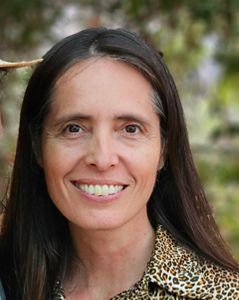
Portrait: Geraldine A Patrick © Geraldine A Patrick
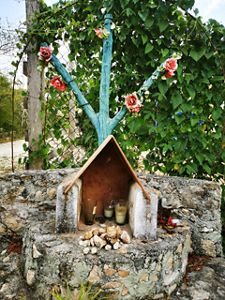
Traditions: Beautiful spiritual ritual © Norberto May Pat
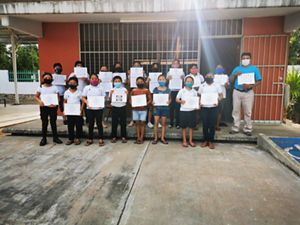
Learning together: Children holding certificates outside the schoolhouse © Norberto May Pat
Calendar: Ancestral timekeeping © Geraldine A Patrick
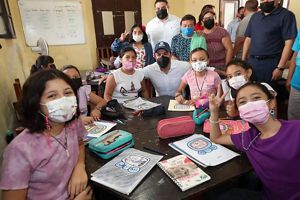
Joy and Learning: Children learning together © Norberto May Pat

The Missing Piece of Ancestral Timekeeping
Geraldine Patrick Encina | Mapuche—Chile, Celtic—Ireland & Scotland
Geraldine Patrick Encina: I would like to now dive into the philosophical components of being in harmony with time and with place as well that with my husband, we've been looking into for many, many years and that we would really love to share with you.
Gabriela Tejeda: Researcher and cultural astronomer Geraldine Patrick Encina traces her ancestry to the Mapuche peoples in Chile, as well as the Celtic peoples of Ireland and Scotland. Perhaps it's this lineage and connection that leads her to describe herself as "sensible to what Indigenous Peoples have to bring to the consciousness of humanity."
One of those sensibilities is a keen focus on Indigenous knowledge of time, especially in Mesoamerica.
Geraldine Patrick Encina: I've been very closely following the way that they would see cycles and follow seasons and what calendar systems they put in place in the place where my husband and my children were born, which is the Valley of the Moon in Central Highlands of Mexico.
Gabriela Tejeda: Geraldine has her PhD in ethnoecology, where she studied the relationship between Indigenous Peoples and their environments. It was something her husband, an Otomi-Toltec ceremonial leader, said that led her on her current path of study.
Geraldine Patrick Encina: And, coming from the Otomi-Toltec tradition, my husband was able to, at one time in the ceremony, tell me, "You see how we have just performed the ceremony, which is universal. We greet the four directions, we greet above and below, and the seventh is in our heart.
"If this is the way that we have perceived time and space in such an orderly manner, why is it that scholars claim that our timekeeping system is always lagging, that we're missing the leap day?
"And that our calendar that only counts for 365 days is not useful as a calendar for people today.”
Meaning we have no way to keep track of time by using a Mesoamerican calendar. The Otomi or the Maya, or the Mexica or any other calendar that was generated in Mesoamerica, are today of no use.
Gabriela Tejeda: Geraldine agreed with her husband. Something wasn't right. Western Colonial scholars believed that the traditional Mesoamerican calendar was missing a way to include a leap day after four years. If indeed that was the case, it was a big problem. Here's why:
Let's say you watch the sunrise on the March Equinox, March 21st. You would notice that the sun is in a specific place on the horizon.
The next calendar year, 365 days later, you would see that the sun has returned to that same place. But by the fourth year, you'll see that it isn't rising in that same spot. You'd have to wait one more day because the Earth takes 365 and one quarter days to revolve around the sun each year. In order to make up for this apparent gap, early scholars and leaders added a leap day every four years, which became February 29th on the Western calendar.
When Western scholars saw the Mesoamerican calendars, they noticed there was no leap day equivalent. They thought the leap day was the only way to stay in sync with the sun, so they immediately assumed that the Mesoamerican calendars lagged because they counted 365 days, year after year, and never 366.
As Geraldine points out, for hundreds of years, schoolchildren and communities have been told to disregard their ancestral calendars altogether, as apparently, they could not stay in sync with the sun. So, as part of her postdoctoral research, Geraldine set out to uncover what was lost under piles of colonial misinterpretations about the ancient timekeeping system of Mesoamerica.
Geraldine Patrick Encina: And, after opening old books and uh, also going to visit many elders, I was able to understand what was a missing piece in the interpretation.
Gabriela Tejeda: What Geraldine discovered is that these Mesoamerican calendars did, in fact, account for that one quarter day each year, but in a much different way than Western timekeepers' Gregorian calendar system.
Whereas Western conceptions of time see it as linear, marching forward into the future with no end, many Indigenous conceptions see time as cyclical, meaning that somewhere in their timekeeping system there is always a return to the beginning.
Time, in a sense, repeats itself.
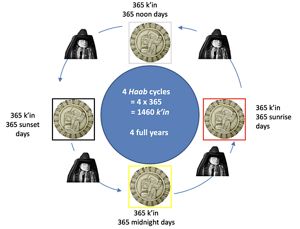
A good example of this is the four Year Bearers. The Year Bearer is a timekeeper, and on the Mesoamerican calendar, each of the four Year Bearers stand on one of the cardinal directions: east, north, west and south, and take a turn carrying the year.
When a new Maya year begins on August 13th, the Year Bearer to the east counts each of the 365 days from sunrise, the first of four solar starting points recognized by Mesoamerican timekeepers. When its count of 365 days is complete, it passes the calendar to the next Year Bearer on the north, who begins a quarter day later at noon, then to the Year Bearer on the West, who begins at sunset, and finally to the Year Bearer on the South,who begins at midnight. After all four Year Bearers have taken their turns, the start of the calendar year once again aligns with the sunrise of August 13th, beginning a new cycle.
While Western calendars mark the start of each year at midnight, Mesoamerican timekeepers recognize four solar starting points: sunrise, noon, sunset and midnight, each linked to a cardinal direction and marking where the Year Bearer begins its count. This way of timekeeping reflects a worldview where the four cardinal directions are equally important and where time and space are deeply connected, something linear models of time do not consider. That's why the Maya didn't need to add a leap day every four years like Western calendars do to make up for the missing quarter day.
Geraldine Patrick Encina: Scholars of the Maya and timekeepers today claim that the Haab, which is this Maya 365-day system, perpetually recedes in relation to the sun, meaning that the original month that was marked to see the rising of the sun on the 21st of March, for instance, would suddenly be totally out of place and not be marking that original location of the sun.
Gabriela Tejeda: Because Western Colonial scholars didn't understand the Mesoamerican way of keeping time, they assumed the ancient calendar was drifting, which made the precision of sunrises or sunsets observed at these sites seem to have no original calendar basis.
Geraldine Patrick Encina: And this is something that is aberrational, that the intelligence of the ancestors was not able to create a system that would enable them to follow the seasons appropriately.
Gabriela Tejeda: Having a calendar to live in sync with the sun's days was important to the ancestors. Their ceremonies and festivals marked these cycles and helped them live in accordance with nature. Without their traditional calendar, they couldn't perform their ceremonies accordingly. This was the case with timekeeping rituals that require moving from one cardinal direction to the next.
Geraldine Patrick Encina: And there's today only fragments of that memory that there is a ceremony that needed to happen from one place to another inside a single community.
But that original function of the ceremony has been forgotten. And now people do this, but they don't understand why they're doing it.
But what we're able to now show the teachers in Maya, Yucatan, for instance, is the relevance of following the original version of the calendar.
Gabriela Tejeda: The original version of the calendar, Geraldine points out, has markers that show the start of Equinox in springtime, the summertime solstice, the fall Equinox and the winter solstice. These events weren't just abstract dates. They marked what was happening in the horizon and in the sky and were critically important for these ancestors.
They guided their interactions with the world around them, including signaling exactly when to plant and when to harvest. One of the most stunning examples between the sun and the calendar at the Equinox can be seen at Chichén Itzá, the famous pyramid site in Mexico.
Geraldine Patrick Encina: And we've known this and people have been traveling, especially for the, the observation of a phenomenon that can only be seen in Equinox, which is the apparent descendance, or coming down in movement, of the body of a snake, Kukulcan, along the side of the staircase of Chichén Itzá. This phenomenon, this observation that definitely demonstrates that the ancestors were able to build structures according to the orientations and alignments that were important for them, we can now pair with the presence of that same date, March the 21st, on the actual calendar system.
Gabriela Tejeda: The appearance of this snake due to the sun's alignment on that date confirms that the ancient timekeepers were accurate. The architecture, together with the sun, marks the Equinox every single year.
Geraldine Patrick Encina: And there's many other observational points within Chichén Itzá that are also related to the beginning of other months, like, for instance, in May time. So, when we collect all the observations and of alignments that were happening singly in the Chichén Itzá area, for instance, we see that they were marking the beginning of different months throughout the year.
Now, what was most relevant for Mesoamerican peoples and so many peoples throughout Turtle Island is the possibility to grow corn according to the rainy season.
Gabriela Tejeda: The seeds were blessed in February, then the rainy season began in that part of the world on April 30th. The harvest would come August 13th. To celebrate, people would go into the fields with freshly cut sweet stalks.
Geraldine Patrick Encina: And then September would come and there would be, until today, very special corn flatbreads that would be part of another celebration to Mother Earth, to a mother figure that is the one to whom, you know, there needs to be all sorts of ceremonies to thank for all that she has been giving throughout the year. And finally comes the time to bless the dead. So, Día de Muertos comes in so many communities throughout Mexico and beyond in Guatemala, where the dead are remembered and they come to visit. It is believed that it is a time when they can actually come, come into the world of the living and exchange and celebrate the opportunity of enjoying the food from the newly harvested corn.
Gabriela Tejeda: These special dates were built into Chichén Itzá itself, where alignments with the sun traced each stage of the corn cycle and guided the ancestors in their planting and harvest.
From the blessing of the seeds in February to the Día de Muertos in late October, the lifecycle of corn marked the passage of time. Geraldine points out that this isn't just for planting and harvesting. It also reflected the life cycle of humans.
Women could follow their pregnancies along this same rhythm of nature as the 260-day cycle of corn mirrored the cycle of growing life. These accurate ways of timekeeping were critically important and lost to these cultures for a time, until Geraldine helped uncover the missing timekeeping pieces.
Geraldine Patrick Encina: For now, we go to the next stage where we can go to schools throughout the Maya lands with Maya school teachers and also throughout the Otomi high, Central Mexico lands with school teachers as well, where we can bring back the original calendar system of the ancestors that is still useful today, and it's so beautiful because of how it enables people to really follow through the seasons and carry out ceremonies.
Gabriela Tejeda: Geraldine talks of how important it is to recover this old knowledge and to live by it.
Geraldine Patrick Encina: Today, we are at a time where according to prophecy, it is a new dawn for Indigenous Peoples. When, um, the Spaniards arrived to these territories, there was a lot of turmoil. Millions of people died due to smallpox and other viruses, and yes, pandemia, I would say. And also, there was a lot of destruction of the knowledge that had been built throughout so many generations.
So it was said that the sun had hidden for Indigenous Peoples in Mexico. Our sun has hidden his face from us. He has left us in complete darkness, but we will be back. And he will be back once again to shine on us.
That was said by Cuauhtemoctzin in 1521. And, when he said that, he was meaning that you as a people would need to go and hide out and keep the knowledge away from others but keep cultivating the knowledge so that they would be able to inherit it at an appropriate time to the children that would be coming in the time of the new dawn.
So that is why this that has been given to my husband is relevant and we share it here with you. As you think about the world you're inheriting to your children, think about what children you're inheriting to the world as well. Because, it was said that only children who were able to inherit the knowledge and the wisdom and the harmonious way of conceiving the world and the philosophical components of ancient people, that we would ensure that there would be a good harmonious living.
Gabriela Tejeda: Geraldine continues to share her knowledge of timekeeping and Indigenous perspectives with communities in Mesoamerica and around the world.
Over the past few decades, she and her husband have spent time listening to elders and learning from their wisdom. Drawing from these conversations, they've distilled seven guiding principles that Geraldine describes as "a way of being in the world," a collective understanding, rooted in connection. She shares those as well.
Geraldine Patrick Encina: And the first principle to be as a collective being is to love, is to love yourself, is to love human community, but also Mother Earth and the cosmos, and to think beautifully and send blessings to your relatives.
The next principle is to be conscious of time and space-order. So, to live attentively, pay attention to the unfolding of natural cycles, the changing of seasons and the fruits of each month, to live no slower, no faster than the rhythms marked by nature and live in relation to space, time reference to the four directions and the four seasons.
Gabriela Tejeda: She says that this principle can really ground people and should be applied every day.
Geraldine Patrick Encina: Another principle is to be inclusive and respect self-determination. This means that all communities, every color, need to be honored with equity, respect and trust. We need to remember that communities are comprised of all members, that we need to participate collaboratively with members of the community, especially with those who have been born into and raised in, in that place. And, whenever possible, make sure that original peoples partake in every decision and so to ensure good living.
And we need to be cooperative. There's a principle in the Toltec-Otomi language, which, which is nfoxte. And every community has this kind of language, which is about mutual help and which is something that enables for inclusivity.
Gabriela Tejeda: The fourth principle is to be mindful about biocultural diversity, that it should be, as she says, what drives us to decide things like conservation policy and where we are heading. We should research what our ancestors know about how to live in the world, about the diversity of nature around us, join networks that protect this cultural heritage and, as she says, bring the original names back to the consciousness of everyone living on the land.
Geraldine Patrick Encina: Another principle is to apply precaution in any initiative, any endeavor or task, we need to apply the precautionary principle to avoid the risk of negatively affecting systems, natural systems, especially, to think about the possible consequences of our actions, especially if there's uncertainty about the effects that our decisions or our actions may cause.
And um, remember my husband says that even thoughts have effect in large scales of time and space.
Gabriela Tejeda: The sixth principle that they distilled from all the wisdom they've collected is to be reciprocal. Ask permission to enter a sacred site. First, offer something in return. Ask the people who are the true caretakers before making changes. Even if we think it's right based on science, she says, we should still ask the custodians. They know the language of the land.
Geraldine Patrick Encina: So, ask through them, ask the land, is this what you need from me as I co-participate in, in co-creation in a responsible way, co-creation of nature.
The seventh principle is to respect collective dignity. So, dignity is an inherent quality of every being that is fully thriving. When Mother Earth's dignity is violated, our dignity as the people's, as a collective is also violated. So, it is really hurtful to see what is happening to Mother Earth today.
And that is why we need to think about the world that we are inheriting to our children but also think about what children we're inheriting to Mother Earth.
It is an opportunity every day in every act, in every step we take, that we have the opportunity and the responsibility to be in harmony with Mother Earth every time.
Gabriela Tejeda: We want to extend a heartfelt thanks to Geraldine Patrick Encina for being a part of this episode in The Nature Conservancy’s Wisdom Keepers audio series. I’m Gabriela Tejeda—thank you for listening.
About the Music
Stories can be shared in all kinds of ways, including through song. In the Wisdom Keepers audio series, you’ll notice the enchanting vocal and flute melodies from Bear Fox and Mignon Geli, inspired by the language, traditions and stories of the Mohawk Nation. These songs reflect the messages, spirit and wisdom passed down from their ancestors and through today’s generations.
A Special Note About Language
We are deeply grateful to the speakers and their community for sharing their knowledge and language. The spellings used in these transcripts reflect the speaker’s pronunciation and understanding of the language as shared. There are often multiple ways to spell words in Indigenous languages. These variations may result from the language traditionally being oral rather than written, differences in regional dialects, historical events such as the suppression of Indigenous languages and other reasons. As a result, standardized spelling systems may not exist or may vary across communities. Thank you for your understanding and respect for the Indigenous languages shared.