

Painted Trillium, or Trillium undulatum, is a unique wildflower found across the eastern United States. In Ohio, it is considered state-endangered and can only be found in Ashtabula County.
At our Morgan Swamp Preserve, a pocket of about 800 Painted Trillium plants thrive today. The success of this population has largely depended on the installation of an eight-foot-high fence, which was constructed in 2017 to prevent deer from eating these plants.
This conservation tool was built at the preserve in February of 2017. Derrick Cooper, the current Northeast Ohio preserves manager at The Nature Conservancy (TNC) in Ohio, played a key role in building the fence when he was a seasonal worker.
“I was with the organization just under a year when I built the fence with two other seasonal workers. It was a pretty laborious process—we had to bring supplies deep into the swamp forest,” says Cooper.
Painted Trillium
The success of this population of Painted Trillium has depended on the installation of an eight-foot-high fence, which was constructed in 2017 to prevent deer from eating these plants.
The importance of growing this population
Since this plant is only found in this specific area in Ohio—it’s vital to ensure its success at the preserve.
“There used to be more known populations, but almost all of those have been on private land, and they're presumed lost,” says Cooper.
Growing this population of painted trillium in Ohio is important to combat biodiversity loss in the state.
“This species is more stable within other areas of the Appalachians. Increasing this population in Ohio is important because even though things are stable in other places, every place where the species disappears from contributes to the greater threat of biodiversity loss,” says Cooper.
The rarity of Painted Trillium piqued the interest of a University of Akron professor, who joined the survey team this May to better understand why the plant is thriving at the preserve.
Dr. Randy Mitchell, a biology professor at University of Akron, hopes to learn more about the population at Morgan Swamp.
“I wanted to come see the response TNC has had with their management practices and to scope out the area to better understand opportunities to collaborate with TNC on this, including maybe bringing students. I love working with TNC,” says Mitchell.


Discover more wins for nature
Get nature’s best stories delivered monthly to your inbox with our Nature News.
How we survey these plants
Surveying, or counting, these trillium plants has also become a yearly event for Northeast Ohio staff to enjoy every spring. This year, the survey took place in mid-May—right when these plants are in peak bloom.
“It's a great day for people to unwind and do something different. It's grown beyond the original intent,” says Cooper.
Emily Finch, Crooked River Cooperative Weed Management Area Coordinator for TNC in Ohio, has participated in the survey since 2022 and looks forward to the day each year.
“Painted Trillium survey day is a highlight of spring for our team. Getting out to see this rare flower in bloom and the expanding population is a great reminder for why we do what we do,” says Finch.
The survey follows the same pattern each year. Below you can find more about the steps our staff take to ensure all plants are accounted for.
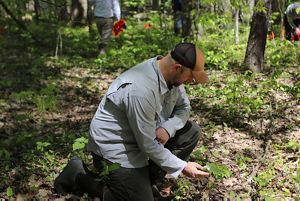
Cooper with Trillium: Derrick Cooper showing Painted Trillium at the May 2026 survey day at Morgan Swamp Preserve. © Marlee Stollar/TNC
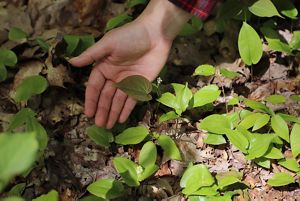
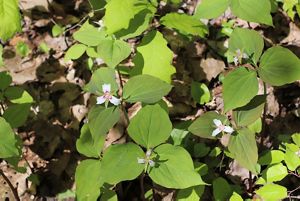
Non-flowering Painted Trillium: Non-flowering Painted Trillium within the deer fence area at Morgan Swamp Preserve. © Marlee Stollar/TNC
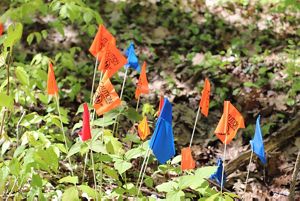
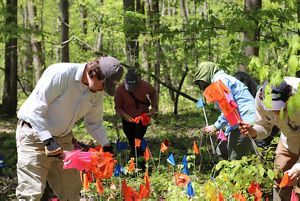
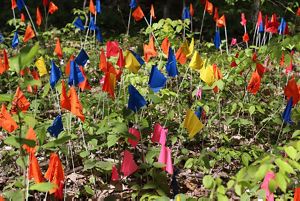
Survey Flags: Survey flags point out flowering versus non-flowering Painted Trillium plants at the May 2026 survey day. © Marlee Stollar/TNC
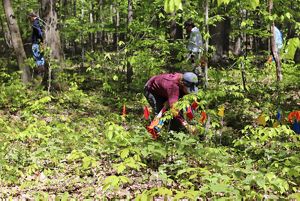
Staff Flag Painted Trillium: The team then went out within the zone and used different colors of flags to point out flowering plants versus vegetative plants at the May 2026 survey day. © Marlee Stollar/TNC
Counting Flags: Staff gather to count flags for totals of Painted Trillium in a subsection. © Marlee Stollar/TNC
Pocket of Painted Trillium: Painted Trillium thrive within the deer fence at Morgan Swamp Preserve. © Marlee Stollar/TNC
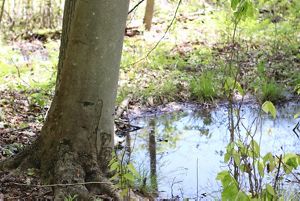
Vernal Pool: A vernal pool near the deer fence area where the Painted Trillium can be found at Morgan Swamp Preserve. © Marlee Stollar/TNC
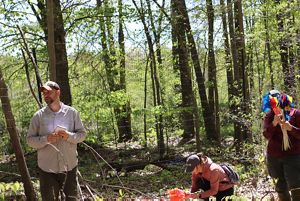
Flagging Painted Trillium: Staff flag Painted Trillium as part of the May 2026 survey day at Morgan Swamp Preserve. © Marlee Stollar/TNC
Survey Flags for Trillium: Different colors of flags point out flowering plants versus vegetative Painted Trillium plants during the May 2026 survey day. © Marlee Stollar/TNC
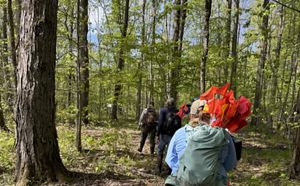
Staff Hiking Into Swamp: The deer fence is located deep within the swamp. Staff had to hike into the area before completing the survey in May 2026. © Marlee Stollar/TNC
Step 1 – Creating the survey zone
The team created the first 100-meter transect to outline the first zone the team surveyed. Later, the team continued to create additional 100-meter transects to more easily survey each smaller zone within the larger area.
Step 2 – Flagging plants within the zone
The team then went out within the zone and used different colors of flags to point out flowering plants versus vegetative plants. Vegetative plants were the ones that were not flowering. Our conservation team needs to know if the plants are flowering versus nonflowering to better understand the viability of the plants.
Step 3 – Counting flags for each zone
After each zone had flags placed, team members went through and collected flags according to their color. Then, the larger team met and counted each set of flags.
After all the zones were complete, the team totaled all flags to understand the full population of Painted Trillium within the full survey area.
Clips from the Painted Trillium survey in May of 2026 at Morgan Swamp Preserve.
Related Articles

Reconnecting the Wild Midwest: Wildlife Corridors in Action
Let the Midwest roam again. See how TNC reconnects forests, prairies, rivers and more, so wildlife from bobcats to butterflies can move and thrive in a changing climate.

Eleven Stories of Hope for Biodiversity in Ohio
Climate change and biodiversity loss are the greatest threats to people and wildlife. But despite the heaviness of these twin crises, there is hope. Explore stories of hope for biodiversity in Ohio.

Protecting Places Crucial for Nature in Ohio
From wetlands to rivers to forests, Ohio’s natural areas are as bountiful as they are beautiful. Discover how TNC is protecting places crucial for nature and biodiversity in Ohio.