
Educating the Next Generation of Fire Practitioners
TNC is proud to welcome 10 newly qualified crew members.

Before a new firefighter can participate in prescribed burns, there is a lot to learn.
That training is especially important in Kansas, where fire has long played a role in shaping and maintaining grasslands. Today, prescribed fire helps keep grasslands open, address woody plant encroachment and create a variety of habitat conditions for wildlife. Because fire is critical for these landscapes, having more trained crew members expands The Nature Conservancy’s capacity to carry out prescribed burns and meet conservation goals across the state.
To prepare individuals for that work, TNC follows training standards established by the National Wildfire Coordinating Group (NWCG), which provides national guidance for wildland fire training and qualifications. Following these standards helps ensure practitioners are prepared for both prescribed burns and wildfire response and enables TNC crews to work alongside state and federal partners.
However, meeting those standards takes time. For a recent training led by TNC Habitat Management and Restoration Specialist Zoë Colatarci, the process started well before participants ever stepped onto a fireline. Those working toward their National Wildfire Coordinating Group Firefighter qualification completed around 40 hours of online coursework before coming together at the Tallgrass Prairie National Preserve in Kansas for a pack test, field training and the opportunity to put those new skills into practice.
The 10 individuals who completed the training represented a mix of interns and staff from across TNC. Three Tallgrass interns were joined by two interns from Dunn Ranch in Missouri and one from Smoky Valley Ranch in Kansas. Four Kansas staff members also took part, building their skills beyond those typically required in their day-to-day roles.
Together, the group would learn not only what it takes to participate in a prescribed burn, but how much preparation and teamwork happens before a burn ever begins.


Learning by Doing
There is only so much you can learn about prescribed burns from behind a computer.
Once together in Kansas, staff moved from online coursework to the hands-on side of fire training, learning about fire behavior, basic fire ecology and the procedures that guide work on a fireline, including the role each person plays as part of a larger crew.
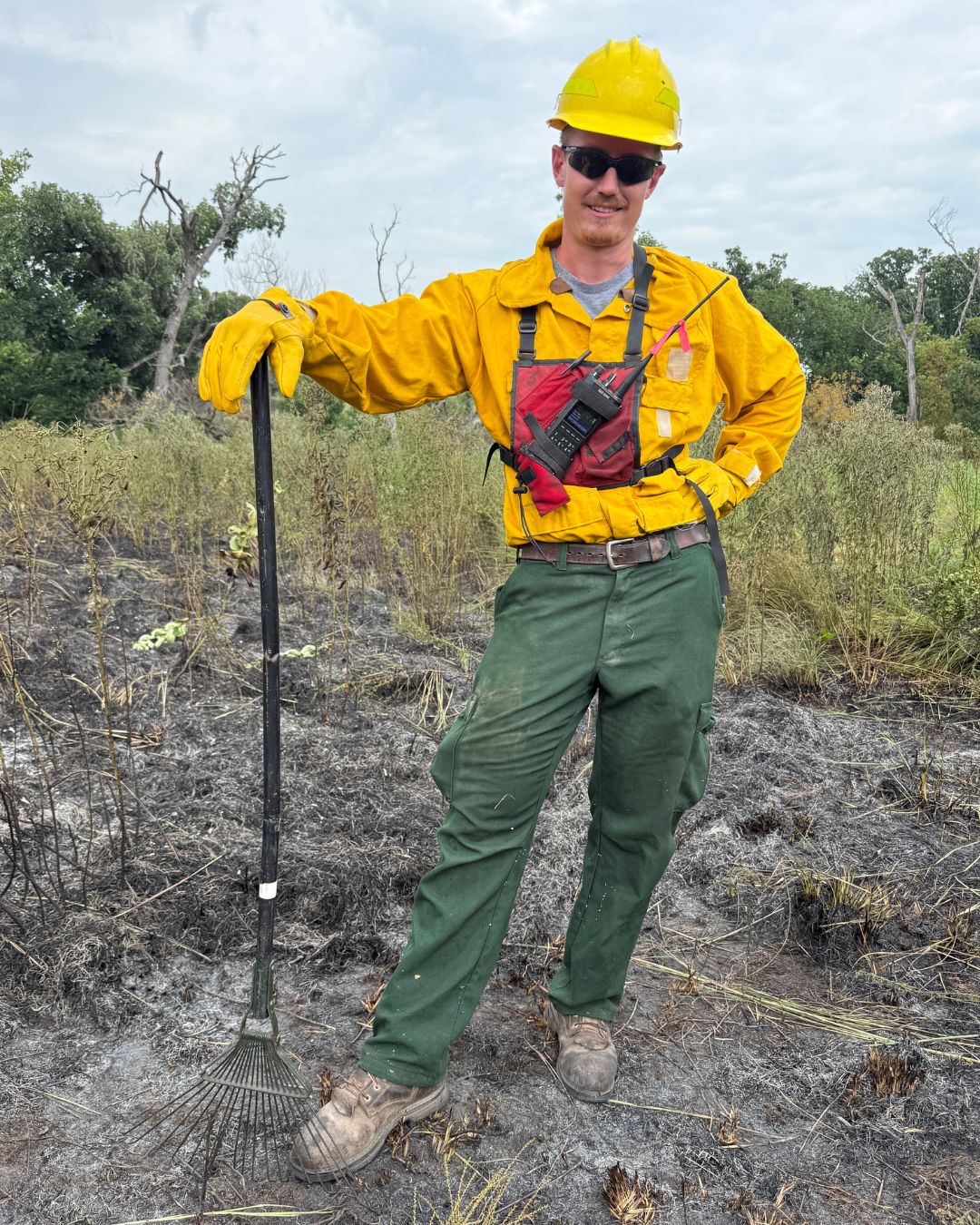
That learning also meant getting familiar with the tools of the job. The group worked with hand tools, drip torches, pumps, radios and personal protective equipment, learning how each is used and what they may need when they arrive onsite for a prescribed burn.
The training also put participants to the test physically. Before moving on to a training burn, each person had to complete a pack test, which requires walking a set distance within a certain amount of time while carrying a weighted pack. Staff also practiced deploying a fire shelter in just 15 to 20 seconds, simulating the quick response that could be needed during an emergency.
Each step built on the last, preparing the group to bring those lessons together on a prescribed burn. But before anyone reaches burn day, there is another important part of the process to understand: everything it takes to get there.
Months of planning can go into a single day of prescribed burning. Before the crew arrives, a burn plan must be developed and approved, weather and fuel conditions considered, equipment and staffing needs coordinated, and firebreaks prepared when needed. That preparation continues on burn day, when conditions are continually evaluated and weather is checked throughout the operation.
For someone experiencing this process for the first time, the training offers a look at both what happens on the fire line and the extensive preparation that makes a day of prescribed burning possible.
Overall, there are so many levels of preparation that go into just one day of fire.
Strengthening Conservation and Collaboration Across State Lines
The skills staff carried away from the training were only part of the experience.
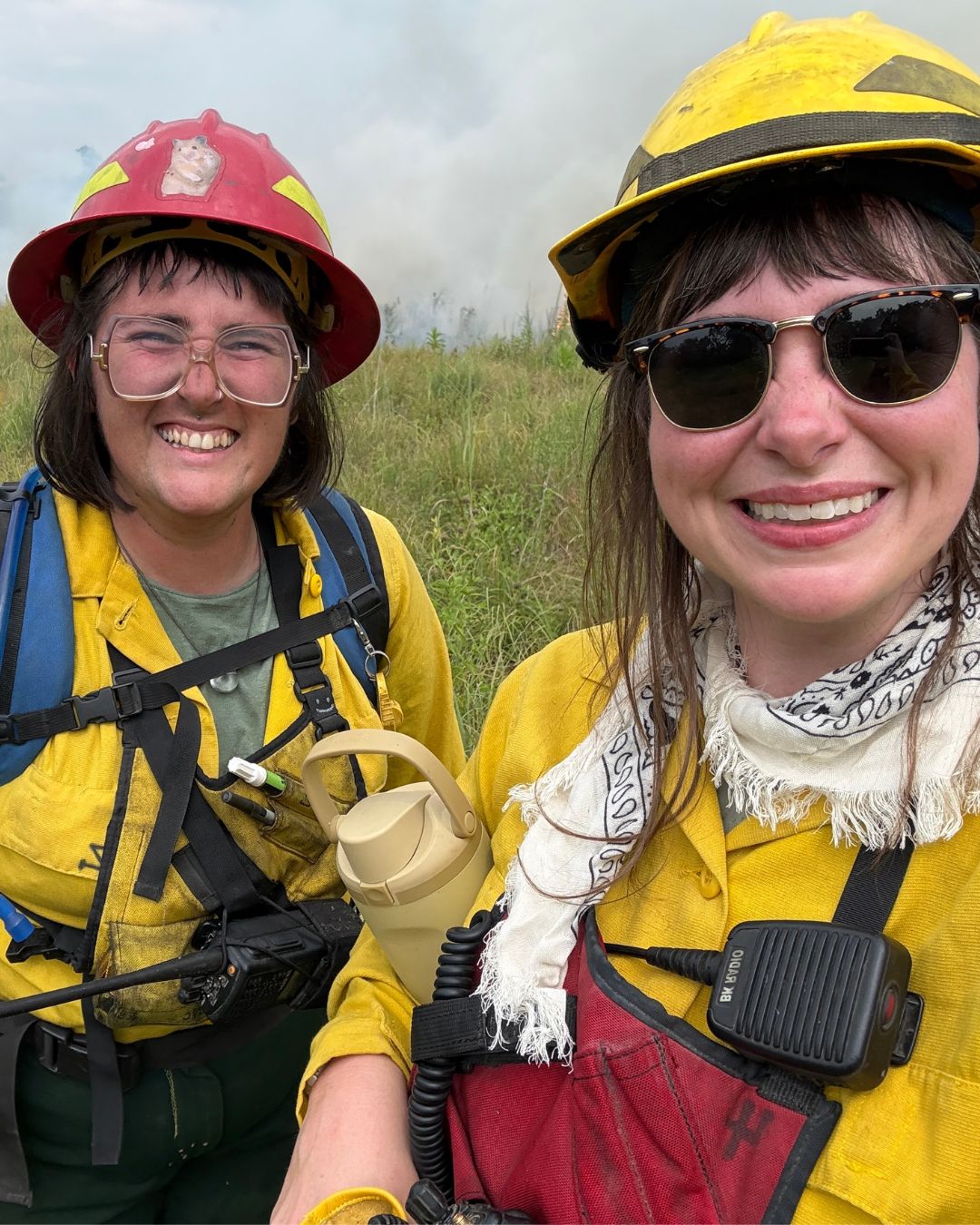
Bringing staff from Kansas and Missouri together meant they were learning alongside people they may work with again on future burns. They could ask questions, share experiences and build relationships with practitioners beyond their own teams.
Earning their NWCG “Firefighter Type 2” qualification also opens the door to more opportunities. It enables TNC staff and interns to participate in prescribed burns on TNC lands and work alongside agency partners, giving participants a chance to continue building their skills and experience beyond this training.
With 10 newly qualified fire practitioners, the training helped grow a broader network of people prepared to support prescribed burns and conservation work across the region.
This class was offered to a range of people, with a variety of jobs, across totally different worlds, from intern to state director we made new fire people! That to me screams accessible trainings, which opens doors and better expands the workforce of fire qualified folks!


Related Articles

Q&A with Tony Capizzo: Flint Hills Initiative Director
The Flint Hills of Oklahoma and Kansas nurture some of the greatest biological diversity in the world. TNC’s Tony Capizzo is leading the charge to protect and preserve this incredible ecoregion.

Collaborating for Conservation
TNC in Kansas is proud to be a member of Kansans for Conservation, a statewide coalition working to fund working lands, wildlife, outdoor recreation and education.

Spotlight on Grassland Conservation
The Nature Conservancy’s work is featured in the Kansas Reflector.