

Growing Chicago’s Urban Forest
Since 2018, TNC has been working with Chicago-area partners to green up neighborhoods—for people as well as local wildlife

In This Article
In Chicago, The Nature Conservancy works to improve the quantity and quality of the city's urban forest. Working in partnership with numerous community organizations and city planners, TNC's work helps to improve access to green spaces so they are more equitably distributed. This article goes over some of the main partnerships and initiatives driving TNC's tree work in Chicago.

Chicago’s urban forest is doing some heavy lifting. In an urban setting, trees provide a wide variety of environmental, economic and social benefits, from increasing property values to improving cognitive function to reducing local flooding. (See graphic below for more benefits.) Chicago’s city motto, Urbs in Horto, means “city in a garden,” and the Chicago area has led the nation on some urban forestry metrics, such as the Forest Preserves of Cook County being one of the oldest and largest forest preserve districts in the United States.
And yet, Chicago’s tree canopy coverage is 20% lower than other large cities in North America, and the canopy that exists is not distributed equally, with some parts of the city enjoying 25% canopy coverage and other parts having less than 15%, sometimes much less.
Regreening a city is a collaborative endeavor. You have to know where (and which) trees need planting, what community organizations to engage and how to influence the city to create a responsive and strategic urban canopy plan. In Chicago, for more than a decade TNC has been doing what it does best: taking complex problems and tackling them through science and partnerships while listening to and working with frontline communities. “We’d like to see all Chicagoans have equal access to the benefits of nature,” says John Legge, TNC’s Illinois director of applied conservation.

A Deep History of Collaborating with Community Partners
In Chicago, TNC’s work with trees doesn’t start with the trees. It starts with listening to the needs of communities. Take, for example, the 122 trees recently planted along three busy commercial streets in the Marshall Square neighborhood of South Lawndale, which is one of the areas of the city with the lowest tree coverage. The path to these trees, which dovetailed with a larger city tree planting initiative called “Our Roots Chicago” seeking to increase the city’s tree canopy by 75,000 trees by 2026, started by listening to the community’s concerns around health.
One of Latinos Progresando’s focus areas is community health, and several years ago they partnered with TNC on several projects aimed at improving this dimension of city life. A walkability study led to community discussions on how to increase access to nature, which led to a schoolyard improvement project that TNC supported in a planning and fundraising capacity. Community concerns about air pollution’s health impacts led to TNC helping to facilitate a three-year community air quality study, which led to an interest in getting more trees in the neighborhood due to trees’ ability to filter fine particle pollution, among their other benefits. Latinos Progresando and TNC worked with the city and the community to identify good planting locations and are now helping to maintain the trees. Through a grant from the Chicago Region Tree Initiative, an additional 100 trees will be added to the Marshall Square community by 2028.


A Seat at the Table with City Planners
Chicago is wrapping up the active planting phase of its Our Roots Chicago program in 2026. As part of Chicago’s 2022 Climate Action Plan, Our Roots’ goal was to equitably expand Chicago’s tree canopy, focusing on communities on the South and West sides that needed them most, like Marshall Square.
From the beginning, TNC has partnered with the City of Chicago, providing useful thought leadership and scientific data that have helped shape the city’s approach to its urban canopy. TNC is a founding member of the City of Chicago Department of Environment’s Tree Equity Working Group, which now convenes more than 200 community groups to provide critical input on tree-related programs and policies, with a specific focus on equity.
Continuing that work, Tabor Whitney, TNC-Trienens community climate resilience postdoctoral scholar, as part of a two-year-long study through Northwestern’s Trienens Institute for Sustainability and Energy and TNC, is mapping where the 75,000 trees were planted and evaluating if the city met its equity targets. She and her team have been able to map all the new trees and have also sampled 1,500 trees to measure species diversity and condition. This first-of-its-kind initiative for Chicago will help the city and other metros best allocate precious budget dollars to future plantings and tree maintenance.
Evaluating Tree Suitability
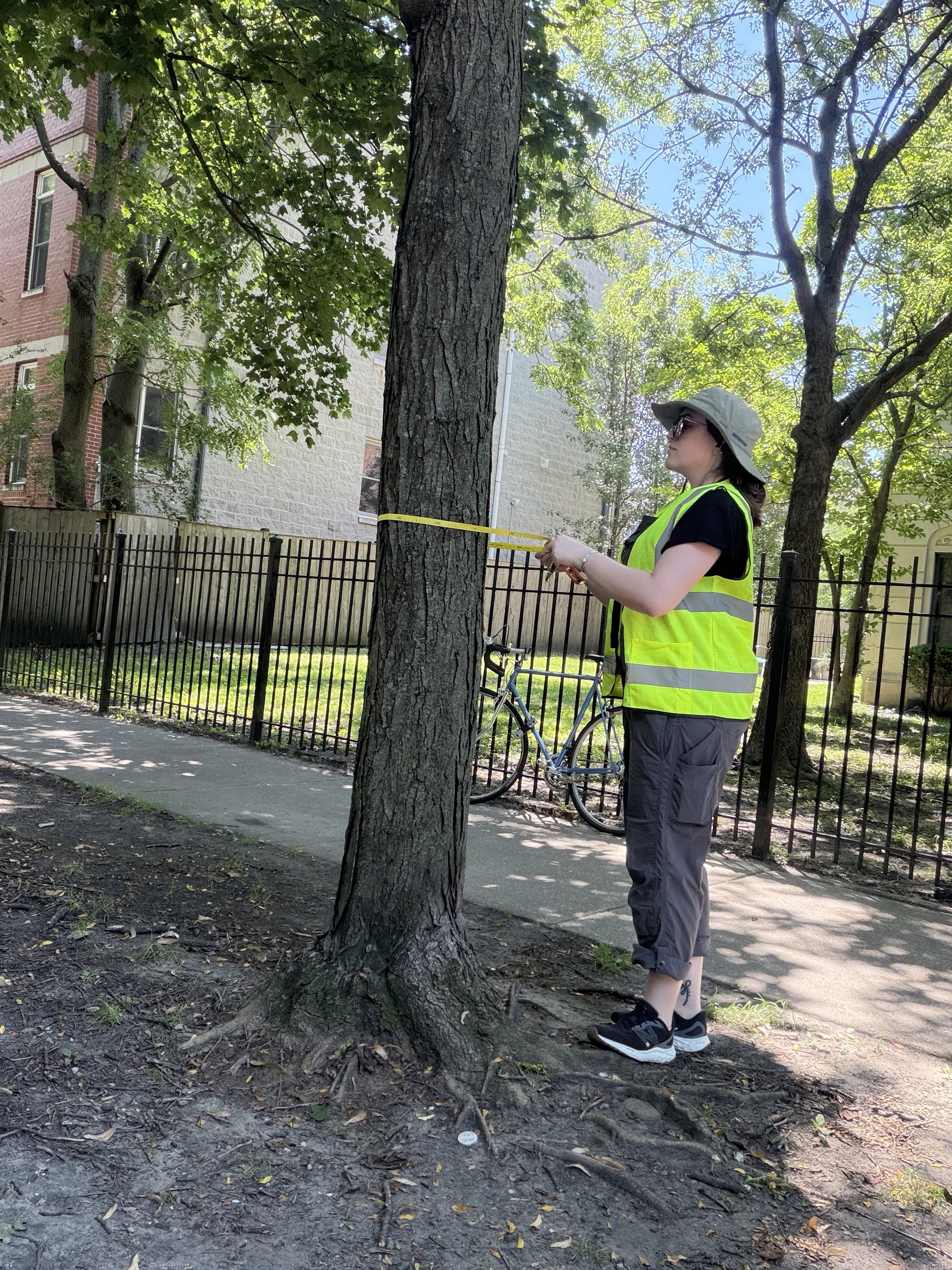
As part of a two-year study of Chicago’s tree canopy, a random sample of 1,500 trees in both priority areas and non-priority areas for the Our Roots Chicago program hopes to illuminate which tree species might be good investments for future plantings. Factors indicating tree health, such as trunk diameter and crown density, and more obvious factors like whether the tree is still alive or not, will hopefully indicate applicable patterns that can help steer future species selection.
Maintaining Urban Trees
Proper maintenance is a critical aspect of a healthy urban forest. One way TNC helps directly maintain Chicago’s urban forest is through the Treesilience program. Treesilience is a national initiative focusing on removing barriers to a healthy canopy, including removal and replacement of dead or dying trees on private property, mature tree maintenance and site preparation to improve planting conditions for new plantings. In Chicago, the day-to-day work of this program is administered by TNC’s partner, Imani Green Health Advocates, a career development program that trains young people (ages 18 to 25) to assess tree health and speak with residents about the importance of tree planting and maintenance as well as the removal of dead trees. Focusing on Chicago’s South Side, including the neighborhoods of Pullman, West Pullman, Cottage Grove Heights, Washington Heights, Roseland and Chatham, over the past five years, more than 230 trees have been added to the urban canopy through the program.
“Looking ahead, we’ll be collaborating with our urban forestry partners to ensure that the young trees we’ve planted are thriving and that our mature trees will be around for many years,” says TNC’s Joel Zavala, director of community partnerships and engagement. “Additionally, we want to help prioritize an equitable rollout of new trees to benefit the health of both people and nature.”
Renativefying the Urban Forest
Focusing on the neighborhoods of Pullman, West Pullman, Cottage Grove Heights, Washington Heights, Roseland and Chatham, over the past five years the Imani Green Health Advocates have planted over 230 trees on Chicago's South Side. They have planted climate-ready species including coffeetree, speckled alder, serviceberry, red cedar and hazelnut.


Imani Green Health Advocates: Members of Imani Village adding mulch to trees in Washington Park, Chicago, Illinois. © Alex Garcia
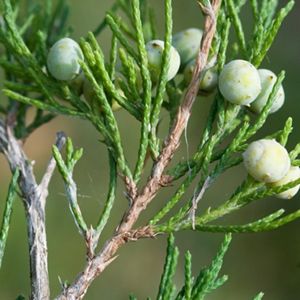
Eastern Red Cedar: Part of the juniper family, eastern red cedar cones resemble small berries. Newly emerged berries are green, maturing to a dark blue with a dusty white coating. © Chris Helzer
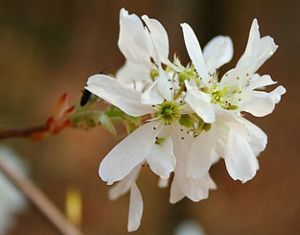
Common Serviceberry: (Amelanchier arborea) © Amy Buthod
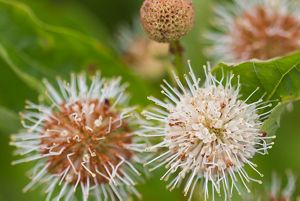
Buttonbush in Bloom: The Stream Wetland and Mitigation Program's (SWMP) work in VA benefits habitat for plants and animals to thrive. © Jack Looney
Imani Green Health Advocates : Kareema Bass (R) and Varak Bosnoian (L) conduct tree health surveys during the 2020 Imani Green Health Advocate Program. © Noel Rozny/TNC
What Is Next
Through our participation in the city’s Tree Equity Working Group, we are sharing learnings from our research and amplifying the voices of our community partners to help shape Chicago’s next tree canopy goal. Looking ahead, we aim to strengthen our current partnerships and forge new ones (for example, with the healthcare sector) so together we can significantly expand the amount of green space, including natural areas, in urban neighborhoods that have historically lacked equitable access to nature and its environmental, health and social benefits. At the same time, we aim to build local economic opportunities, including jobs, related to conservation.
Branch Out

Residents Regreening Chicago
The communities of Marshall Square are building a healthier future through regreening efforts led by Latinos Progresando.

Our Roots Chicago Program 2022-2025 Overview
This overview summarizes the Our Roots Program’s efforts from 2022 to 2025 to equitably expand Chicago’s tree canopy.

Midwest Tree Species
Meet the mighty tree species that clean our air, protect our water and provide habitat for the wildlife all around us!