
A Stewardship Legacy Built Over Decades
As longtime stewards Dave Gumbart and Wayne Woodard retire, we reflect on decades of land stewardship—and the future they helped build.

For decades, Dave Gumbart and Wayne Woodard have cared for Connecticut’s lands, waters and wildlife—often quietly, always consistently. As both retire this summer, their careers offer a living definition of what stewardship really means: showing up, adapting with nature and committing to the long view.
What Stewardship Means Over Time
Stewardship isn’t a single action or moment. It’s the everyday work of paying attention and learning the land parcel by parcel, season by season, decade by decade.
Beyond the day to day, you gotta look at the time and scale of what nature’s doing. Land management is also about working with lots of people.

When Dave Gumbart began his career as a preserve steward 35 years ago, that work meant knowing boundaries well enough to follow a stone wall through the woods. Over time, it also came to mean understanding how landscapes change and how people relate to them.
This long-term perspective is at the heart of a stewardship legacy, one that values patience, relationships and decisions made with the future in mind.
Decades of Land Stewardship in Action
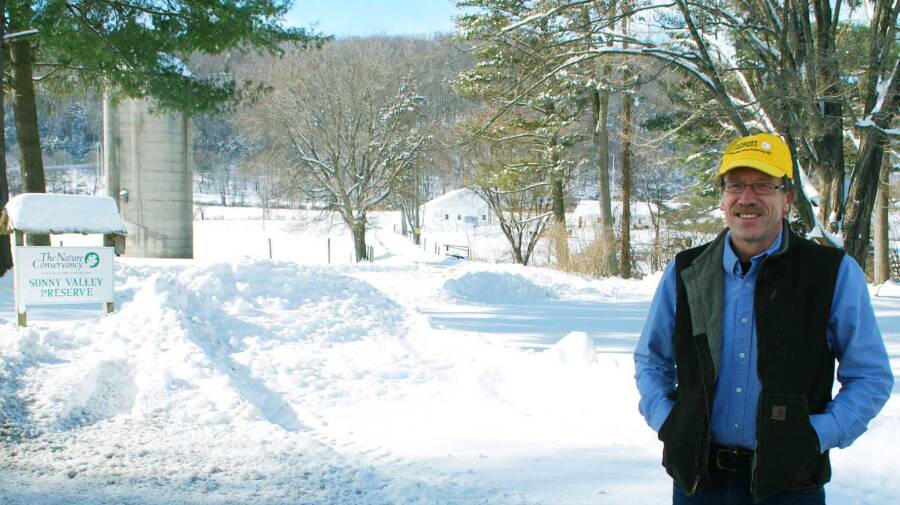
Wayne Woodard has been part of Sunny Valley Preserve since 1991, managing a landscape shaped by farms, forests and 22 miles of trails. His days often began at sunrise: clearing storm damage, monitoring invasive species and managing land for resilience.
Most days I was starting probably at 6:30 and seeing the sun rise up in front of me—and it’s been beautiful.
Tales from the Trails
Any memorable wildlife encounters?
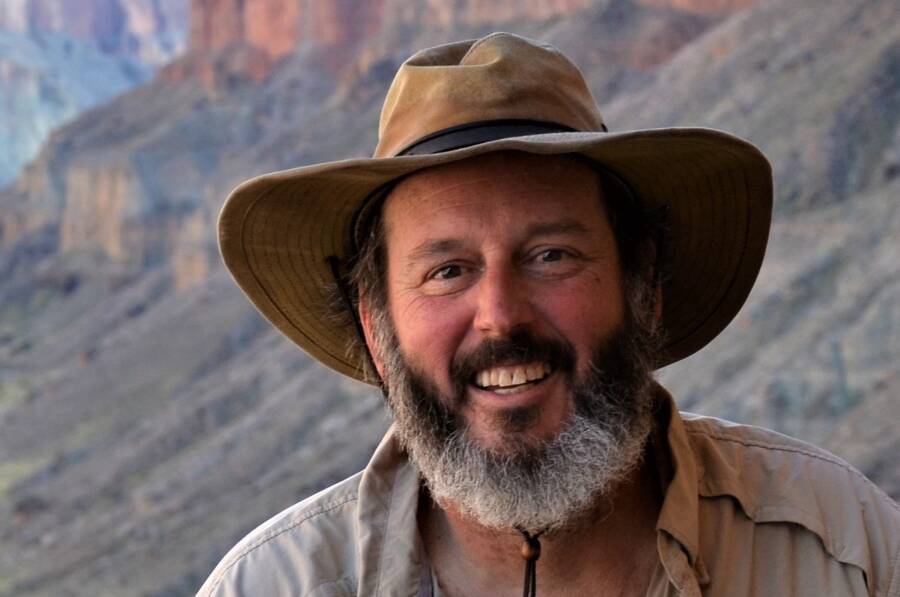
David:
One time I was checking an easement and saw an animal, but wasn’t sure what it was. I wondered, “Is it even alive?”
It was a coyote all curled up—alive and napping. That coyote heard me, jumped up and looked at me like, “I was asleep and you ruined it,” so it turned and ran off. I had never been near one before and don’t want to be again!
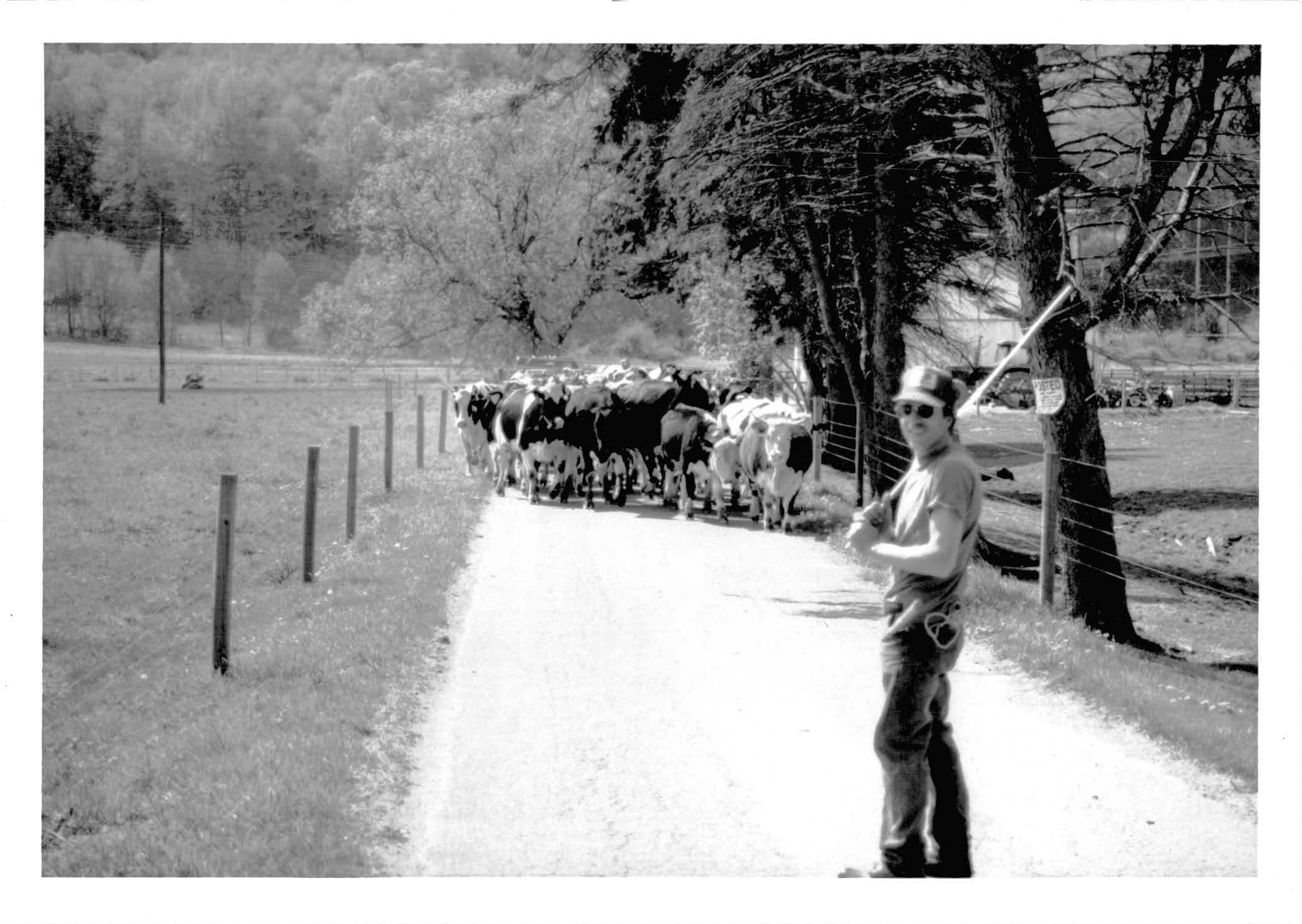
Wayne:
We were demolishing an old, abandoned house; the contractor was on site, when out of the second story a black vulture and its partner stepped onto the windowsill. This meant that they were using the second story for nesting and had babies inside.
We looked at each other and said, “see you in a couple of months.” When the babies fledged, we tore down the house.
Dave’s work along the Connecticut River focused on easements, preserve monitoring and relationships with neighbors—protecting land not just through ownership, but through trust and collaboration. Together, their careers reflect a form of stewardship that is deeply hands‑on and deeply human.
From trail clearing after storms to conversations with nearby landowners, their work helped ensure Connecticut’s landscapes could remain healthy, accessible and resilient for decades to come.
Stewardship Through Change
Over the years, both Dave and Wayne watched conservation itself evolve.
What began as a focus on individual preserves expanded into a broader understanding: land can be protected in many ways, and people and communities must be part of the work. Technology changed how stewards map and monitor land. Climate change reshaped winters, storms and ecosystems.
I saw TNC start looking at things globally, and how we didn’t need to own land to protect it. I also started to see our work incorporate people and communities and emphasize those who call an area home.

Passing the Torch
As Dave and Wayne prepare for retirement, they aren’t worried about the future of conservation in Connecticut. In fact, they’re hopeful.
Stewardship legacies aren’t defined by endings. They are defined by continuity—by knowledge shared, lessons passed along and landscapes left healthier than they were found.

It’s good to nurture the things you care about. If you put your effort into it, you can derive good results—not just for yourself, but for habitat, and the State of Connecticut and very far beyond.
Stay Connected
Sign up today and join a community committed to conservation and connectivity.


