

Clinch Valley Program
Conserving the Clinch River, and supporting nature-based economic and recreational opportunities in Southwest Virginia communities.

The Clinch, Powell and Holston rivers run nearly parallel courses through the remote mountains and valleys of southwestern Virginia and northeastern Tennessee. These last free-flowing tributaries of the Tennessee River system harbor the highest concentrations of globally rare and imperiled fish and freshwater mussels in the U.S.
The region is a global hotspot for biodiversity at a time when the world is losing species at a staggering rate. The area also provides hope for the future through diverse terrain where species can shift their ranges as the climate warms.
It’s never been more important to keep places like this connected.

The Cumberland Forest Project
A Deal for the Centuries
In July 2019, TNC announced the acquisition of 253,000 acres in the Central Appalachians. The Cumberland Forest Project is TNC’s largest-ever conservation effort in the eastern United States, protecting sweeping forest landscapes across two parcels, one in Southwest Virginia and one along the Kentucky and Tennessee border.
The project has its roots in the Clinch Valley, building on the program's successes and lessons learned in community-based conservation, sustainable forestry and carbon markets.
Managing this vast stretch of forest tackles climate change on two fronts: by storing millions of tons of carbon dioxide and by connecting a migratory corridor that scientists believe could be one of North America’s most important “escape routes” as plant and animal species shift their ranges to cooler climates.
In August, 2019 TNC took another historic step with the announcement of the largest open space easement ever recorded in the Commonwealth. The partnership between TNC, the Virginia Department of Forestry (VDOF) and the Virginia Department of Environmental Quality (DEQ) permanently protects 22,856 acres of forest land in Russell County in southwest Virginia.
The Clinch Highlands working forestry easement is unique not only for its size, but more importantly because of the many ways it supports the resiliency of the surrounding communities.
Conservation Update
Expanding Conservation Lands
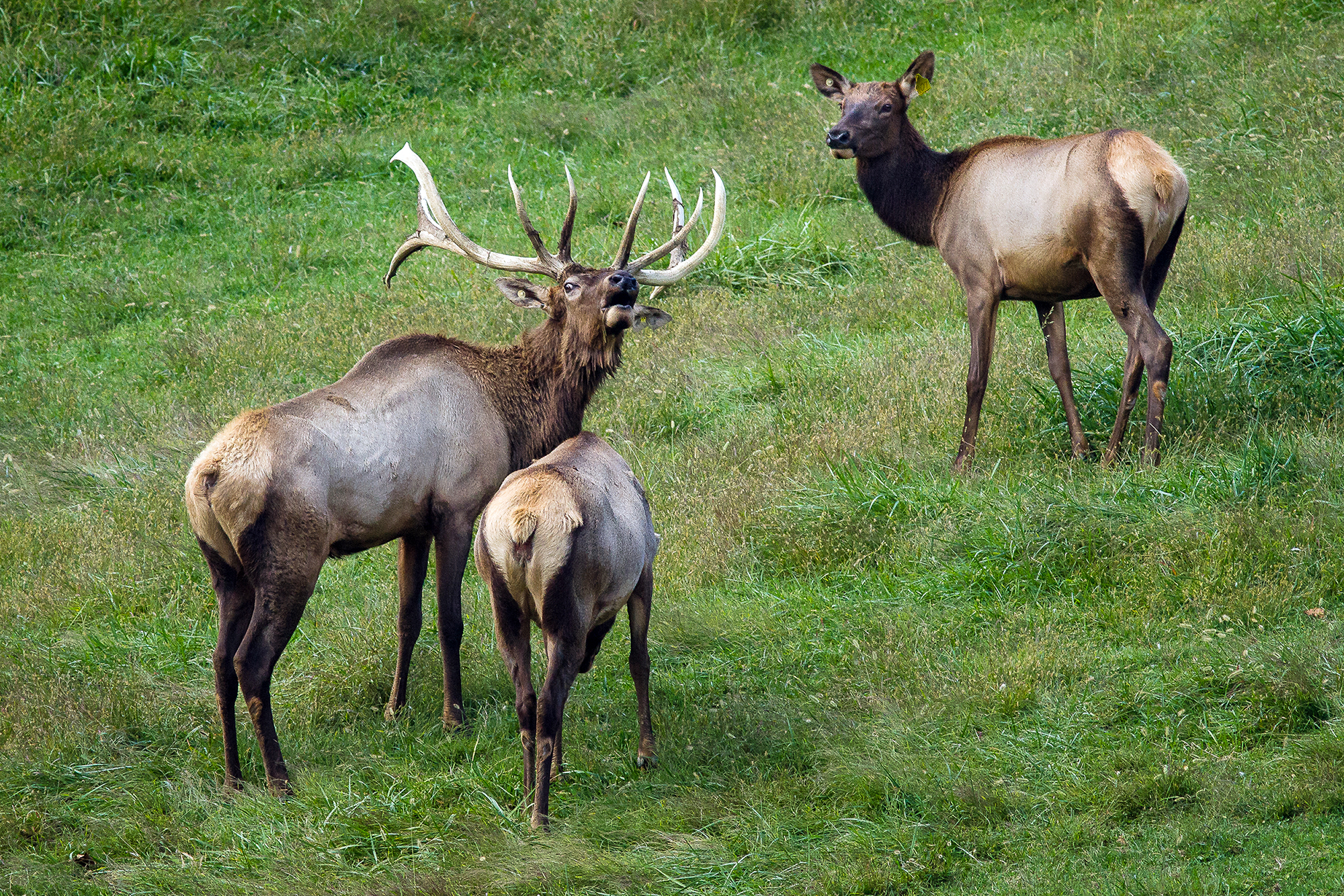
Two new land deals will help expand Virginia's natural area system along the Clinch River and add to our portfolio of lands that are protecting core habitat for elk.
The Smith acquisition includes 121 acres of property in the Artrip Community of Russell County, Virginia. This was accomplished through a combination of Virginia Land Conservation Foundation funding and matching private funds.
The majority of the property is forested and contains a large riparian corridor along Weaver Creek, a significant tributary to the Clinch River. This property occurs within the Clinch River-Little River Stream Conservation Unit, which has been designated as having outstanding biological significance by the Virginia Department of Conservation and Recreation’s (DCR) Division of Natural Heritage.
The property will be dedicated as part of the Pinnacle Natural Area Preserve and will be transferred to DCR, increasing the commonwealth's conservation footprint in arguably the most biologically critical section of the Clinch River. There is synergy between this acquisition and the new Clinch River State Park through protection of the viewshed from the river.
The Smith property is in an area that has seen widespread conservation efforts along the Clinch River. This acquisition will further our efforts to create a protected-lands corridor along the Clinch River among the State Natural Areas and TNC preserves from Cleveland to the Pinnacle, adding protection for aquatic habitat and wildlife corridors.
The Breeding acquisition of 576 acres of property in Buchanan County, Virginia will support the continued success of the Virginia Department of Wildlife Resource’s (DWR) elk restoration and the associated developing ecotourism industry. The property was purchased using a combination of funds from the Rocky Mountain Elk Foundation and private donors.
Elk were reintroduced in Virginia by DWR from 2012 to 2014 in Buchanan County, Virginia. The recently purchased property is in close proximity to the release site, and it contains habitat that is important for elk.

Conservation Update
Restoring Elk
Many partner organizations, including DWR, the local and national chapters of the Rocky Mountain Elk Foundation and the Southwest Virginia Sportsmen, have been working together since 2012 to protect, conserve and manage elk habitat and provide public access. These partners have shown support for the acquisition of this property and will play an important role in assisting with its future management.
This property is also recognized by TNC and the Commonwealth of Virginia as an important area for biodiversity and climate resilience. Protection and stewardship of this property helps TNC secure stepping-stones among key connectivity gaps within the Cumberland Forest in Buchanan County.
Acquisition and improved management of this property, specifically for elk habitat, wildlife viewing and other outdoor recreational activities, contributes to a regional strategy to attract more visitors to the area for environmental education and economic development.

Restoring Globally Rare Mussels
Freshwater mussels are filter feeders, removing bacteria, algae and sediment to clean the waters in which they live. This function makes them vulnerable to contamination and, thus, an important indicator species for river health and water quality.

We work with local farmers and other rural landowners to protect water quality in the region's streams, rivers and caves. Since 1995, we have assisted more than 250 landowners in implementing economically sensible agricultural best management practices such as fencing cattle away from waterways.
We are currently spearheading a $4.5-million initiative to improve agricultural practices and water quality on farms spanning five counties in southwestern Virginia and northeastern Tennessee. This project area encompasses more than 4,000 farms and 350 miles of impaired streams, and it hosts some of the most diverse and imperiled aquatic wildlife in the nation.
In the Clinch River alone, we have protected seven key shoal habitats that support some of the world’s most diverse assemblages of mussels. But boosting populations of these beneficial creatures remains critical to their survival.

Enhancing Augmentation Capacity
In partnership with Virginia Tech and the Virginia Department of Game and Inland Fisheries (VDGIF), TNC embarked on a significant ramp-up of mussel-augmentation capacity. Thanks to an approximately $200,000 grant from the National Fish and Wildlife Foundation (NFWF) and matching resources from the partners, TNC will collaborate with the Virginia Tech Freshwater Mollusk Conservation Center and VDGIF’s Aquatic Wildlife Conservation Center to produce 100,000 juvenile mussels—an approximately six-fold increase—for release into the Russell County, Virginia, reach of the Clinch River.
The grant will also support a cutting-edge new juvenile mussel transformation technique that, instead of requiring live fish hosts, uses in-vitro media. If successful, this innovation may enable far greater mussel production than previously possible. This three-year project commenced April 1, 2020; TNC ecologist Braven Beaty anticipates the first releases occurring in summer or fall of 2021.

Conservation Forestry Program
Promoting Responsible Forestry
To maintain healthy forests that protect water quality for people, fish and mussels, we launched the Conservation Forestry Program in 2002 and now manage over 23,000 acres within the Forest Stewardship Council® FSC® - C008922 certification to model responsible forestry practices.
Our program emphasizes long-term stewardship, providing an economic return to landowners and making forests healthier, more diverse and more resilient in the face of climate change.
Our on-the-ground operations are designed to enhance forest resources such as soil and water quality, high-value timber, sensitive wildlife habitat and carbon storage. All forest management, including our timber harvesting, is guided by principles set forth in an Operations Plan prepared in consultation with many forestry and wildlife professionals.
TNC's Conservation Forestry Program is one example of how creative problem solving has provided much needed conservation funding through carbon markets.
The Benefits of Carbon Markets
Creative problem solving is rewarded through carbon markets. When companies must pay for their carbon dioxide pollution, they have a financial incentive to reduce the amount they pollute. This creates business opportunities for sectors that improve energy efficiency, fuel efficiency, renewable energy options and more.
Carbon offsets, a component of carbon markets, are credits given to projects that remove carbon dioxide or other greenhouse gases from the atmosphere. These projects require money to develop and maintain. Businesses fund these projects through purchasing carbon offsets, and in return, receive credit for the carbon that project removed from the atmosphere.
In 2014 our Conservation Forestry Program became the first TNC project in the nation to earn and sell certified forest-carbon credits under California’s cap-and-trade program. In 2018, we successfully verified 158,905 tons of carbon captured, offsetting emissions from almost 18 million gallons of gasoline.
With California’s legislature extending the program through 2030, market stability will generate increased revenues, which will enable more on-the-ground forest restoration—a big win for climate, habitat and water quality.
Carbon offsets have made our Conservation Forestry Program economically viable and environmentally sustainable. This is just one example of the potential of carbon markets to create new financial opportunities.

Community-Based Conservation
For nearly three decades, TNC has worked with local communities and partners in Southwest Virginia to promote sustainable economic and recreational opportunities that are consistent with conserving the region’s lands, waters and way of life.
TNC works alongside numerous communities and community groups, such as the Clinch River Valley Initiative (CRVI). Working at a watershed scale with many local partners, this grassroots effort has developed significant momentum with applicability for communities in Appalachia and beyond.
Utilizing a consensus-based approach, CRVI project partners have developed goals for connecting downtown revitalization, outdoor recreation, water quality, entrepreneurship, and environmental education along the Clinch River, and are taking action to realize the prioritized goals.
The project connects to cultural and natural heritage efforts within the 4-county footprint of the Clinch River Valley to create new possibilities in the communities along the Clinch, particularly around environmental education, economic development, and entrepreneurship.
TNC also provides several volunteer stewardship events that create meaningful, and fun, opportunities to connect with nature in the Clinch Valley. TNC volunteers have helped establish native river cane brakes, assist with invasive species control, remove trash from waterways, or plant milkweed along the Clinch River.
In 2021, the Cumberland Forest Project Community Fund awarded its first round of grants to local businesses and groups. The 17 grants, totaling more than $270,000, will fund nature-based economic and community development projects like the construction of an ADA-accessible elk-viewing tower in Tennessee, the installation of a rooftop solar system at a community center in Kentucky and new climbing routes in Virginia's Breaks Interstate Park.

Cumberland Forest Community Fund
In 2021, the Cumberland Forest Project Community Fund awarded its first round of grants to local businesses and groups. The Community Fund continues to distribute annual grants, having funded over 28 projects for a combined $340,000 investment in the region. The grants support a variety of nature-based economic and community development projects like improved trail access and new climbing routes in Virginia's Breaks Interstate Park, build an outdoor environmental education classroom in Pennington Gap, or the complete an ADA bridge at Wetland Estanoa in St. Paul.

A String of Pearls: Clinch River State Park
As partners in the Clinch River Valley Initiative, we have been part of the movement to create Clinch River State Park. All four counties through which the river flows will share the park’s physical footprint and economic benefits, making it a unique addition to Virginia's state park system.
The first unit of Virginia’s 41st state park, the Sugar Hill Unit in St. Paul, was dedicated on June 16, 2021. It currently has nearly 9 miles of hiking trails, more than 2 miles of river frontage and significant cultural and historical attributes.
Once developed, Clinch River State Park will highlight the Clinch River’s natural, historical and recreational resources. The first blueway state park in Virginia, it consists of several smaller (250-400 acres) anchor properties connected by multiple canoe and kayak access points. This “string of pearls” along a 100-mile stretch of the Clinch River will provide outdoor enthusiasts access to the river as well as opportunities to enjoy the river’s beauty and ecological diversity.
Quote: Brad Kreps
In the Appalachians, people have always been in the equation. For our work to be successful, it has to speak to the needs of the community so they see the practical benefit of conservation.

Mining the Sun: Solar Energy
In May 2021 TNC announced an innovative collaboration with two renewable energy companies that aim to develop some of the first utility-scale solar projects in the Central Appalachian coalfields. Charlottesville-based Sun Tribe and Washington, D.C.-based Sol Systems will build on former coal mines within TNC’s nearly 253,000-acre Cumberland Forest Project.
Much of the optimism around this project is driven by enabling policies passed in Virginia that encourage the development of renewable energy, including solar. Over the past several years, Virginia lawmakers and private business interests have taken great strides toward becoming a leader in the clean energy space.
A big driver of this shift is the Virginia Clean Economy Act (VCEA), which was signed into law in 2020. It calls for Virginia’s electric utilities to produce their electricity from 100% carbon-free sources by 2050. The legislation also declares 16,100 megawatts of solar and onshore wind-generation facilities to be in the public interest.
Southwest Virginia and the wider Central Appalachian coalfield region is uniquely positioned to support the expansion of renewable energy development with hundreds of reclaimed former surface mines potentially capable of being converted to new solar projects. The effort aims to achieve environmental and economic benefits while creating a blueprint for further coal-to-solar transformations across the region, demonstrating that a mission of conservation and economic recovery can be compatible.
Contact
Brad Kreps
Director, Clinch Valley Program
146 East Main Street
Abingdon, VA 24210
email: bkreps@tnc.org
Phone: (276) 676-2209
Download Resources

Stay In Touch
Sign up to receive monthly conservation news and updates from Virginia. Get a preview of Virginia's Nature News email
Take a Closer Look

Coal to Solar
Innovation and collaboration is creating a model for utility-scale projects that can be replicated across Central Appalachia—and beyond.

Seeing the Light
New solar power projects on former Appalachian coal lands can bring a boost to the economic fortunes of southwest Virginia.

VA's Newest State Park
Gov. Ralph Northam and other officials welcomed Virginia's newest state park into the recreation system during a dedication ceremony in St. Paul.