
We're working with you to make a positive impact around the world in more than 35 countries, all 50 United States and your backyard. Support our work
Yes
The preserve will be closed to the public starting June 1 for a major wetland construction and restoration project. View All
Located in Monroe County in the Lower Peninsula View All
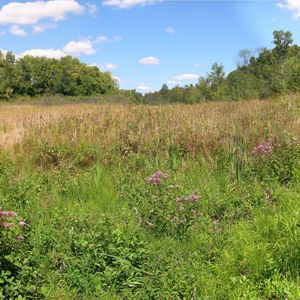
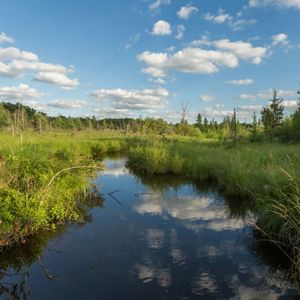
Erie Marsh is one of the largest coastal wetlands on Lake Erie, supporting numerous animals and plants that would otherwise be hard-pressed to find suitable habitat. The most significant feature of this area is its role as a migratory and nesting area for shorebirds, waterfowl, landbirds, and in the fall, raptors. It also harbors some of Michigan’s few remaining colonies of American lotus, and swamp rose-mallow, both listed as state-threatened.
In 2006, Erie Marsh Preserve became a privately-owned component of the Detroit River International Wildlife Refuge, established in 2001 as North America’s first International Wildlife Refuge. The refuge, which includes islands, coastal wetlands, inland marshes, shoals, and riverfront lands along 48 miles of the Detroit River and western Lake Erie, protects habitat for 65 species of fish, 29 species of waterfowl, and 300 species of migratory birds in Michigan and Ontario, Canada. Erie Marsh Preserve is managed through a collaboration of The Nature Conservancy, U.S. Fish & Wildlife Service and other partners.
Why the Conservancy Selected This Site
The Nature Conservancy received the donation of Erie Marsh from the Ottawa Bay Development Company in 1978. It supports numerous animals and plants that would otherwise be hard-pressed to find suitable habitat.
What the Conservancy Has Done/Is Doing
The Conservancy works with the Erie Shooting and Fishing Club to manage the site to continue to protect its wetland values. The Club has managed a portion of the property for more than a century. As part of the terms of the donation, the Club leases the site from the Conservancy for waterfowl hunting in the fall and continues to own the cottages at the southern end of the preserve.
During late 2011 and 2012, The Conservancy implemented a large-scale restoration project at the preserve. The ultimate goals of this project are to provide fish access to the diked area, improve water management capacity to increase wetland quality and control invasive plants such as Phragmites.
The preserve will be closed to the public starting June 1 for a major wetland construction and restoration project.
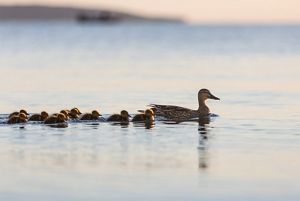
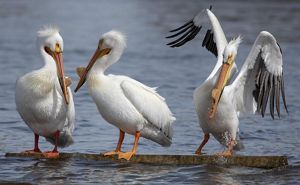
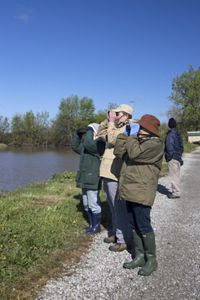
Many dabbling ducks, shorebirds, and marsh-loving songbirds can be seen in March and early April as they rest and refuel on their way to northern breeding grounds for the summer. They will return to this site in the fall on their way back to their Latin American and Caribbean winter homes. The marsh also provides a summer range for the great egret, great blue heron and black-crowned night heron.
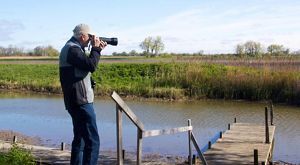
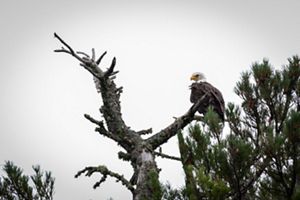
Dress warmly for spring visits to this preserve as the wind coming off Lake Erie can be brutally cold. Be prepared for muddy and uneven terrain walking along the series of dikes. Be sure to bring along binoculars or a spotting scope if you have one. Closure of certain trails is possible during eagle nesting periods, therefore watch for posted closure signs.
Permitted Activities
Prohibited Activities
Please see "Preserve Visitation Guidelines."
From Monroe, Michigan:
Have you been to this preserve? Are you thinking of visiting? See what others are saying about their experiences and add your comments below.
Time for you to join the discussion. Tell us about your experience at this preserve. What plants and animals did you see? When did you go? You can help others plan their visit when you share your thoughts. And thank you for visiting one of our nature preserves!
Whether scary or exciting, nature has a way of sneaking up on you. See stories
Hear some of nature's success stories and see how nature matters to us all. Watch videos