

Regenerative Agriculture in Michigan
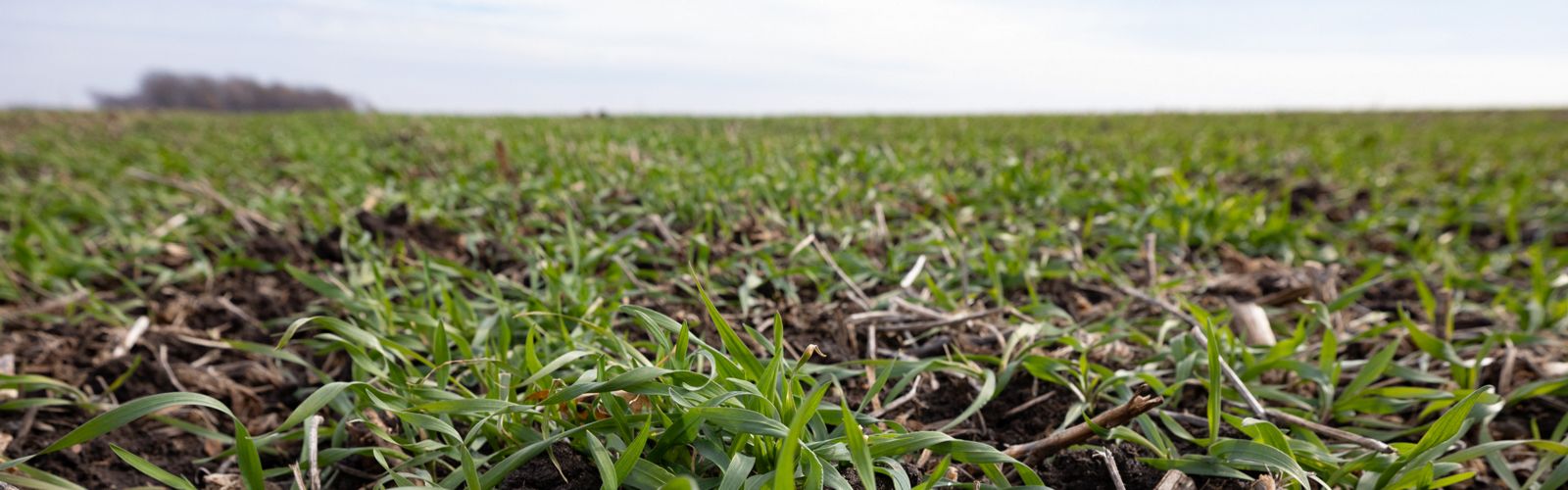
In Michigan’s agricultural watersheds, farmers are shifting to practices that restore and sustain long-term soil health and reduce harmful runoff.
Explore resources and tools from The Nature Conservancy to help improve soil health.
Ready to take action?
Connect with experts and farmers in Michigan to take meaningful action to improve your soil health today.


Approach to Soil Health
In Michigan’s agricultural watersheds, most notably the Saginaw Bay watershed and western Lake Erie basin, we are working to support farmers—and make it easier—to shift to practices that restore and sustain long-term soil health.
Our Strategies
Ultimately, we all depend on clean water and fresh food. We believe that productive agriculture and healthy ecosystems can coexist if we address where they intersect: the soil.
-
Incentivization
Connect Michigan farms and conservation through a suite of incentivization projects.
-

Engagement
Provide workshops and resources on soil health and water quality to the farmers who need them.
-
Collaboration
Work with agribusinesses, crop advisors, food companies and agencies to adopt conservation practices.
-
Science
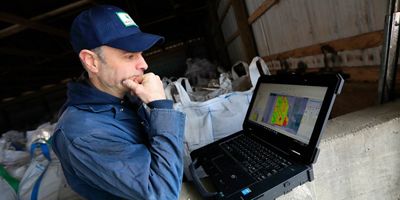
Leverage data and research to focus our work in the places that can have the biggest positive impact.


Programs
Are you interested in taking strategic regenerative steps on your own farm? TNC is committed to connecting farmers with opportunities to build soil health. Click the tiles below to take advantage of one of these programs.

ASSET
With Michigan Sugar Company, Environmental Tillage Systems and Blue Water Conservation District, TNC is piloting a program to help farmers access the equipment and the financial and technical support necessary to transition sugar beet acres to strip tillage. This program is supported by a USDA Regional Conservation Partnership Program grant. TNC aims to enroll 10 farms over the next three years (2026-2029).

Feed in Focus
With the Michigan Milk Producers Association, TNC is offering a three-year feed supply incentives program for up to 30 Michigan dairies. Incentives are offered to implement new feed management strategies and feed crop production practices to reduce dairy cattle methane emissions and support soil health. Watch more about this program here.

Farmer-led Networks
Farmer-led networks (FLN) are a grassroots gathering of local farmers and land managers from the same general area. These self-governed groups are led by farmers and driven by members. They are independent of any particular organization.
The primary focus of FLNs is on collaboration and addressing specific needs of the local area, such as water quality, rural aesthetics and other local resource concerns. They also offer peer support as farmers integrate regenerative agriculture practices for long-term benefits.
Farmer Stories in Saginaw Bay
In our 7-episode series, hear from farmers in the Saginaw Bay about their experiences implementing soil health strategies.


Farmer Resources
Check out these resources available for Michigan farmers.
A tool for evaluating, tracking and reporting water quality and groundwater recharge improvements at watershed and field scales.
Evaluate fields, generate reports and protect sensitive areas.
A whole farm and ranch carbon and greenhouse gas accounting system.
Operational Tillage Information System (OpTIS), an automated system to map tillage, residue cover, winter cover and soil health practices using remote sensing data.
A platform for visualizing how past and future management changes soil organic carbon stocks globally.
This dashboard was prepared to describe the state of agricultural conservation practice adoption in Michigan’s Western Lake Erie Basin (WLEB) using the best available datasets and other information, with an emphasis on remote sensing-based data products.
Lessons Learned from Saginaw Bay and Western Lake Erie Watersheds.

Saginaw Valley Farmers
For a sustainable future, one of the most important questions to address is how to feed a growing population while also protecting clean water. Today, farmers across Saginaw Bay are working together to change their soil practices.

Underwear Experiment
Learn how a pair of deteriorating underwear can help demonstrate soil health in the "Underwear Experiment."
More Soil Health Stories

Conservation Where Soil and Water Meet
In Michigan, farmers are stewards of the land and Saginaw Bay Watershed.

Healthy Soil, Clean Water (0:56)
The Nature Conservancy is working with farmers to implement voluntary, industry-led approaches to improve soil health.

Farming for a Stable Climate (1:30)
Farmers are making soils healthier for water, productivity and climate. See what these farmers from Ohio and Iowa are doing.
Farmer-led Networks (FLN)
An FLN is a grassroots gathering of local farmers and land managers from the same general area. These self-governed groups are led by farmers and driven by members. They are independent of any particular organization.
The primary focus of FLNs is on collaboration and addressing specific needs of the local area, such as water quality, rural aesthetics and other local resource concerns. They also offer peer support as farmers integrate regenerative agriculture practices for long-term benefits.
In short, FLNs represent a movement toward community ownership over local challenges. They are local citizens coming together, helping one another and taking proactive steps to expand knowledge and manage and protect their region.
Join a FLN in Your Area
Farmer-led Networks in Michigan A farmer-led network or FLN is a grassroots gathering of local farmers and land managers from the same general area. Click on the boxes to learn about the FLNs in Michigan.

Sign Up for the Latest News
Connecting with farmers is extremely important to our work in soil health and water quality—from getting helpful information into the hands of those who need it, to identifying and supporting champions of conservation

Meet Our Team
If you’re a farmer, you know your livelihood depends on healthy soils. But changing the way you farm can be risky and expensive, and a failed crop is hard to come back from. Our soil health team is here to help.


Soil Health Heroes
Soil Health Heroes are Michigan farmers honored for implementing regenerative soil health principles including reducing tillage, armoring fields with vegetative cover, managing nutrient inputs and other sustainability efforts at their successful operations.
The application of these practices helps reduce input costs, rebuilds soil structure, buffers farm fields against weather extremes, protects water quality and demonstrates to others that soil health practices can be part of a successful farm.

Soil Health Hero Awards
Congratulations to our 2025 Soil Health Heroes, awarded at the Great Lakes Crop Summit in January 2026.
The 2025 Michigan Soil Health Heroes
were chosen by a 10-member selection committee from a variety of conservation-minded agriculture professionals. All nominations were anonymized before being given to the committee for consideration.
2025 Soil Health Hero awards were expanded statewide
For the first year, TNC recognized farmers from across the state. Awards for 2025 were given in the following categories for established cash crop, vegetable or livestock farms over 200 acres:
-

Conservation Newcomer Award
A farm applying conservation practices for the first time (within three years).
-
Conservation Legacy Award
A farm applying conservation practices for five or more years.
-

Conservation Innovation Award
A farm applying new or experimental conservation practices.


2025 Honorees


These winners represent the future of regenerative agriculture and a healthier Michigan.
| 2018 | 2019 | 2021 | 2023 | 2025 |
|---|---|---|---|---|
| Conservation Excellence Award: Agribusiness | J.J. Metz, Linwood | Conservation Excellence Award: Contributor | Method Products, San Francisco | Conservation Newcomer Award | Scott Brechtelsbauer, Frankentrost | Conservation Excellence Agribusiness Award | Sarah Michalek, Michigan Milk Producers Association Sustainability Director | Conservation Newcomer Award | Zach Cook |
| Conservation Excellence Award: Practitioner | Huron County Field Office, Bad Axe | Conservation Excellence Award: Practitioner | Joel Leland, Saginaw | Conservation Innovation Award | Don Morse, Birch Run | Conservation Newcomer Award | Caleb and Cody Symons, Symons Farms, Chesaning | Conservation Innovation Award | Sklarczyk Seed Farm |
| Conservation Excellence Award: Contributor | Paul Sweeney, Maplewood | Conservation Excellence Award: Agribusiness | Justin Krick, Frankenmuth | Conservation Legacy Award | Nate Rupprecht, Vassar | Conservation Innovation Award | James Weber, Weber Farms, Vassar | Conservation Legacy Award | Tom Hess |
| Conservation Newcomer Award | Chad Dzurka, Pinconning | Conservation Newcomer Award | Nick Weisenberger, Chesaning | Conservation Impact Award | Pohl Dairy, Mt. Pleasant | Conservation Legacy Award | Wayne Bierlein, WMW Bierlein Farms, Reese | |
| Conservation Veteran Award | Wayne ""Lee"" Wackerle, Pinconning | Conservation Veteran Award | Jason Haag, Unionville | Conservation Excellence Agribusiness Award | Lisa Woodke, Frankenmuth | ||
| Conservation Innovation Award | Dan Ritter, Elkton | Conservation Innovation Award | Ryan and Melissa Shaw, Marlette | |||
| Conservation Impact Award | Steve Tait, Caseville | Conservation Impact Award | Jeffery Krohn, Owendale |
Sign Up
Soil Health Newsletter
Connecting with farmers is extremely important to our work in soil health and water quality—from getting helpful information into the hands of those who need it, to identifying and supporting champions of conservation. Register for our comprehensive newsletter for the latest news and information on soil health in Michigan.