
We're working with you to make a positive impact around the world in more than 35 countries, all 50 United States and your backyard. Support our work
Over the winter months, The Nature Conservancy has been restoring sand prairie at Spring Green Preserve. You can learn more about the restoration work in this Q&A with Steve Richter, the Conservancy’s Director of Conservation in Agricultural Landscapes.
Because you can get a taste of the American West — a land of cacti and lizards, sand dunes and dry grasses — without going far from home.
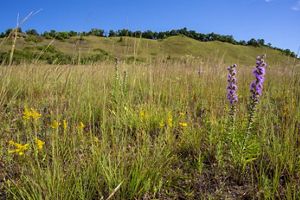
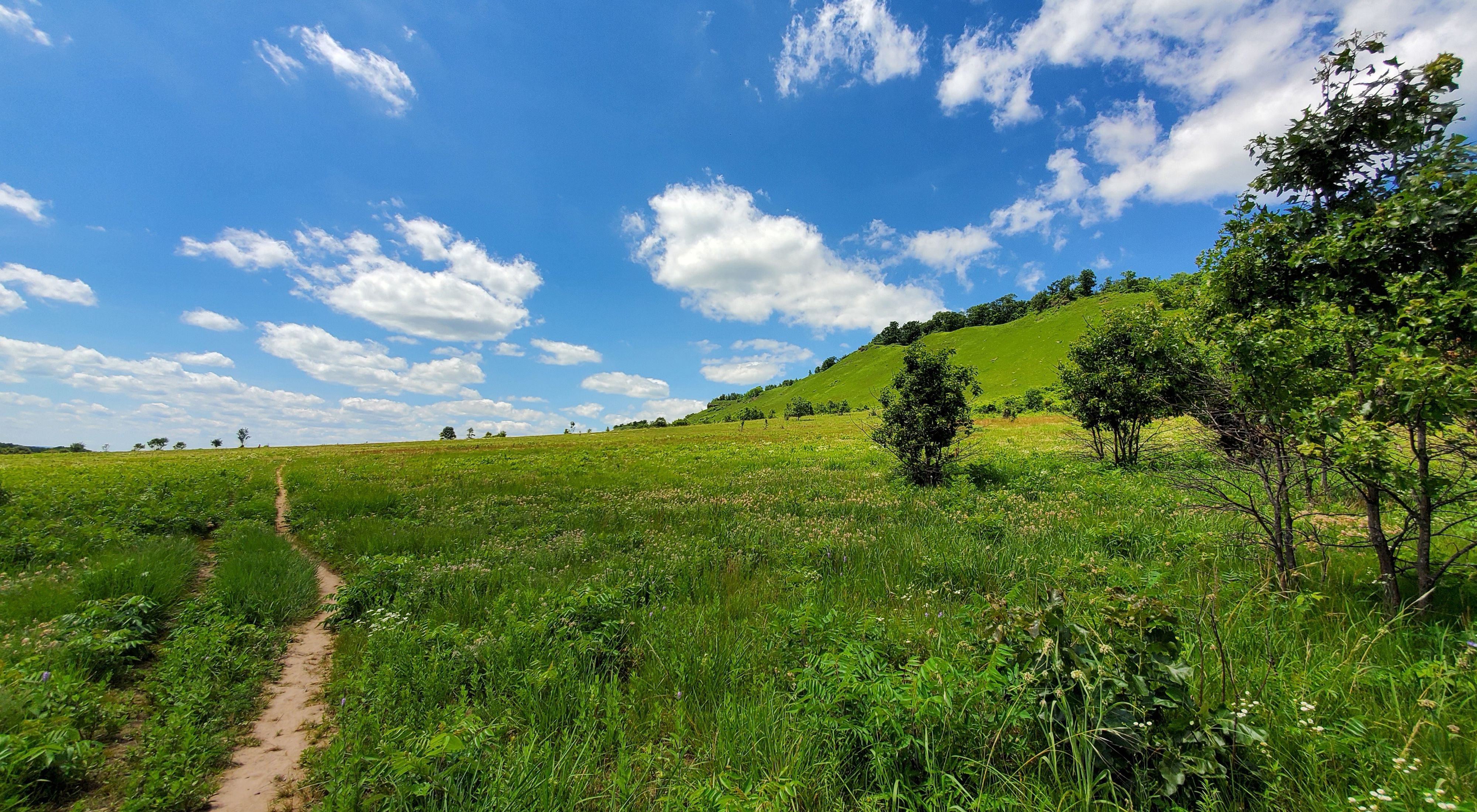
Known as the "Wisconsin Desert," Spring Green is a place where forest meets bluff, and bluff levels off into plains and dunes. It is located in the unglaciated region of the state.
Southwestern Wisconsin: Sauk County just north of Spring Green in the Wisconsin River valley.
Open year-round, dawn to dusk
The preserve's self-guided trail allows you to learn as you go. At the trailhead, you will find a pamphlet containing blocks of information corresponding to each of a series of numbered markers along the trail.
Warning: Please do not hike on the bluff.
Spring Green Preserve harbors some of Wisconsin's rarest plant communities, including sand prairie, dry bluff prairie, and black oak barrens. Due to changes in land use, all of these communities, which once covered thousands of acres across the state, have almost completely disappeared.
This preserve began as part of a 480-acre joint management agreement between The Nature Conservancy, the Head Foundation, the Wisconsin Natural Areas Preservation Council, and local landowners. The Conservancy acquired its first parcel of land at Spring Green Preserve in 1971. As of July 20, 2012, the Conservancy owns and manages over 1,111 acres.
Two primary types of land management activities occur here:
The following groups have worked together to understand and protect the site's rare and interdependent communities of plants and animals:
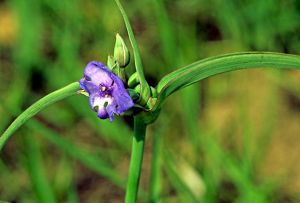
Some plants common to Spring Green's prairies:
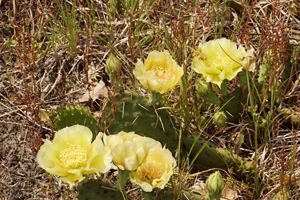
Though uncommon in Wisconsin, prickly pear cactus is abundant here. It blooms in late June, producing many large, pale yellow flowers.
Three species are found nowhere else in the state:
Please see "Preserve Visitation Guidelines"
From the intersection of US Hwy 14 and State Hwy 23 near Spring Green:
Have you been to this preserve? Are you thinking of visiting? See what others are saying about their experiences and add your comments below.
Time for you to join the discussion. Tell us about your experience at this preserve. What plants and animals did you see? When did you go? You can help others plan their visit when you share your thoughts. And thank you for visiting one of our nature preserves!
Whether scary or exciting, nature has a way of sneaking up on you. See stories
Hear some of nature's success stories and see how nature matters to us all. Watch videos