



Description
The Nature Conservancy protected 3,792 acres at the Quincy Bluff and Wetlands Preserve. Today the land is owned and managed by the Wisconsin Department of Natural Resources for the people of Wisconsin.
Why You Should Visit
Coming here is akin to stepping into a time machine, traveling back some 300 years to experience the once vast Wisconsin wilderness.
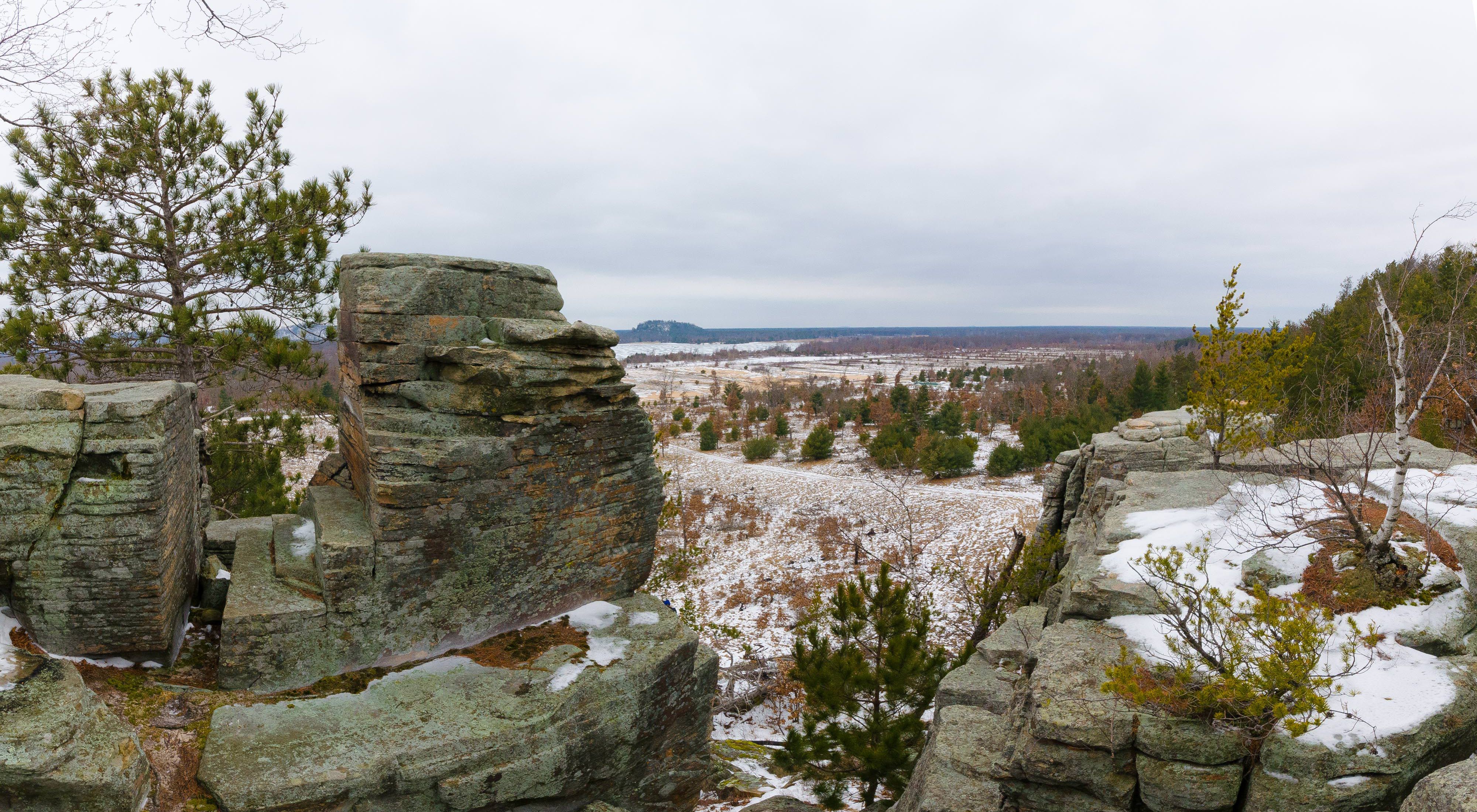
The view from the top of Quincy Bluff and the picturesque, 200-foot-high sandstone mesa of Lone Rock reveals not a trace of human habitation. As far as the eye can see in every direction, there are only wooded ridges, steep bluffs, open cliffs and wetlands.
Conditions
Quincy Bluff is a great place to hike — the scenic views from the top of the bluff are well worth the climb. In the winter, the wide trails are ideal for cross-country skiing.
See the informational kiosk in the parking area for more information.
Why TNC Selected This Site
For three reasons:
- Large size — big enough to provide habitat for mammals such as the bobcat
- Relatively undisturbed condition
- Diversity of habitats, including rare oak-pine barrens, forests, cliffs and wetlands.
What TNC Has Done/Is Doing
The Nature Conservancy has been protecting land at Quincy Bluff and Wetlands in cooperation with the Wisconsin Department of Natural Resources (WDNR) since 1992. Over the years we have dedicated our land as a State Natural Area and began transferring portions of it to the state for long-term protection and management.
Nature Conservancy staff, volunteers and WDNR Natural Areas staff worked together to restore the barrens communities by removing selected trees and using controlled fire.
In 2013, the Conservancy donated its remaining 1,700 acres at Quincy Bluff & Wetlands SNA to the state for continued use as a valuable conservation area offering diverse public recreation opportunities in central Wisconsin. With the gift of Quincy Bluff to the State, the Conservancy also donated a permanent endowment to supplement management costs at the preserve, with the funds to be managed by a qualified foundation. This gift of land will better enable the WDNR to streamline management across the natural area, particularly the use of prescribed fire to restore rare oak barrens.