

- Phone: +1 608-356-5300
- Email: wisconsin@tnc.org
-
Follow


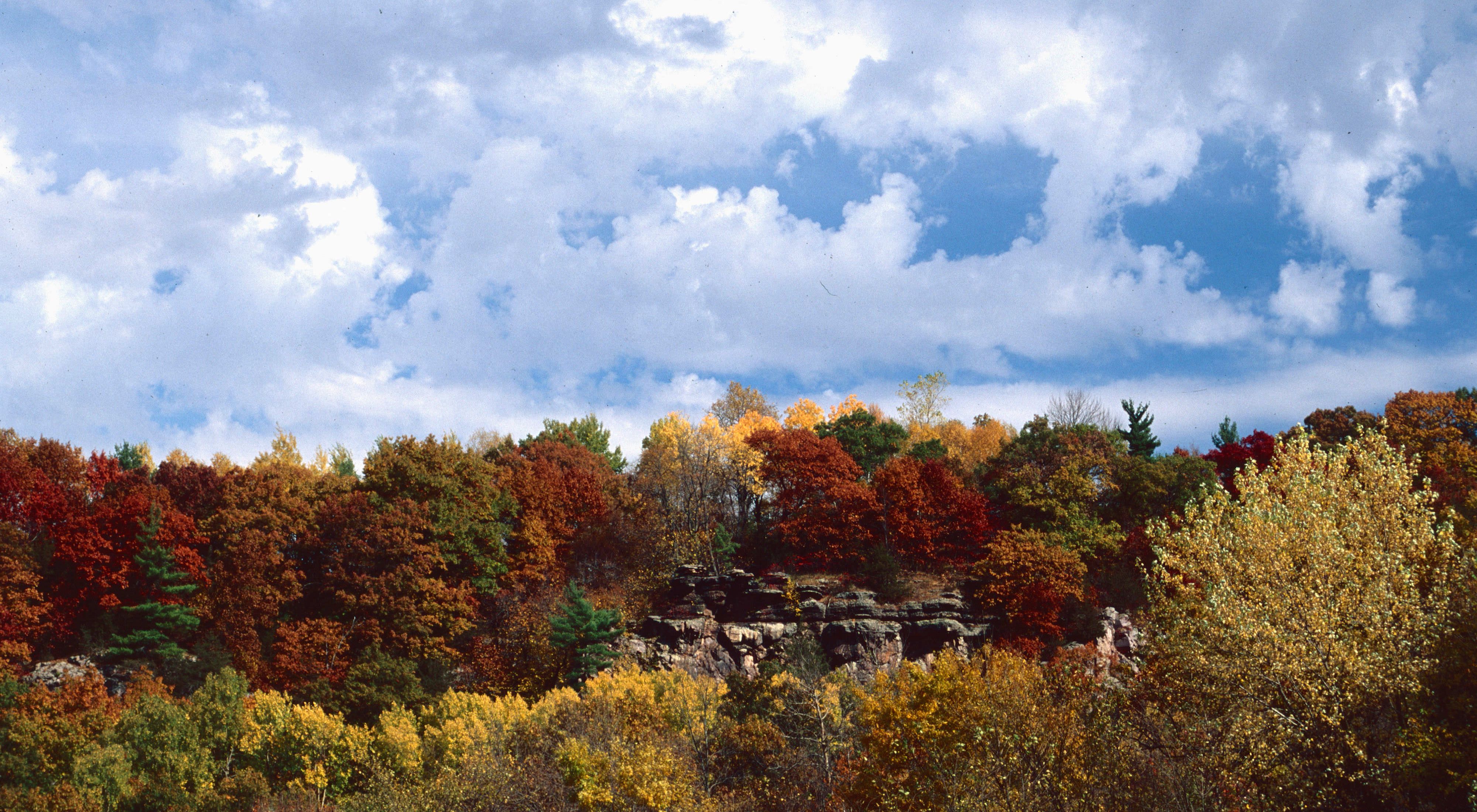
The Baraboo Hills are all that remain of one of the most ancient rock outcrops in North America.
BARABOO HILLS
The Baraboo Hills of Sauk and Columbia counties are all that remain of one of the most ancient rock outcrops in North America. A forested sanctuary underlain by durable rock called Baraboo quartzite, the Hills are an ecologically unique part of the Midwest.
The oak, maple, and basswood forests of the Baraboo Hills constitute the largest block of upland forest still standing in southern Wisconsin. They provide habitat for more than 1,800 kinds of plants and animals.
THE NATURE CONSERVANCY
The Nature Conservancy (TNC) first came to the Baraboo Hills in the early 1960s at the request of local residents and university professors who knew how ecologically unique this area was and who wanted TNC's help in protecting the area. We continue to work with partners to protect the exceptional diversity of animals and plant communities in the Baraboo Hills at places like Baxter’s Hollow and Hemlock Draw.
CONSERVATION GOALS
Protecting the large block of forest from scattered rural residential development (TNC concentrates its efforts on the forest block west of Devil's Lake State Park).
- Managing our preserves to support healthy populations of wildlife, in particular, songbirds that need to nest in large blocks of forest.
- Providing information about the plants and animals of the Bluffs forest and compatible forest management to area residents and other interested parties.
- Working with other organizations concerned with the health of the Bluffs forest.
- Working to protect the forest block while balancing human needs and economic health in the region.
HOW WE ACCOMPLISH OUR GOALS
Land acquisition from willing sellers and generous donors (TNC pays fair market value; contact the Baraboo office for more information).
- Conservation easements (voluntary legal agreements that compensate landowners who protect the conservation value of land by permanently limiting its future uses while keeping it in private ownership).
- Land/Forest management (research, removal of non-native plants; forest stand improvement).
CONSERVING FOR MORE THAN 30 YEARS
TNC has been working in the Baraboo Bluffs for more than 30 years and community concerns are important to us. The following is a list of some of the things we do to "give back" to the community:
- We open our preserves to the public for low-impact, compatible recreation like hiking and bird watching.
- We open most of our lands to deer hunting.
- We preserve some of the most pristine and biologically unique areas for future generations to enjoy!
TNC NATURAL AREAS IN BARABOO HILLS
TNC owns 9,844 acres at 10 preserves in the Hills, including:
- Baxter's Hollow (5,910 acres)
- Hemlock Draw (1,010 acres)
TNC has helped protect a total of 12,421 acres in the Hills. This figure includes lands owned and managed by TNC, conservation easements, government co-ops and assists.
GET INVOLVED
Join other volunteers one Saturday each month at a preserve in the Baraboo Hills. Activities include controlling invasive plant species, maintaining hiking trails, tree planting, seed collection, tree monitoring and working on fire breaks. Contact Sherren Clark (608-225-2974 or sclark99@outlook.com) to be added to the Baraboo opportunities e-mail list.
Most TNC preserves are open for hiking, bird-watching, nature study, photography and other low-impact recreating opportunities.
BARABOO OFFICE STAFF
Ann Calhoun, Driftless Resilience & Climate Solutions Manager
Caleb Klima, Baraboo Hills Land Steward
If you have any questions about The Nature Conservancy's Baraboo Hills project, please call us at 608-356-5300 or stop by our office at
124 Second Street
Room 33
Baraboo, WI 53913
Please note: Office is open by appointment only. Please call before visiting.
WHAT TO SEE AT BARABOO HILLS


Join Us
Join our Great Places News email list to receive regular updates about our work in Wisconsin and learn more about how you can get involved.
Related Articles

Hemlock Draw
Of all the hollows in the Baraboo Hills, Hemlock Draw supports the most stunning contrast in vegetation.

Baxter's Hollow
Remarkable for the large area of deep forest and the mountain-like creek it protects, Baxter's Hollow is TNC's largest preserve in Wisconsin.

Spring Migrations
Learn more about the top 3 spring migrations in Wisconsin.