
We're working with you to make a positive impact around the world in more than 35 countries, all 50 United States and your backyard. Support our work
Virginia’s Eastern Shore, a narrow finger of land that separates the Chesapeake Bay from the Atlantic Ocean, is home to the longest expanse of coastal wilderness remaining on the eastern seaboard of the United States. The Conservancy’s Virginia Coast Reserve (VCR) protects 14 undeveloped barrier islands that help buffer Eastern Shore communities from storms, as well as thousands of acres of pristine salt marshes, vast tidal mudflats, shallow bays, and productive forest uplands. Will you help us continue this vital conservation work?
Historically, the Eastern Shore served as Native American hunting and fishing grounds, a hideout for pirates, and a destination for well-heeled travelers. Today this peninsula is dotted with small villages, family farms, and vast natural areas that shift in concert with the elemental forces of wind and water. But encroaching development from Hampton Roads and Ocean City threatens to engulf the cultural and natural heritage of Virginia’s Eastern Shore — one of the most important migratory bird stopover sites on Earth.
Please download and observe all visitation policies for the VCR barrier islands (Smith, Myrtle, Ship Shoal, Little Cobb, Cobb, Hog, Parramore and portions of Metompkin and Cedar Islands).
Pets, vehicles, camping and campfires are prohibited. Several islands are closed to visitors and seasonal restrictions are in place to protect nesting birds.
Learn how you can help protect beach-nesting birds when visiting the Virginia coast: Download our Beach-Nesting Bird Brochure.
The islands shelter more than 250 species of raptors, songbirds, and shorebirds, which find food in the adjacent bays and salt marshes.
Guided by sound conservation science, the Conservancy works with a variety of public and private partners to protect, enhance, and restore the unique and productive habitats and wildlife of the Virginia Coast Reserve. Below are some of the ways we work:
Learn more about oystercatchers and see a slideshow of these colorful birds.
Track the migratory routes of tagged whimbrels from Virginia’s Eastern Shore.
June 2009. Kate Hibbard collecting eelgrass chutes with VIMS staff in background during a seagrass restoration project in the South Bay of the Virginia Coast Reserve. © Daniel White
See how the Conservancy and partners are restoring seagrass at Virginia Coast Reserve.
Have you been to this preserve? Are you thinking of visiting? See what others are saying about their experiences and add your comments below.
Time for you to join the discussion. Tell us about your experience at this preserve. What plants and animals did you see? When did you go? You can help others plan their visit when you share your thoughts. And thank you for visiting one of our nature preserves!
Whether scary or exciting, nature has a way of sneaking up on you. See stories
Hear some of nature's success stories and see how nature matters to us all. Watch videos
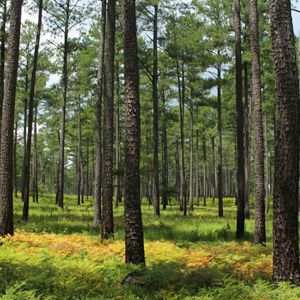
Brian van Eerden, Southern Rivers Program Director, with his daughter, Abigail, explore the pine savannahs at The Nature Conservancy's Piney Grove Preserve and adjoining International Paper property located in the Mid Atlantic Coastal Plain ecoregion of southeastern Virginia. © Mark Godfrey/TNC