We're working with you to make a positive impact around the world in more than 35 countries, all 50 United States and your backyard. Support our work
Yes
See how many of Piney Grove Preserve's amazing plants and animals you can spot. View All
Get the most from your visit to Piney Grove. View All
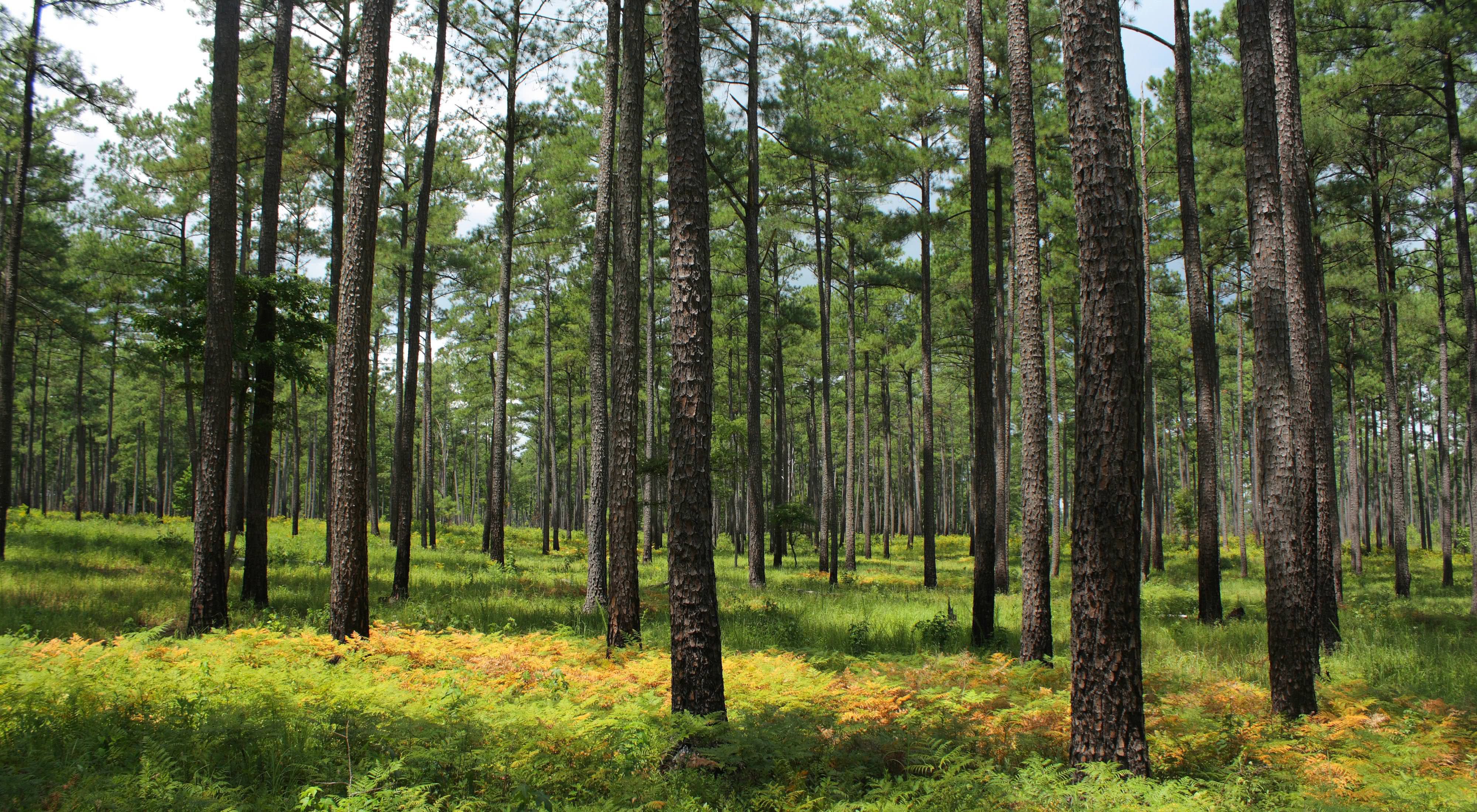
The preserve is open to visitors from February through October. The Constance Darden Nature trail offers an overview of our work at the preserve to restore pine-savanna habitat for the benefit of endangered red-cockaded woodpeckers and myriad other plants and animals.
Sussex County, Virginia
3,200 acres
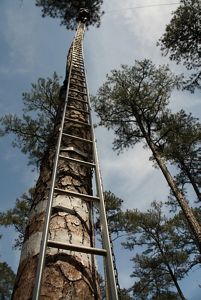
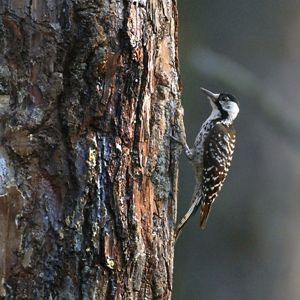
Piney Grove harbors Virginia's last breeding population of red-cockaded woodpeckers and the northernmost population in the U.S. Listed as endangered in 1970, this charismatic black-and-white woopecker gets its name from a barely visible speck of red on each side of the male's cap. Nesting exclusively in live pine trees, the bird requires mature trees with soft heartwood for excavating nest cavities. Red-cockaded woodpeckers once numbered in the hundreds of thousands throughout the Southeast and up into New Jersey, but the loss of old-growth pine habitat led to a dramatic decline.
The Conservancy acquired the first tract for the preserve in 1998 from the Hancock Timber Resource Group, and several additional purchases brought Piney Grove to its current size.
By investing in our forest restoration efforts, Conservancy supporters have helped us to enhance habitat and expand the preserve's breeding groups of red-cockaded woodpeckers. In 2011, a remarkable 25 chicks left the nest. Perhaps most impressively, we’ve seen a nearly 70-percent increase in fledglings per nest.
2012 continued the trend of record recovery. Biologists from the Center for Conservation Biology documented modern day highs at Piney Grove for the number of breeding pairs, the number of young fledged, and a record high population count of 53 individual woodpeckers.
Protecting and restoring Piney Grove's special resources require active management. To maintain and expand the pine-savanna habitat upon which the red-cockaded woodpecker and myriad other species depend, the Conservancy conducts frequent prescribed burns. Our science staff works closely with state and federal agencies and highly trained volunteers to implement safe, effective fire management.
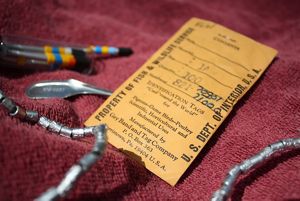
The Conservancy also partners with these agencies and with the Center for Conservation Biology to monitor and enhance our red-cockaded woodpecker population. Beginning in 2001, woodpeckers captured from stable populations in the Carolinas were released at Piney Grove to boost the number of breeding colonies.
At Piney Grove and all along the Southern Rivers, we work to conserve southeastern Virginia’s historic loblolly and longleaf pine forests and the variety of life they support.
See a video of how the Conservancy is working to conserve remaining longleaf-pine forests and restore degraded ones across the Southeast.
Take a virtual tour of the Darden Trail at Piney Grove and then plan a date to see it in person!
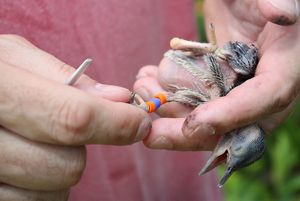
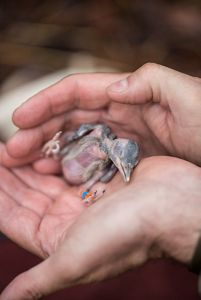
Biologists from the Center for Conservation Biology for the College of William and Mary participate in a chick banding survey at Piney Grove Preserve, where the pine savanna habitat supports Virginia's only breeding population of the endangered red-cockaded woodpecker (Picoides borealis), Virginia © David Dadurka
Red-cockaded Woodpecker Banding
Piney Grove harbors Virginia's only breeding population of red-cockaded woodpeckers.
The Darden Trail is open daily, February through October. To ensure visitor safety, the trail is closed November through January due to hunting in the vicinity.
Old-growth pine savanna and two rare plant species: seymeria and Carolina peatmoss.
In addition to the red-cockaded woodpecker, Piney Grove is home to many other birds and the state-rare fox squirrel.
Download our interpretive brochure and map of the Constance Darden Nature Trail to bring along on your next visit (pdf, 200KB).
From the west (Richmond area):
Take I-95 South to Petersburg, then take the exit for Rte 460 East. Follow Rte. 460 through Waverly. Go about three miles past Waverly, and turn right on Chinquapin Road (Rte. 604). Go about 1.5 miles to the intersection with Harrell Mill Road (Rte. 621). Turn left on Harrell Mill Road and go a short distance to the Darden Trail parking area on your right.
From the east (Virginia Beach/Suffolk areas):
Take Rte. 460 West. Just beyond Wakefield, look for Chinquapin Road (Rte. 604) on your left. Follow as above.
Have you been to this preserve? Are you thinking of visiting? See what others are saying about their experiences and add your comments below.
Time for you to join the discussion. Tell us about your experience at this preserve. What plants and animals did you see? When did you go? You can help others plan their visit when you share your thoughts. And thank you for visiting one of our nature preserves!
Whether scary or exciting, nature has a way of sneaking up on you. See stories
Hear some of nature's success stories and see how nature matters to us all. Watch videos
Brian van Eerden, Southern Rivers Program Director, with his daughter, Abigail, explore the pine savannahs at The Nature Conservancy's Piney Grove Preserve and adjoining International Paper property located in the Mid Atlantic Coastal Plain ecoregion of southeastern Virginia. © Mark Godfrey/TNC