

We're working with you to make a positive impact around the world in more than 35 countries, all 50 United States and your backyard. Support our work
Yes
Take a look around and spot some of North Landing River Preserve's amazing plants and animals. View All
Get the most of your trip to North Landing River Preserve. View All
North Landing River Preserve is one of the largest expanses of undisturbed freshwater marsh habitat along the entire eastern seaboard. This unusual wetland system provides a habitat for southern species of plants that are rare in Virginia, including sawgrass, an integral part of the Florida Everglades.
West bank of the North Landing River in Virginia Beach and Chesapeake.
Daily dawn to dusk.
7,533 acres
A 1/5-mile boardwalk runs through the woods to the marsh. The rest of the preserve is accessible only by boat. An interpretive brochure is available.
Influenced primarily by wind tides as opposed to lunar tides, this unusual wetlands system provides a habitat for southern species of plants that are rare in Virginia. About half of the rare plants are at or near their northern limit. It has the highest concentration of rare species east of the Blue Ridge Mountains.
The Conservancy and the commonwealth of Virginia together have protected more than 10,000 acres along the North Landing. Conservancy staff are working with the state and other partners to control invasive species, especially Phragmites. Protecting corridors along the North Landing and Northwest rivers remains a top priority for the Conservancy.
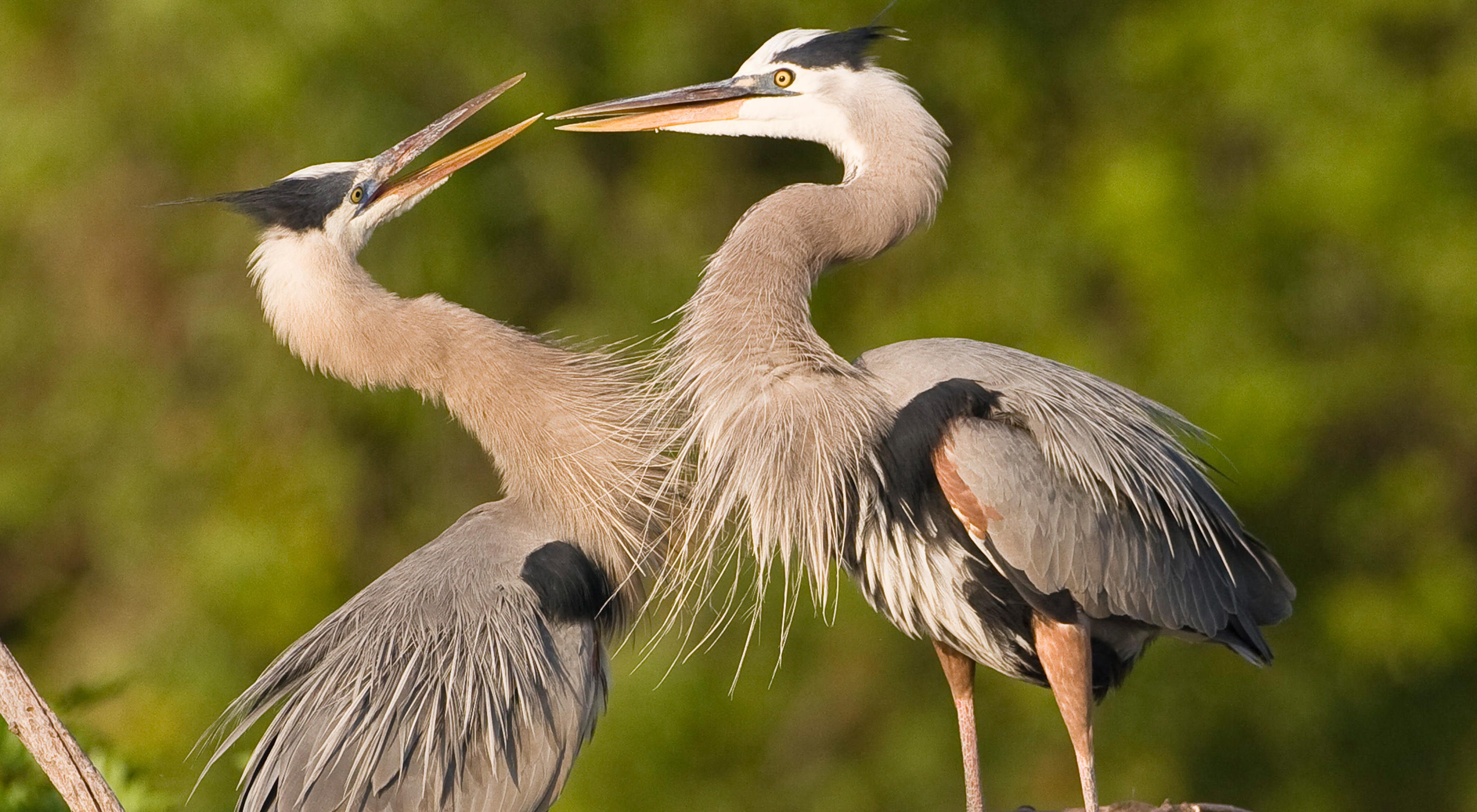
Least bitterns, great herons and other waterfowl are all present. Spring and fall are the ideal times for observing migrating birds.
Hollow trees provide a comfortable den for raccoons, opossums and squirrels. Muskrat and otter build lodges hidden among the grasses for their shelter. Deer retreat to nearby forests to bed down for the day.
As fall advances and insects become less active, neotropical migratory songbirds move through the area as they journey south to their winter feeding grounds. Some birds, including ducks, geese and swans, will remain here all winter, feeding on fruits, berries or marsh grasses. The yellow-rumped warbler arrives about the time wax myrtle berries begin to ripen and remains until spring.
During the summer, the marshes explode with color as the herbaceous plants begin to bloom. Visitors can see rose mallow, which are large flowers in varying shades of pink and white; the orange flowers of the rare lanceolate milkweed; flowers of the arrowhead family, which are white and grow circles of three on the stem; and pickerelweed, which produces spikes of violet-blue flowers.
An unusual plant species at the preserve is sawgrass, which is not a grass at all but a member of the sedge family. It is a southern species reaching its northernmost limit in southeastern Virginia along the North Landing River and extending southward to the Gulf Coast. Sawgrass reaches its greatest abundance in the Florida Everglades. By rubbing your fingers along the edges of the leaf blades you can feel the sawlike bristles, capable of scratching or cutting exposed skin.
There are a total of 32 rare plants at the preserve, and along the edges of the marsh, a young cypress forest has developed.
Contact the Virginia Program office at (434) 295-6106, or the Southern Rivers Program at (804) 644-5800.
From the north (Northern Va. or Richmond area):
Have you been to this preserve? Are you thinking of visiting? See what others are saying about their experiences and add your comments below.
Time for you to join the discussion. Tell us about your experience at this preserve. What plants and animals did you see? When did you go? You can help others plan their visit when you share your thoughts. And thank you for visiting one of our nature preserves!
Whether scary or exciting, nature has a way of sneaking up on you. See stories
Hear some of nature's success stories and see how nature matters to us all. Watch videos
Brian van Eerden, Southern Rivers Program Director, with his daughter, Abigail, explore the pine savannahs at The Nature Conservancy's Piney Grove Preserve and adjoining International Paper property located in the Mid Atlantic Coastal Plain ecoregion of southeastern Virginia. © Mark Godfrey/TNC