
We're working with you to make a positive impact around the world in more than 35 countries, all 50 United States and your backyard. Support our work
Yes
Take a look around and spot some of Bottom Creek Gorge's amazing plants and animals. View All
Download a map of Bottom Creek Gorge. Don't forget your binoculars! View All
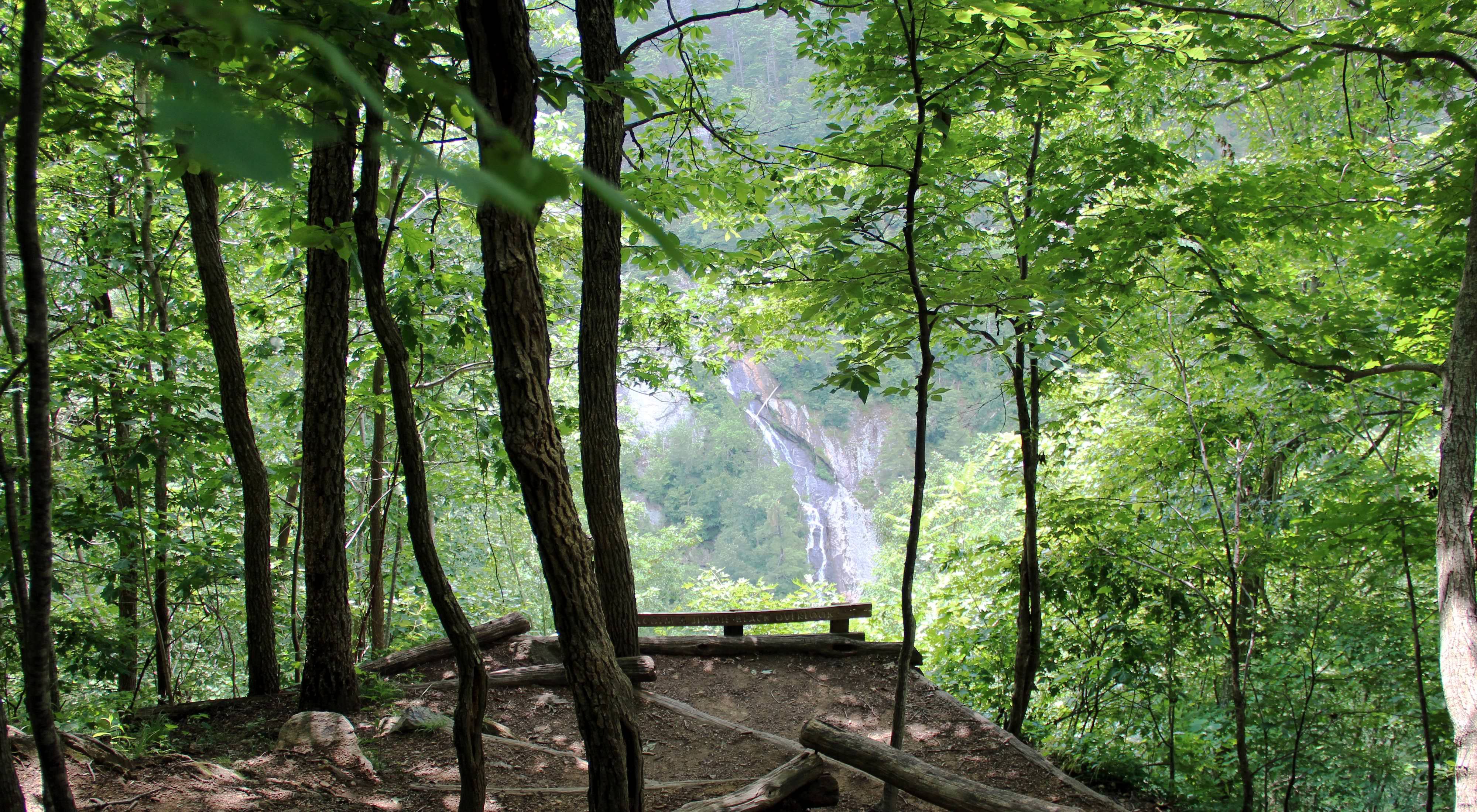
Forming the headwaters of the Roanoke River, Bottom Creek Gorge boasts spectacular scenery: the second highest waterfall in Virginia, virgin hemlocks and hundreds of wildflowers.
Bottom Creek is a powerful mountain stream that forms a stair-step series of broad-basin waterfalls known as the "kettles." One of the headwater streams of the South Fork of the Roanoke River, Bottom Creek boasts a 200-foot high waterfall. Flanking Bottom Creek are forests of mixed hardwoods (tulip poplar, maple, oak, hickory) and upland meadows. Five rare species thrive in this habitat.
Montgomery County
Open daily, dawn to dusk
1,657 acres
More than five miles of accessible trails. There are no restrooms.
Bottom Creek Gorge is a hotbed for rare aquatic species. It contains three rare fish and one globally rare plant.
The Conservancy has improved the trails at Bottom Creek Gorge while reducing their impact on surrounding habitat. Researchers continue to monitor the rare species and Conservancy staff are working with adjacent private landowners on conservation easements.
Bottom Creek is critical habitat for four species of fish native to the headwaters of the Roanoke River: the orangefin madtom, the bigeye jumprock, the riverweed darter and the Roanoke darter. It also contains approximately 10 percent of all fish species known from Virginia, including native brook trout.
A half-acre shale barren provides habitat for the globally rare chestnut lipfern. Formerly known only from north-central Mexico to the southwestern United States, this lipfern occurs in isolated patches in southwestern Virginia and eastern West Virginia.
An old-growth hemlock forest rising from the north side of the creek remained largely untouched due to its inaccessibility. A mix of forest and field covers the rest of the preserve. Mixed hardwood stands of tulip poplar, maple, oak and hickory are complemented by several meadows and dense rhododendron thickets in ravines.
For information, contact the Virginia program office at (434) 295-6106.
Download a trail map of Bottom Creek Gorge Preserve (pdf, 167KB).
From Roanoke and points north:
From Blacksburg and Christiansburg:
Have you been to this preserve? Are you thinking of visiting? See what others are saying about their experiences and add your comments below.
Time for you to join the discussion. Tell us about your experience at this preserve. What plants and animals did you see? When did you go? You can help others plan their visit when you share your thoughts. And thank you for visiting one of our nature preserves!
Whether scary or exciting, nature has a way of sneaking up on you. See stories
Hear some of nature's success stories and see how nature matters to us all. Watch videos
Brian van Eerden, Southern Rivers Program Director, with his daughter, Abigail, explore the pine savannahs at The Nature Conservancy's Piney Grove Preserve and adjoining International Paper property located in the Mid Atlantic Coastal Plain ecoregion of southeastern Virginia. © Mark Godfrey/TNC