

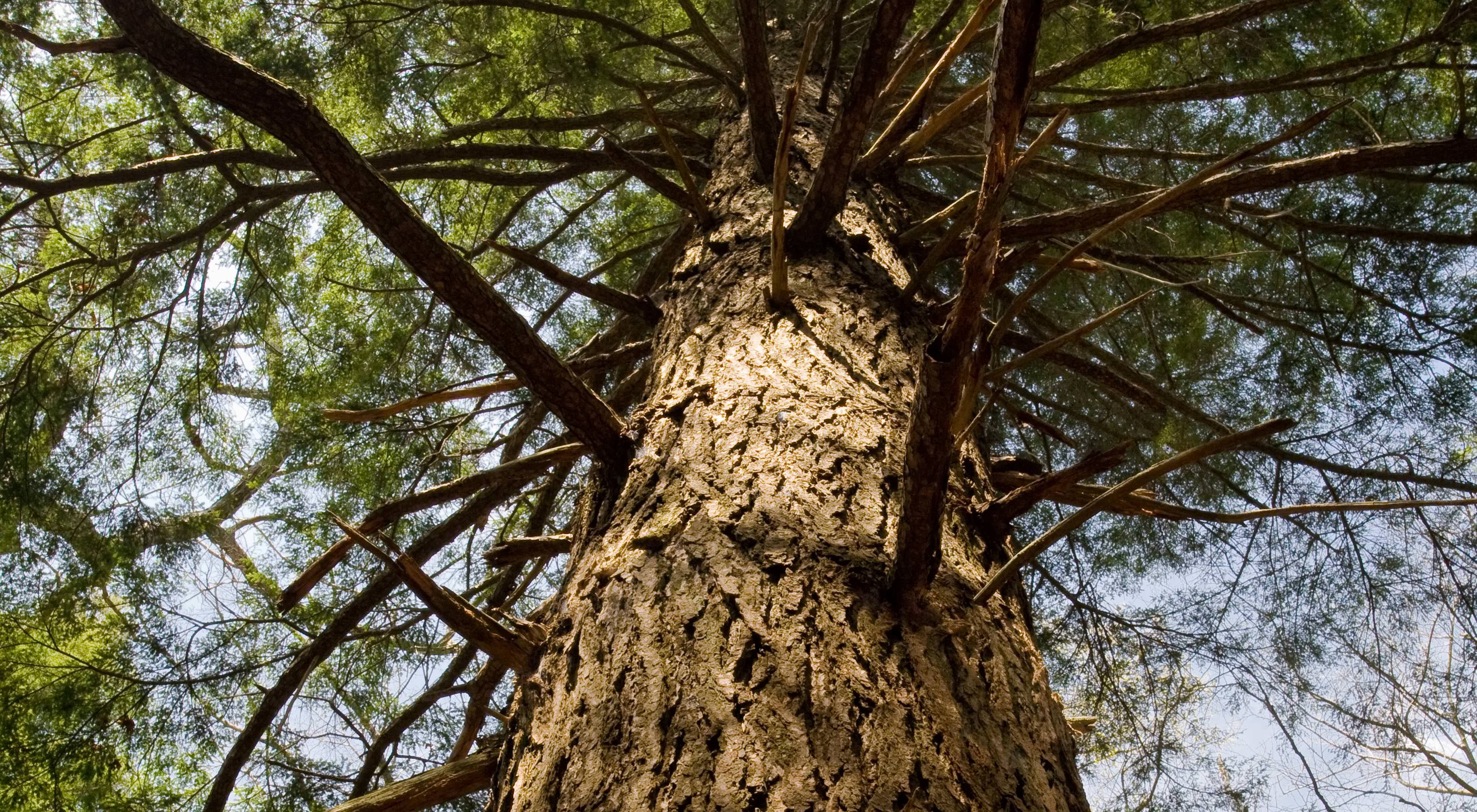
Tennessee Hemlocks
These majestic trees are under attack. Let's work together to save them.

Sometimes called the “redwoods of the east,” hemlock trees are beautiful, slow-growing and long-lived evergreens that can reach more than 150 feet tall. Usually located around streams and gorges, mature hemlock trees represent a keystone species that play a critical role in a much larger ecological community.

Specifically, a mature hemlock tree’s network of thick branches above ground works with its root system below to filter air and water, and store carbon, as part of the surrounding forest. Hemlocks also provide valuable shade that moderates air and water temperatures to benefit forest-dwelling animals, including fish and insects, that depend on these gentle giants for all or part of their life cycle.
-
Helping Tennessee Hemlocks
Magazine Insert
The Fall 2023 issue of Tennessee Nature News focuses on TNC's efforts to conserve hemlocks and why these forests are such an important part of the state's landscape.
DOWNLOAD
Hemlocks Under Attack
In Tennessee, Eastern hemlocks (Tsuga canadensis) and their close relative, Carolina hemlocks (Tsuga caroliniana), are commonly found throughout the eastern part of the state, especially in the Great Smoky Mountains, in the Cherokee National Forest and on the Cumberland Plateau. Some of Tennessee’s most formidable hemlock trees can also be found towering over the Fiery Gizzard Trail at the South Cumberland State Park, where one specimen near the northern trailhead is estimated to be more than 500 years old. Hemlocks also adorn portions of The Nature Conservancy’s Bridgestone Nature Reserve at Chestnut Mountain.
Hemlocks in these locations and elsewhere in Tennessee are under attack by an invasive insect known as the hemlock woolly adelgid (HWA). Native to Asia, HWAs have no natural predator in the United States, which enables them to freely feed on and kill hemlocks in as few as three years. First spotted in East Tennessee in 2002, HWAs have killed many hemlocks in the state and have been recorded in most counties where there are native hemlocks. It is believed that birds are the primary source of their spread.

Combatting Hemlock Woolly Adelgid
The most common method of combatting HWA involves chemical treatments that prevent the insects from harming the trees. Applied manually, tree-by-tree, treatment periods can range from five years up to eight years or more.
An alternative action against HWAs involves biological tools, such as predator beetles imported from Asia and the western U.S. After careful quarantine and studies, releasing these beetles shows signs of success in controlling HWAs. Both types of treating HWAs are costly when implemented at large scales.
_1640x1230.jpg?crop=0%2C70%2C1640%2C1089&wid=1656&hei=1100&scl=0.9903381642512077)
In 2005, TNC joined an effort led by the Tennessee Division of Forestry (TDF) to organize experts from government, academia, non-profits and other organizations to create and implement a strategic plan for HWA as part of the Tennessee Hemlock Conservation Partnership (THCP). The THCP meets twice a year to share best practices for chemical treatment, develop science-based planning for hemlock conservation areas and collaborate on funding opportunities to support these efforts.
As a member of THCP, TNC also secured funding from the USDA Forest Service to support a position to coordinate the THCP. TDF also secured additional USDA Forest Service funds to create an HWA Strike Team. This seasonal team, which works with government agencies and private landowners, convenes between October and May to implement an intensive and environmentally conscious pest-management plan to prevent and combat HWA infestation throughout East Tennessee and the Cumberland Plateau. The team also conducts community workshops to train others to protect hemlock trees.
Support Tennessee Nature
Help us work to ensure a future in which people and nature can thrive together.
Related Stories

Family Forest Carbon Program
The Family Forest Carbon Program, created by the American Forest Foundation & The Nature Conservancy, is a pathway for owners of small forests to address climate change through climate-smart forestry.

Help Protect Our Smoky Mountain Forests
Deadly invasive pests are threatening the majestic forests of the Great Smoky Mountains National Park. Help turn the tide!

Forests Can Absorb Carbon More Quickly Than Previously Thought
Letting forests regrow on their own could be a secret weapon to fighting climate change.