
We're working with you to make a positive impact around the world in more than 35 countries, all 50 United States and your backyard. Support our work
Yes
The Trail View All
Interested in taking a weekend trip to the region? View All
If you’re interested in seeing where The Nature Conservancy got its start in Ohio, Lynx Prairie Preserve is the place to visit. It was here, where islands of grassland support rare species like Texas sandwort and blue-hearts, that in 1959 a group of ecologists made a small investment in the future of Ohio’s natural resources, paying $1,000 for the 42-acre parcel of prairie.
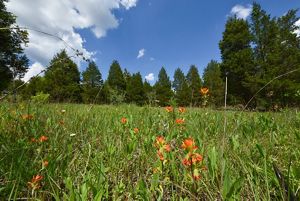
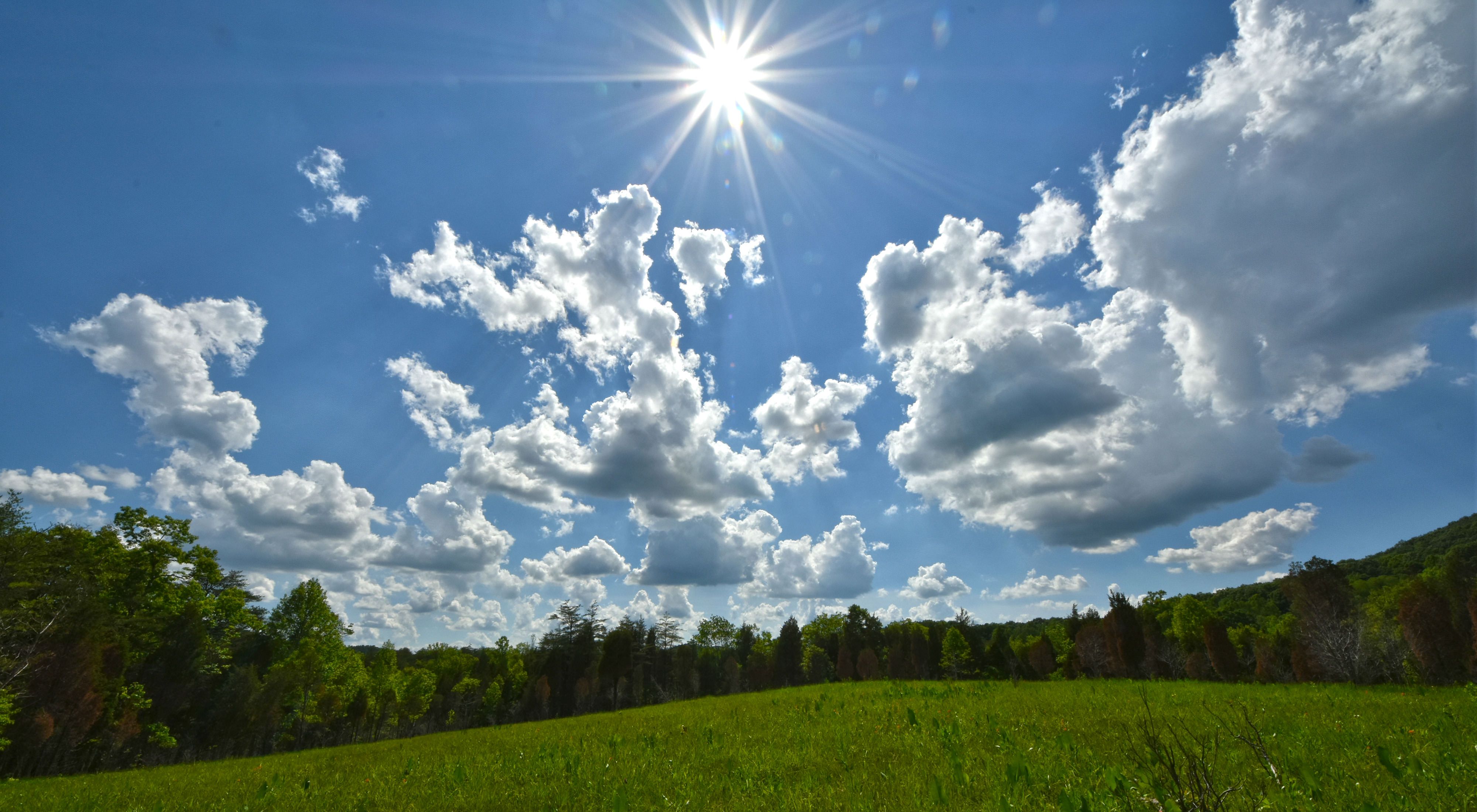
Designated a National Natural Landmark in 1967, Lynx Prairie was protected to save the best of the few remaining remnants of the once extensive prairies of this area. This preserve features a series of natural grassland openings that appear as islands in an otherwise forested area. These natural openings, called cedar barrens or glades, are prevalent throughout the preserve system.
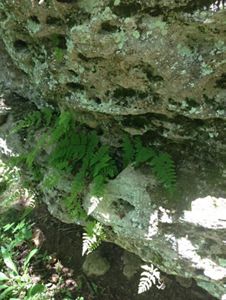
Prairie-like in nature, cedar barrens have thin, shallow soils overlying dolomitic (Silurian) bedrock, a significant amount of tree and shrub growth and an abundance of native grasses and wildflowers.
The following activities are not permitted at Lynx Prairie:
Please note that there are no facilities of any kind on the trail.
Bring a copy of the Lynx Prairie Trail Guide and Map on your trip! (pdf, 527KB)
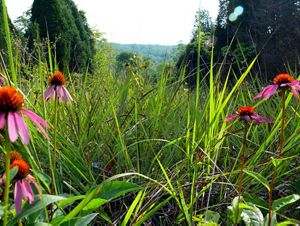
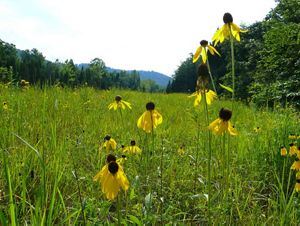
Within Lynx Prairie Preserve are three plainly marked interconnecting loop trails, named Red, White and Green. Their combined length is 1.5 miles with no steep hills to climb. The trails loop around and through the preserve’s prairies, where prairie grasses and tall flowers dominate the scene in late summer and early fall.
Parts of the trail system traverse through woods dominated by native Virginia pines and red cedar. Watch along the trail during July and August for an unusual member of the orchid family, known as crested coralroot, which grows underground and only occasionally sends up a one-half to two-foot high purple and yellow flowering spike.
Check out the Appalachian Discovery Trail, a guide to southern Ohio’s rich nature, culture and history.
From the north:
• Travel south on U.S. Route 23 to Waverly
• Take State Route 104 south
• Take State Route 32 (the Appalachian Highway) west for about 25 miles to State Route 41 at Peebles
• Follow SR 41 south to West Union
• Turn left (east) onto State Route 125
• Travel east on SR 125 for about 7 miles toward the village of Lynx
• To visit Lynx Prairie, follow SR 125 into Lynx, then turn right (south) onto Tulip Road. The first driveway on the left is East Liberty Church. Public access to Lynx Prairie is available from a trail beginning in the southeast corner of the cemetery.
From the west:
• Travel east on State Route 32 to State Route 41 at Peebles.
• Follow SR 41 south to West Union
• Turn left (east) onto State Route 125
• Travel east on SR 125 for about 7 miles toward the village of Lynx
• To visit Lynx Prairie, follow SR 125 into Lynx, then turn right (south) onto Tulip Road. The first driveway on the left is East Liberty Church. Public access to Lynx Prairie is available from a trail beginning in the southeast corner of the cemetery.
Have you been to this preserve? Are you thinking of visiting? See what others are saying about their experiences and add your comments below.
Time for you to join the discussion. Tell us about your experience at this preserve. What plants and animals did you see? When did you go? You can help others plan their visit when you share your thoughts. And thank you for visiting one of our nature preserves!
Whether scary or exciting, nature has a way of sneaking up on you. See stories
Hear some of nature's success stories and see how nature matters to us all. Watch videos