Uplands Farm Sanctuary is open to visitors from dawn to dusk, seven days a week. The office is open Monday-Friday, 9 am to 5 pm. The Nature Conservancy does not allow dogs or other pets on our preserves.
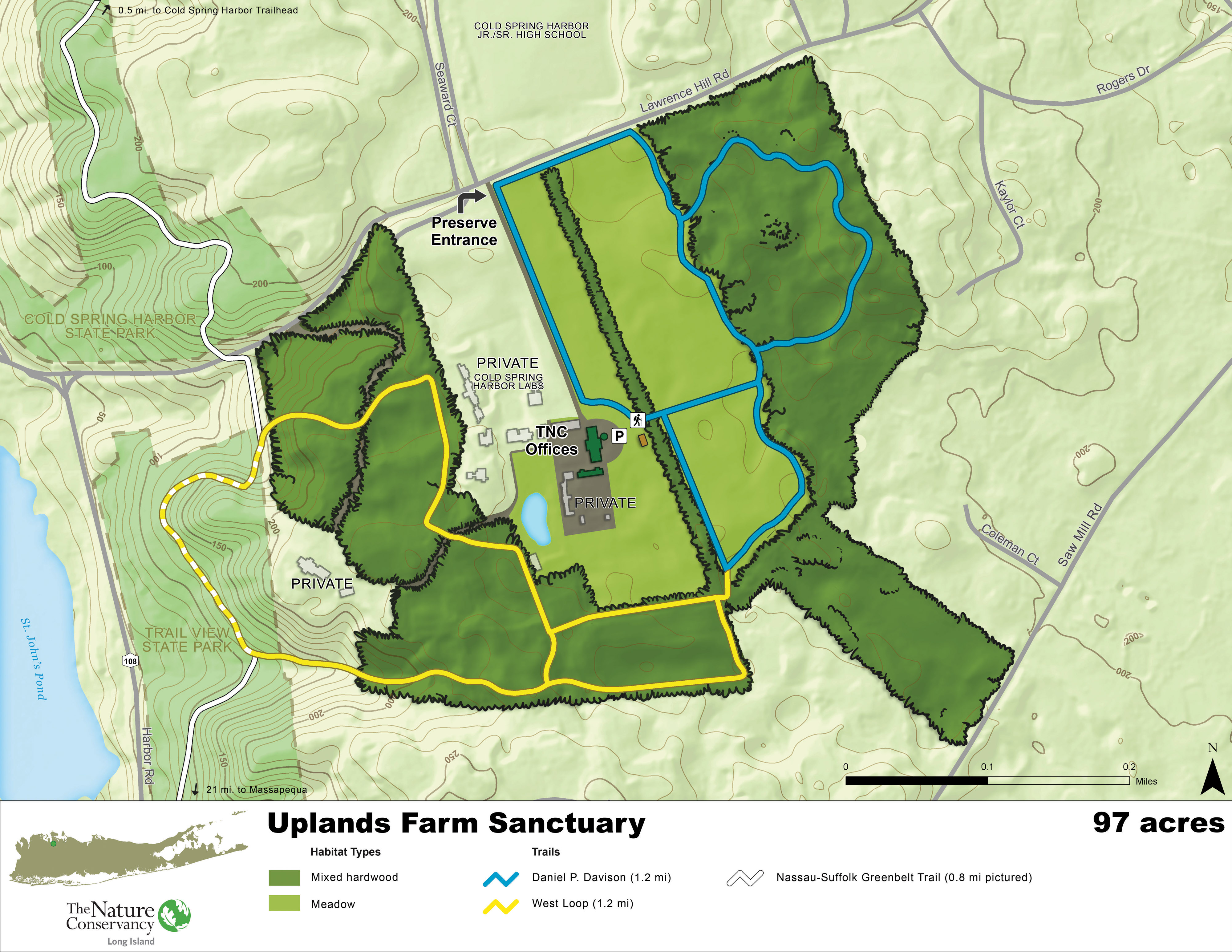
If you’re interested in longer hikes, the West Loop Trail at Uplands Farm connects to the 20-mile Nassau-Suffolk Trail, part of the Long Island Greenbelt where one can hike from Cold Spring Harbor south to Massapequa.
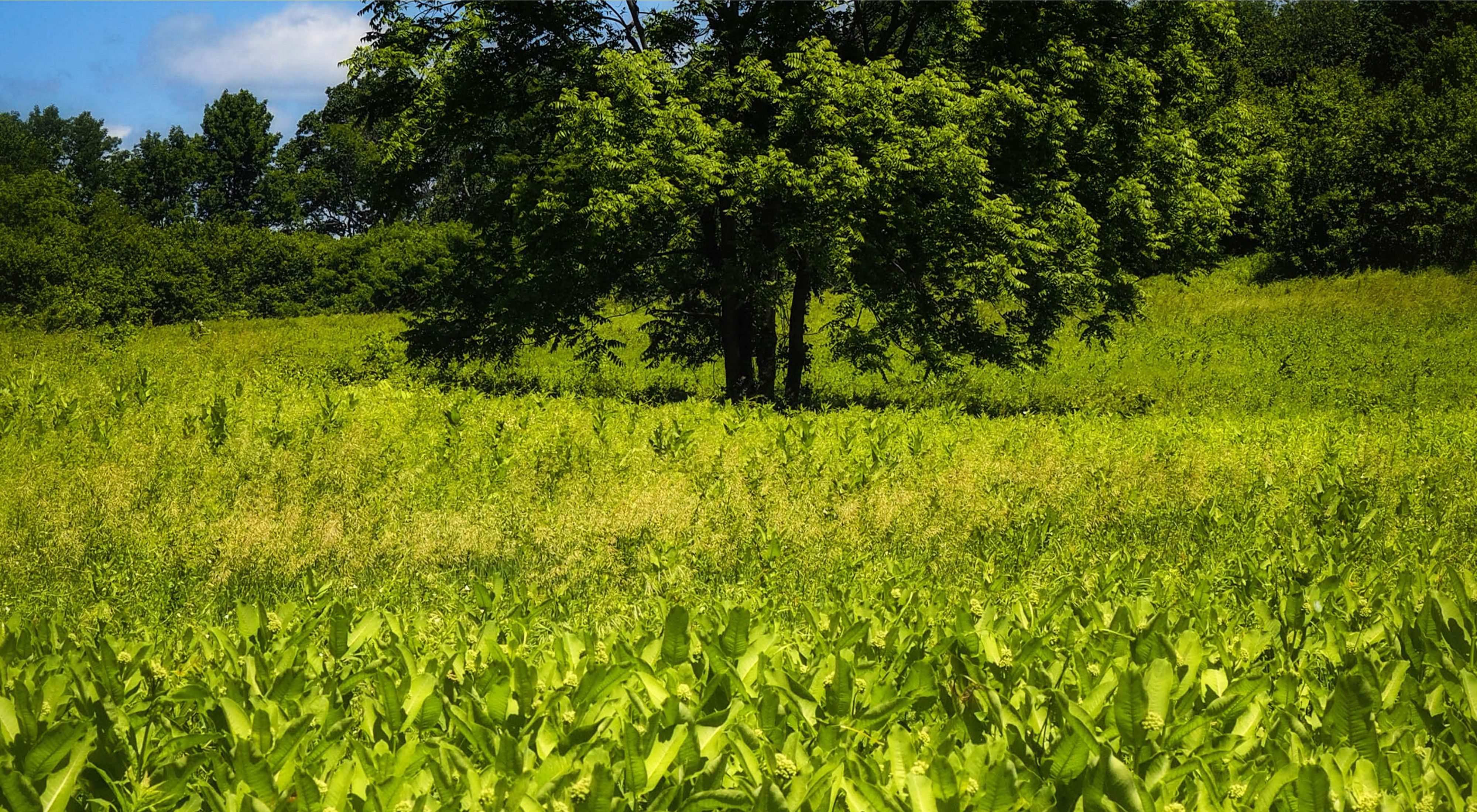
The trail begins in the sanctuary's most popular attraction—the vast wildflower meadows which provide important habitat for a wide variety of plants and animals, including milkweed, goldenrod, and dozens of butterfly species. Bird species associated with this type of habitat are Eastern Bluebird, Tree Swallow, and Blue-winged Warbler. Groundhogs have also become common on the preserve, so be sure to look for them feeding along the edge of the meadow along the Daniel P. Davison trail. Historically, these fields were hayed once a year and used to feed the local cattle. Every winter, stewardship staff at the Conservancy mow the vegetation in the meadow to retain this special habitat and historic appearance.
A nest box program provides shelter and reproduction opportunity for cavity-nesting birds such as Tree Swallows, House Wrens, and occasionally Eastern Bluebirds. Look for the Tree Swallows, flashes of metallic blue above the meadow grasses and wildflowers, as they swiftly snatch flying insects out of the sky. The Conservancy maintains trails leading to the nest boxes to manage the program, so please stay out of these areas to minimize disturbance. They are marked with signage indicating they are closed to hiking.
Follow the Daniel P. Davison trail through the eastern woodland to see red maple, black cherry, and red cedar mixed with oak, ash, black walnut, and hickory trees. Traverse the hilly terrain of the West Loop trail through the western woodland to spot flowering dogwood and extensive thickets of mountain laurel bloom below a canopy of oaks, tulip trees, and black birch.
Uplands Farm Sanctuary is a great place to view a variety of resident and migratory songbird species throughout most of the year. May is a particularly fun time to visit— diversity is at its peak with neotropical migrants and return breeders bustling about the preserve. Twenty-two species of warbler have been documented here and stunners such as Scarlet Tanager, Baltimore Oriole, and Orchard Oriole breed in the surrounding woodlands and edges. The golden-rod filled meadows offer an excellent chance of spotting Orange-crowned Warbler during the month of October. Eastern Bluebird, the New York state bird, can also be found on the preserve throughout the year.
The main office once served as a cattle barn for the Nichols dairy operation and was renovated in 1995 to provide space for the Conservancy’s growing staff and conservation programs. Outfitted with its original barn doors and windows, along with a large white silo, Uplands Farm still retains its historic appearance. In the near future, The Nature Conservancy, in partnership with Suffolk County, will be installing a new wastewater treatment system that is designed to reduce the amount of nitrogen that enters our groundwater and surrounding water bodies.
Parking is available for up to 10 vehicles in front of the Uplands Farm Sanctuary main office. Please inquire with the Uplands Farm staff before bringing large groups: 631-367-3225.
Tick Safety: Please be cautious when hiking at Uplands Farm Sanctuary throughout the year, but especially during peak tick activity (April through October). Deer and dog ticks are commonplace at this sanctuary and proper protection measures should ensure an enjoyable experience throughout the year.
Instagram user? Please use #uplandsfarmsanctuary and tag us, @nature.ny, with your nature shots!
In the eastern woodland, you’ll see red maple, black cherry and red cedar mixed with oak, ash and hickory trees. In the hilly terrain of the western woodland, flowering dogwood and extensive thickets of mountain laurel bloom below a canopy of oaks, tulip trees and black birch. The sanctuary's meadows and hedgerows provide habitat for a wide variety of plants and animals, including butterfly weed and goldenrods, 40 butterfly species and grassland birds such as bobolinks and meadowlarks, which have become rare as their habitat has disappeared.
Bluebirds, the New York state bird, return in late winter and early spring. They build their nests in bird boxes or tree cavities along forest edges. Monarch butterflies return to the region in late summer. Both the caterpillars and adult butterflies rely on the butterfly weed and other milkweed species that bloom in the open fields.
This 97-acre preserve is located in Cold Spring Harbor, New York.