

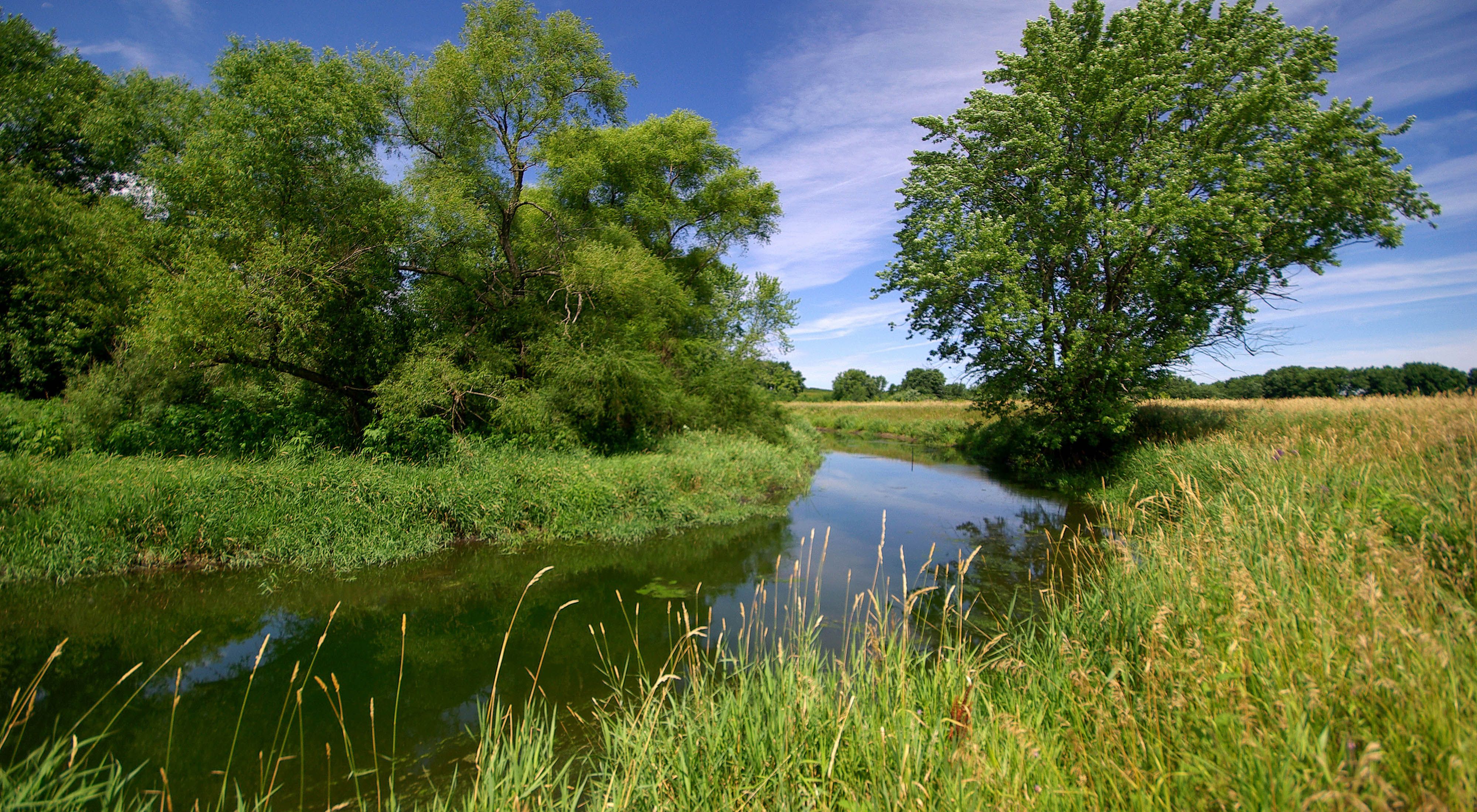

Description
The Boone River is considered an area of significance because of its aquatic biodiversity. It was identified in the Upper Mississippi River Basin Plan as an area with significant plant and animal life.
Why you should visit
For its size, the Boone River is a relatively intact watershed. The river itself is boulder strewn and a favorite canoeing stream. Canoe rentals, available through Webster City outfitters, make it easy to view the picturesque deep valley that contains the river.
Location
Webster City is the best area to visit this stream, but from Webster it runs through five counties.
Conditions
The river can be hazardous in spring during high water, so be cautious when planning boating trips. However, the river is usually very gentle and easy to canoe.
Why the Conservancy Selected This Site
Boone River is significant because it is a biologically important tributary to the Des Moines River. Further, working in this region enables the Conservancy to find solutions for much larger problems, such as hypoxia in the Gulf of America. Hypoxia occurs when run-off from farm fields causes large vegetation blooms that remove all oxygen in the water and kill plant and animal life. This is particularly a problem at the mouth of the Mississippi River. By improving the quality of this small river, we will improve the entire river system.
What the Conservancy Has Done/Is Doing
On the Boone River, a Des Moines River tributary, the Conservancy is working with partner organizations, such as the Prairie Rivers of Iowa Resource, Conservation and Development Council, the Iowa Soybean Association and area landowners to establish science-based conservation goals for the watershed involving water chemistry, physical habitat improvements and hydrology, which deals with how water flows through landscapes. Participants recommend and test alternative farming practices. Partners determine financial incentives to support these practices. The goal is to conserve native freshwater biodiversity in ways that are scientifically and economically sound and of benefit to the agricultural community.