
We're working with you to make a positive impact around the world in more than 35 countries, all 50 United States and your backyard. Support our work
Florida LEAF students and their mentor meet Jim Yawn (l) of The Walt Disney Co., who helped fund the program this year, and Nature Conservancy President and CEO Mark Tercek at a preserve event summer 2012. © Heather Brownlow/TNC
Yes
** The Preserve will be closed Friday, May 24 through Monday, May 27 for the Memorial Day Holiday and will reopen on Tuesday, May 28 **
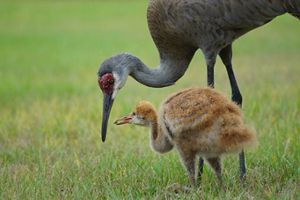
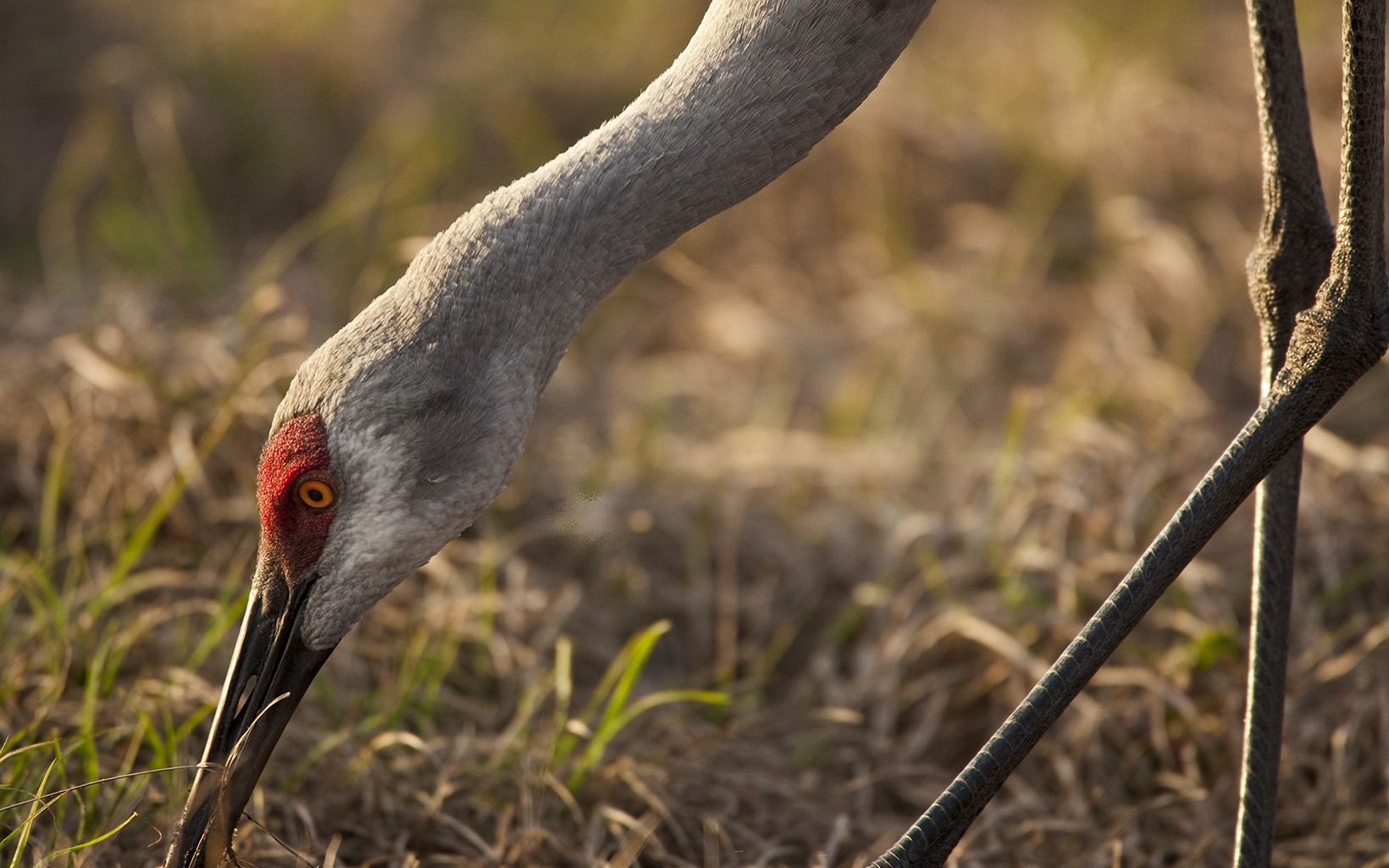
Arriving at The Nature Conservancy's Disney Wilderness Preserve, you may get to see rare wildlife before reaching the parking lot. Sandhill cranes, a flock of wild turkeys and red-shouldered hawks are often seen from the drive, while native grasses and trees bow in the breeze. This flagship Florida preserve is a Florida chapter highlight.
Here, the Conservancy celebrates 20 years of innovative land management and restoration among the preserve’s 18 distinct natural communities. Will you help us continue this work?
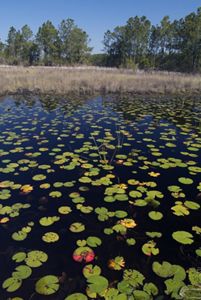
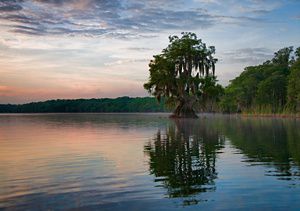
Located south of Orlando, the 12,000-acre preserve straddles the headwaters of the Everglades ecosystem. Bordered by cypress-ringed Lake Russell, with one of the area’s last undeveloped lakefronts, the preserve is home to more than 1,000 species of plants and animals. It anchors a mosaic of protected Central Florida lands where visitors can step back into time.
The preserve began as the country’s first large-scale, off-site wetlands mitigation project. In the early 1990s, The Walt Disney Co. purchased and donated 8,500 acres to the Conservancy to offset lands impacted by the development of Walt Disney World. The Disney Co. also provided funds for restoration and wildlife monitoring, and continues to partner a number of on-site projects.
Additional acreage came later from the Greater Orlando Aviation Authority and other organizations as part of their own mitigation requirements. Today the preserve is considered a national model for sustainable development and state-of-the-art management.
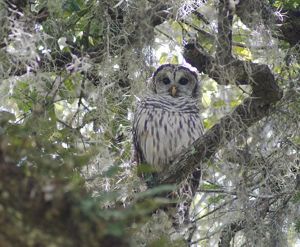
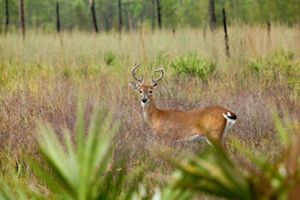
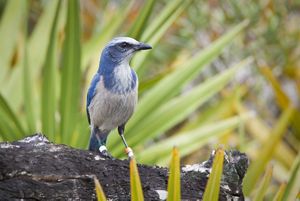
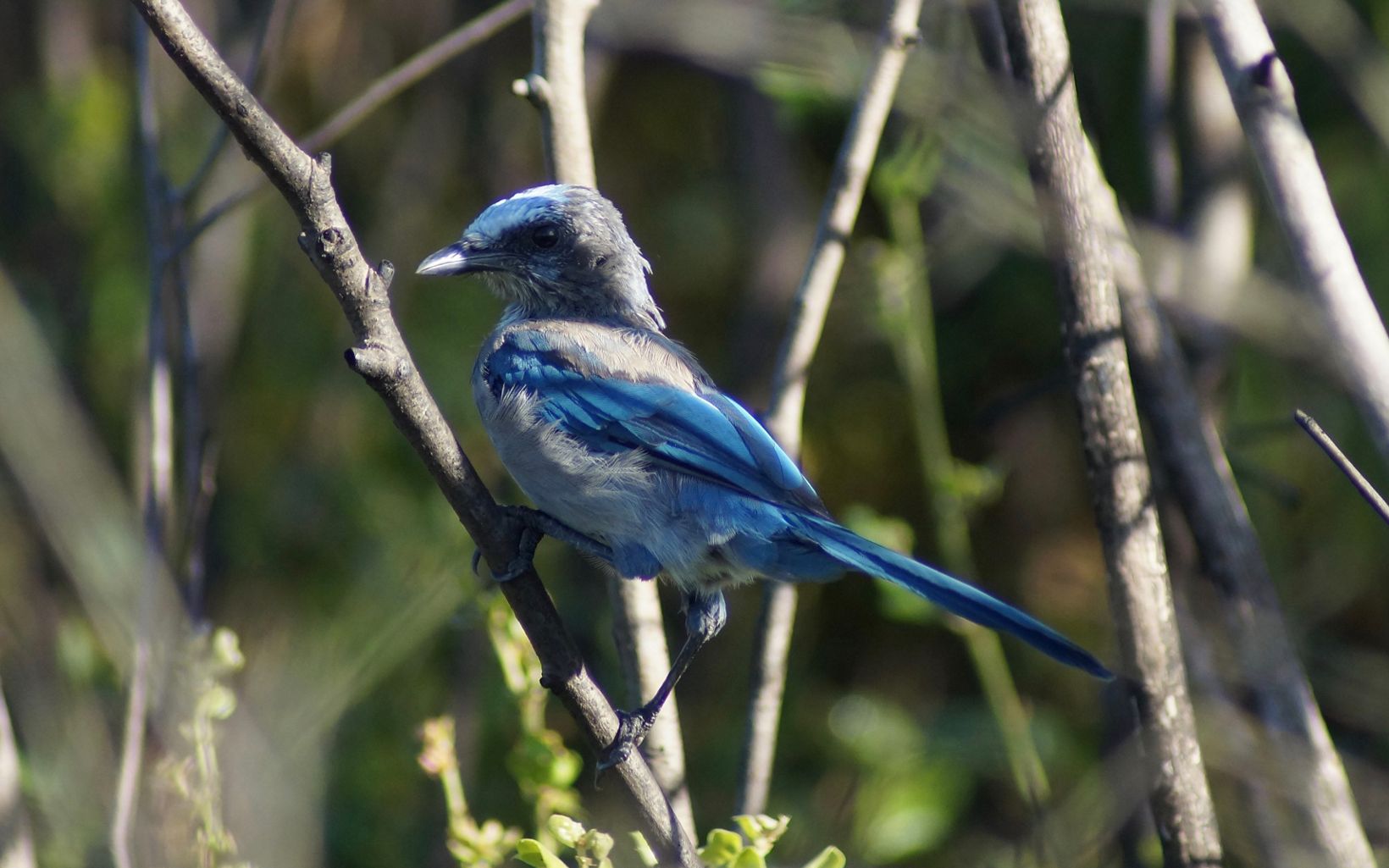
Birds include the bald eagle, red-cockaded woodpecker, Florida scrub-jay, wood stork, sandhill crane, northern harrier and crested caracara. The preserve is also home to the southeastern big-eared bat, Sherman’s fox squirrel, eastern indigo snake and gopher tortoise. (The Florida panther has been documented crossing the site!)
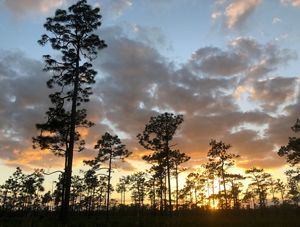
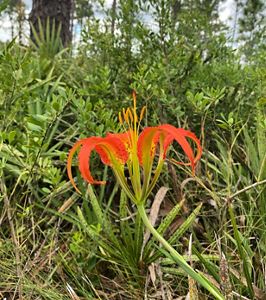
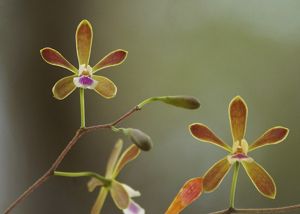
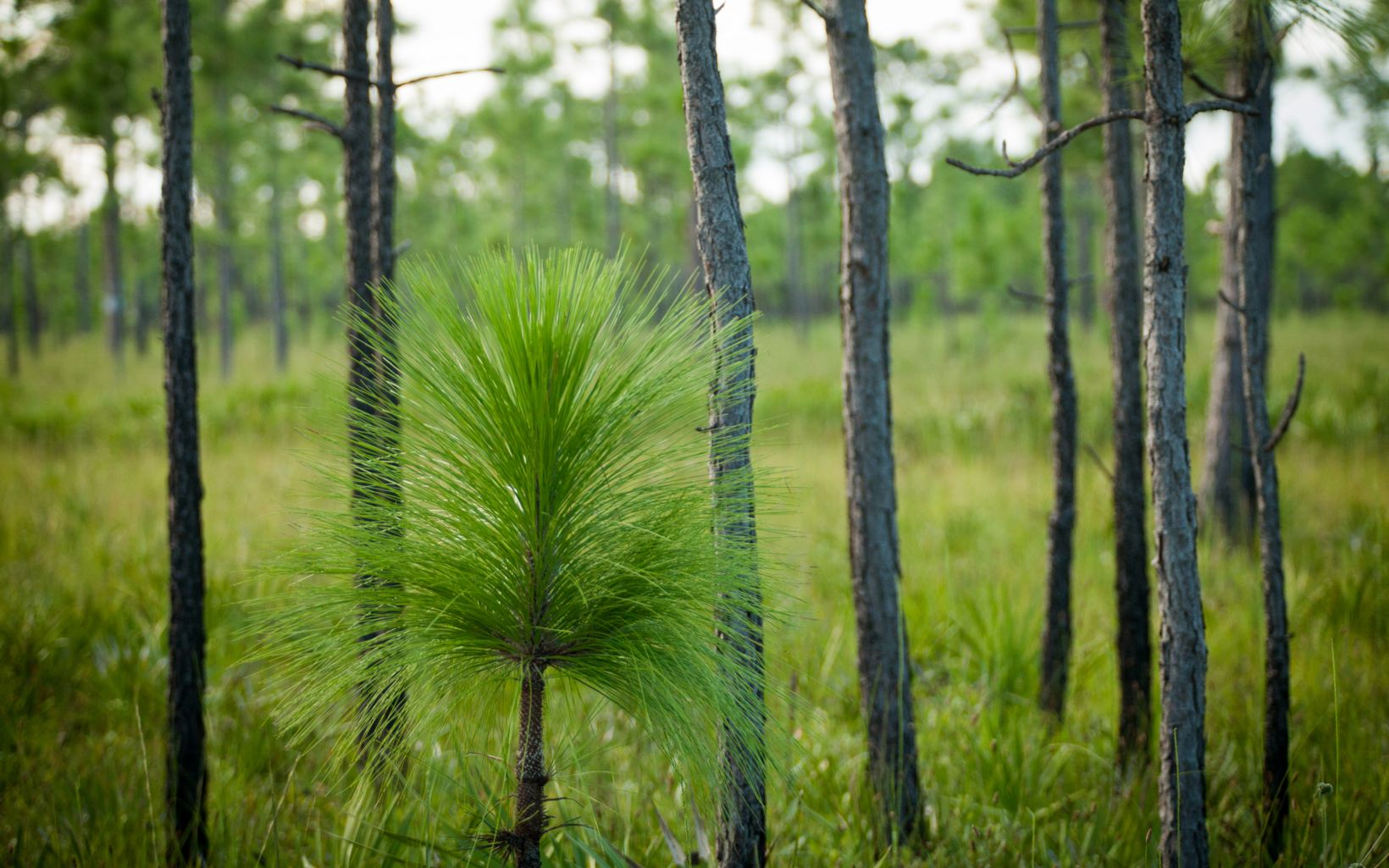
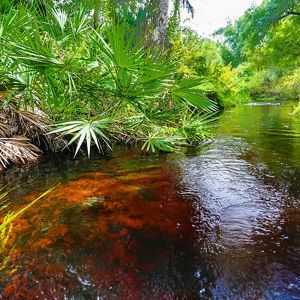
The preserve features cypress swamp, freshwater marsh, scrub, flatwoods and oak hammock. A rejuvenated longleaf pine forest – with its lush understory of native grasses and forbs, saw palmetto and other shrubs – is one result of the return of prescribed fire to the land. Key flowers include the fallflowering ixia, Catesby’s lily and terrestrial orchids.
View a slideshow of the wildlife found at The Disney Wilderness Preserve.
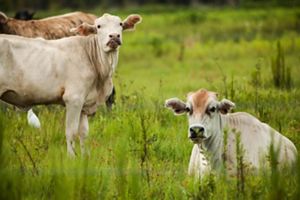
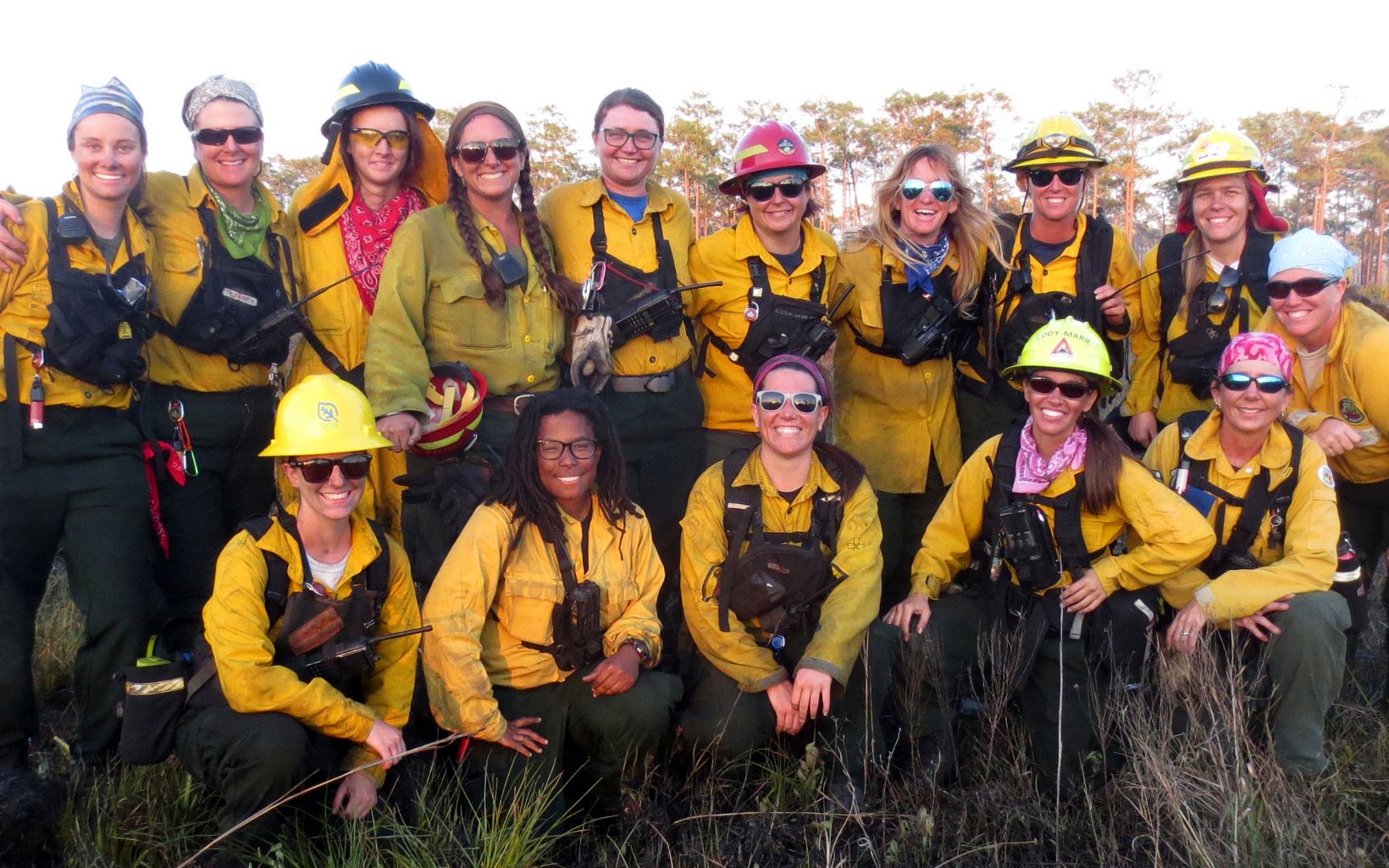
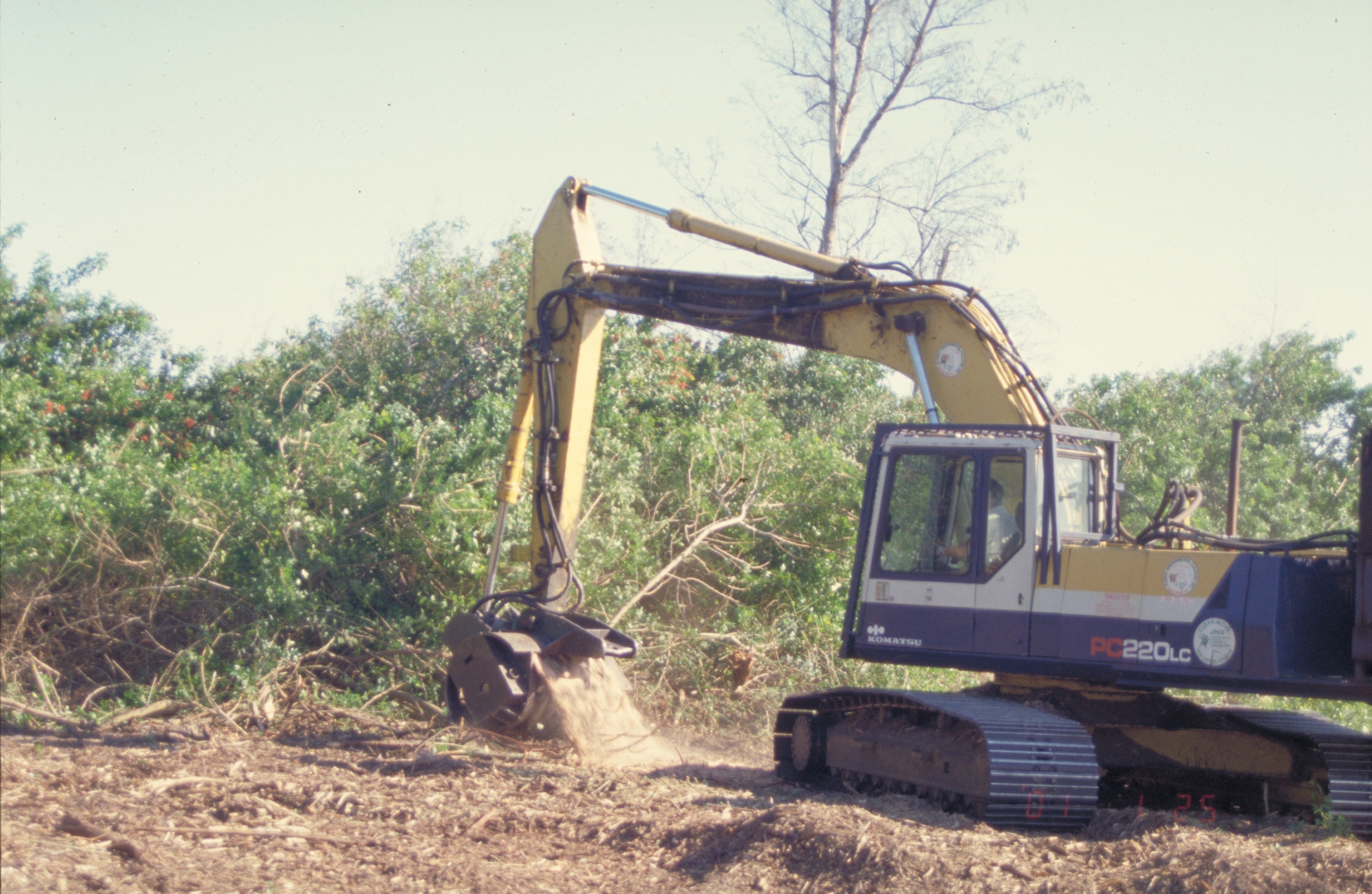
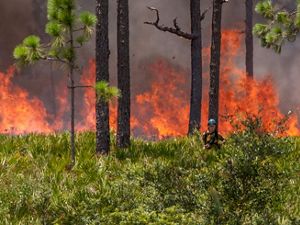
Heavily logged and used as ranchland for decades, the preserve is restored very near to its original state. (Records remain from the area’s first Spanish missionaries.) Large-scale wetland and upland restoration has included the removal of non-native, invasive plants and grasses and the removal of agricultural ditches. The preserve has also benefitted from the use of controlled burns among its numerous fire-dependent habitats, as well as the mechanical removal of excessive shrub and tree growth.
Red-cockaded woodpecker translocation program
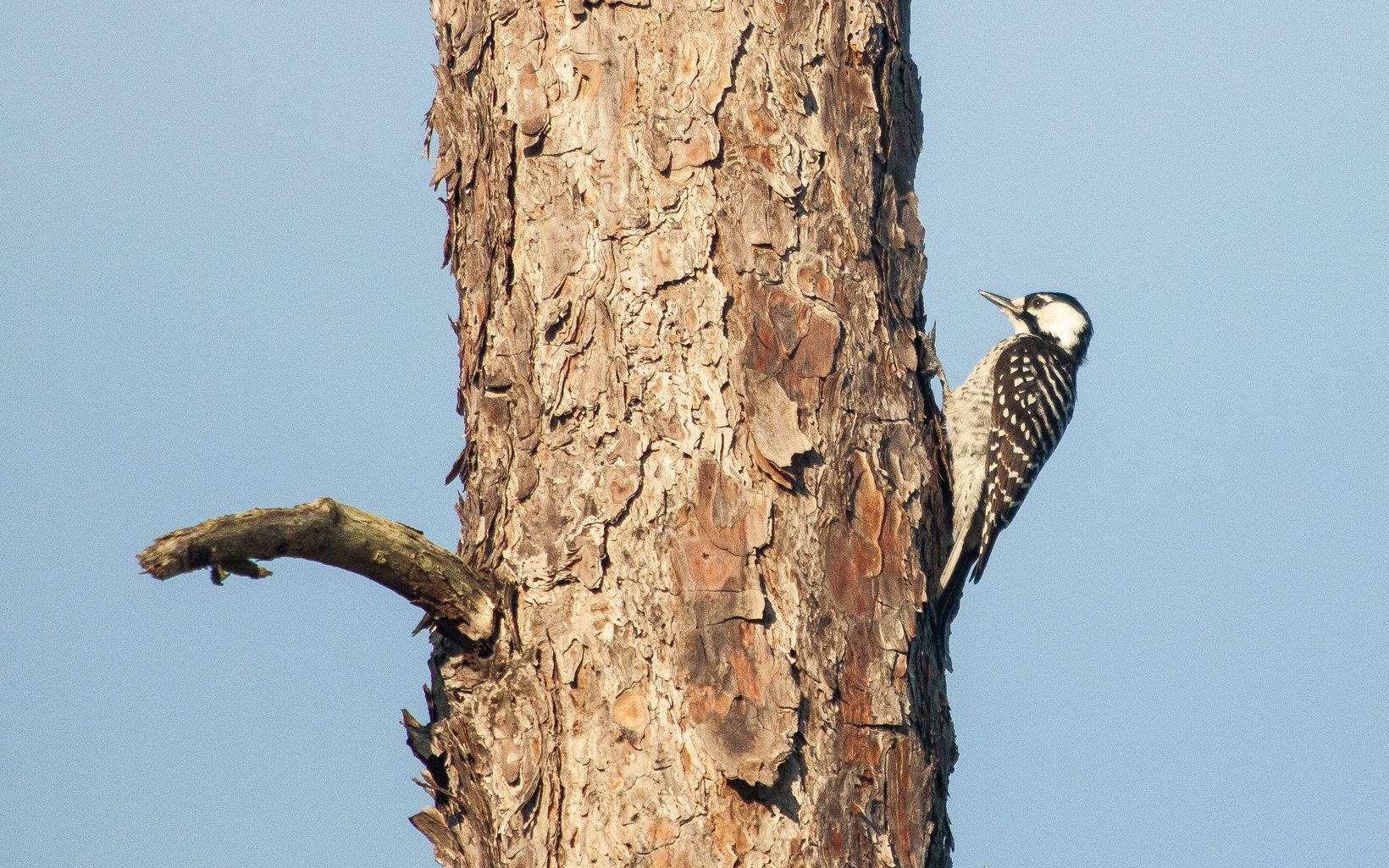
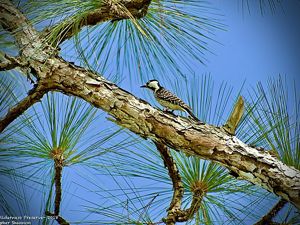
The Conservancy works with the U.S. Fish and Wildlife Service on a program to return the red-cockaded woodpecker (RCW) to the preserve. Locally extinct for decades, relocated RCWs are adapting well in man-made cavities within the restored longleaf pine habitat. Four fledglings survived during their third nesting season in 2010!
Monitoring the Southeastern big-eared bat
A nice surprise when biologists first surveyed the property was the discovery of a rare maternity colony of the southeastern big-eared bat. The colony has taken over a decrepit hunting trailer. The bats are carefully monitored and have been encouraged to move into a new bat house the Conservancy supplied. To date, most still cling to the trailer!
Wetlands restoration
Conservancy staff has restored the preserve so that approximately 4,000 acres of wetlands once again exist within its boundaries . As “nature’s sponge”, wetlands are the life-blood of peninsular Florida. Rain filters through the preserve’s uplands into lower-lying wetlands that capture water, filter nutrients, replenish Florida’s aquifer and provide essential habitat for plants and wildlife.
Scientists and land managers employ methods developed at the preserve as a model for Northern Everglades wetlands restoration. Data from the preserve and other sites are used to estimate potential water storage and water quality gains achieved through large-scale wetland restoration.
Wood stork rookery one of most significant
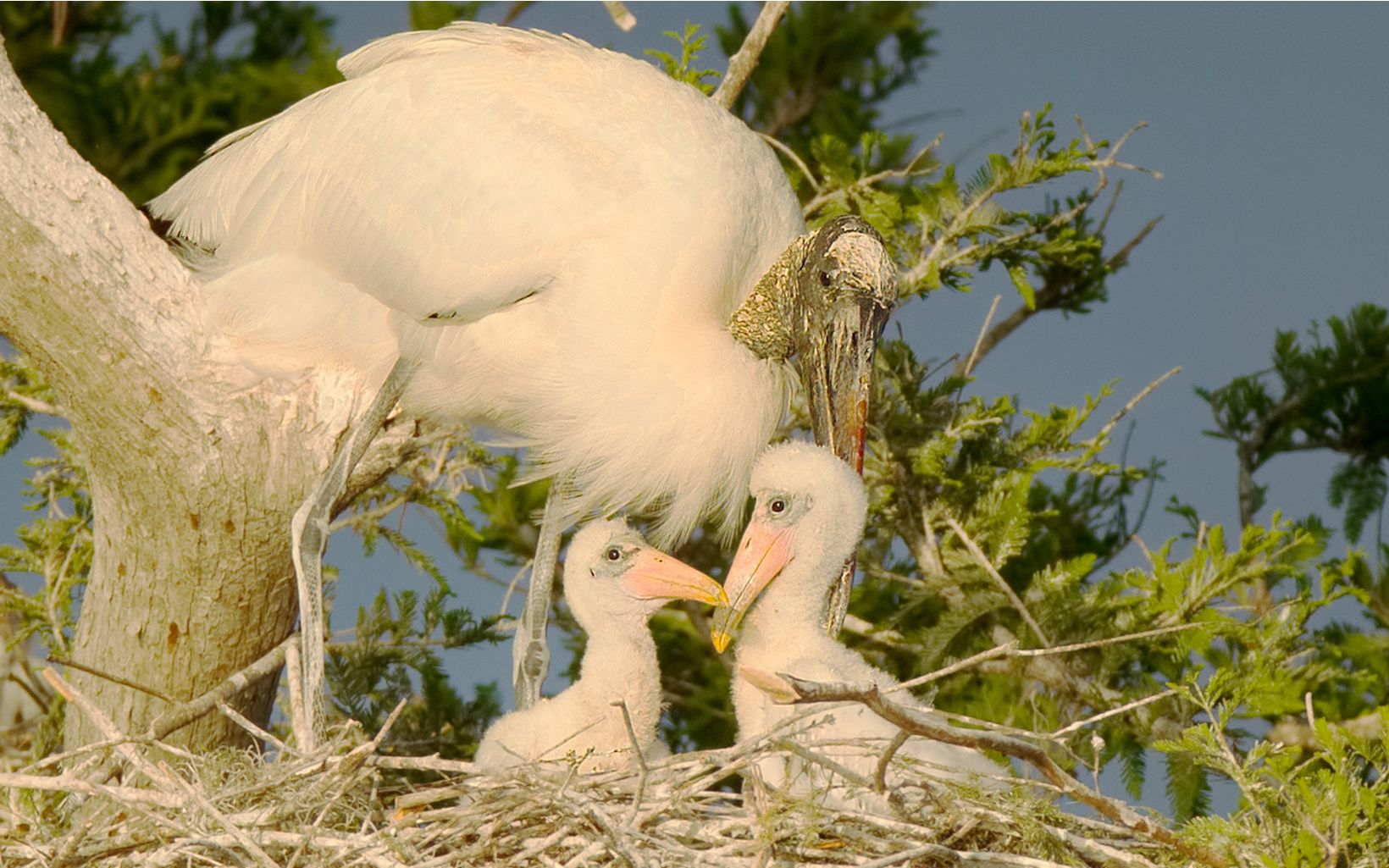
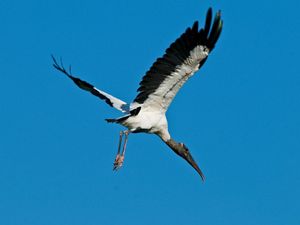
The Conservancy partners with The Disney Co.’s Animal Kingdom, quietly monitoring one of the most closely studied wood stork rookeries in the United States. Hundreds of pairs of this ancient, endangered bird flock to the preserve each spring, where they roost in raucous splendor among old growth bald cypress. A wood stork’s unique bill allows a curious feeding mechanism within shallow waters.
A laboratory for scientific experiments
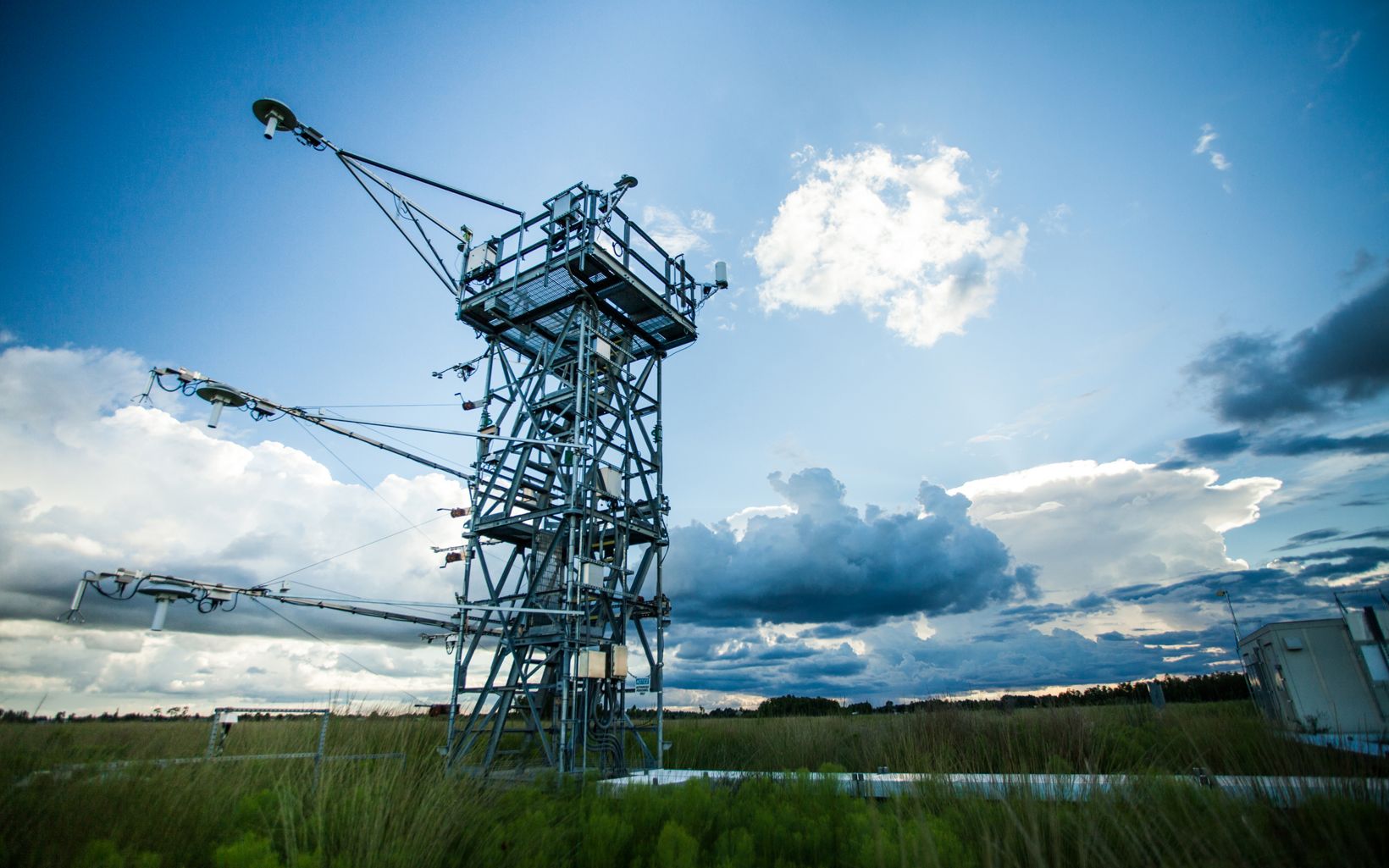
The Conservancy has teamed up with scientists from the University of Central Florida and the National Ecological Observatory Network to better understand issues such as climate change by measuring the amount of carbon stored in different habitats at the preserve. Sensitive instruments collect data on weather, water, energy and carbon storage. Scientific studies help document the value of natural habitats.
Green elements of the Conservation Learning Center and other buildings
Buildings were created with the environment in mind, including:
• Geothermal heating and cooling
• Freshwater catchment used for irrigation and other non-potable uses
• Green forest-grown pine
• Solar panels that collect steady sunlight; wide porches and ceiling fans that shield work areas
• Low VOC paint
• All original furniture made from recycled materials
Contact us to learn more about how your conservation group might use the learning center.
The preserve is open 9 a.m. to 5 p.m., Monday- Friday, closed on most major holidays. The preserve is closed on weekends. Before visiting, please call us at (407) 935-0002, as there may be limited access due to flooding or restoration activities.
The Nature Conservancy’s Disney Wilderness Preserve
2700 Scrub Jay Trail
Kissimmee, FL 34759
Phone:
Email: visitdwp@tnc.org
Photography by Carlton Ward, Jr. helps tell the story of the Northern Everglades
Reintroducing the Red-cockaded woodpecker
The Disney Wilderness Preserve welcomes back the red-cockaded woodpecker.
Wildlife of The Disney Wilderness Preserve
See what plants and animals call this preserve home.
Watch LEAF Intern Diamond Coles explain why prescribed burns are good for nature and people! Diamond worked at The Nature Conservancy's Disney Wilderness Preserve in Florida during the summer of 2012.
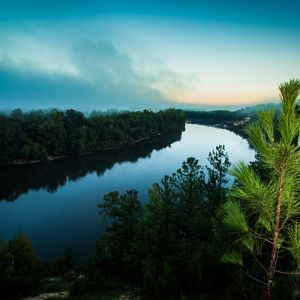
Beautiful Lake Russell at Disney Wilderness Preserve is one of the last Florida lakes undeveloped on all sides.
Conservancy scientist on the Southeastern big-eared bat research at The Disney Wilderness Preserve.
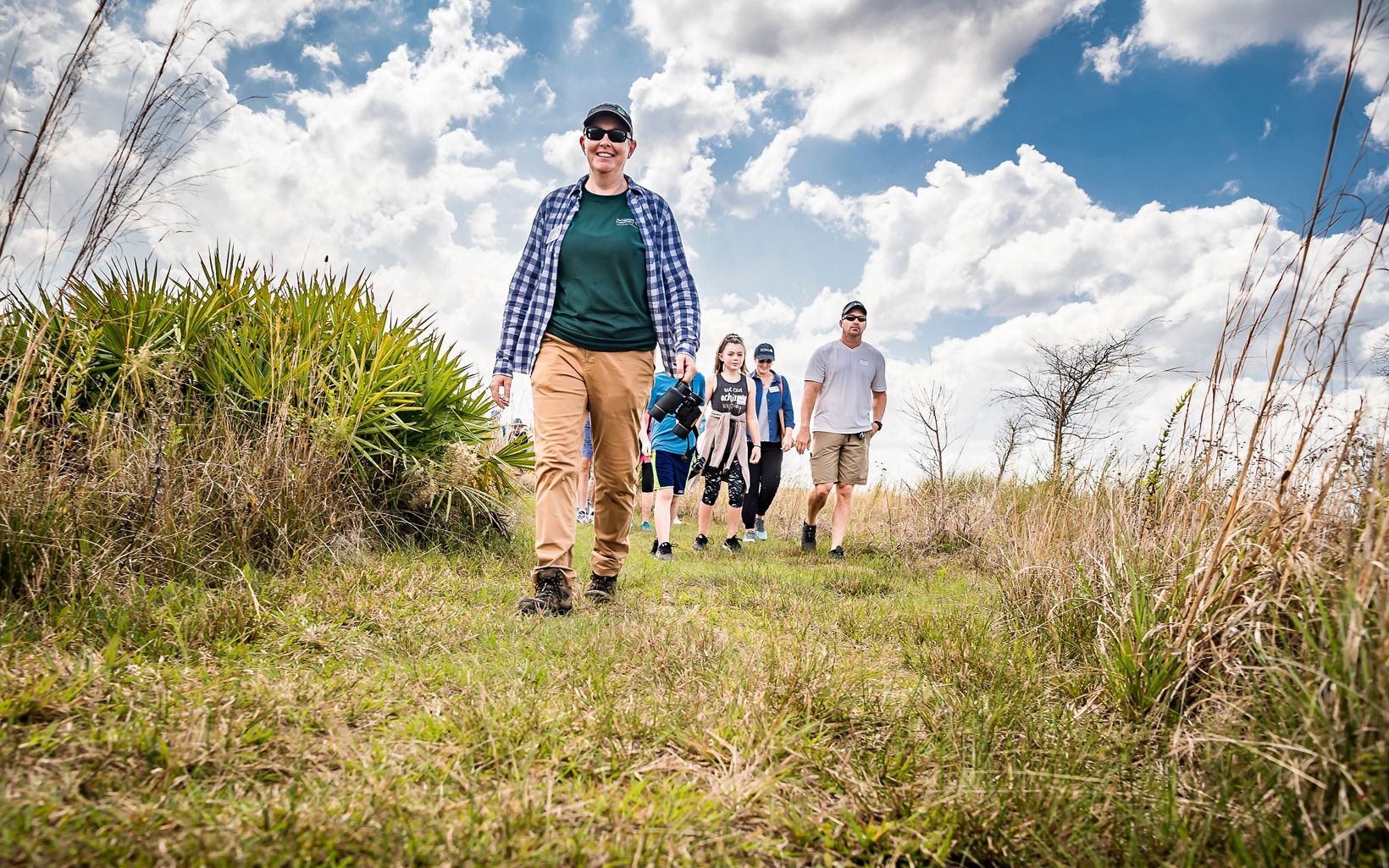
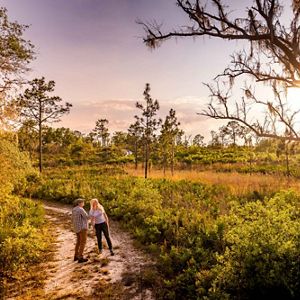
At The Disney Wilderness Preserve, visitors can hike, bird watch, and enjoy old Florida’s natural beauty. There is no fee, although donations are appreciated.
Volunteer
Learn how you can join the conservation team.
Monday -Friday 9:00 a.m. to 5:00 p.m., except for major holidays. ** The Preserve will be closed Friday, May 24 through Monday, May 27 for the Memorial Day Holiday and will reopen on Tuesday, May 28 **
Hikers: Please register at the Adventure Center prior to setting out and allow at least two hours to hike the trail (not including stops.) For your safety and comfort, bring drinking water, hats, sun protection, bug repellent and use appropriate footwear. Always be aware of changing weather conditions. Water levels fluctuate based on rainfall and groundwater levels; trails may be wet at times.
Pets, smoking, weapons and alcohol are prohibited. Please stay on the trail and do not collect plants or animals.
The hiking trail includes a one-mile trip to Lake Russell. Those wishing a longer experience may continue along the 2.5-mile loop, which offers a closer look at the preserve’s natural communities.
Go on a treasure hunt with your family! What will you find?
See Overview map.
From Tampa/Lakeland via Interstate 4
From Orlando International Airport
Coming from other locations? Call the preserve for directions from other locations.
The Nature Conservancy’s Disney Wilderness Preserve
2700 Scrub Jay Trail
Kissimmee, FL 34759
Phone: (407) 935-0002
Have you been to this preserve? Are you thinking of visiting? See what others are saying about their experiences and add your comments below.
Time for you to join the discussion. Tell us about your experience at this preserve. What plants and animals did you see? When did you go? You can help others plan their visit when you share your thoughts. And thank you for visiting one of our nature preserves!
Whether scary or exciting, nature has a way of sneaking up on you. See stories
Hear some of nature's success stories and see how nature matters to us all. Watch videos