


Florida Reef Resilience Program
This program is leading an effort to make Florida’s Coral Reef healthier and more able to withstand natural disturbance events.
Download
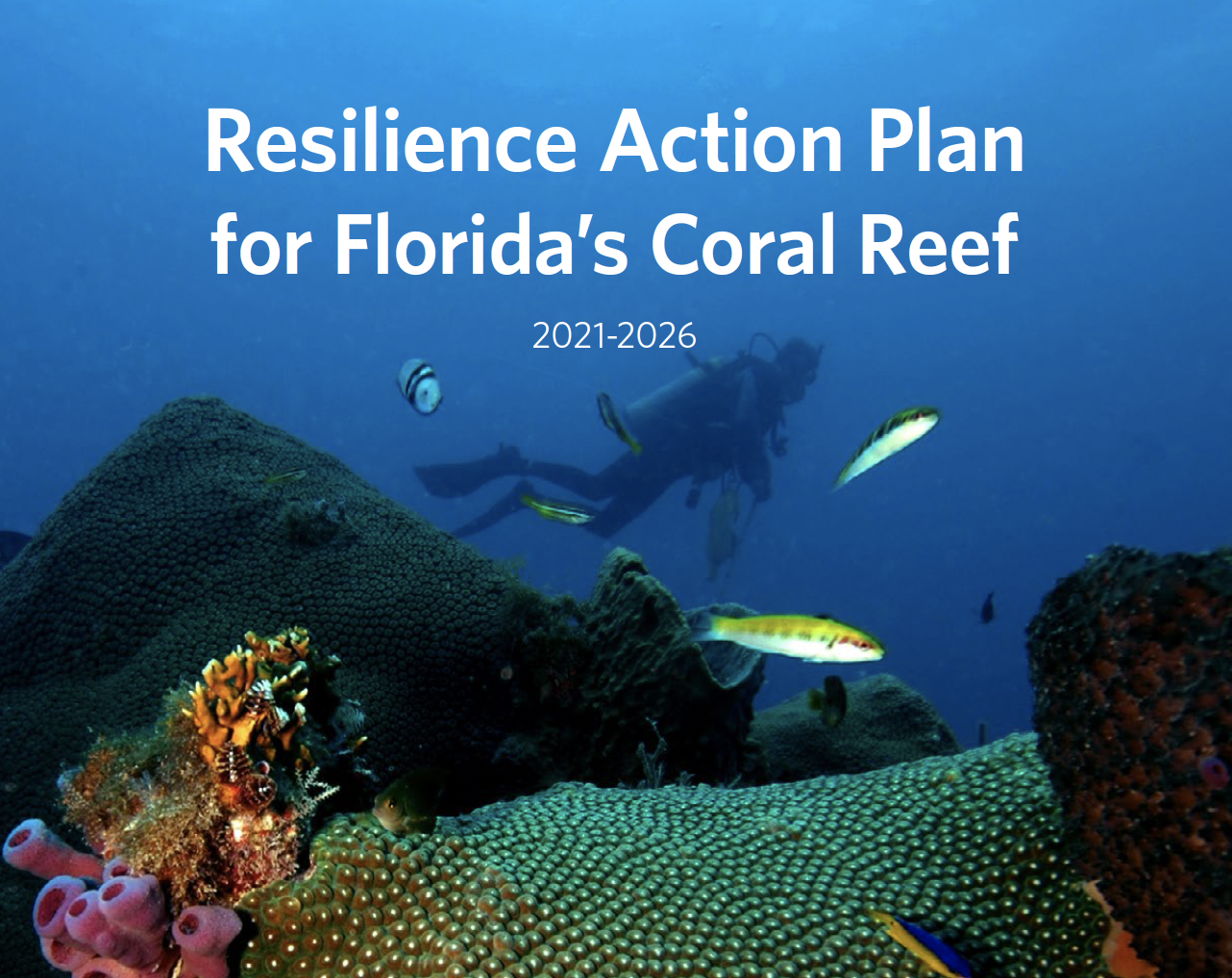
This report defines critical near-term steps to tackle threats to Florida’s Coral Reef and rapidly increase restoration efforts.
DownloadThe Florida Reef Resilience Program (FRRP) has a unique history, growing from a program to encourage knowledge and best practices sharing between the managers of the renowned Great Barrier Reef and stakeholders of Florida’s Coral Reef. The FRRP now serves as a forum for Florida’s reef managers to discuss and address a wide array of issues and threats that cross jurisdictional boundaries.
FRRP’s stewardship of Florida's Coral Reef includes work to identify and track the health and status of coral reefs, understand underlying factors that lead to and maintain resilience, and inform efforts to reduce negative impacts and stressors on reefs. Throughout FRRP’s history, partners have successfully worked together in four main program areas: Disturbance Response Monitoring, Human Dimensions of Reef Resilience, Communications and Outreach, and Supporting Coral Reef Management and Sustainable Uses.
Florida is exemplary in terms of marine managed areas and hosts one of the first designated marine protected areas in the world, John Pennekamp Coral Reef State Park established in 1963.
In addition, much of Florida’s Coral Reef is protected and managed within the Florida Keys National Marine Sanctuary, Dry Tortugas National Park and Biscayne National Park, Dr. Von D. Mizell-Eula Johnson State Park, St. Lucie Inlet Preserve State Park, and four coastal National Wildlife Refuges in the five-county region—Great White Heron, Key West, National Key Deer, and Hobe Sound.
Most of the reefs of the northern extension of the Florida Reef System, from the northern border of Biscayne National Park in Miami-Dade County to the St. Lucie Inlet in Martin County, are overseen by the Florida Department of Environmental Protection’s Coral Reef Conservation Program which is developing new management strategies for the region, now designated the Kristin Jacobs Coral Reef Ecosystem Conservation Area (ECA).

*FRRP Program Partners: The Nature Conservancy, Biscayne National Park, Broward County, Dry Tortugas National Park, Florida Department of Environmental Protection, Florida Fish and Wildlife Conservation Commission, Florida Keys National Marine Sanctuary, John Pennekamp Coral Reef State Park, Martin County, Miami-Dade County, National Oceanic and Atmospheric Administration, Nova Southeastern University, Palm Beach County and University of Miami Rosenstiel School of Marine and Atmospheric Sciences.
Dive into Coral Reefs

Florida's Coral Reef
We are working to raise awareness of the critical steps needed to tackle threats to reefs and increase restoration efforts.

It's Not Too Late to Save Coral Reefs
Coral reefs are imperiled worldwide, but engaging new sectors in conservation could help us save these vital ecosystems.

#RespectOurReef
Florida’s reefs face serious challenges. Here are eight simple ways you can step up and #RespectOurReef.