

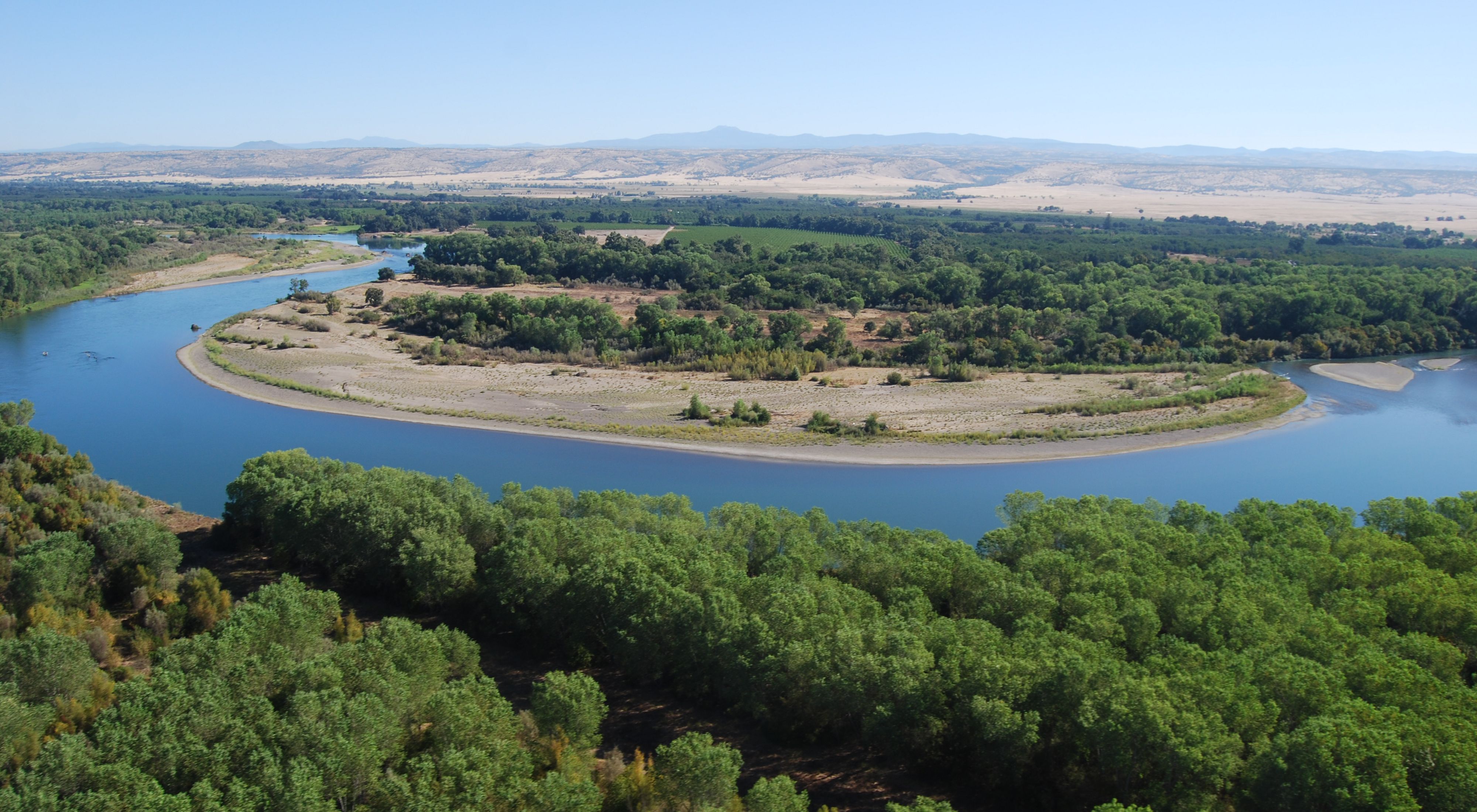
The Sacramento is California's largest river. It’s home to dozens of threatened and endangered species and it represents our state's largest supply of freshwater.
The Sacramento River is the most important river in California for both people and nature. It stretches 384 miles, and snowmelt and springs from four mountain ranges drain into it. The river supplies 35% of the state’s developed water supply, and contains critical habitats for some of our state’s most important species.
Although still vitally important, today’s Sacramento River is highly degraded relative to its former condition. 90% of the river’s forests have been cleared and water has been diverted for agriculture and municipal uses. As a result, fish and bird populations have plummeted. Additionally, the river is no longer free to carve its own path across the valley floor and create the habitats that native species evolved to depend upon. In many places, the river is locked in place by riprap (rocks or other materials that armor shorelines), and levees, which disconnect it from its historic floodplain.
The Nature Conservancy is working to restore the ecological health of the Sacramento River and give it back the tools to protect us from floods and improve water quality.

Description
The Sacramento River is lined with forests, but they’re in trouble. Without them, California would lose some of its most precious resources. In 1988, as little as 2% of these riparian, or riverside, forests remained. TNC undertook what was then the largest riparian restoration project in the U.S.
We focus on the 100-mile stretch between Colusa and Red Bluff and since 1988, TNC and its partners have restored approximately 8,000 acres of riparian habitat.
Thanks to these groundbreaking conservation strategies, the Sacramento River forests have resurged—with portions completely restored to their original richness. At the same time, more space has been made available for public use.
The riparian restoration techniques we developed on the Sacramento are now being on rivers throughout the West.
A Safe Haven
An area that was once critically degraded, is now able to support 135 species of native birds including bald eagles and tropical migratory songbirds on stopover flights.
Visitors may also spot otters and beavers, many species of reptiles and amphibians, as well as a variety of fish, such as Chinook salmon. Recently, large mammals, have even begun to reappear around the Sacramento as well.
With the effects of climate change, the Sacramento River’s riparian forests will become even more crucial to a diverse range of species. The river maintains a moist environment, offering a refuge from the surrounding region that gets more arid with every passing year.
A Landmark Project
Collaborations between The Nature Conservancy and numerous public and private partners have sparked creative conservation approaches in the Sacramento River region.
For example, we partnered with the U.S. Army Corps of Engineers and the community of Hamilton City to develop a levee plan for Hamilton City that would simultaneously protect residents from floodwaters while creating more space for wildlife.
Innovative projects like this have preserved and grown the habitats of more than 50 threatened and endangered species. They have helped protect the water supply for a region responsible for one-quarter of America’s produce. Finally, they have created more recreational space for visitors to enjoy for years to come.
How You Can Help
There is still much more work to be done to protect the Sacramento River forests. Please consider donating to the California program or becoming a member of The Nature Conservancy.
Sacramento River Project Accomplishments
The Nature Conservancy and its partners have:
Planted over two million seedlings, using a broad mix of native plants
Created the Sacramento River National Wildlife Refuge—an important stopover for migratory birds on the Pacific Flyway and tremendous outdoor recreation opportunities for Californians
Protected over 24,000 acres of land along the Middle Sacramento River
Restored 6,000 acres of riparian habitat
Increased the amount of land available for public use
Inspired public agencies and private individuals to join in these important efforts
VISIT
Birding, hiking, boating and fishing are just a few of the activities to enjoy along the Sacramento River. Visit the Sacramento River.

Make a Difference in California
Together, we can achieve transformative change on a scale that’s attainable—for California, and for the world.
You May Also Like

Water Is Life
When nature doesn’t have enough water, it’s only a matter of time before people don’t either.

Staff Stories
Explore with our staff and scientists and get a firsthand look at what it takes to get conservation done on a day-to-day basis.

When Nature Doesn’t Have Enough Water, Neither Do We
A thousand mile drought needs a thousand mile solution.