


Description
Why You Should Visit
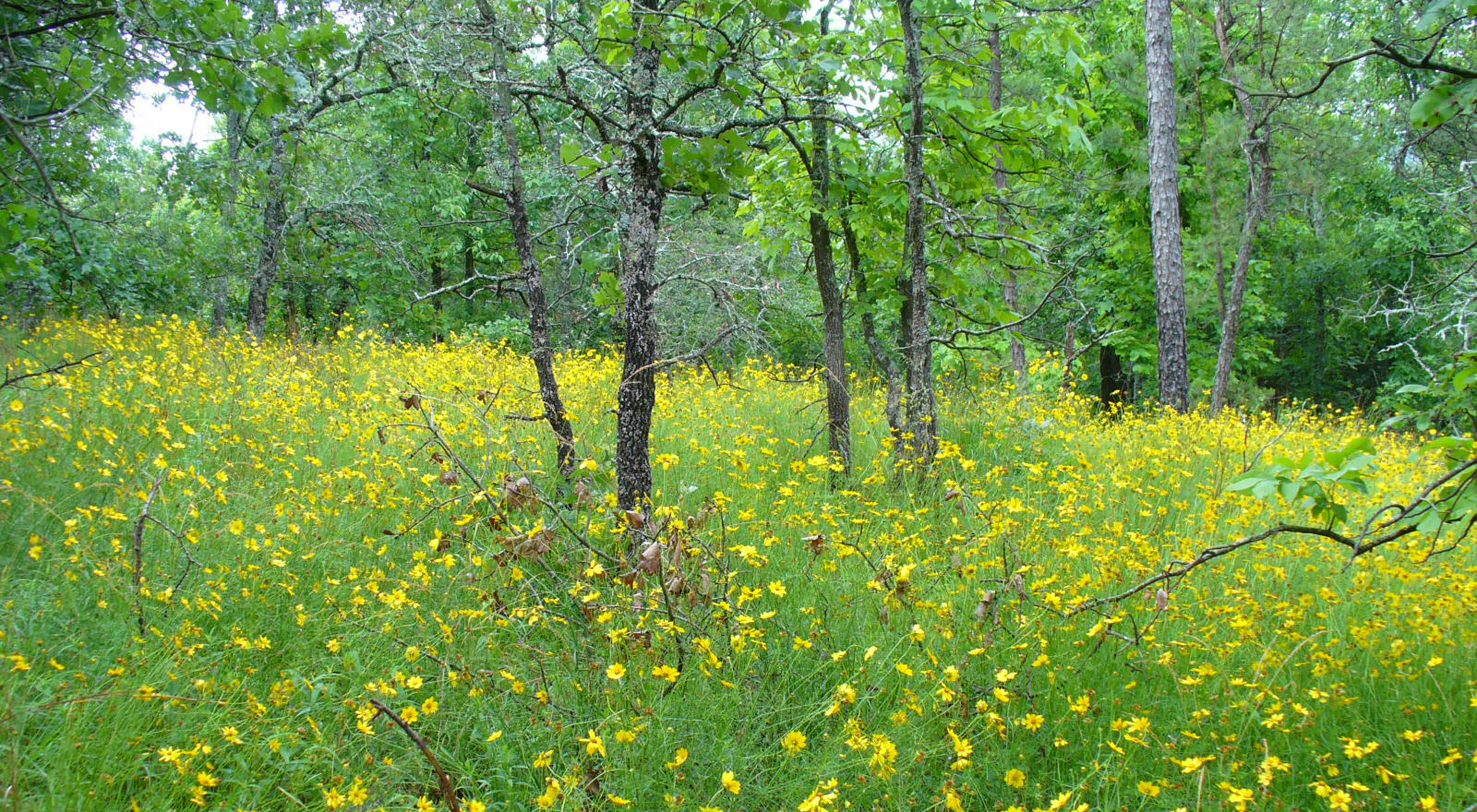
The Simpson Preserve rises from a gentle base to steep upper slopes and two narrow ridgelines with the ephemeral upper Rush Fork stream flowing between them. This piece of land contains excellent examples of Arkansas' rich natural diversity. A hike to the ridgetop glades is rewarded with sweeping vistas of the surrounding Ouachita Mountain landscape.
Location
Hot Spring County, near the border with Garland County.
Size
791 acres
What to See: Plants
Trap Mountain contains four general habitats:
- Glades occur on ridgelines and south- and north-facing slopes. Old, dwarf, fire- and drought-tolerant trees like post oak and blackjack oak survive here. The rare Arkansas cabbage or twistflower (Streptanthus obtusifolius), which is endemic to the Ouachita ecoregion, grows in the understory.
- Woodland slopes feature shortleaf pine, oaks and hickories with shrubs, grasses and wildflowers in the understory, depending on the direction of the slope. Endemic Ouachita bluets (Houstonia ouachitana) can be found in places.
- In the riparian forest along the ephemeral creeks and moist lower slopes, one can find flowering dogwood (Cornus florida), several varieties of fern, and the dwarf iris (Iris cristata).
- Wooded seeps are habitat for orchids such as the yellow-fringed orchid (Platanthera ciliaris).
What to See: Animals
Nearly two dozen species of butterflies, including the rare diana fritillary (Speyeria diana); 60 bird species, including hawks, warblers, kinglets, tanagers, vireos and woodpeckers; and mammals like white-tailed deer (Odocoileus virginianus) and black bear (Ursus americanus) call this place home.
Why the Conservancy Selected This Site
The Ouachita Mountain ecoregion of Arkansas and Oklahoma comprises a landscape of more than 8 million acres with rugged mountain ridges, broad valleys, and the headwaters of several large river systems. The complex geological formations and soils of this forested landscape have created tremendously diverse habitats for a variety of species. With roughly four dozen species found nowhere else in the world, the Ouachitas are one of North America's hot spots for endemism.
Dr. and Mrs. John B. Simpson of Hot Springs donated the original 348.5 acres of ecologically unique land to the Conservancy in 2000 to establish the preserve. Since then, they've made additional donations to help expand the preserve. It protects six rare species of plants.
What the Conservancy Has Done/Is Doing
The Conservancy has purchased two additional tracts, bringing the preserve's total area to 791 acres.
The preserve is a demonstration site for oak ecosystem restoration and is part of a cooperative program with the state’s Game and Fish, Natural Heritage and Forestry commissions, the USDA Forest Service and others. The Conservancy is using prescribed fire to restore the preserve’s woodlands to a more open structure.