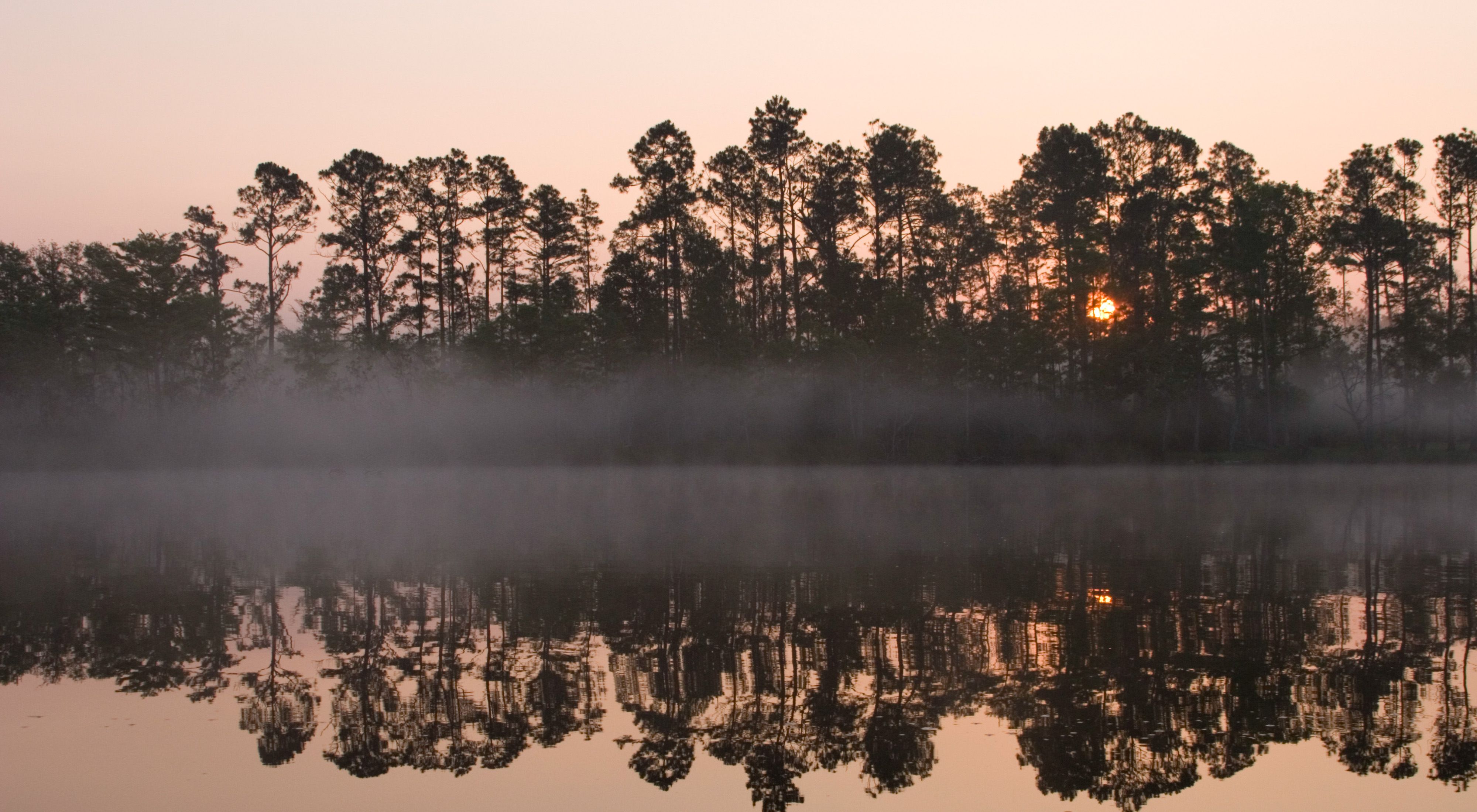
Birdsong wafts through rustling pine savannahs. Gentle waves lap within hidden marshes, while sunlight flashes through a prism of clouds above the Perdido River. If you are ever in need of stress reduction, this preserve may offer the remedy—it's a balm that soothes the soul.
Part of a significant protected corridor along the Perdido River, the preserve is enlivened by the river and is estuaries, blackwater creeks and remote lakes. Dominated by open pine flatwoods and bottomland forests, the land is dotted with marshes, swamps and mystic bogs. Here, nature moves at its own pace.
Perdido River Nature Preserve is open to the public for hiking, bird watching, nature photography and self-guided educational tours.
Plants
Rare carnivorous plants—they consume flies, small insects and even small frogs—include the white-topped pitcher plant, Tracy’s and dwarf sundew, and devil’s boot. Long-dormant orchids and lilies such as the delicate rose pogonia, grass pink orchids and endangered Panhandle lily reappeared only after fire was returned to the land. See a slideshow of these rare plants!
The longleaf pine/wiregrass habitat, native to the region, is in various stages of restoration. Hardwood trees include red maple, southern magnolia and redbay, along with shrubs such as wax myrtle, titi and yaupon holly. When restoration is complete, more than 200 plant species will exist in just one acre.
Animals
Otter, deer, coyote and bobcat frequent the area, along with numerous amphibians and reptiles such as the iconic gopher tortoise. Some 50 species of butterflies have been spotted so far, including the Palamedes swallowtail and monarch.
Spring and fall are wonderful for birders as the preserve is a stopover on the migratory path for many neotropical birds. Rare species include the northern parula, prothonotary warbler, swallow-tailed kite, and many species of overwintering sparrows and marsh wren. Year-round the preserve is home to a variety of hawks, osprey, owls and wading birds.
River
Mile after mile of wild and pristine beauty, this is canoe and kayak paradise. Cypress trees and Spanish moss frame the entrance to hidden lakes and streams. Several uninhabited islands parallel the shoreline. Deep and narrow at the preserve’s north end, the river widens to about a quarter-mile at the south. Representing freedom and the opportunity for discovery, the river remains mostly undeveloped.
Conditions
The preserve is still in early stages of restoration but, after several years of careful land management, its trees and herbaceous groundcover show dramatic results. Conditions will vary from open pine savannas to xeric sandhills to wet pitcher plant bogs.
Plan to get your feet wet and you won't be disappointed! Long pants and insect repellent are recommended. Temperatures from March-October can range from 30s in early March to mid-90s by June and July. Spring and Fall are usually ideal times for a visit.
How We're Restoring This Preserve
Longleaf pine forest and groundcover restoration is underway. Here at the wetter end of the longleaf’s range, staff is experimenting with restoration techniques. In some cases, restoration began with bare fields after the harvest of slash pine plantations grown for paper production.
On these sites TNC has planted longleaf pine seedlings and, even more importantly, restored more of the native groundcover. In other areas we have thinned the slash pine plantations and planted longleaf pine seedlings underneath. This method maintains a mature forest structure, which is important to the many bird, mammal and reptile species that call the preserve home. In total we have planted almost a quarter million longleaf pine seedlings here. Lastly, in some areas of the preserve the native forest structure is relatively intact. These areas are missing only one thing—fire!
Fire is a natural part of many ecosystems across the world, but it is of particular importance to the overall health of the longleaf pine ecosystem. Throughout history, lightning-ignited fires occurred here every few years, but beginning in the early twentieth century fire was suppressed because some foresters and land managers thought fire was a threat to the forest, its inhabitants and people.
With the return of fire, however, we see native plant and animal communities respond rapidly—wiregrass, bluestems and Indian grass grow lush and abundant and even pitcher plant bogs burst with flowers only two months after a fire. The entire preserve is managed with controlled burns that are carefully planned and professionally executed. These fires clear the understory and allow for the return of thriving longleaf pine grasslands. They also serve to eliminate the buildup of massive fuel loads reducing the likelihood of devastating wildfires.
In many ways the centerpiece of the preserve, Black Lake, offers a perfect mirror image of wildlife, foliage and sky. Since the 1950s, the lake had been blocked by a series of culverts. TNC restored the aquatic system by removing these culverts and reconnecting the stream with its natural floodplain. This tidally influenced lake is bordered by sawgrass flats that give way to bald cypress and atlantic white-cedar ponds. The rare panhandle lily is usually found flowering in mid-summer along its banks.
Invasive species are managed to maintain the composition, structure and functions of the Preserve’s ecology. Staff and volunteers work throughout the year to prevent new infestations, detect and respond to any newly discovered exotics and control the pre-existing infestations.
FUTURE PLANS
The preserve will offer nature-based recreation and self-guided ecological interpretation to the community. Self-guided, interpretive hiking trails will be expanded to allow access to the interior of the Perdido River Nature Preserve.
PARTNERS
Preserve staff collaborate with state, federal and local agencies, as well as many like-minded groups and individuals, including the following:
BCR Foundation: The preserve is a living memorial to Betty and Crawford Rainwater, whose family foundation allowed for the property’s purchase in 2003. The family held this land in the 1940s and 50s as part of a large ranch that specialized in pedigreed Angus bulls; the original Rainwater caretaker’s house was recently renovated and offers modest quarters for partnering organizations. Three different timber companies later held ownership for 45 years, planting and logging slash pine plantations.
Gulf Power/Southern Company and the National Fish and Wildlife Foundation have provided generous grants for longleaf pine restoration, preserve maintenance and improvements. Volunteers have constructed hiking trails, cleared brush and are helping restore the old caretaker house. Gulf Power has also provided valuable architectural services.
Local volunteers including Boy Scouts, U.S. Navy flight school cadets and numerous private citizens have helped with tasks such as trail construction, tree planting, plant and wildlife surveys, seed collection and sowing, and invasive species control.
Environmental club members have enjoyed field trips and birding hikes on the preserve. Important conservation partners have assisted with bird counts during spring migrations and are helpful in spotting wildflowers, butterflies and other wildlife. The bird species count stands at 111 confirmed; this is sure to increase with additional surveys.
TNC owns and protects additional acreage at the headwaters of the Perdido River at Splinter Hill Bog Preserve in Baldwin County, Alabama.
Contact Information: Brent Shaver at (251) 433-1150 x 104