


- Phone: 303-444-2950
-
Follow

More than 40 million people depend on the Colorado River Basin for their water
including 30 federally recognized Tribal Nations. 150 threatened species depend on the river for their survival, and 70% of native fish species in the basin are found nowhere else on Earth.

Together, we find a way.
Sign up for our monthly emails to receive conservation updates, stories and opportunities to get involved near you.
New Magazine Story
A River Runs Through Us
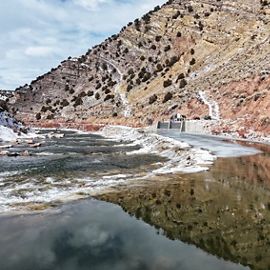
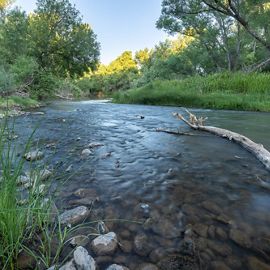
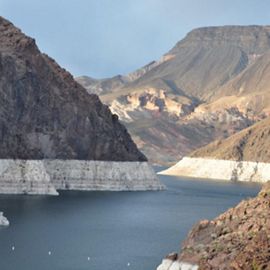
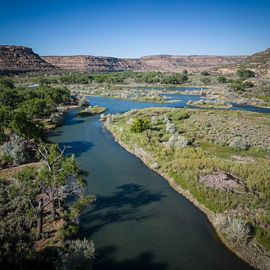
The Colorado River cuts through landscapes that are as rugged and diverse as their inhabitants. Now, in the face of historic drought, its people are coming together to tell a different story.


Explore
Discover Different Approaches, State by State
Our Work in the Basin Discover projects we're working on throughout Arizona, Colorado, Nevada, New Mexico, Utah and Mexico.
The Latest in the Basin


Add a Podcast to Your Queue
In partnership with Mountain & Prairie, we're bringing you exclusive conservation stories, updates, advice and more from TNC leaders and host Ed Roberson.

Innovation in the Basin
March 2023 | Taylor Hawes, TNC's Colorado River program director, provides background on the river basin’s challenges and how TNC is working to solve these problems by building community support, working collaboratively with Tribal Nations and helping agricultural producers become more efficient.

Building Trust w/ Indigenous Communities
Celene Hawkins, Tribal Water Partnerships Program Director at The Nature Conservancy’s Colorado River Program, and Izabella Ruffino, Tribal and Indigenous Engagement Program Manager at TNC in Colorado, join Ed to discuss building trust and solid relationships, recent collaborations with Tribal Nations and recommended resources for deeper learning.

Rivers, Agriculture and Communities
November 2023 | Water experts Diana Lane and Aaron Derwingson join Ed Roberson to discuss some of Colorado's most urgent water-related challenges and opportunities and how TNC is working with a wide range of stakeholders to find mutually beneficial solutions.

Solving Challenges with Tribal Wisdom
July 2023 | As vice chair of the Southern Ute Indian Tribe, trustee for TNC Colorado and the first-ever Tribal member on the Colorado Water Conservation Board, discover how Lorelei Cloud is applying her expertise to complex challenges in the basin.

Simple Approach to Riparian Restoration
Do you like beavers? Well then, you'll enjoy this episode. Discover how TNC experts are improving our streams in the West by adding simple structures made of natural materials to simulate processes like beaver dams in streams and wetlands.

View all episodes
On the fourth Tuesday of every month, the Mountain & Prairie podcast brings you conversations with a wide range of The Nature Conservancy’s leaders, partners, and collaborators, highlighting the myriad of conservation challenges, opportunities and solutions here in the West.
Support our work
The Colorado River is one of the hardest working rivers in the West. The Nature Conservancy is working hard across the entire Colorado River Basin to protect this amazing river and resource.