
We're working with you to make a positive impact around the world in more than 35 countries, all 50 United States and your backyard. Support our work
Lesser Sundas Update
The Conservancy is pleased to report that it has completed the design of a Marine Protected Area network spanning the entire Lesser Sunda ecoregion. This new design will connect existing protected areas with dozens of new MPAs and, when completed, will cover 9.7 million hectares of coral reefs and deep sea canyons between Bali and East Timor.
This project was a collaboration with Indonesia’s Ministry of Marine Affairs and Fisheries and Ministry of Forestry as well as the Timor Leste Ministry of Agriculture and Fisheries. We look forward to working with them to make it a reality.
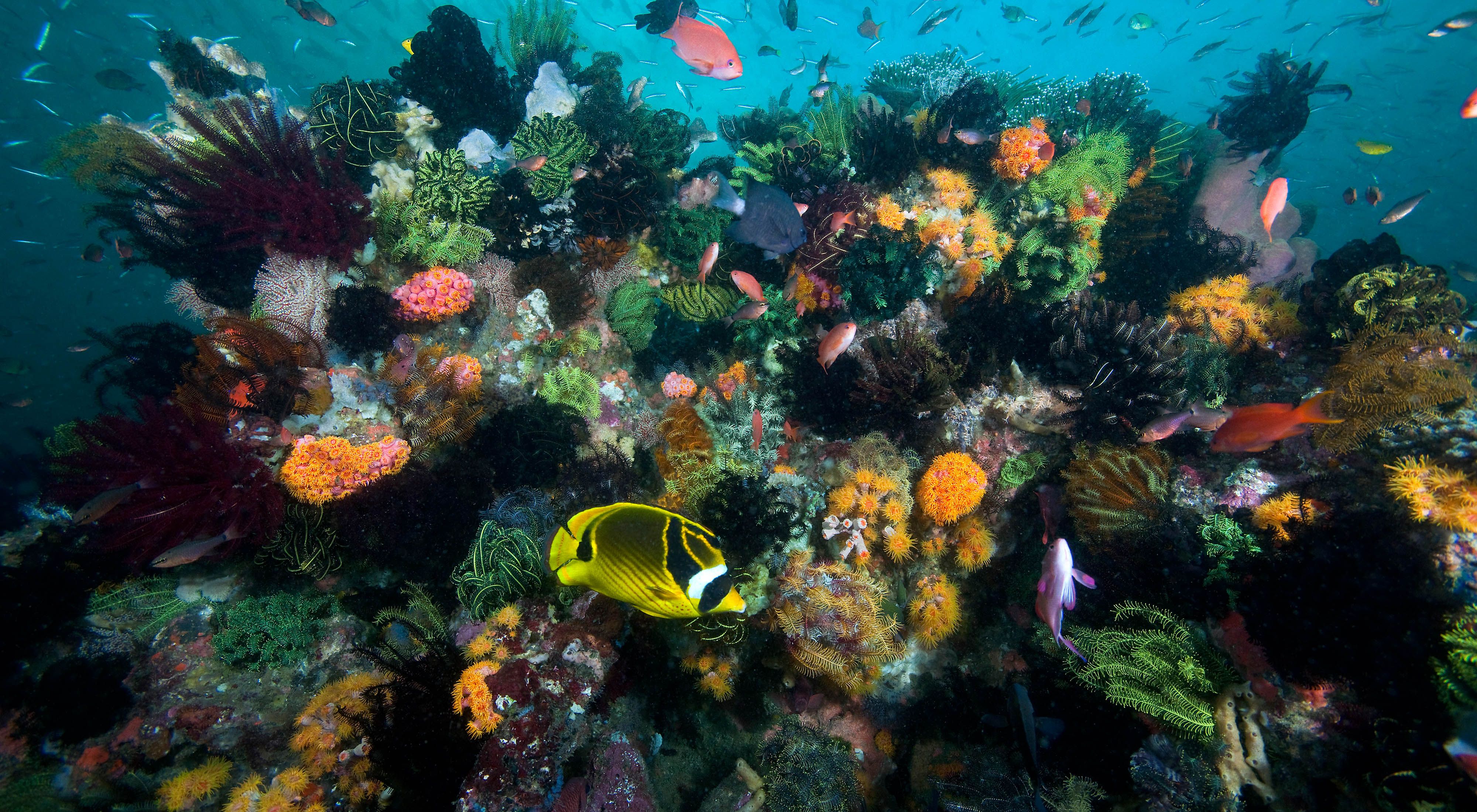
Stretching from Bali to Timor Leste, covering an area of more than 110 million acres, the Lesser Sundas region encompasses small rugged islands surrounded by jaw-dropping coral reefs bursting with marine life like mantas, whales and sea turtles.
In addition to the irreplaceable resources these waters provide to island communities, this region also has ecological significance on a global scale. It sits at the crossroads of the Indian and Pacific Oceans, and a combination of unique conditions — including channel depth, currents and temperatures — make this an extraordinarily rich hub for marine life.
Although the islands are sparsely populated, their life-sustaining waters are seriously threatened by over-fishing and over-hunting of turtles — often by outsiders flocking in from other areas that have already been depleted by unsustainable fishing.
In fact, if properly protected, the Lesser Sunda region could be a vital refuge for marine mammals and fish amid global climate change. That’s not only important for wildlife — that’s a matter of survival for the millions of people whose lives are inextricably bound to the sea.
The Nature Conservancy and partners are working with communities in the Lesser Sunda to preserve their marine resources through the creation of a network of connected Marine Protected Areas, alternative livelihood projects and other innovative strategies.
Divers from around the world flock to see the spectacular marine life of the Lesser Sundas, but they are also warned of the exceptionally strong currents in the region. These currents combined with steep underwater cliffs causes major cold-water upwellings — the key factors that quite possibly protect the reefs in this region and make them resilient to the growing threat of rising sea surface temperatures associated with climate change.
The Conservancy is collaborating with a range of local partners — including government, local communities and universities — to design a groundbreaking network of Marine Protected Areas (MPAs) in the Lesser Sunda Ecoregion based on the best available science and building on areas identified for conservation by local governments. MPA networks protect and restore resilient ocean and coastal habitats in ways that benefit marine life; they also safeguard fisheries that keep local economies afloat.
In addition to creating this scientific blueprint, the Conservancy is also:
Through these projects, we can help directly protect high priority ecosystems and earn the confidence of governments and communities elsewhere in the region — leverage that we can use to spur conservation well beyond the bounds of those project sites.
Learn more about Conservancy projects within the Lesser Sundas:
Komodo National Park
In the heart of the Lesser Sunda seascape, the waters of Komodo are home to 1,000 species of fish, 260 reefbuilding corals, 70 sponges, whales, dolphins, sea turtles and the famous Komodo dragon. But just over a decade ago, Komodo National Park was suffering from degradation of natural resources due to human activity. The Conservancy and its partners have employed creative strategies that protect biodiversity and enable people to benefit from the park in sustainable ways — including ecotourism and alternative livelihoods.
The Penida Islands
At the southwestern edge of the Coral Triangle, the Penida Islands sit a short boat ride away from Bali. The exceptional diversity of life here supports local communities through tourism, fishing and seaweed farming. The main threats to the reef ecosystems of the Penida Islands are overfishing and coastal development due to their proximity to population centers and Indonesia’s tourism capital of Bali. The Conservancy is working with partners to support the local government in establishing a 25,000 acre MPA.
Savu Sea
Encircled by chains of islands and dramatic deep-sea features, the Savu Sea lies at the eastern end of the Lesser Sunda Ecoregion and encompasses some 8.6 million acres. It is home to critical habitats and a migratory corridor for 14 species of whales, including the rare blue and sperm whales. The Conservancy has been invited to assist with the design and implementation of a network of interconnected MPAs in the Savu Sea, in collaboration with the Ministry of Marine Affairs and Fisheries, the provincial government of East Nusa Tenggara and WWF-Indonesia.
Have you been to this preserve? Are you thinking of visiting? See what others are saying about their experiences and add your comments below.
Time for you to join the discussion. Tell us about your experience at this preserve. What plants and animals did you see? When did you go? You can help others plan their visit when you share your thoughts. And thank you for visiting one of our nature preserves!
Whether scary or exciting, nature has a way of sneaking up on you. See stories
Hear some of nature's success stories and see how nature matters to us all. Watch videos