


African Bush Elephant
Facts about the African elephant and how we’re helping to protect them

African Elephant Fast Facts
Common name: African bush elephant, African savanna elephant
Scientific name: Loxodonta africana
Conservation status: Vulnerable
Lifespan: Up to 70 years
Weight: 6,600 (adult female) to 13,000 (adult male) pounds
Meet the African Bush Elephant
The African bush elephant is the largest land mammal in the world and the largest of the three elephant species. Adults reach up to 24 feet in length and 13 feet in height and weigh up to 11 tons. As herbivores, they spend much of their days foraging and eating grass, leaves, bark, fruit, and a variety of foliage. They need to eat about 350 pounds of vegetation every day.
African bush elephants are also known as African savanna elephants. Their range spans a variety of habitats, from the open savanna to the desert, and can be found in most African countries. African elephants live up to 70 years—longer than any other mammal except humans.

Elephant herds are matriarchal, consisting of related females and their young and are led by the eldest female, called the matriarch. Adult male elephants rarely join a herd and often lead a solitary life, only approaching herds for mating. Females give birth to a single calf after a 22 month gestation, the longest gestation period among mammals.
How we work with Elephants
A wild African elephant born today could live for more than 60 years if she has enough safe, healthy habitat.
To give her that chance, we’re working with partners on a holistic approach to elephant conservation.
Zambia's Elephants
TNC Africa Conservation Director Matt Brown walks us through the results—and what they could mean for the future of conservation in Zambia.

Elephants are Mapping Kenya’s Future
Elephants have complex maps in their heads of vast landscapes that include water points, saltpans, and even danger zones. Youngsters learn these routes from their mothers and pass them on to their own offspring. TNC and its partners are sharing some of these routes with Kenya’s government so that new development allows for safer passage of elephants.
Using Fireworks to Save Elephants in Tanzania
In the past, when an elephant made a wrong turn and ended up in a community garden, a villager often defended their food supply with a spear. A direct hit can be enough to kill the animal within a few days. But now, villagers have a safer way to redirect elephants from their farmland, a specially-developed firework that deters rather than harms.

 RETURN

What makes African elephants different?
- Both males and females have visible tusks
- Their large ears are shaped like the continent of Africa
- A very long prehensile nose (trunk) with two finger-like features
An elephant's trunk is a strong appendage, with more than 40,000 muscles and tendons that can lift more than 400 pounds at once. Yet its sensitive tip has two finger-like projections, which an elephant can use to manipulate very small objects. Elephants suck water up through the trunk and then blow it into their mouths for a drink or onto their backs as a cooling mist.
Both male and female African elephants have visible tusks. Elephants use their tusks to pull bark off trees, dig up roots and water holes, and for protection. Males also use tusks for sparring other males for mating opportunities. Males with the biggest tusks sire the most offspring. However, poaching unnaturally removes theose with the largest tusks from the population, causing some elephants to now be born with smaller or nonexistent tusks.
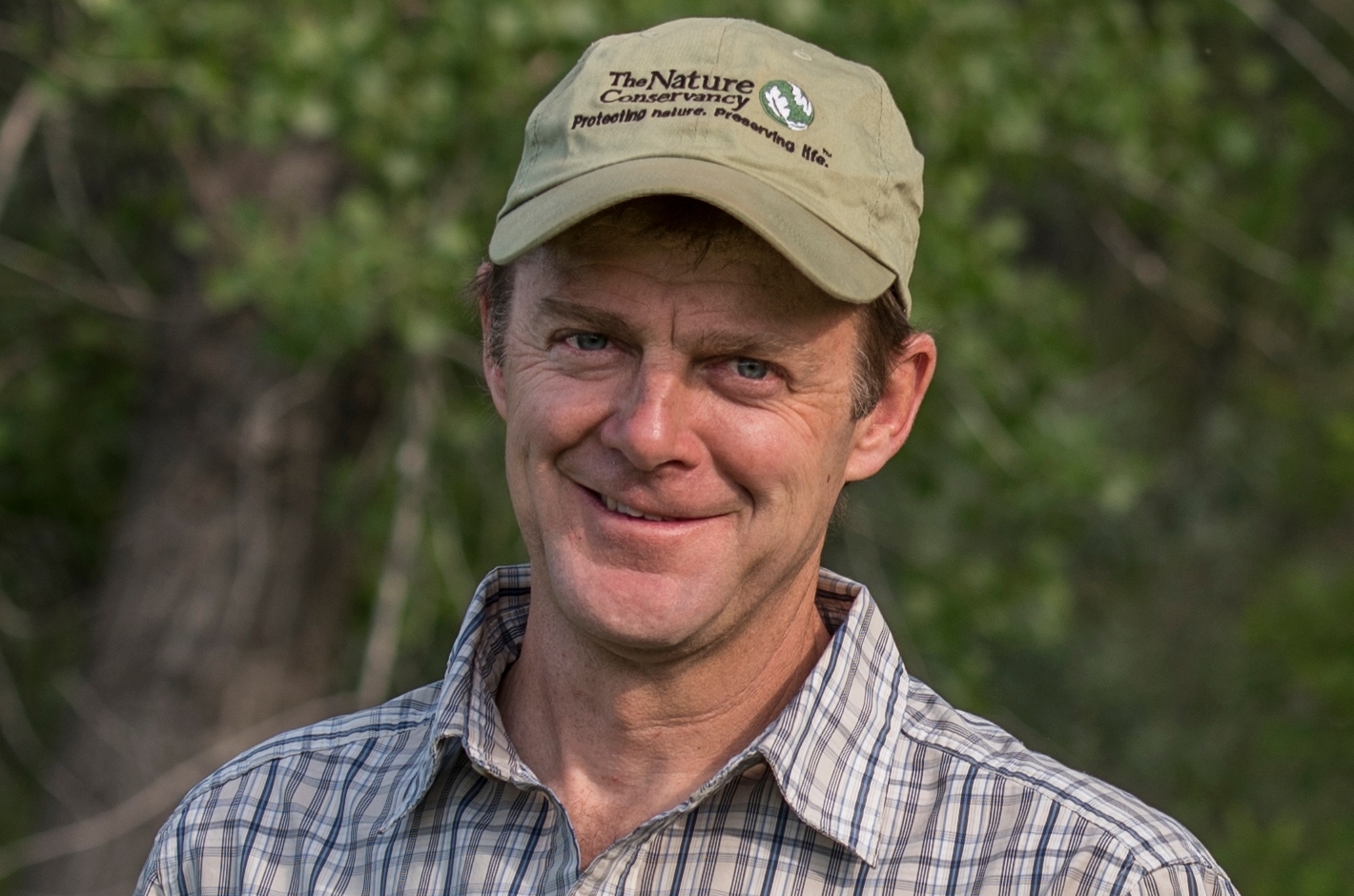
The Nature Conservancy's Africa Regional Director
Q&A with Matt Brown
How is TNC helping save elephants in Kenya and Tanzania? Where are we focusing our efforts and why?
The need for anti-poaching efforts is still very real. We’re all seeing that where there is better frontline protection there is less poaching, but we aren’t out of the woods yet. In addition to supporting critical frontline protection work, another big piece of our African Elephant Initiative is keeping large spaces open for elephants to live and thrive.
Amboseli will forever be known as a real stronghold for elephants. Decades-long research on the elephant population here tells us that elephants move south from Amboseli into the forests of Mount Kilimanjaro. If we can keep Enduimet open and viable, we are both protecting critical hectares of land for elephants and helping improve livelihoods for local communities. A key vision for this area is to be able to showcase in future years that Maasai living along the northern border of Tanzania are seeing a better life with elephants alive. Today, I am not sure that is the case.
What does TNC bring to the table?
TNC’s role is to identify high priority areas to focus our conservation efforts and to convene the right partners to have lasting impact. We’ve learned where elephants move thanks to data collected by GPS collars and this helps us pinpoint critical movement and dispersal corridors to protect. We can’t protect these big wild places alone and that’s where our partners come in. We’ve joined forces with NGOs Honeyguide and Big Life Foundation to work with the local communities on better managing this area and developing more wildlife-based tourism revenue. We’re working on a collaborative conservation action plan to get us all focused on strategies that will have the greatest positive impact.
We’ll be improving how their security patrols collect, share, and use data, which will enable them to adapt and deploy where trouble flares up. To ensure that tourism revenue is well managed, and to further increase confidence among potential funders, we’re helping WMA leaders improve their accounting and reporting systems.
In the long run, we hope that Enduimet will have a sustainable future. If successful, we’ll keep this wildlife corridor open.
What will happen if the wildlife corridor is severed? Why can't elephants be happy in just one of the national parks?
One of the side effects of human encroachment and unplanned agriculture expansion is that there’s a lot of human-wildlife conflict. Elephants raid cornfields and local community members can lose 30-50% of their crops in one night’s feast. The humans retaliate by joining together and killing an elephant, even if it’s not the same problem elephant that did the damage. They’re killing out of revenge. This drives more human-wildlife conflict and has a negative impact on the elephant population we’re trying to protect.
As elephant, lion, and other wildlife populations increase, you see more and more conflict. Crops destroyed, cattle killed. Followed by retaliation by humans. By better designating habitat and encouraging people to understand the ways they can benefit from wildlife, we can help stop negative impacts between the two.
There are also some tactics we can use to help people live with wildlife. For example, tracking lions makes it possible to alert community members to move their cattle into new areas to avoid predation when lions are nearby. Developing crop protection teams and ensuring that the viable elephant corridors remain open grasslands rather than being cultivated are proven strategies as well.
It's not about preventing expansion, but steering development in the right direction. Are we trying to reclaim any land that's been lost?
There’s still enough habitat in this area that we don’t need to reclaim any land that’s been lost. We’re stemming the tide.
Why do elephants continue to be an important part of TNC's conservation story?
Elephants are a key focal species that help us identify where to focus our conservation efforts throughout Africa because they need such large habitats to exist and thrive. They shift north, south, east, and west through forests and grasslands all year. If a system works for elephants, it generally works for impala, zebra, giraffe, kudu, lion, and other species that utilize similar habitat.
Is it really possible to save room for elephants as Africa grows?
Absolutely. The protected areas today are the heart and lungs of Africa. What we’re trying to do is create a whole circulatory system where elephants and other wildlife—which do disperse outside of protected areas—can remain viable. Even if we have to triage and let go of some places where there are elephants today, we know we have those key critical areas to fall back on. Enduimet is a great example of one of these critical areas because you have two national parks and a community area in between. As a result, you have a greater chance of success than you would with areas that are not adjacent to two national parks.
I believe that we can see development. I believe that we can see growth in Kenya and Tanzania. It’s about finding smart growth opportunities. There’s value in nature-based tourism and that’s more evident now than ever before. We need to continue to prioritize the key areas and improve management in these critical places by bringing more benefit to local communities. This is our key strategy for lands protection in Africa. We have been working on this approach with partners for the past 10 years.
In those key areas, elephants can persist. We just need good master planning, government support, and communities to realize increased benefits of wildlife. If we can do this in the most critical areas, then we can protect elephants as development occurs. We also need donors and businesses that are excited about this heavy lifting. And there’s an opportunity for governments to truly realize the value of transparently sharing how resources flow from tourism sectors into communities and the conservation efforts there. Wildlife is a natural resource and it should be viewed that way.
We can’t take our foot off the gas pedal now.


Protecting the African Bush Elephant
Because elephants require substantial amounts of food and a large area in which to forage, habitat destruction across their range is a major threat to survival. As of late, poaching has caused the most serious damage to African bush elephant populations, with approximately 25,000 being lost every year. The Nature Conservancy is using a comprehensive three-pronged approach to elephant protection:
-

Building Community Support for African Elephants
Working with farmers near elephant habitats to help track and safely steer elephants off agricultural lands. Read how fireworks are helping keep elephants safe.
-

Conserving Critical Elephant Habitat
Protecting large contiguous swaths of land that are vital for traveling elephant herds. Read about the elephant corridor.
-

Increasing Security for African Elephants
Safeguarding elephants from poaching by expanding, training and properly equipping wildlife security teams.
A wild African elephant born today could live up to 60 years if she has enough safe, healthy habitat.
We’re taking a holistic approach with partners to give her that chance.
What We're Doing:

Documenting Zambia’s Elephants
In September 2015, ecologists took to the sky to get a better picture of the state of elephants in Zambia as part of the Great Elephant Census.

Using Fireworks To Save Elephants
Working with partner Honeyguide, we are using fireworks, air horns and flashlights to save elephants' lives in northern Tanzania.

Elephants Will Have a Say in Mapping Kenya’s Future
Could elephants, with their complex mental maps of rivers, forests and fertile grassland, contribute to smarter growth for Kenya? With a little help from TNC’s scientists and movement data from Save the Elephants, we can make this happen.