

We're working with you to make a positive impact around the world in more than 35 countries, all 50 United States and your backyard. Support our work
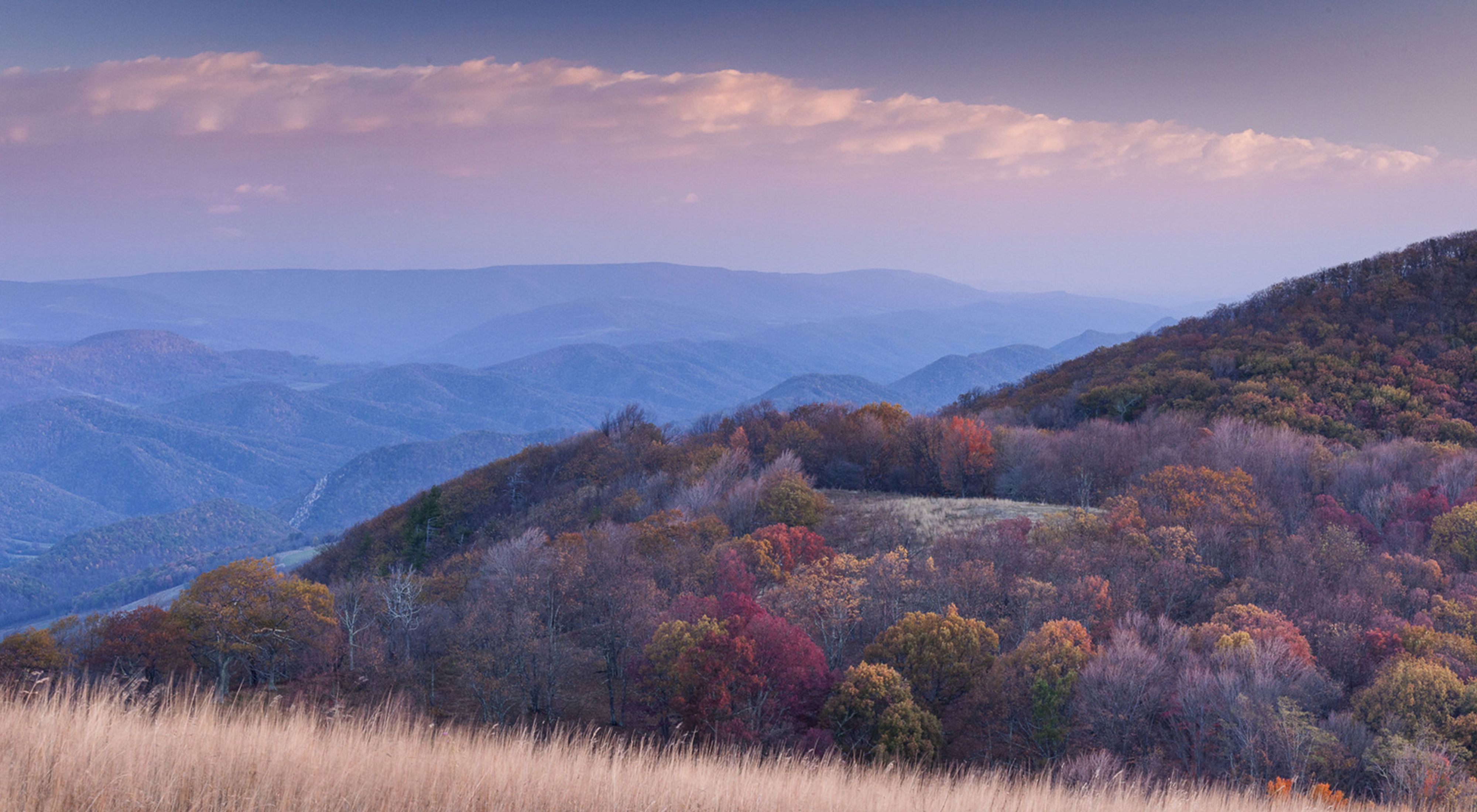
Secluded amid a 3,600-acre string of protected peaks on North Fork Mountain lies The Nature Conservancy’s Pike Knob – a 1,600-acre preserve boasting some of the finest views in the state. From its open fields, visitors can gaze out over the expanse of West Virginia’s large, intact mountain landscapes, where family farms dot the valleys, golden eagles cruise the skies and coyotes howl in the distance.
To the west of the preserve, Spruce Knob, West Virginia’s highest point, intercepts weather systems, causing storms to drop much of their rain and snowfall before they hit North Fork. As a result, the mountain is one of the driest in the East. These dry conditions help to make Pike Knob Preserve, and the landscape it’s nestled within, one of the most ecologically significant areas in the Central Appalachians.
Here, red pine and paper birch add diversity to the oak-dominated forest that cloaks the mountain. Surprisingly small, some of these oaks actually comprise an old growth forest with some trees more than 300 years old. Pike Knob is also home to the most southern natural occurrence of red pine, which covers the mountain side and is succeeding into the open meadows. Along the summit, rocky outcrops make perfect homes for herbaceous species and ferns like silver nailwort, three-toothed cinquefoil, and rusty woodsia that mix in with native grasses such as Canada mountain-ricegrass and poverty oatgrass.
Hunting the slopes of the oak and pine landscape are bear, bobcat and gray foxes. In the fall, hikers with keen eyesight may spot migrating hawks and eagles while nesting songbirds like blue-headed vireo, winter wren and black-throated green warblers nest here during spring.
Main threats to Pike Knob Preserve and North Fork Mountain are habitat fragmentation, invasive species, second home development, and trampling of rare habitats by off-road vehicles and visitors. In order to safeguard the preserve, the Conservancy is:
The following activities are NOT permitted at Pike Knob Preserve:
- Biking
- Camping
- Driving an ATV or off-road vehicle
- Cooking or camp fires
- Horseback riding
- Removing any part of the landscape
- Geocaching
Fit hikers looking for seclusion will enjoy the out-of-the-way destination of Pike Knob and its mountaintop pasture, Nelson Sods. Visitors up for the four to five hour round-trip hike will be rewarded not only with stunning views, but also with unusual plant communities and wide-ranging wildlife that travel this remote mountain.
The Nature Conservancy’s Pike Knob Preserve is open to the public for hiking and nature study. Visitors should carry the appropriate USGS topographic map. Topographic maps and additional information about adjoining federal lands can be obtained from:
Monongahela National Forest
Potomac Ranger District
HC 59, Box 240
Petersburg, WV 26847
Phone: (304) 257-4488
From Franklin:
Have you been to this preserve? Are you thinking of visiting? See what others are saying about their experiences and add your comments below.
Time for you to join the discussion. Tell us about your experience at this preserve. What plants and animals did you see? When did you go? You can help others plan their visit when you share your thoughts. And thank you for visiting one of our nature preserves!
Whether scary or exciting, nature has a way of sneaking up on you. See stories
Hear some of nature's success stories and see how nature matters to us all. Watch videos