

Turning the Tide for Texas Oysters
Getting it right for the Texas Gulf Coast means getting it right for oysters.
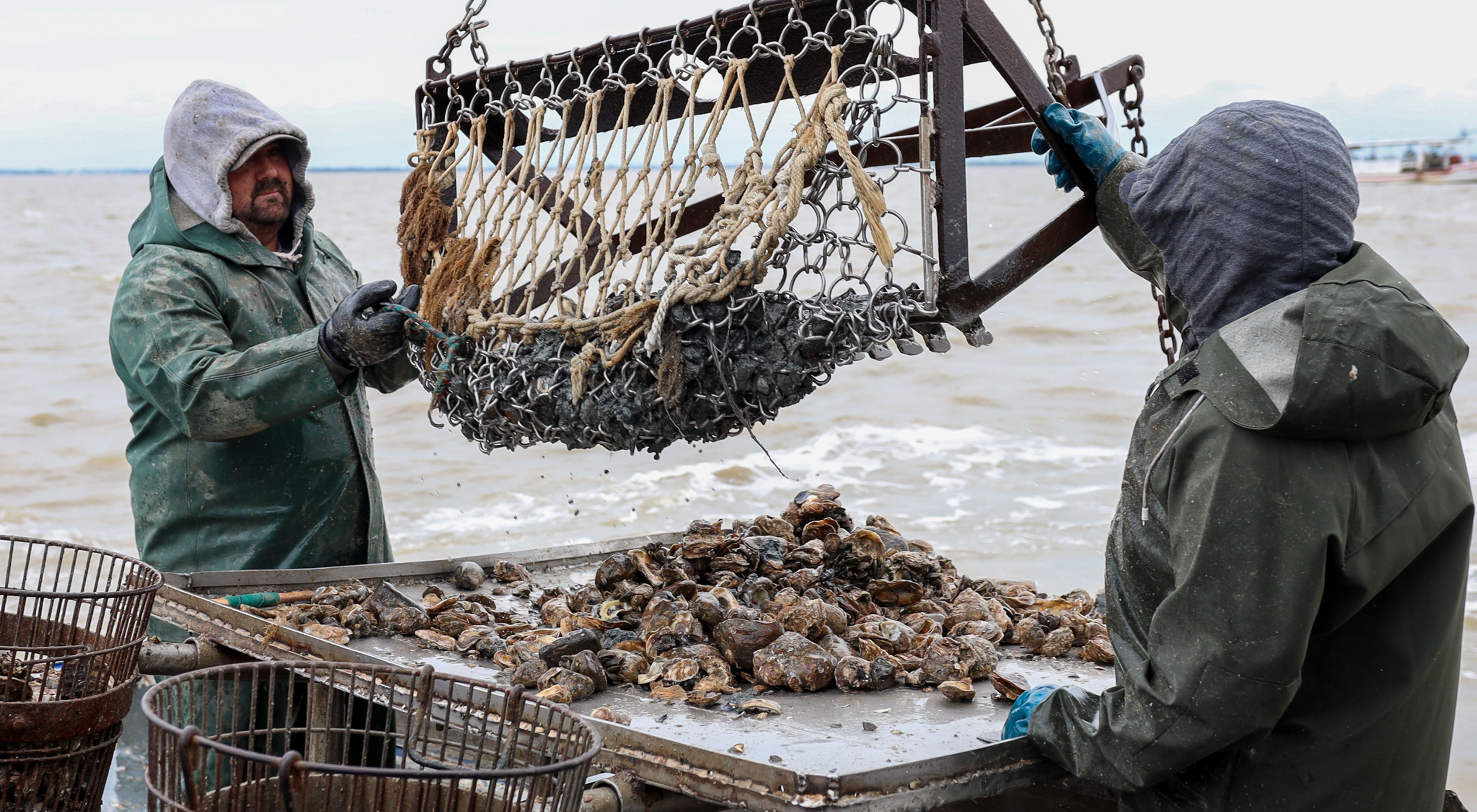
Consider the Oyster
In Texas, that might call to mind your favorite raw bar or drum up memories of family vacations along the Gulf Coast. But there’s more than meets the eye when it comes to these underwater powerhouses. In addition to filtering water and promoting marine biodiversity, oyster shells have long been used as livestock feed, in manufacturing and as paving material—the Houston Astrodome alone used 500,000 cubic yards of oyster shells to construct its stadium and parking lot.
In the Gulf of Mexico, fisheries serve as the cornerstone of a $220 million national industry, producing nearly half of all oysters consumed in the U.S. each year and impacting the state economy to the tune of $43 million annually. Put simply: Thriving oyster populations are vital to the health and prosperity of the Gulf region.
But the alarming decline of shellfish reefs has made oyster reefs one of the most threatened marine habitats on Earth. A study led by The Nature Conservancy (TNC) found that 85% of oyster reefs globally have been lost due to overharvesting, hurricanes, disease and changes in freshwater flows to Gulf rivers and streams. While just 20-50% of original oyster reefs remain in the Gulf of Mexico, it is considered the last, best hope for full restoration of healthy oyster populations. And that’s just what TNC aims to do.
Dive deeper into our Texas oyster work
Learn more about our oyster reef restoration projects in the Gulf of Mexico

Lessons from Half Moon Reef
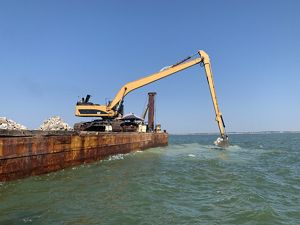
Half Moon Reef in Texas’ Matagorda Bay is a cornerstone of TNC’s restoration efforts along the Gulf of Mexico. Once one of the largest and most productive reefs in all of Texas, by the late 20th century, Half Moon Reef had lay barren for decades. In 2014, TNC and partners collaborated on a multi-year project to restore the reef, using more than 100,000 tons of limestone to bring this Texas resource back to life.

Today the reef is teeming with marine wildlife. Oysters can now be found on 70% of the reef’s surface, where they’re helping to improve water quality, bolster sea grass growth and promote biodiversity. It’s also become a hot spot for anglers, who refer to the reef as an area “that holds the fish,” and has helped to generate an additional $1.27 million in annual economic activity for the state of Texas through tourism, fishing guide excursions and recreational fishing.

Copano and Galveston Bay—and Beyond
The success of Half Moon Reef has created a blueprint for coastal restoration across the region. In 2019, with support from the federal Natural Resource Damage Assessment, TNC spearheaded a 60-acre reef restoration project in Copano Bay, north of Corpus Christi, where we took a hybrid approach to reef restoration.
Building off the Half Moon Reef model, half of the reef is a habitat reef, creating a nursery not only for oysters, but fish and other marine life, as well. The other half will be open for commercial oyster harvesting. Then, with funding dedicated by the National Fish and Wildlife Foundation, we collaborated with partners to create a new, 40-acre oyster reef in Texas’ Galveston Bay, using a similar hybrid model that designates 15 acres for oyster sanctuary and 25 acres as commercially harvestable.


This innovative reef design highlights the importance of protecting marine ecology to safeguard oysters for ecology and economy alike. It also illustrates how conservation can bring often-competing interests to the table around a common goal: more oysters. Supporting sustainable, productive fisheries while protecting marine habitats gives us the biggest win-win scenario and proves that we don’t have to choose between ecological health and economic prosperity—we can help people and nature thrive, together.
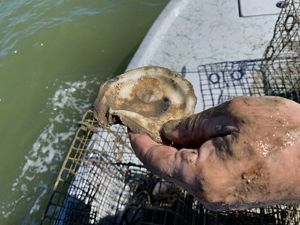
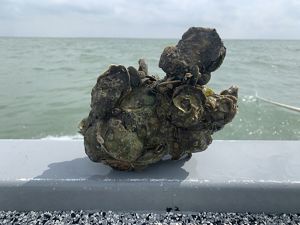
ON THE HALF SHELL: Oyster spat grows on a shell and will eventually grow into an adult oyster. © Kathy Sweezey
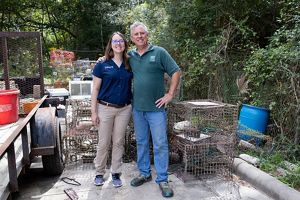
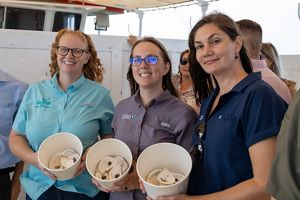
PARTNERS IN RESTORATION: Kathy Sweezey of TNC and Bill Rodney of TPWD stand by repurposed crab traps for oyster monitoring. © Claire Everett
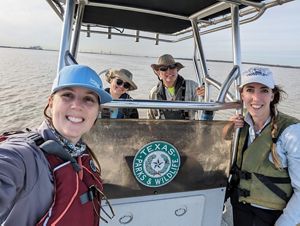
WORKING TOGETHER: Staff from TNC, TPWD and Galveston Bay Foundation conduct oyster monitoring on Galveston Bay. © Kathy Sweezey
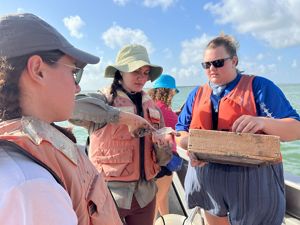
PROOF IN THE WATER: Oysters pulled from Copano Bay during monitoring and sampling. © Kathy Sweezey
SANCTUARY AT SEA: Texas Sea Grant and TNC staff support Rett Reef, the first-ever sanctuary reef created by an oyster industry member in Texas. © Claire Everett
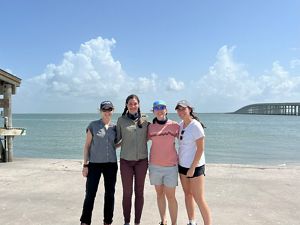
TNC TEAM: Our conservationists are working to futher coastal ecology and economy by restoring the Gulf. © Kathy Jack
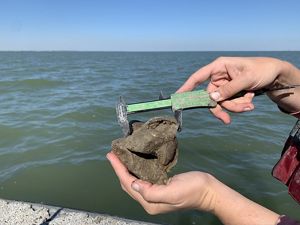
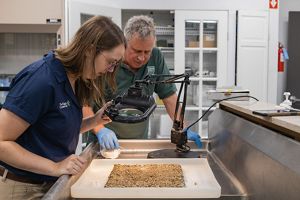
MEASURING PROGRESS: Staff use calipers to measure oysters as part of monitoring efforts at Galveston Bay. © Kathy Sweezey
BUILDING BACK OYSTERS: Limestone boulders help create new habitat for oyster reefs in Galveston Bay. © Kathy Sweezey
SAMPLING THE BAY: TNC and TPWD staff process oyster samples from a part commercially harvestable, part sanctuary oyster reef in Galveston Bay at TPWD’s lab in Dickinson, Texas. © Claire Everett
FISH THE REEF: Staff examine samples pulled from Copano Bay during the Fish the Reef event. © Kathy Jack
We Can’t Save Nature Without You
Sign up to receive monthly conservation news and updates from Texas. Get a preview of Texas’ Nature News email.

Learn More
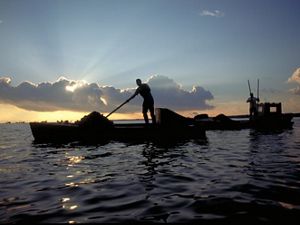
A Future for Oysters in the Gulf
We have a unique opportunity to reverse the decline of the Gulf’s oysters. Find out how.
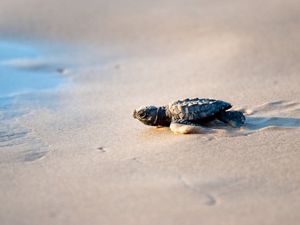
Safeguarding South Padre Island
Working with the USFW and other partners, The Nature Conservancy has acquired more than 6,200 acres along part of the last unprotected stretch of South Padre Island.
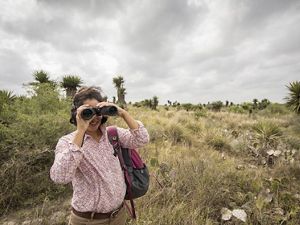
Reconnecting the Bahia Grande
Since 2017, The Nature Conservancy has worked with partners to protect thousands of acres within the Bahia Grande coastal corridor in South Texas.