


Description
Conservation Highlights
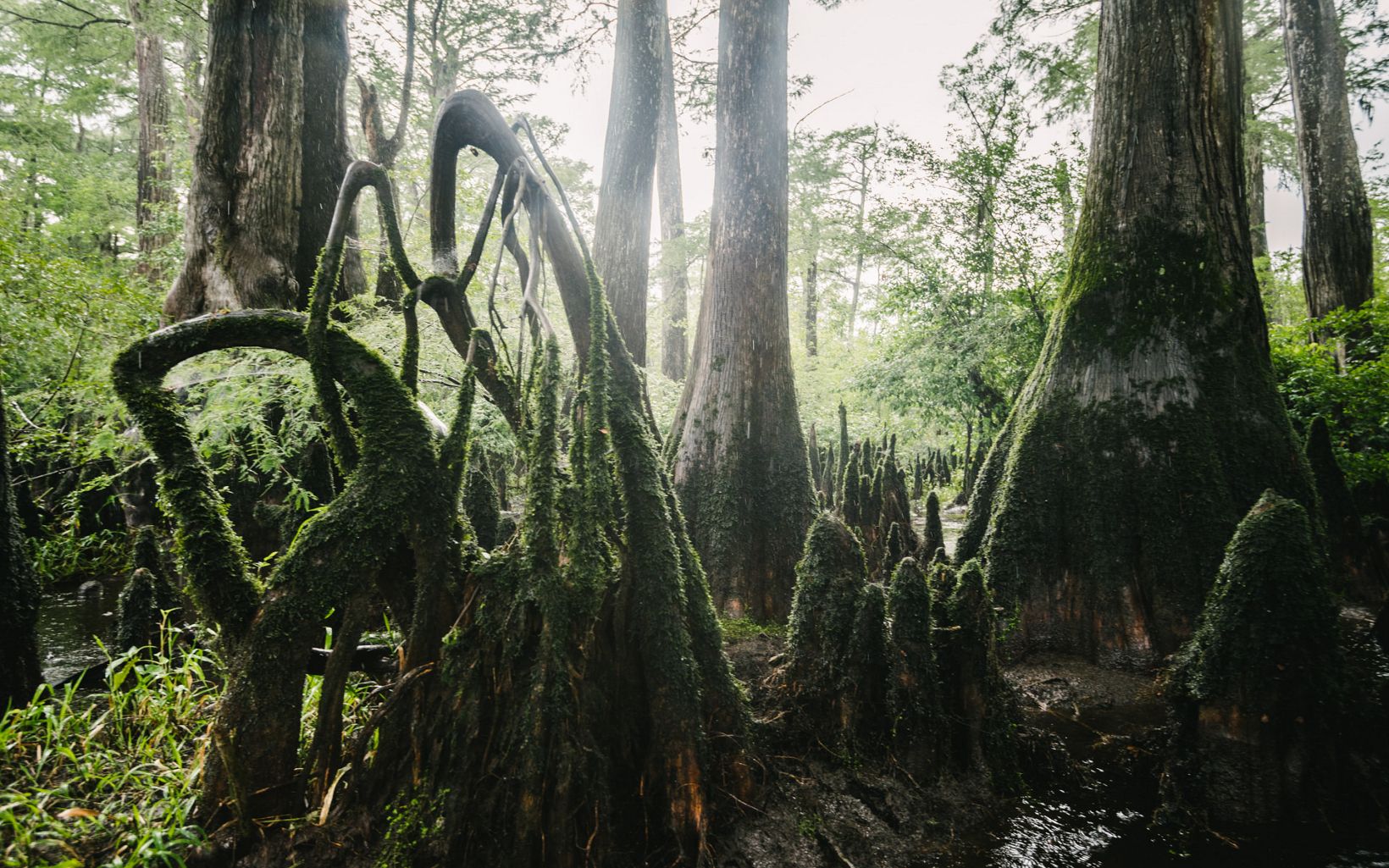
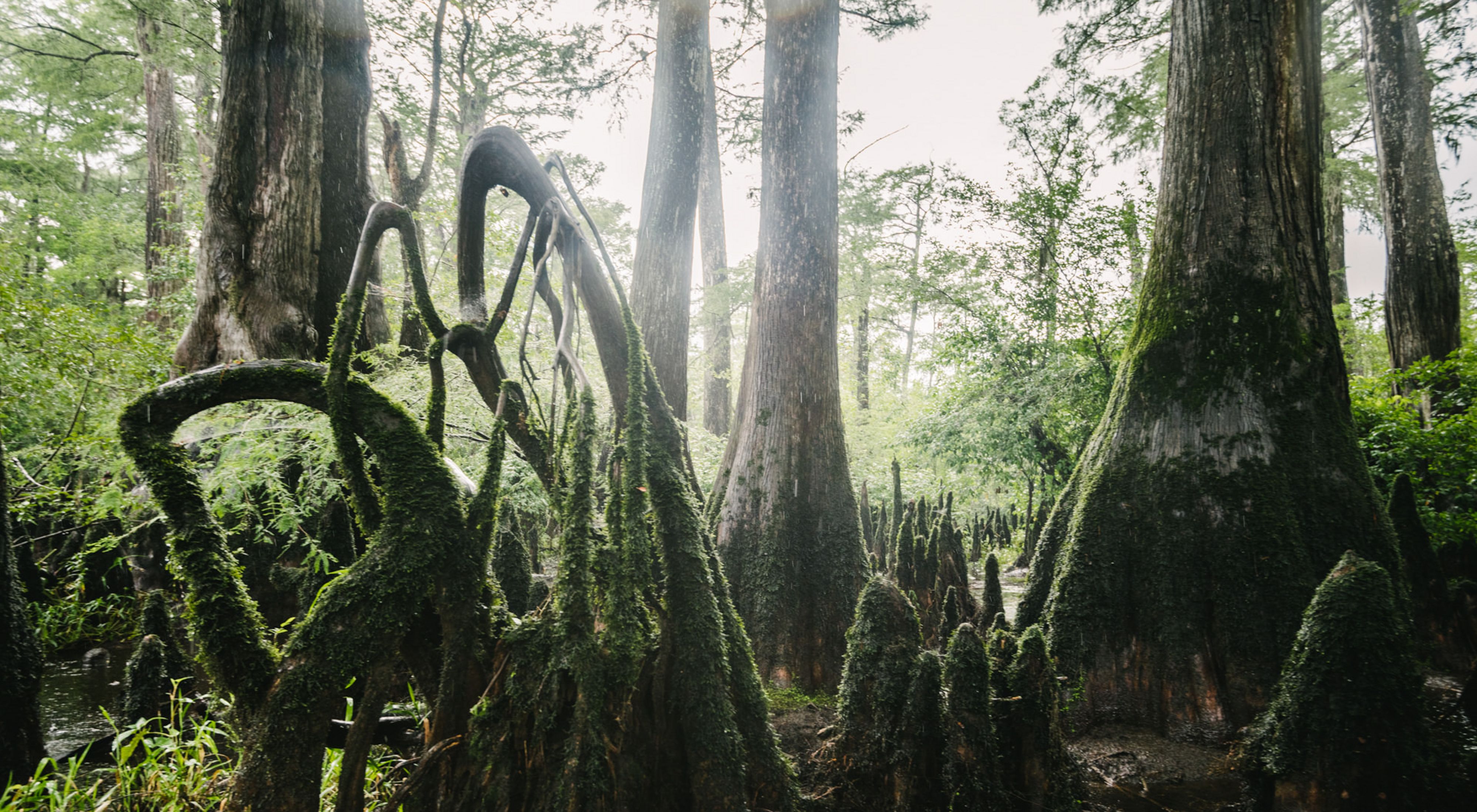
Bald cypress, gracefully draped with Spanish moss, are the classic embodiment of our southern swamps. The oldest bald cypress, the fifth oldest tree species in the world, can only be found alongside Black River’s meandering black waters in southeastern North Carolina. These ancient trees are easily recognized by their huge buttresses and gnarly flat tops sculpted by countless storms.
Formed by the confluence of Coharie and Six Runs Creeks, the Black River snakes its way over 60 miles through portions of Sampson, Bladen and Pender counties before emptying into the Cape Fear River 14 miles above Wilmington. Upstream the waters flow more swiftly past large forests of oaks and other bottomland hardwoods and cypress and tupelo gums in the wetter swales. Occasional high banks rise above the river, the highest being a 60-foot bluff with mountain laurel and galax. Further downstream the river slows and spreads out into expansive bald cypress-dominated swamps. In a few places, sandy upland sites along the river support longleaf pines and turkey oaks.
In recognition of the high-quality waters, the State of North Carolina designated the Black River an Outstanding Resource Water in 1994. The river is home to rare fish species such as the Santee chub and broadtail madtom and numerous rare mussels like the Cape Fear spike. Many wildlife species inhabit the river’s floodplain, including bobcat, river otter, black bear and neotropical songbirds like the prothonotary warbler and yellow-throated vireo.
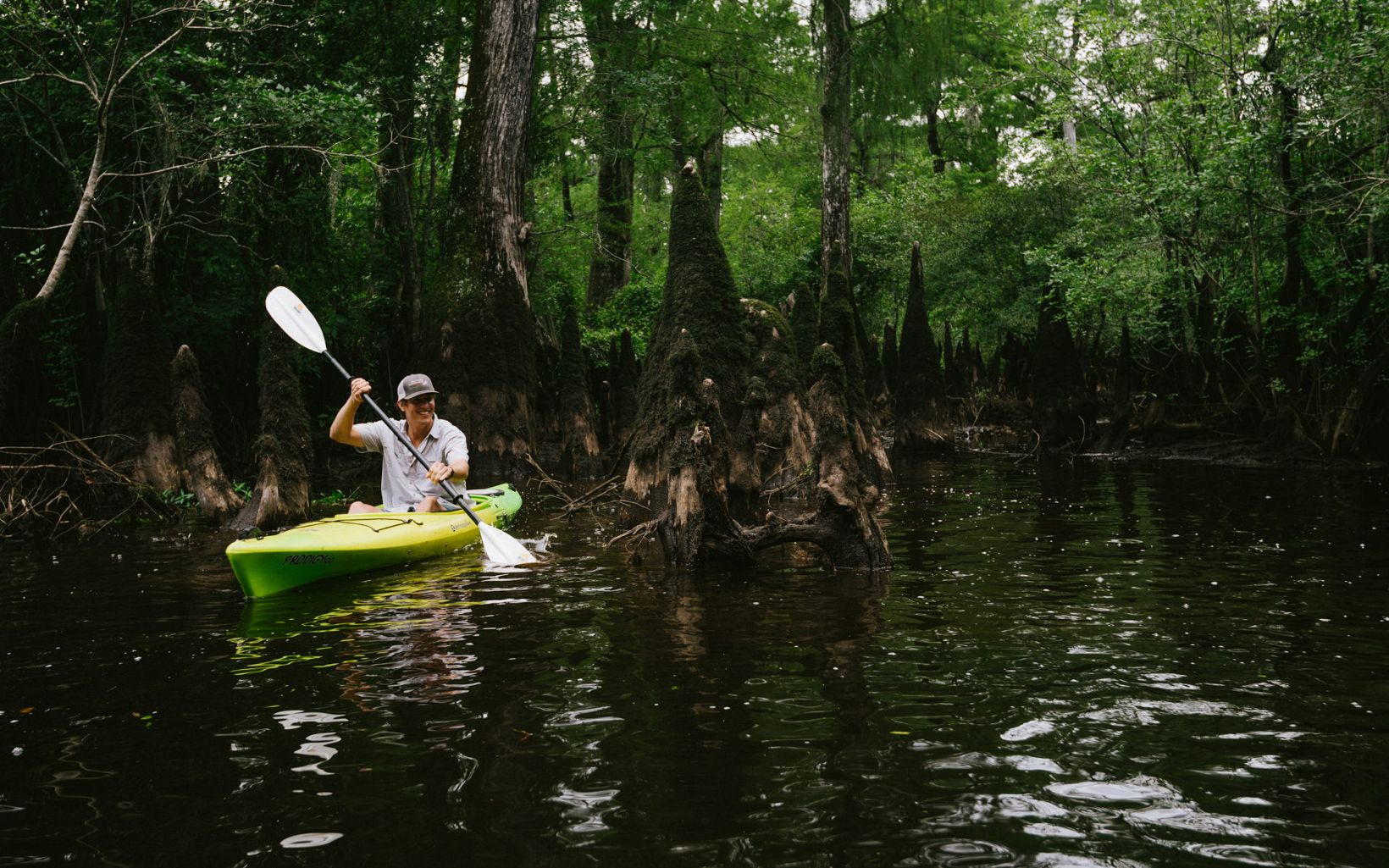
The river is a treat to paddle throughout the seasons. You will relish drifting down the tea-colored stream flanked by stately bald cypress draped with Spanish moss. Swamp roses bloom in the spring, and spider lilies grace the water in the summer. Spring is a great time to see migratory songbirds nesting, while the foliage is outstanding in the fall.
The Bald Cypress
These ancient trees were discovered almost by accident in the 1980s when University of Arkansas professor Dr. David Stahle was exploring the relationship between tree growth rings and climate. The North Carolina Natural Heritage Program led him to the Black River in southeast North Carolina. His oldest tree then dated to 372 A.D. which, along with data from many other tree cores, verified that two of the most severe historic droughts in the mid-Atlantic region had coincided with the Lost Colony and Jamestown settlements.
Dr. Stahle thought there may be trees much older along the river. His suspicions were right: in the spring of 2019, Dr. Stahle announced that he had identified one cypress to at least 605 B.C.E., the time of the Babylonian empire, making bald cypress the fifth oldest tree species in the world. He has found many other ancient cypress along the river dating well over a thousand years. These are the oldest trees in North America east of the Great Basin.
History of the Preserve
Protecting the bald cypress is made possible through contributions from supporters and the work of TNC staff and partners.
TNC is the primary conservation group actively working to protect the ancient bald cypress of the Black River and their surrounding lands and waters. Since 1989, working with State partners and another land trust, we’ve protected more than 17,000 acres as the Black River Preserve, protecting the forests of the floodplains and restoring longleaf pine in the uplands.
Three Sisters, the tract home to some of the oldest bald cypress trees, is safe at last due to TNC’s efforts to conserve the river.
.jpg?crop=0%2C40%2C1920%2C1200&wid=1640&hei=1025&scl=1.170731707317073)