
Places We Protect

Northern Montana Prairies

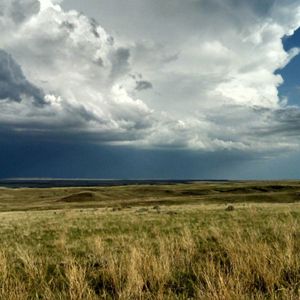
This vast sea of grass supports some of the most endangered birds in the country

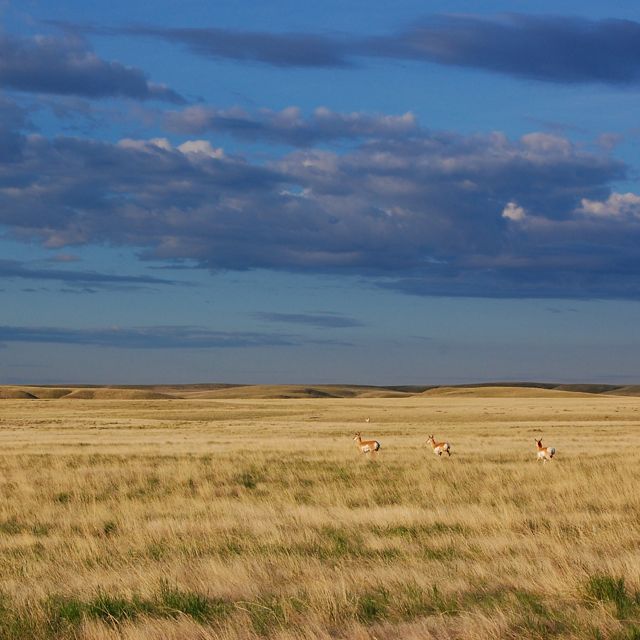
The Montana Chapter is working with scientists and landowners to modify or remove fences that threaten pronghorn movement. Learn more about pronghorn (pdf)

Download a Fact Sheet (pdf 4kb)        Donate to Conserve Grasslands   

The Northern Montana Prairies encompass some of the largest and most significant native grasslands remaining in the United States.

These glaciated plains, blanketed in native mixed grass, support what may be the largest assemblage of grassland species left on the Northern Great Plains.These include disappearing birds such as Mountain Plover, Burrowing Owls, Chestnut-collared Longspurs and Sprague’s Pipits. Interspersed sage brush steppe, also provides habitat for one of the healthiest Greater-Sage grouse  populations in the world.

These prairies are also a key part of the longest migration of pronghorn on the planet. Pronghorn are one of the fastest land mammals on earth -- second only to cheetahs. The grasslands also host deer, elk and such rare species as black-tailed prairie dogs, swift fox, and the black-footed ferret -- the rarest mammal in North America.

Threats

In Montana, the greatest threat to native prairie has been conversion to cropland, so-called “sod busting”. Over the last 25 years, more than 25 million acres of grassland has been destroyed in the U.S.  That’s twice the rate of forest loss and faster then the Amazon rainforest is disappearing.

The push for energy development is also putting the prairies in peril as grasslands are converted to crops for biofuel and broken by development associated with oil and gas exploration.

Hundreds of miles of fencing create obstacles to migrating animals, such as pronghorn. Poorly maintained and designed fencing can even prove deadly for deer, elk , pronghorn and birds.

Invasions of noxious weeds and exotic diseases, such as Sylvatic Plague and West Nile virus, are also threats.

Goals and Strategy

The Conservancy’s goal is to conserve grassland through direct land protection and partnership with the local ranching community. We're using a three-pronged approach:

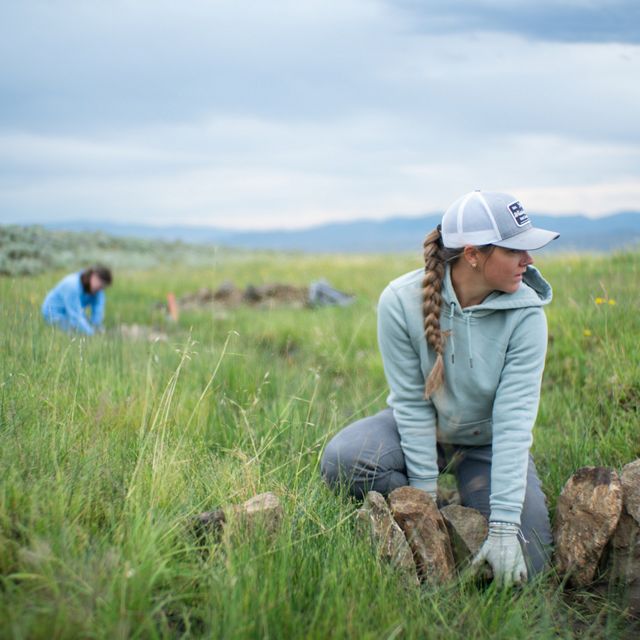
  • First, we are investing in science to help unlock even more of the undiscovered secrets of the northern plains.  We are using our 60,000-acre Matador Ranch as a center for learning that allows researchers and ranchers to work together. 
  • Second, we are employing the best conservation tools developed by science and engaging the people that live in the grasslands through the Matador grassbank.  The grassbank extends wildlife conservation management on an additional 240,000 acres of cooperating ranches, and is the most successful grassbank in the country.  Additionally, by implementing a wildlife-friendly fencing program (pdf), we are removing barriers to movement for pronghorn and Sage-grouse (pdf)
  • Third, we are permanently conserving grasslands vulnerable to habitat destruction through the purchase of conservation easements.


Comertown Pothole Prairie Preserve

The Conservancy owns the Comertown Pothole Prairie Preserve, in the far northeastern corner of the state. Each year, millions of waterfowl and shorebirds migrate to the Prairie Pothole Region to breed . The preserve, and adjoining lands protected through conservation easements, secure important breeding habitat for wetland and grassland birds. We're also helping reseed hundreds of acres of marginal cropland on the preserve and adjacent private land, with native grasses and wildflowers. Read a person essay on the Hidden Treasures of Comertown


Make a gift to Grassland Conservation


June 04, 2013
A Prairie Essay
by Brian Martin, Director or Science. Montana

This past week, I ventured over 500 miles from Helena to complete yearly conservation easement monitoring, meet with landowners, and to collect data with contractor biologist Peter Lesica. The data we collected will help us keep the grasslands healthy at our Comertown Prairie Preserve in the far northeastern corner of Montana. June is a magical time in the prairie potholes and our preserve is located in the heart of some of the best pothole grassland in Montana. I was hopeful spring rains had maintained water in the potholes, another name for wetlands in this land worked by glaciers just over ten thousand years ago

Read More

Close Encounters with Nature

Nature Matters

Explore Related Content

Help Protect Montana Grasslands
Matador Ranch